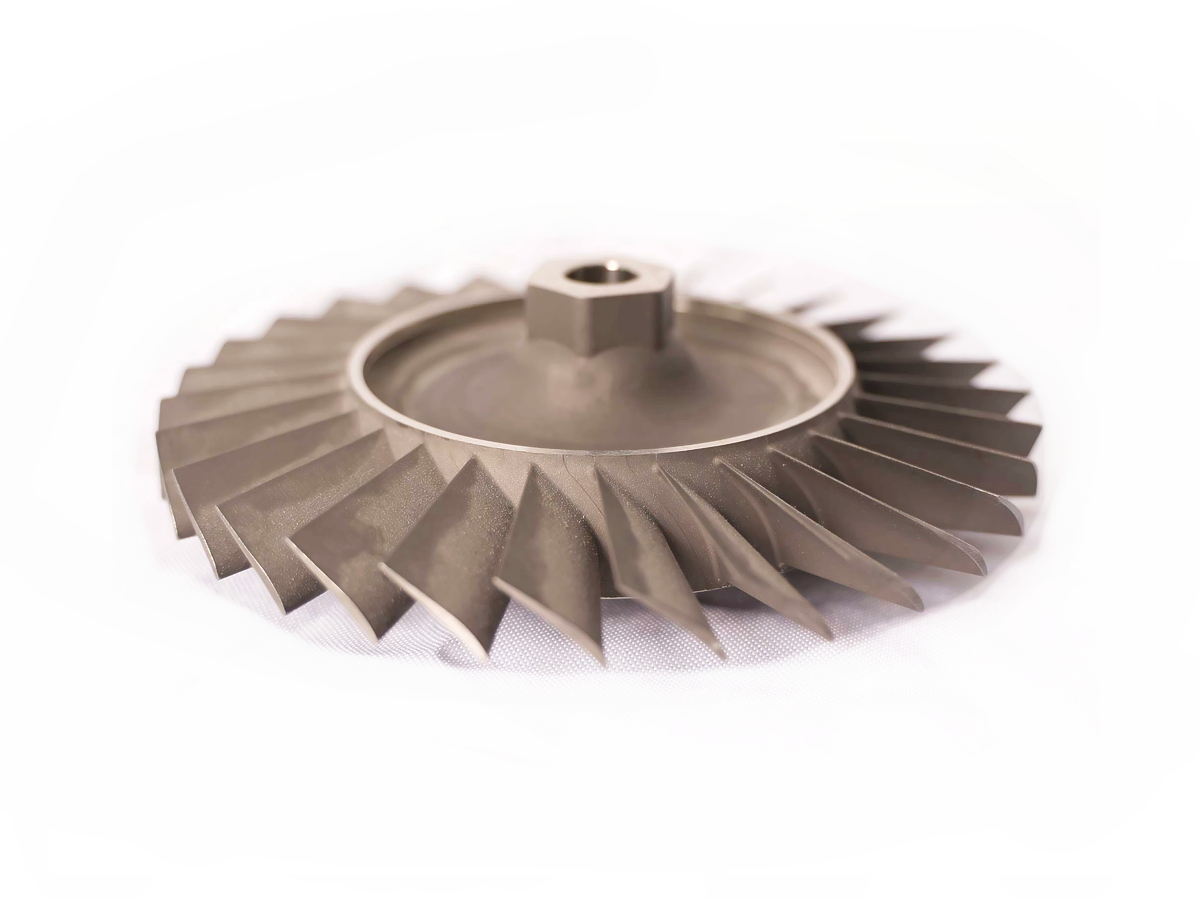
As a senior process engineer at Neway, I have had the privilege of participating in the manufacturing of components for multiple aerospace programs. Through these projects, I have gained a deep appreciation of the outstanding performance of superalloy materials in extreme environments, as well as the unique challenges they present during machining. Critical components of modern aeroengines, such as turbine blades and combustion chambers, must operate continuously at temperatures exceeding 1000°C while enduring massive centrifugal forces and thermal shocks. These extreme conditions impose exceptionally stringent requirements on material properties, and superalloys have become the preferred choice to meet them.
In the aerospace sector, the manufacture of every single component is directly tied to the safety and reliability of the entire system. We must not only achieve micron-level dimensional accuracy, but also ensure the integrity of the internal microstructure and the long-term stability of mechanical properties. Based on this understanding, we have developed a comprehensive, superalloy-specific custom machining solution, providing aerospace customers with one-stop support from material selection to finished parts.
The difficulty of machining superalloys stems primarily from their unique material characteristics. First, superalloys exhibit high strength and hardness even at room temperature, and pronounced work hardening during cutting as temperatures rise. This means the cutting tool must continuously cope with changing material hardness, which significantly accelerates tool wear.
Second, the low thermal conductivity of superalloys is a critical challenge. The large amount of heat generated during cutting cannot be efficiently dissipated through the chips or workpiece, causing heat to concentrate in the cutting zone. Local temperatures can exceed 800°C, which not only shortens tool life but may also induce residual stresses or even microstructural changes in the machined surface.
Additionally, the presence of hard carbide particles in superalloys speeds up flank wear and tool failure. In practice, we often observe severe groove wear on the flank face within a short cutting time. More importantly, given the high value of superalloy components, any machining error can result in substantial financial loss, making fail-safe process design absolutely essential.
At Neway, we recognize that each superalloy grade exhibits its own unique machining behavior. Take the widely used Inconel 718 as an example: we design dedicated process routes around its age-hardening characteristics. In roughing, we apply relatively aggressive cutting parameters to remove excess stock efficiently, followed by stress-relief heat treatment, then finish machining. This strategy effectively controls deformation and ensures dimensional stability.
Our process engineering team knows the “personality” of every major superalloy. Inconel 625, widely used in marine environments due to its excellent corrosion resistance, exhibits a stronger tendency to work harden; therefore, it requires smaller depths of cut with higher feeds. Hastelloy C-276, heavily used in chemical processing, has very low thermal conductivity and demands high-pressure coolant systems. Rene 41, a typical precipitation-hardened alloy, is extremely sensitive to heat treatment cycles and requires precise control of timing between operations.
Within our precision machining services, we place strong emphasis on holistic process planning. From analyzing the initial stock condition to allocating machining allowances for each operation to scheduling each heat treatment step, every detail is rigorously calculated and validated. We apply a modular process design concept, decomposing the entire route into standardized process units. This approach ensures reliability while maintaining enough flexibility to accommodate diverse product requirements.
The application of advanced machining technologies is crucial to overcoming the challenges of machining superalloys. In our multi-axis machining services, 5-axis simultaneous machining plays a crucial role. By enabling continuous machining of complex surfaces, it reduces the need for multiple setups, minimizes cumulative errors, and maintains stable cutting conditions—significantly improving the quality of complex parts such as blades.
For deep cavities, non-standard holes, and other hard-to-machine features commonly found in superalloy components, we integrate electrical discharge machining (EDM) as a complementary process. Since EDM is not limited by material hardness, it is ideal for micro-holes and complex cavities and introduces no mechanical cutting forces, effectively preventing deformation.
In conventional machining, our CNC milling services utilize advanced toolpath strategies, such as trochoidal milling, to control the engagement angle and reduce cutting temperatures. For CNC turning services, we rely on turning centers equipped with high-pressure coolant systems to deliver coolant directly into the tool–chip interface. When ultra-high surface integrity is required, we utilize our CNC grinding services for final finishing.
Quality control holds the highest priority in aerospace manufacturing. From the moment raw materials arrive, we establish a complete traceability system. Each batch must be accompanied by full material certification and undergo spectral analysis or equivalent methods for verification of composition. During the prototyping phase, we produce test coupons for comprehensive mechanical testing and metallographic examination.
In-process quality control is equally critical. We utilize on-machine measurement systems to monitor tool wear and machining accuracy in real-time. For critical dimensions, 100% inspection is implemented to ensure every part meets design specifications. Especially in low-volume production, we enforce stringent first article inspection procedures; only validated process parameters are allowed for subsequent runs.
Non-destructive testing (NDT) is the final safeguard in our quality assurance system. Dye penetrant inspection is used to detect surface-breaking defects, ultrasonic testing is used to detect internal flaws, and radiographic testing is used to verify density and integrity in critical regions. All NDT operations are performed in accordance with aerospace standards, with complete inspection records retained.
Post-processing of superalloy parts requires equally specialized expertise. Our thermal barrier coating services apply ceramic coatings to the component surface, effectively reducing the operating temperature of the substrate and significantly extending the service life of hot-section parts such as turbine blades. Coating thickness and bond strength must be precisely controlled to ensure reliable performance under cyclic thermal loading, without spalling.
Our electropolishing services are mainly used to improve surface quality. By electrochemically dissolving microscopic peaks, we achieve exceptional smoothness while eliminating potential stress concentrators, thereby enhancing fatigue performance. This is particularly important for parts operating in environments with corrosive or cyclic loading.
Additionally, we recommend suitable heat treatment services tailored to the operating conditions of each component. Processes such as solution treatment and aging optimize the microstructure, delivering the desired property balance. Surface enhancement techniques such as shot peening are also employed to introduce beneficial compressive residual stresses, effectively delaying fatigue crack initiation.
At Neway, we are committed to delivering a complete one-stop manufacturing solution. From initial drawing review and process design, through machining and inspection, to final surface treatment and packaging, we operate under a robust and comprehensive quality management framework. Our engineering team not only masters the machining technologies but also understands the real-world operating conditions of each component, enabling us to optimize manufacturing solutions from an application-driven perspective.
Our capabilities extend beyond aerospace. We have accumulated extensive experience in power generation, oil and gas, and the nuclear industry. Whether it is widely used materials such as Ti-6Al-4V (TC4), or specialized alloys like 17-4PH stainless steel, we provide professional machining services.
In mass production, we continuously improve efficiency through process optimization and automation, while maintaining uncompromised quality. Strict supply chain management and a complete documentation system enable us to fully meet aerospace requirements for product traceability.
What types of cutting tool materials are typically used for machining Inconel 718?
How can deformation of thin-walled superalloy parts be controlled during machining?
What heat treatment processes are commonly required after machining superalloy components?
Which aerospace standards and certifications does Neway comply with for superalloy machining?
What is the typical lead time from prototype to small-batch production?