Können technische Kunststoffe und Keramiken präzisionsgefräst werden?
Können technische Kunststoffe und Keramiken präzisionsgefräst werden?
Ja, technische Kunststoffe und Keramiken können präzisionsgefräst werden, aber der qualifizierte Weg ist für jedes Material und jeden Zustand unterschiedlich. Technische Kunststoffe werden im fertigen Zustand geschnitten, wobei Wärme, elastische Durchbiegung, Spannkraft, Feuchtigkeit und Messtemperatur kontrolliert werden. Keramiken können im grünen oder teilweise gebrannten Zustand mit Sinterzugabe gefräst werden, während dichte gebrannte Keramiken normalerweise Diamantschleifen oder einen anderen speziellen Schleifprozess für die endgültigen Merkmale benötigen. Käufer sollten die genaue Sorte, den Ausgangszustand oder den Brandzustand, die funktionalen Bezugspunkte, den endgültigen Kantenzustand, die Betriebsumgebung und den Prüfzustand angeben, bevor sie eine Toleranz als erreichbar behandeln.
Präzision bedeutet, dass das fertige Teil die Zeichnung im angegebenen Zustand erfüllt, nicht dass eine Maschine einem programmierten Pfad folgen kann. Polymermaße können sich mit Temperatur, Feuchtigkeit, Spannungsfreigabe oder Eigenspannung ändern. Keramikmaße können sich während des Sinterns ändern, und gebrannte Keramikkanten können absplittern oder Unterschichtschäden während der Endbearbeitung entwickeln. Ein gültiger Präzisionsbearbeitungsplan verbindet daher Materialzustand, Merkmalsgeometrie, Prozessreihenfolge, Endkonditionierung, Bezugspunktstrategie und Prüfmethode.
1. Können technische Kunststoffe präzisionsgefräst werden?
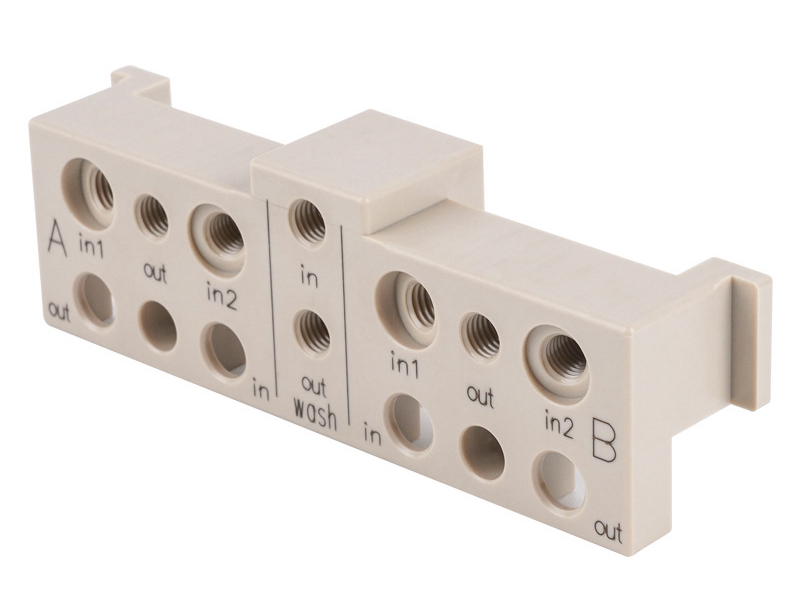
Ja. Technische Kunststoffe eignen sich zum Präzisionsfräsen, wenn die ausgewählte Sorte, Verstärkung, Ausgangsform, Konditionierungszustand und Einsatzumgebung die erforderliche Geometrie unterstützen. Acetal (POM) unterstützt oft stabile allgemeine Merkmale; PEEK dient höheren Temperaturen oder chemisch anspruchsvollen Anwendungen; PTFE bevorzugt chemische Beständigkeit und geringe Reibung gegenüber Steifigkeit; Polycarbonat (PC) erfordert Aufmerksamkeit auf Spannung und sichtbare Oberflächenqualität; und ABS eignet sich für viele unkritische Prototypen oder Vorrichtungen. Diese Aussagen auf Familienebene ersetzen nicht das Datenblatt des Lieferanten für das genaue Ausgangsmaterial.
Das Fräsrisiko bei Kunststoffen resultiert aus dem Zusammenspiel von geringer Steifigkeit, relativ hoher Wärmeausdehnung, begrenzter Wärmeabfuhr, Eigenspannung, Kriechen und sortenabhängiger Feuchtigkeitsaufnahme. Ein Merkmal kann sich während des Schneidens durchbiegen, sich nach dem Werkzeugdurchgang erholen, sich nach dem Entspannen erneut bewegen und später bei Betriebstemperatur oder Luftfeuchtigkeit verschieben. Das Prüfergebnis ist nur dann aussagekräftig, wenn die Zeichnung den relevanten Konditionierungs-, Messtemperatur-, Unterstützungs- und Stabilisierungszustand definiert.
Kunststoffprozesssignal | Wahrscheinlicher Mechanismus | Kontrolle und Bestätigung |
|---|---|---|
Größenänderungen beim Abkühlen des Teils | Schnittwärme und Wärmeausdehnung | Wärmeeintrag kontrollieren; nach Stabilisierung bei der angegebenen Temperatur prüfen |
Wandverjüngung ändert sich mit der Werkzeugrichtung | Geringe Steifigkeit und Durchbiegung im Schnitt | Das Merkmal unterstützen und nach der Spannungsfreigabe messen |
Oberfläche verschmiert oder bildet eine erhabene Kante | Reiben, stumpfes Werkzeug oder unzureichende Spanabfuhr | Sauberen Schnitt wiederherstellen und die funktionale Kante prüfen |
Freigegebenes Teil weicht von der Größe in der Spannung ab | Spannungsdruck oder Bewegung durch Eigenspannung | Spannung reduzieren und Abnahme im freigegebenen Zustand verwenden |
Aufmaß, scharfes Werkzeug, Spanabfuhr, Temperaturkontrolle und Spannkraft sollten an dem flexibelsten oder wärmeempfindlichsten Merkmal qualifiziert werden. Die zugrunde liegenden Entscheidungen werden in Kunststoff-CNC-Bearbeitung, Kunststoff-Bearbeitungsparametern und Kunststoff-Maßtoleranzen diskutiert. Für ein Angebot sollten Sie die gefüllte oder ungefüllte Sorte, extrudiertes oder geformtes Ausgangsmaterial, gegebenenfalls den geglühten Zustand, die Wandgeometrie, die Betriebstemperatur, die chemische Belastung und den Messzustand angeben.
2. Welche technischen Kunststoffe eignen sich am besten zum Präzisionsfräsen?
Der beste technische Kunststoff ist die Sorte, die während Bearbeitung, Prüfung, Montage und Einsatz stabil bleibt. POM ist oft ein praktischer Ausgangspunkt für reibungsarme, maßhaltige Teile. PEEK kann seine nützlichen Eigenschaften bei höheren Temperaturen behalten, aber gefüllte und ungefüllte Sorten schneiden und bewegen sich unterschiedlich. PTFE ist nachgiebig und kann unter Spannung oder Betriebslast kriechen. PC kann Bearbeitungsspannungen oder kosmetische Schäden zeigen, während die Qualität und Eigenspannung von ABS-Rohmaterial die endgültige Größe eines Prototyps bestimmen können. Vergleichen Sie Herstellerdaten für die genaue Sorte und Ausgangsform, anstatt eine Familienbewertung direkt in die Zeichnung zu übernehmen.
Material | Präzisionsfräs-Eignung | Qualifizierungspriorität |
|---|---|---|
POM | Oft günstig für stabile allgemeine Merkmale | Rohstoffspannung, Temperatur und funktionales Spiel |
PEEK | Günstig, wenn die Serviceleistung die Kosten rechtfertigt | Genaue Sorte, Verstärkung, Wärmegeschichte und Endkonditionierung |
PC | Geeignet mit Spannungs- und Oberflächenkontrollen | Klarheitskriterium, Kantenqualität und chemische Verträglichkeit |
ABS | Geeignet für viele Prototypen und Vorrichtungen | Rohstoffqualität, Wärme, Wandbewegung und Servicegrenze |
PTFE | Bedingt geeignet für nachgiebige Teile | Spannkraft, Kriechen, Messunterstützung und Passung |
3. Können Keramiken präzisionsgefräst werden?
Ja, Keramiken können präzisionsgefräst werden, aber der Materialzustand bestimmt, was „Fräsen“ bedeutet. Grüne oder teilweise gebrannte Rohlinge können konventionelle Schneidoperationen vor dem endgültigen Sintern akzeptieren, mit berechneter Zugabe für Schrumpfung und Verzug. Dichte gebrannte Aluminiumoxid (Al2O3), Zirkonoxid (ZrO2), Siliziumkarbid (SiC), Siliziumnitrid (Si3N4) und Aluminiumnitrid (AlN) erfordern normalerweise Diamantschleifen oder einen anderen qualifizierten Schleifprozess für enge Endmerkmale. Ihre Zähigkeit, Wärmeleitfähigkeit, elektrisches Verhalten und Bearbeitbarkeit sind nicht austauschbar.
Sprödbrüche sind das Hauptrisiko bei gebrannten Keramiken. Schnitt- oder Schleifkraft, Werkzeugzustand, Kanteneintritt, ungestützte Geometrie und lokale Wärmebelastung können Kantenausbrüche, Mikrorisse oder Unterschichtschäden ohne große sichtbare Verformung verursachen. Grünbearbeitung vermeidet viel von der gebrannten Härte, führt aber zu einem anderen Versagensmodus: ungleichmäßige Dichte oder Bearbeitungszugabe kann nach dem Sintern zu Verzug führen. Die Zeichnung und das Angebot müssen daher identifizieren, welche Abmessungen vor dem Brennen erstellt und welche danach fertigbearbeitet werden.
Keramikprozesssignal | Wahrscheinlicher Mechanismus | Kontrolle und Bestätigung |
|---|---|---|
Endgeometrie verschiebt sich nach dem Brennen | Sinerschrumpfung oder Dichteschwankung | Grünzugabe definieren und Aufmaß für die Nachbearbeitung nach dem Brand behalten |
Kantenausbruch erscheint am Austritt | Sprödbruch an einer ungestützten Kante | Unterstützung oder Eintrittsweg ändern; Endkante unter angegebener Vergrößerung prüfen |
Oberflächenqualität verschlechtert sich mit Werkzeugverschleiß | Abrasiver Verschleiß ändert Kraft und Schadenstiefe | Werkzeuglimit basierend auf dem Merkmal festlegen und Oberflächenzustand verifizieren |
Teil besteht Maßprüfung, fällt aber im Einsatz aus | Mikroriss oder Unterschichtschaden wurde nicht erkannt | Rissprüfung und Nachweis an das Servicerisiko anpassen |
Die Keramikmaterialauswahl muss die geforderte Eigenschaft mit dem Herstellungszustand und der Prüfmethode verbinden. Hilfsseiten behandeln Keramik-CNC-Bearbeitung, Keramikeigenschaften und Keramik-Bearbeitungsvorsichtsmaßnahmen. Das Angebot sollte die Keramikzusammensetzung, Reinheit oder Sorte, den Grün-/Biskuit-/Brandzustand, die Sinterverantwortung, Kantenzugabe, Endoberfläche, kritische Bezugspunkte und die Anforderung an die Rissprüfung benennen.
4. Welches Präzisionsniveau ist bei Kunststoffen und Keramiken praktikabel?
Praktikable Präzision kann nicht allein aus „Kunststoff“ oder „Keramik“ abgeleitet werden. Bei Kunststoffen umfassen die bestimmenden Variablen Sorte, Verstärkung, Rohstoffgeschichte, Merkmalsgröße, Wandsteifigkeit, thermische und Feuchtigkeitsbedingungen und Messunterstützung. Bei Keramiken umfassen sie Grün- oder Brandzustand, Sinterzugabe, Kantenabstand, Merkmalstiefe, Schleifzugang, Oberflächenanforderung und zulässige Schäden. Eine Toleranz ist nur praktikabel, wenn die gesamte Route sie im endgültigen Abnahmezustand reproduzieren kann.
Die Prüfung muss an die mögliche Bewegung oder das Versagen des Teils angepasst werden. Kunststoffmerkmale können eine Messung mit geringer Kraft nach der Spannungsfreigabe und Konditionierung in der angegebenen Umgebung erfordern. Keramikmerkmale benötigen eine Bezugspunktstrategie, die Sintern und Bearbeitung übersteht, plus eine Kanten- oder Rissprüfung, die dem Servicerisiko angemessen ist. Maschinenpositionierung, Controller-Auflösung oder Auflösung der Prüfausrüstung können nicht die nachgewiesene Teilefähigkeit und eine festgelegte Abnahmemethode ersetzen.
5. Welche Teiletypen eignen sich am besten für präzisionsgefräste Kunststoffe und Keramiken?
Präzisionsgefräste Kunststoffe eignen sich für Teile, deren Funktion von geringem Gewicht, elektrischer Isolierung, geringer Reibung, chemischer Verträglichkeit oder kontrollierter Nachgiebigkeit abhängt. Präzisionsbearbeitete Keramiken eignen sich für Teile, deren Funktion Verschleißfestigkeit, Hochtemperaturstabilität, elektrisches oder thermisches Verhalten oder eine stabile Dichtfläche erfordert. Die Wahl bleibt sortenspezifisch: Nicht jeder Kunststoff widersteht derselben Chemikalie oder Temperatur, und nicht jede Keramik ist elektrisch isolierend oder tolerant gegenüber dünnen scharfen Kanten.
Funktionaler Bedarf | Kandidatenmaterialfamilie | Freigabefrage |
|---|---|---|
Leichte Präzisionsvorrichtung | Technischer Kunststoff | Wird Spannkraft, Temperatur oder Kriechen den Bezugspunkt verschieben? |
Chemiekontaktkomponente | Qualifizierte Kunststoff- oder Keramiksorte | Ist die Verträglichkeit für Medium, Konzentration, Zeit und Temperatur nachgewiesen? |
Elektrischer Isolator | Qualifizierter Kunststoff oder isolierende Keramik | Sind Dielektrizität, Verunreinigung, Geometrie und Temperaturgrenzen definiert? |
Hochverschleiß-Präzisionsschnittstelle | Technische Keramik oder qualifizierter Kunststoff | Können Kanten, Oberflächenschäden, Schmierung und Gegenmaterial akzeptiert werden? |
Hochtemperaturmerkmal | Keramik oder Hochleistungskunststoff | Sind Dauertemperatur, Last, Atmosphäre und Temperaturwechsel spezifiziert? |
Anwendungen im Zusammenhang mit Medizingeräten, Automatisierung und Industrieausrüstung erfordern weiterhin die genauen regulatorischen, Reinheits-, Rückverfolgbarkeits-, Umgebungs- und Abnahmeanforderungen. Ein Anwendungsetikett beweist nicht, dass eine Materialsorte oder Bearbeitungsroute geeignet ist.
6. Zusammenfassung
Materialfamilie | Kann es präzisionsgefräst werden? | Hauptfreigabegrenze |
|---|---|---|
Technische Kunststoffe | Ja, im qualifizierten fertigen Zustand | Größe nach Definition von thermischen, Feuchtigkeits-, Spannungs- und Stabilisierungsbedingungen akzeptieren |
Keramiken | Ja, durch einen zustandsspezifischen Weg | Grünbearbeitung, Sinterzugabe und gebranntes Schleifen trennen |
Technische Kunststoffe und Keramiken können beide Präzisionskomponenten herstellen, aber sie erreichen die Abnahme über unterschiedliche Nachweise. Kunststoffe erfordern Kontrolle über Sorte, Rohstoffgeschichte, Wärme, Unterstützung, Konditionierung und Messung im freigegebenen Zustand. Keramiken benötigen eine deklarierte Grün- oder Brandroute, Sinterverantwortung, endgültigen Schleifzugang, Kantenqualität und Schadensprüfung. Ein nützliches Angebot liefert das Modell und die Zeichnung, genaue Materialspezifikation, Ausgangs- oder Brandzustand, Einsatzumgebung, funktionale Bezugspunkte, kritische Merkmale, endgültige Oberflächen- und Kantenanforderungen, Messbedingungen, Prüfmethode, erforderliche Aufzeichnungen und Chargenmenge.