What Are the Key Properties of Ceramics for CNC Machining?
What Are the Key Properties of Ceramics for CNC Machining?
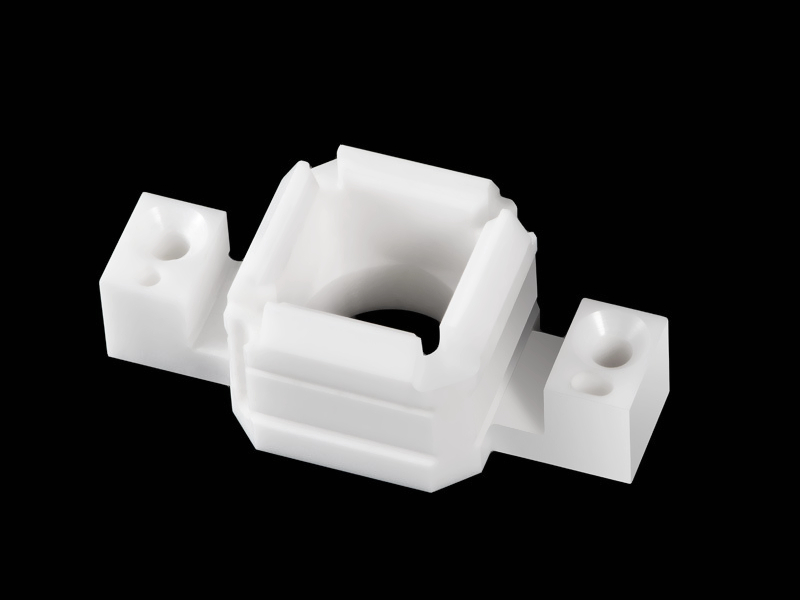
The key properties of ceramics for CNC machining include high hardness, excellent wear resistance, high temperature stability, chemical resistance, electrical insulation, low thermal expansion, and strong dimensional stability. These properties make ceramics valuable for precision components used in medical devices, power generation, electronics, industrial equipment, and harsh operating environments.
However, ceramics also have machining challenges. Most engineering ceramics are hard and brittle, which means they can crack, chip, or fracture if the machining process is not properly controlled. For buyers, the most important point is that ceramic CNC machining requires the correct material selection, tooling strategy, cutting control, fixturing, and inspection planning before production begins.
1. High Hardness and Wear Resistance Are Major Ceramic Advantages
One of the most important ceramic properties is hardness. Ceramic materials are often chosen for parts that must resist wear, abrasion, scratching, or long-term friction. This makes ceramics suitable for guides, sleeves, insulators, spacers, cutting-related components, sealing parts, and precision wear components.
For CNC machining, high hardness also means slower machining, higher tool wear, and stricter process control. A ceramic part may perform extremely well in service, but it usually requires more careful machining than aluminium, brass, plastic, or many steels.
Property | Benefit for Finished Parts | Machining Concern |
|---|---|---|
High hardness | Improves wear and scratch resistance | Requires suitable tools and controlled cutting forces |
Wear resistance | Supports long service life in friction applications | Can increase machining time and tool cost |
Surface stability | Helps maintain function after repeated contact | May require grinding or fine finishing |
2. Brittleness Is the Main Risk in Ceramic CNC Machining
Although ceramics are hard, they are usually less ductile than metals. This means they do not deform like aluminium or stainless steel under cutting pressure. Instead, they may chip, crack, or break when stress concentration is too high. Thin walls, sharp corners, small holes, narrow slots, and unsupported edges are especially sensitive.
To reduce this risk, ceramic part design should avoid unnecessary sharp internal corners, extremely thin sections, and sudden geometry changes where possible. A reliable supplier should review the drawing and recommend adjustments before machining, especially for tight-tolerance or fragile ceramic parts.
3. High Temperature Resistance Makes Ceramics Suitable for Harsh Environments
Many ceramic materials can maintain strength, insulation, and dimensional stability in high-temperature environments. This is one reason ceramics are used in power generation, electronics, thermal insulation, industrial equipment, and other demanding applications.
For example, materials such as Alumina, Aluminum Nitride, and Silicon Carbide are often considered when buyers need heat resistance, insulation, wear resistance, or thermal performance. The right choice depends on the operating temperature, mechanical load, electrical requirements, and part geometry.
Ceramic Property | Typical Buyer Requirement | Common Application Concern |
|---|---|---|
Heat resistance | Parts must operate under elevated temperature | Material must remain stable without cracking or distortion |
Thermal insulation | Parts must reduce heat transfer | Geometry and material choice must match the thermal load |
Thermal conductivity | Parts may need to conduct or dissipate heat | Material selection is critical because ceramics vary widely |
4. Electrical Insulation Is a Key Reason Buyers Choose Ceramics
Many engineering ceramics provide strong electrical insulation, making them useful for electronic, power, sensor, and high-voltage components. Ceramic insulators, spacers, housings, and structural parts may need to maintain electrical separation while also resisting heat, wear, and chemical exposure.
This property is especially important when a plastic part cannot meet temperature or durability requirements. In these cases, ceramics can offer a stronger solution, but the machining process must protect edge quality, hole accuracy, and surface integrity.
5. Chemical Resistance Helps Ceramic Parts Perform in Corrosive Conditions
Ceramics are often selected for corrosive, abrasive, or chemically aggressive environments. Compared with many metals, suitable ceramics can provide strong resistance against oxidation, solvents, acids, and other harsh media. This makes them useful for pump components, sealing parts, analytical equipment, industrial fixtures, and medical-related applications.
For buyers, chemical resistance should be considered together with mechanical load and impact risk. A ceramic material may resist corrosion very well, but if the part is exposed to shock, vibration, or impact, the design and material choice must be reviewed carefully.
6. Low Thermal Expansion Supports Dimensional Stability
Many ceramic materials have relatively low thermal expansion compared with common metals and plastics. This helps parts maintain dimensional stability when temperature changes. Low expansion can be valuable for precision fixtures, measurement-related components, optical assemblies, and high-temperature mechanical systems.
However, low thermal expansion does not remove all risk. If ceramic parts are assembled with metal parts, differences in expansion can create stress during heating or cooling. Buyers should consider the full assembly environment, not only the ceramic component itself.
7. Material Grade Selection Changes Machining and Performance
Ceramics are not one single material group with one fixed behavior. Different ceramic materials have different strengths, weaknesses, machining difficulty, and application value. A general ceramics selection should consider hardness, toughness, insulation, thermal behavior, corrosion resistance, and precision requirements.
Common options include Zirconia, Alumina, Silicon Nitride, Aluminum Nitride, Silicon Carbide, and Boron Nitride. The best material depends on whether the final part needs toughness, insulation, thermal conductivity, wear resistance, or high-temperature stability.
Material Option | Common Selection Reason | Buyer Should Confirm |
|---|---|---|
Zirconia | Strength, toughness, wear resistance, and precision use | Impact load, edge design, and surface finish requirements |
Alumina | Insulation, hardness, heat resistance, and cost balance | Purity level, tolerance, and working environment |
Silicon Nitride | Strength, thermal shock resistance, and demanding mechanical use | Load condition, wear behavior, and machining complexity |
Aluminum Nitride | Thermal conductivity and electrical insulation | Thermal design, flatness, and surface quality |
Silicon Carbide | Extreme hardness, wear resistance, and high-temperature use | Machining difficulty, brittleness, and cost |
8. Precision Machining Requires Design Review and Process Control
Because ceramics are hard and brittle, precision ceramic CNC machining depends heavily on process planning. Tooling, fixturing, cutting force, grinding allowance, hole-making strategy, and inspection should be reviewed before production. A part that looks simple in CAD may still be difficult to machine if it has thin walls, small holes, sharp edges, or very tight tolerances.
For projects requiring close tolerance, smooth surfaces, or critical mating features, ceramic machining may also involve CNC grinding after initial shaping. This helps improve dimensional accuracy and surface quality on hard ceramic components.
9. Cost and Lead Time Depend on Ceramic Property Requirements
The cost of ceramic CNC machining is affected by material grade, hardness, brittleness, part geometry, tolerance level, surface finish, inspection requirements, and production quantity. A simple ceramic spacer may be relatively straightforward, while a thin-walled, tight-tolerance ceramic component may require slower machining, special fixtures, additional inspection, and higher scrap-risk control.
To receive an accurate quote, buyers should provide 3D CAD files, 2D drawings, ceramic material requirements, quantity, tolerance requirements, surface finish requirements, and operating environment details. This allows the supplier to recommend a machining strategy that balances ceramic performance, manufacturing risk, cost, and lead time.