WCB Impellers and CA6NM Wear Rings: A Small-Batch Machining Perspective
WCB Impellers and CA6NM Wear Rings: A Small-Batch Machining Perspective
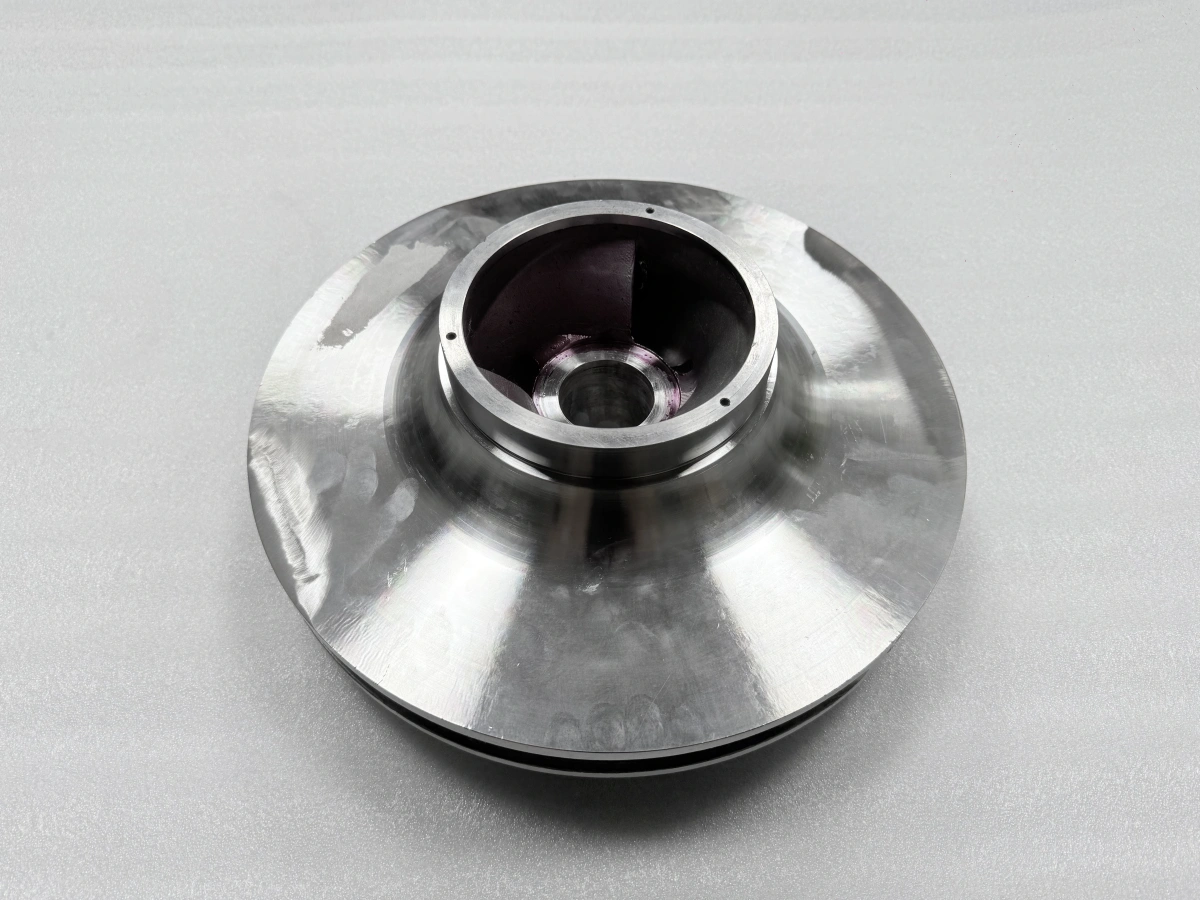
A small-batch closed pump impeller assembly may combine two drawing-specified casting grades in very different component roles. In this project, the drawing specified WCB for the impeller body and CA6NM for the associated wear rings. The impeller combines casting-formed geometry with selected machined interfaces, while the rings participate in the later fit relationship. For an industrial equipment project, that division matters because grade, product form, supplied condition, machining stock, and feature purpose must be reviewed together. A useful WCB impeller and CA6NM wear ring machining plan therefore starts with material responsibilities rather than treating both cast components as one generic steel-machining task.
Material Roles Start with the Drawing
WCB belongs to a cast carbon steel family, while CA6NM belongs to a martensitic stainless cast-steel family. Those categories give a manufacturing review an initial direction, but the drawing and governing material specification remain the controlling inputs. The team still needs to identify the ordered casting standard, required furnished condition, any supplementary requirements, and the records expected with the material. This distinction is especially important when a project combines a cast body and separate ring components. The material designation describes the required alloy family; casting allowance, surface finish, fit, cutting data, and the sequence of rough and finish operations come from the wider product and process definition. Keeping those decisions separate lets the manufacturer translate each component's role into a suitable process without turning a material name into an unsupported performance conclusion.
WCB Connects Cast Form to Machined Interfaces
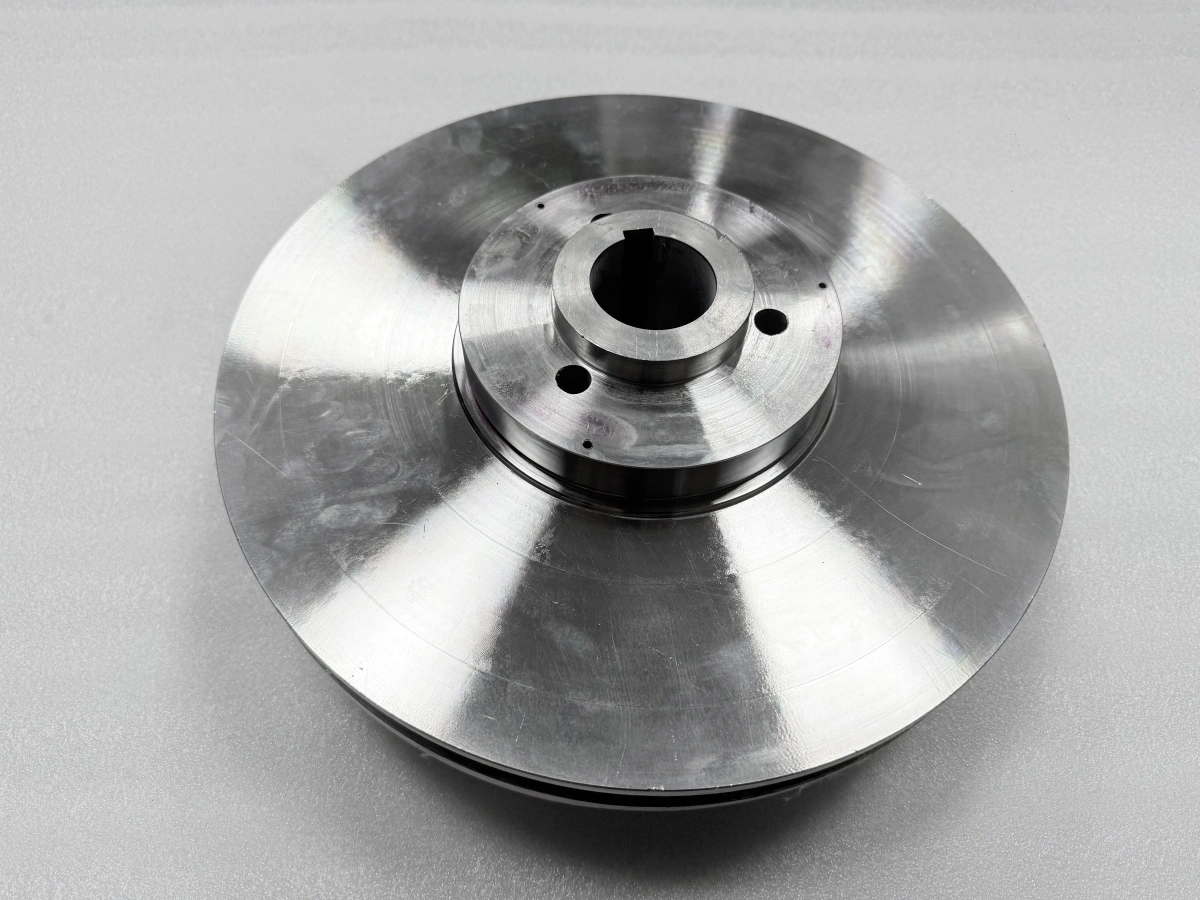
The proposed manufacturing route used casting to establish the impeller's complex body and reserved selected interfaces for later machining. For the cast steel impeller material, the first planning question is not whether WCB can be cut, but what condition the casting will be in when machining begins. Surface skin, interruptions, local stock distribution, section changes, and the furnished heat-treated condition all influence tool entry and the amount of stable material available beneath the first cut. Broader carbon steel machining experience helps with tool and coolant selection, yet the route still has to follow the actual casting and drawing. The objective is to preserve casting-formed geometry while creating only the interfaces, faces, and shaft-related features that the product definition assigns to machining.
Read Casting Surface and Stock Before Cutting
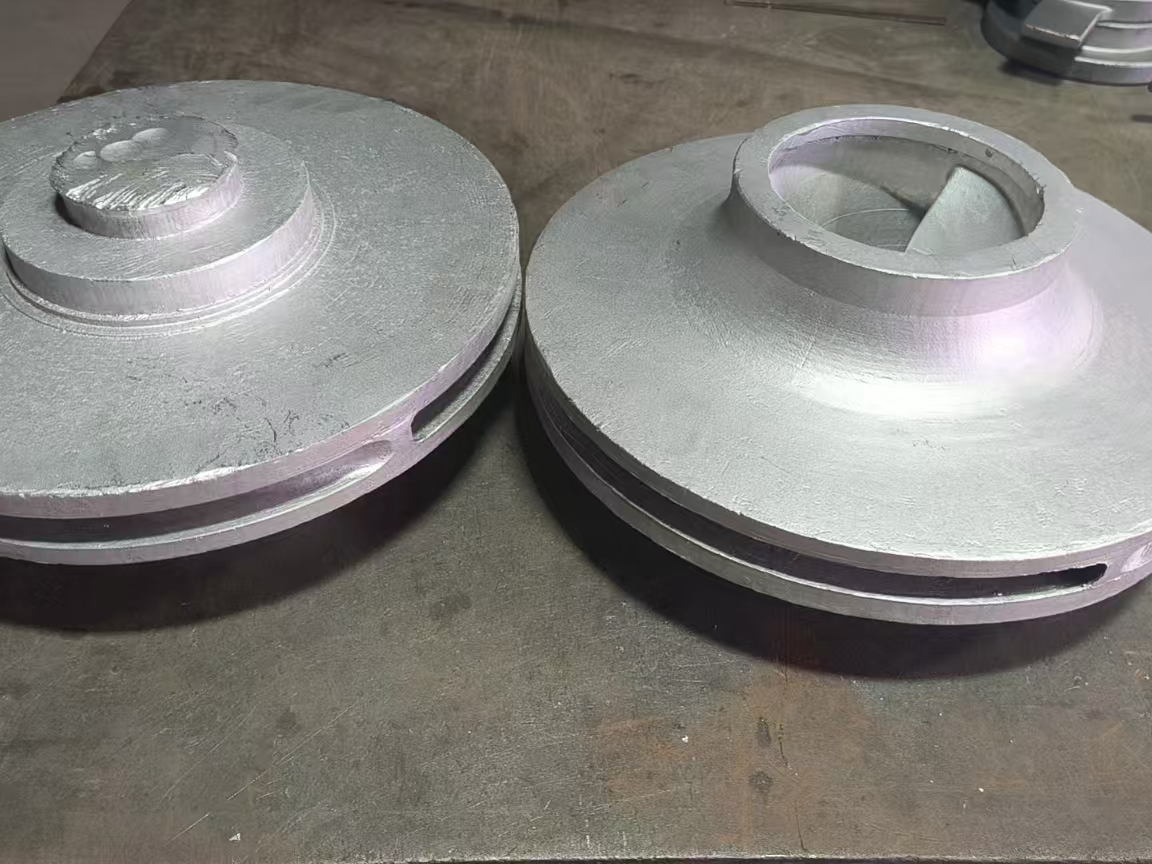
The unfinished impeller bodies illustrate why casting condition deserves its own review. A rough surface may include scale, adhered residue, or local irregularity, and an interrupted entry behaves differently from a continuous cut in established base metal. Before setting a finish strategy, the machining review should establish where usable stock exists, which surfaces are intentionally left as cast, and where cleanup must reach a drawing-defined interface. This does not require one universal allowance or a fixed first-pass recipe. It calls for a stock review that matches the actual geometry and a cutting approach that moves from the surface layer into consistent material without sacrificing the features that casting was intended to provide. Within the wider CNC machining scope, this boundary between near-net form and machined interface is more useful than describing the whole impeller as a turned part.
CA6NM Needs Its Own Machining Assumptions
CA6NM machining considerations begin with its martensitic stainless cast-steel structure and confirmed material condition. Heat treatment shapes microstructure and hardness, so final cutting data must match the supplied state. Industry guidance for CA6NM emphasizes rigid support, steady tool engagement, chip control, and effective cooling. Those principles are useful starting points for stainless steel machining, but they do not justify copying parameters from an austenitic stainless grade or from a different component shape. The wear rings should be assessed in their supplied state, with attention to section stiffness, interrupted features, available stock, and the surface relationship defined by the drawing. Insert grade, geometry, feed, speed, and coolant delivery are then selected for the actual machine, setup, and condition rather than for a broad stainless category.
Heat-Treatment State Is a Manufacturing Input
Material condition should be settled before the machining plan is treated as fixed. The governing casting standard and purchase requirement define the required furnished or heat-treated state, while the manufacturing review connects that state to the intended machining stage. Condition affects hardness, residual stress, cutting response, and the stability expected during material removal; CA6NM's martensitic structure makes this connection especially important. A heat treatment review should therefore connect the drawing, purchase requirement, casting specification, and feature sequence. For this small-batch scope, the useful question is which confirmed condition the machining team must plan around. Exact furnace cycles and achieved properties belong to the applicable process and material records rather than to assumptions based on WCB or CA6NM alone.
Connect Material State to Turning Features
The impeller and wear rings both include rotational relationships, but their setups need not be identical. On the impeller, machining has to respect the cast body's support and the relationship between the shaft interface and selected finished surfaces. On a ring-like component, clamping force, wall stiffness, and the amount of stock removed may affect how the part presents itself during and after release from the fixture. These conditions make CNC turning a feature-level decision rather than a complete description of either component. A proposed route can separate roughing from finishing, choose support suited to the component state, and reserve final interface work until the necessary material and assembly conditions are known. Setup, finish, and allowable deformation come from that combined review rather than from the material designation.
Fit Requirements Come from the Product Definition
The wear-ring designation does not establish a clearance, contact pattern, surface finish, or service life. Those requirements come from the drawing and the assembled product relationship. Material engineering still matters because the confirmed condition of CA6NM affects how the ring can be machined and how much material should be removed in each stage. The WCB impeller interface must likewise be reviewed in the condition in which the ring relationship will be established. Where assembly-state finish machining is being considered, it remains a conditional method tied to access, stock, support, and the customer's functional requirements. WCB defines one casting and machining context, CA6NM defines another, and the drawing connects them at the interface without making either grade a substitute for dimensional definition.
Use Early Cutting Feedback Without Generalizing
In a small batch, the first stable operation on each material offers a check on process assumptions before the remaining pieces follow the same route. Relevant observations include chip formation, tool-edge condition, heat at the cutting zone, surface response, and the part's behavior after it is released from the fixture. For WCB, this feedback helps distinguish entry through casting skin from cutting in established base material and shows how the available stock is distributed. For CA6NM, it informs tool engagement, chip evacuation, cooling, and support decisions for the ring geometry. These observations should remain separate for the two material/component combinations rather than becoming one shared parameter set. If the cutting response differs materially from the planned condition, the right next step is to reconcile the supplied state, stock, and setup assumptions before continuing, not to infer chemistry or acceptance from machining behavior.
Make Small-Batch Records Decision-Ready
A useful material record set should help the next manufacturing decision, not merely repeat the grade name. The drawing identifies the specified material and component role. Material documentation should identify the supplied heat or lot and condition. Heat-treatment records, when required, address the defined cycle and traceability. The machining route identifies which features are worked and in what component state, while dimensional records address the drawing features selected for review. A focused quality assurance plan assigns each record to its relevant stage and review responsibility. For a small batch, this separation prevents a casting record, material record, and finished-feature record from being treated as interchangeable. It also gives the buyer a practical way to specify the evidence needed while keeping each record tied to its proper purpose.
Prepare the Two Materials for One Small-Batch Review
A buyer makes a material-led review more useful by providing the current drawing revision, material standard and required condition, part list, interface priorities, expected batch range, and inspection scope. Neway's review can cover casting stock, component stiffness, machining access, proposed rough and finish stages, and the records needed to support those choices. For WCB, the discussion centers on the cast body and its selected machined interfaces. For CA6NM, it centers on the ring condition, support, cutting response, and mating surfaces. Buyers evaluating low-volume manufacturing use this review to align material state with the intended route before detailed cutting assumptions are fixed. This gives buyers a clearer basis for planning two different casting grades within one connected impeller assembly.
FAQ