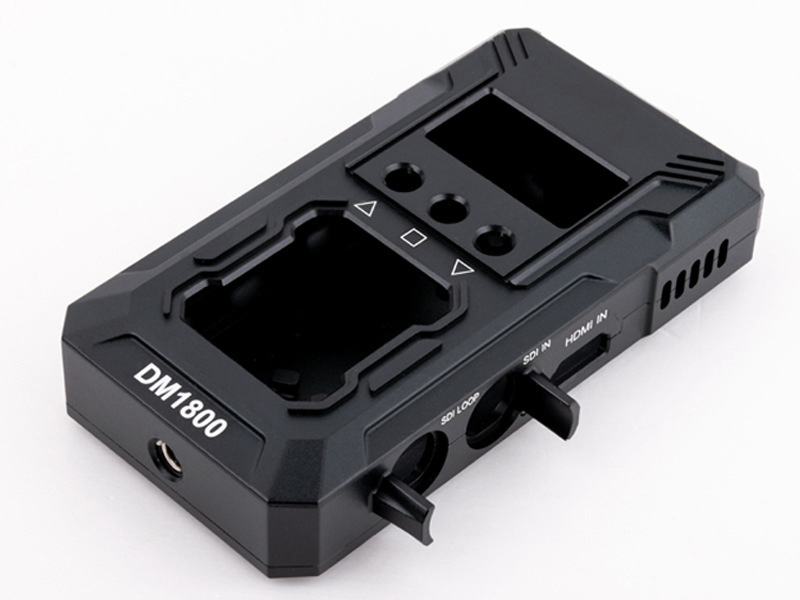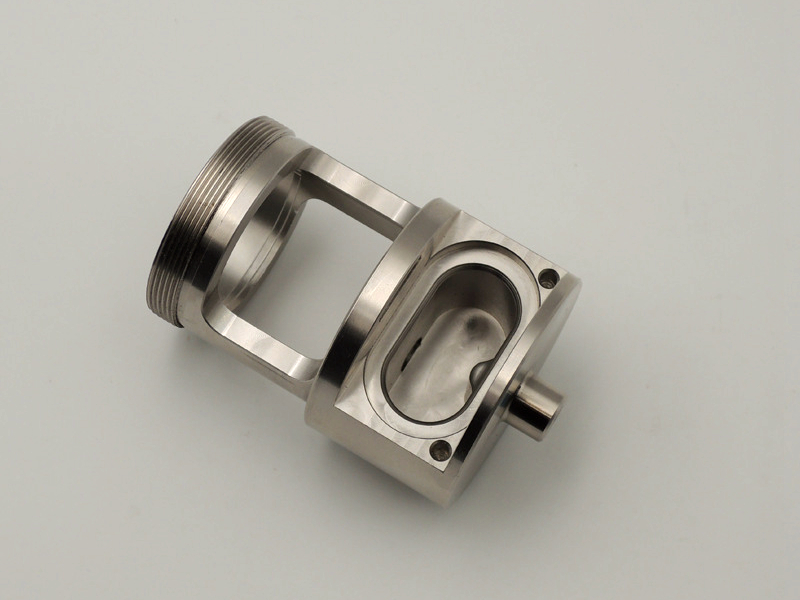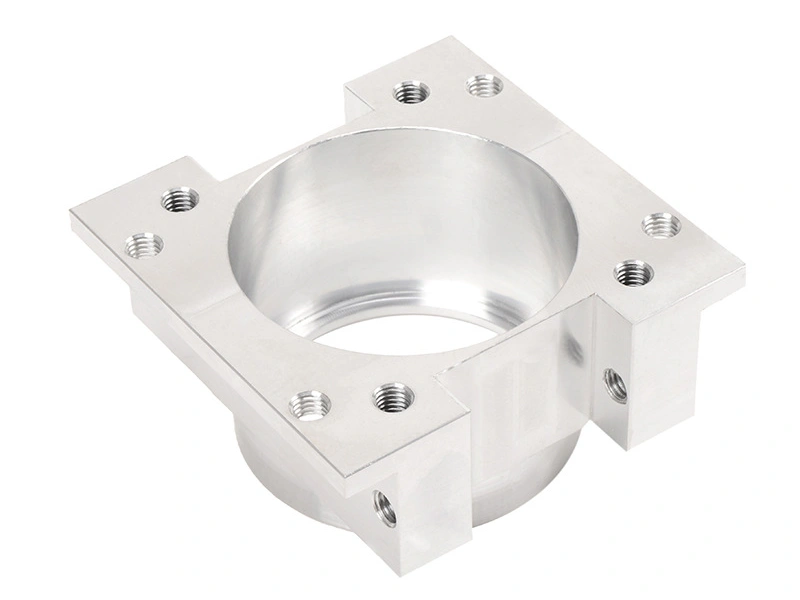
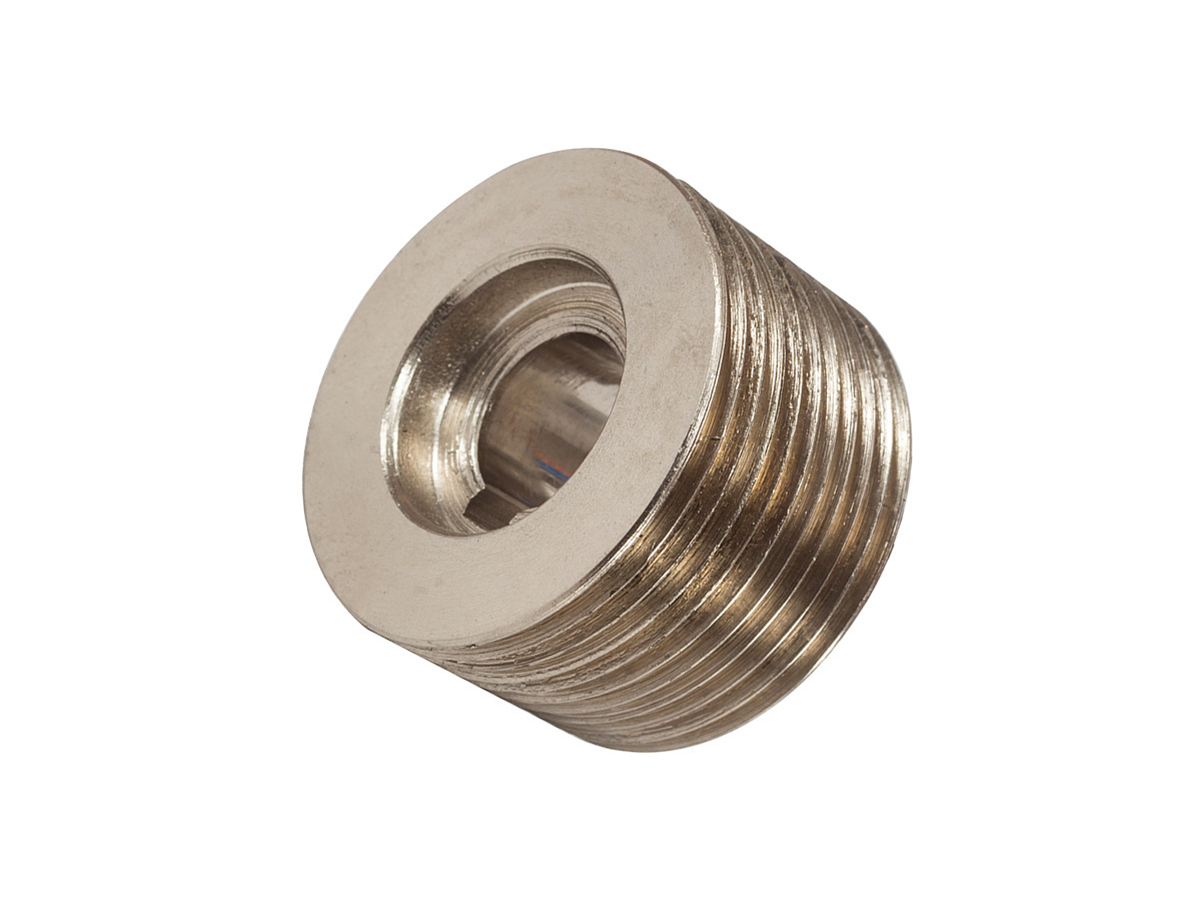
In Neway’s titanium manufacturing practice, we observe a consistent pattern: precision CNC machining yields accurate geometry, but the surface condition ultimately determines whether a titanium component can withstand its real working environment. For high-end applications in aerospace, medical devices, energy, robotics, and demanding industrial systems, the right surface treatment is not “optional finishing” — it is an engineering function.
Properly selected and controlled treatments can significantly enhance corrosion resistance, wear resistance, fatigue strength, cleanliness, aesthetics, and overall functional behavior. This article summarizes the typical and advanced surface treatments integrated into Neway’s titanium CNC machining services, as well as how we match them to different alloys and working conditions.
Abrasive blasting (also known as sandblasting / bead blasting) is often the first step in conditioning titanium surfaces. Using controlled Al2O3 or glass bead media, we:
Remove fine burrs, machining marks, light oxides, and contaminants,
Create a consistent satin or matte finish,
Prepare a reproducible anchor profile for subsequent coatings or anodizing.
Pressure, standoff distance, angle, and exposure time are precisely controlled to avoid dimensional deviation, especially on tight-tolerance features and sealing surfaces. For complex titanium geometries, Neway combines automated blasting with targeted manual work so every critical area is properly treated.
For small and mid-sized production parts, vibratory finishing delivers efficient bulk deburring and edge smoothing. By selecting tailored ceramic or plastic media, we can:
Remove sharp edges without over-rounding critical features,
Improve handling safety and assembly quality,
Standardize surface appearance across large batches of Ti-6Al-4V components.
Magnetic polishing is reserved for thin-walled, delicate or complex titanium parts. Driven by a magnetic field, fine ferromagnetic media lightly shear the surface, delivering controlled edge radiusing and localized polishing without deforming the part — a strong tool inside our precision machining toolbox.
Pickling is used to strip heat tint, oxides, and embedded particles from machined surfaces or those exposed to prior thermal treatment. Neway employs tightly controlled nitric–hydrofluoric acid systems to:
Restore a clean, reactive titanium surface,
Eliminate inclusions that could act as crack initiation sites,
Prepare parts for anodizing, coating, or passivation.
Process control is critical: we limit HF content, temperature, and immersion time to avoid hydrogen embrittlement, pitting, or dimensional drift.
Passivation treatments promote the growth and stabilization of the native TiO2-based film, thereby enhancing corrosion resistance in harsh environments. Depending on the application, Neway adjusts chemistry and cycle to:
Maximize resistance in chloride, marine, or chemical atmospheres,
Maintain biocompatibility for implants,
Create micro-textured conversion layers that significantly improve paint or coating adhesion.
Titanium anodizing uses an electrochemical process to grow a dense, adherent TiO2 film of controlled thickness. Compared with aluminum, titanium requires more precise parameter control: electrolyte composition, temperature, current density, and ramp profiles are all engineered to the alloy and function.
By adjusting voltage, we can generate interference colors ranging from straw, bronze, purple, and blue to green. These colors:
Deliver premium aesthetics for consumer products, instruments, and hardware,
Serve as a non-contact indicator of oxide thickness and process repeatability.
Anodized titanium surfaces exhibit:
Improved corrosion resistance,
Higher surface hardness and wear resistance,
Excellent adhesion base for secondary coatings.
For Ti-6Al-4V ELI medical components, we use validated anodizing processes designed to preserve biocompatibility and traceability.
Micro-arc oxidation (MAO / PEO) applies pulsed high voltage in suitable electrolytes to form a thick, strongly bonded ceramic layer on titanium:
Typical thickness: tens up to ~100 μm,
Hardness reaching ~HV1000 or higher,
Excellent dielectric and thermal barrier properties.
MAO is ideal for titanium parts exposed to extreme wear, heat, erosion, or electrical insulation demands, such as actuator housings, hydraulic components, and aerospace structural hardware operating in severe environments.
Using advanced PVD (Physical Vapor Deposition) technologies, we apply ultra-thin (≈1–5 μm) ceramic or metallic films such as TiN, TiCN, DLC, and others on CNC-machined titanium parts to:
Increase wear resistance and galling resistance,
Lower friction in sliding/assembly interfaces,
Provide durable decorative colors for visible components.
For applications requiring visual coding, environmental protection, or low cost, we employ high-performance paint systems (epoxy, polyurethane, etc.). Pre-treatment via blasting, conversion, and controlled curing ensures strong adhesion and consistent coverage, especially in the automotive and industrial sectors.
The “right” process is never chosen in isolation. At Neway, we match surface treatments to:
Alloy type & heat treatment state (e.g. Ti-6Al-4V vs Beta C),
Service environment (marine, vacuum, chemical, body fluid, high temperature),
Functional requirements (wear, friction, conductivity/insulation, bonding),
Regulatory and cleanliness requirements (especially in medical and aerospace),
Cost, lead time, and scalability.
Examples:
Medical implants: electropolishing + passivation; carefully controlled anodizing where applicable.
Aerospace structures: anodizing, micro-arc oxidation, or PVD for wear and corrosion protection.
Marine & offshore: optimized passivation, anodizing, or compatible coating systems.
High-end consumer & optics: decorative anodizing + fine mechanical finishing.
Because we handle machining, thermal processing, and surface treatment within a unified one-stop service framework, we can design the entire routing around your performance targets:
Deburring & blasting tuned not to harm tolerances,
Chemical preparation compatible with alloy chemistry and fatigue life,
Anodizing / MAO / PVD / coatings selected and sequenced for maximum durability,
Full traceability, inspection, and process documentation for aerospace, medical and other regulated industries.
The result: CNC-machined titanium components whose surfaces are engineered — not improvised — for the environments they must survive.
What are the most common anodized colors for titanium, and how stable are they in service?
Does micro-arc oxidation significantly increase part dimensions? What is the typical coating thickness?
Which surface treatments are recommended for titanium components operating in long-term seawater exposure?
Can surface treatments negatively affect titanium’s fatigue strength, and how can this be controlled?
How can I determine whether a surface treatment provider is qualified to work with aerospace or medical titanium parts?