What are the best materials for CNC milling custom parts?
What are the best materials for CNC milling custom parts?
Aluminum alloys are the best general-purpose materials for CNC milling custom parts, while stainless steels, carbon and alloy steels, brass, copper, titanium alloys, engineering plastics, and engineered ceramics are better for specific service demands. The choice changes with load, environment, weight, conductivity, wear, temperature, geometry, finish, and production quantity. A material family is only the first filter: the RFQ must identify grade, temper or heat-treatment condition, stock form, coating, critical dimensions, service environment, and inspection method.
Material selection changes cutting force, heat flow, chip formation, tool wear, burrs, unclamped stability, secondary finishing, and total cost. A capable CNC machining service should connect those effects to the drawing instead of selecting by raw-stock price. The existing guides to best materials for CNC milling and metal selection provide broader background; this FAQ focuses on the first RFQ decision.

1. Material Families and Their Failure Limits
Material Family | Selection Advantage | Failure Limit | RFQ Confirmation |
|---|---|---|---|
Low density and efficient milling in common wrought tempers | Thin walls can move after unclamping; anodizing changes finished dimensions | Specify alloy, temper, stock form, coating, and post-coating critical sizes | |
Strength and corrosion performance can be matched by grade and finish | Work hardening, heat, and the wrong grade for the exposure can cause failure | State grade, product condition, exposure medium, finish, and passivation need | |
Strength, heat-treatment options, and favorable material economy | Hardness raises tool cost; unfinished surfaces remain vulnerable to corrosion | State grade, hardness, machining stage, coating, and final inspection condition | |
Free-machining grades form controlled chips and preserve fine details | Strength and material-compliance limits depend on the exact brass alloy | Confirm alloy, regulatory constraints, threads, sealing faces, and finish | |
High conductivity when the selected grade and purity support the function | Ductility can produce smearing, burrs, and flatness changes | Specify copper grade, conductivity target, burr limit, plating, and flatness datum | |
High specific strength and grade-dependent corrosion resistance | Cutting-zone heat, tool wear, and thin-wall deflection raise process risk | Confirm grade, mill condition, thin walls, surface integrity, and inspection plan | |
Low mass, insulation, low friction, or media resistance by polymer grade | Thermal expansion, moisture, creep, and clamping can shift dimensions | State polymer, filler, conditioning, service temperature, and load duration | |
Insulation, wear, or temperature performance by ceramic system | Fired material is brittle; edge chipping and grinding cost can dominate | Define composition, green or fired state, edge limit, datum, and inspection method |
2. Choose by Service Condition, Not Material Name
If your priority is... | Best Material Choices | Why |
|---|---|---|
Low weight and fast machining | Aluminum 6061, Aluminum 7075, plastics | Start with 6061-T6; use 7075-T6 when added strength justifies cost, and use plastics only when stiffness and temperature permit |
Corrosion resistance | Stainless steel, titanium, engineering plastics | Screen the actual medium, concentration, temperature, cleaning cycle, and surface condition before approving a grade |
High strength and cost control | Carbon steel, alloy steel, selected stainless grades | Put hardness and heat-treatment stage on the RFQ because machining after hardening changes tool life and cost |
Thermal or electrical conductivity | Copper, aluminum, brass | Specify the functional target and any plating because alloying and finishing change conductivity |
Precision high-performance parts | Titanium, stainless steel, high-grade aluminum | Use these grades only when strength, mass, corrosion, and traceability justify machining and inspection cost |
Chemical resistance and insulation | PEEK, PTFE, POM, other engineering plastics | State media, temperature, load duration, moisture condition, and mating fit; the polymer name alone is insufficient |
3. Metal Grades and Machining Tradeoffs
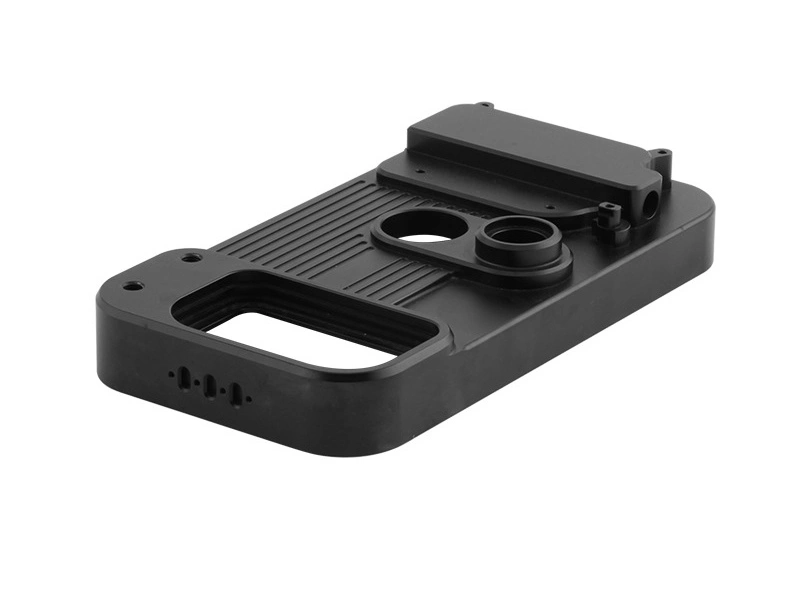
Aluminum is the broadest starting point for low-mass parts and efficient milling. Aluminum 6061 in T6 condition suits many brackets and housings, while Aluminum 7075-T6 is screened when higher strength matters. Thin walls can spring after unclamping, and hard anodizing can reduce bore size, so critical features need inspection in the final condition.
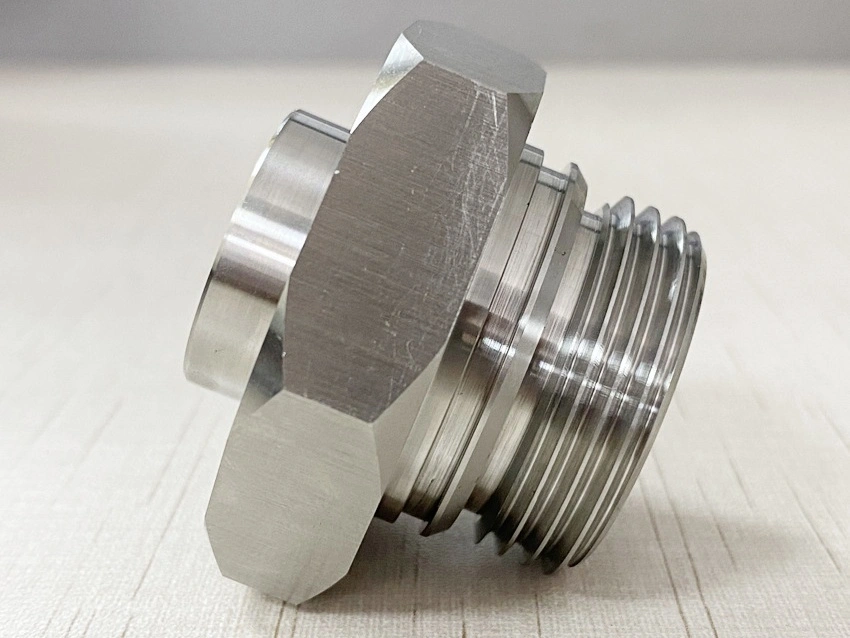
Stainless steel is preferred when the chosen grade and finish meet the actual corrosion environment. Stainless Steel SUS304 and Stainless Steel SUS316 are not interchangeable across every medium. Heat and work hardening can accelerate tool wear, so the quote needs grade, product condition, exposure, finish, and inspection requirements. The stainless steel CNC machining guide covers that process in more detail.
Carbon steel is often the best value choice when strength, machinability, and budget all matter. 1018 Steel, 1045 Steel, and 4140 Steel suit shafts, bases, fixtures, and power-transmission parts. Hardness and heat-treatment stage can change tool life, distortion risk, and price; corrosion exposure also requires a specified finish.
Brass can hold fine threads and details efficiently when the specified alloy is free-machining. Brass C360 is one such option, but its composition may not satisfy every potable-water, food-contact, or restricted-substance requirement. Put the exact alloy and compliance requirement on the drawing instead of accepting a generic brass substitution.
Copper is selected when thermal or electrical conductivity is the main requirement. Copper C101 (T2) and Copper C110 (TU0) suit busbars, electrodes, and heat-spreading parts. Ductility can increase burrs, smearing, and flatness change, so the drawing needs a burr limit, functional datum, plating condition, and conductivity requirement.
Titanium is justified when specific strength or corrosion performance offsets lower machining productivity. Ti-6Al-4V (TC4) concentrates cutting heat near the tool, while worn edges increase burrs and surface risk. A material certificate confirms grade and condition; the drawing separately defines thin walls, critical surfaces, and inspection. See titanium CNC machining for process context.
4. Where Engineering Plastics Fit
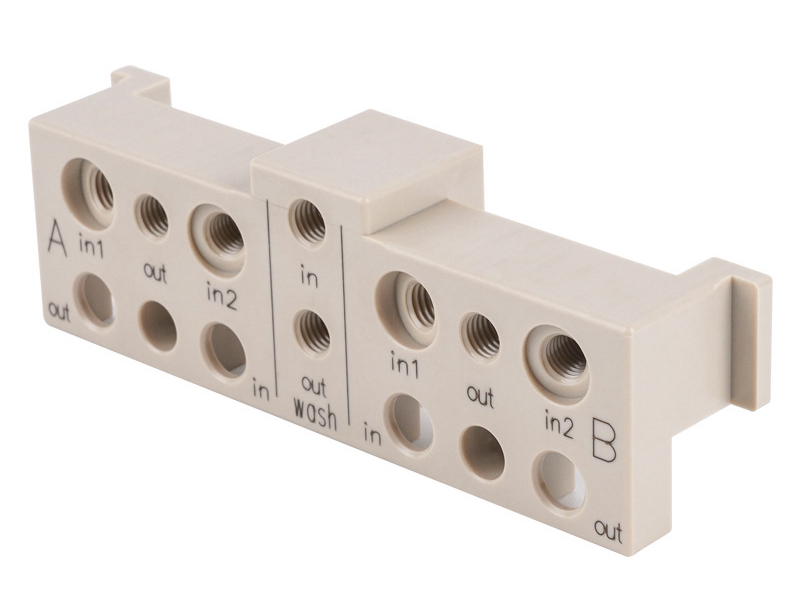
Engineering plastics fit parts that need low mass, insulation, low friction, or compatible media resistance without metal-level stiffness. Useful options include Acetal (POM), PEEK, PTFE, Polycarbonate (PC), and ABS.
POM machines cleanly for guides and fixtures, PEEK serves higher thermal and mechanical demands, and PTFE favors chemical resistance over rigidity. Plastic dimensions can change with stock stress, moisture, heat, and clamping. Inspect critical sizes after conditioning and unclamping at the drawing's stated temperature. For broader tradeoffs, see metal vs plastic CNC machining and plastic CNC machining.
5. When Engineered Ceramics Earn the Cost
Engineered ceramics earn their cost when electrical insulation, wear, or temperature performance cannot be met by a metal or polymer. Alumina (Al2O3), Zirconia (ZrO2), and Silicon Carbide (SiC) have different fracture, thermal, and finishing behavior, so the composition must be explicit.
Green machining before firing and grinding a fired ceramic are different routes because firing changes size while fired stock carries greater chipping risk. The RFQ must identify the material system, supplied state, edge acceptance, datum scheme, and final measurement method before a tolerance is treated as feasible.
6. Quick Material Selection Guide
If your part needs... | Recommended Materials |
|---|---|
Fast machining and low weight | Start with 6061-T6; compare 7075-T6 for strength, or ABS/POM after stiffness and temperature checks |
Corrosion resistance in wet environments | Screen SUS304, SUS316, titanium, or PEEK against the actual medium, temperature, cleaning, and finish |
High strength at reasonable cost | Compare 1045 and 4140 at the specified hardness; add stainless only when corrosion justifies its machining cost |
Electrical or thermal conductivity | Use the specified copper, brass, or aluminum grade after setting a conductivity target and plating condition |
Biocompatibility or aerospace-grade performance | Use certified Ti-6Al-4V or the specified stainless grade with application-specific traceability and inspection |
High wear or extreme heat resistance | Compare service temperature, wear mechanism, edge risk, and finishing route for ceramics, hardened steels, or superalloys |
7. Complete the Material Decision in the RFQ
Aluminum is the practical default only when its grade, temper, wear limit, and final finish suit the part. Stainless steel, carbon or alloy steel, brass, copper, titanium, engineering plastics, and ceramics become better choices when corrosion, load, conductivity, insulation, temperature, or wear sets the priority. No material name by itself establishes achievable tolerance or surface finish.
For a useful CNC Machining quotation, provide the drawing, exact material specification and condition, stock or certification requirement, service environment, critical datums, finish, production quantity, and inspection method. Ask the supplier to identify material-driven risks and any dimensions that require verification after unclamping, heat treatment, coating, conditioning, or firing.