Stainless Steel CNC Machining: Everything You Need To Know
Introduction: Stainless Steel — Outstanding Performance, Demanding Machinability
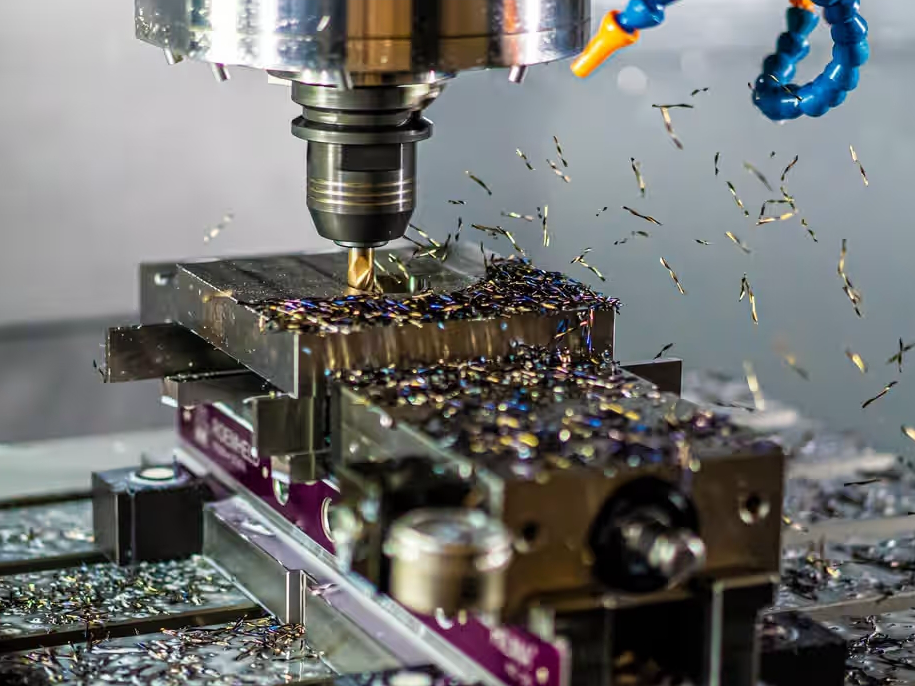
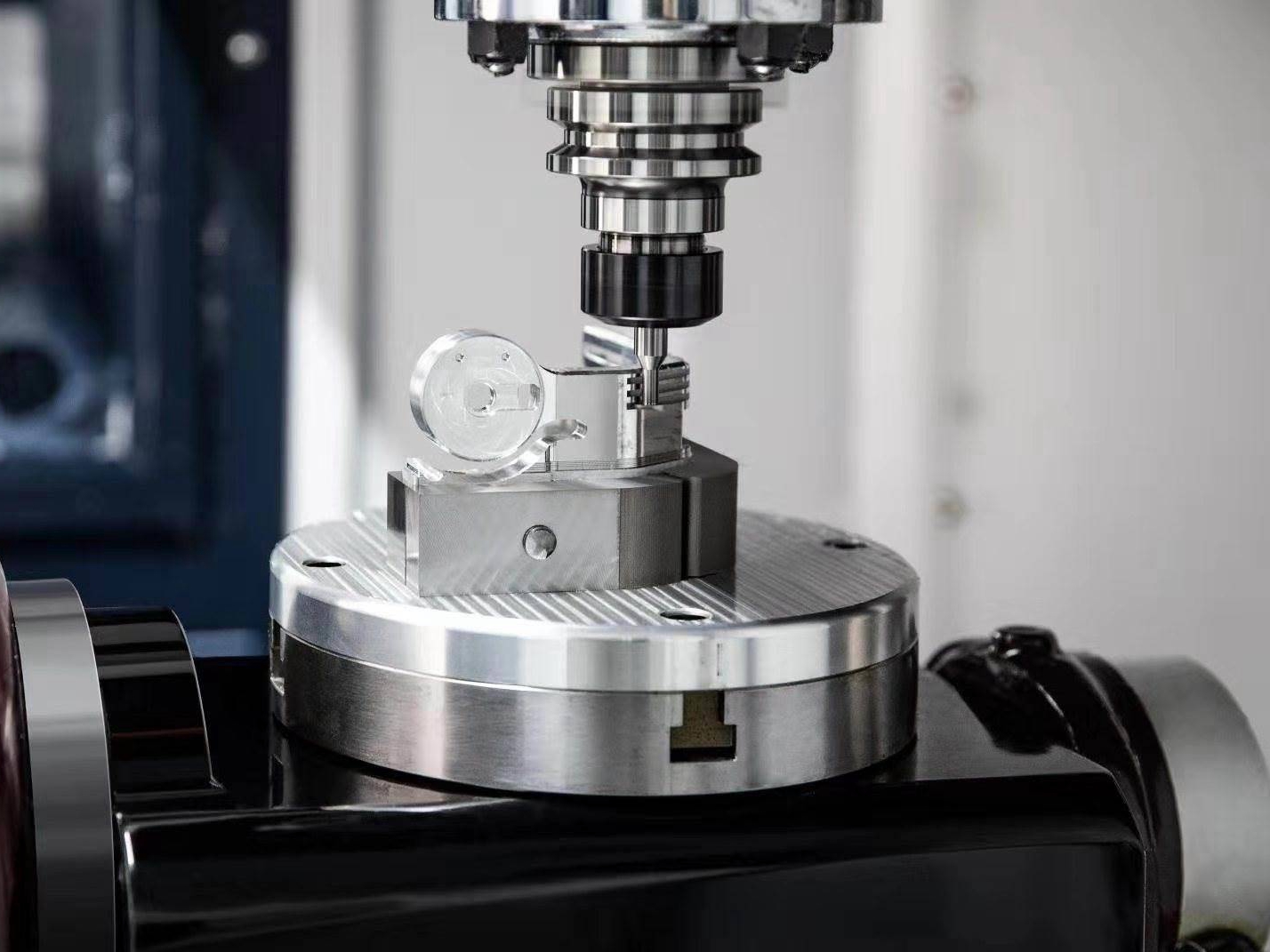
Stainless steel CNC machining produces corrosion-resistant, strong, and clean-looking precision parts, but it needs grade-specific tooling, stable chip load, heat control, workholding, post-processing, and inspection. The material family is not difficult because of one single problem. Stainless steel combines high strength, low thermal conductivity, adhesive wear, and work-hardening behavior, so a machining plan must protect both dimensions and surface integrity from the first setup to final inspection.
A useful stainless steel CNC machining services review should answer five buyer questions before production starts. It should identify the stainless grade, stock condition, force- or heat-sensitive features, required surface treatment, and finished-part inspection method. This guide covers the material families, cutting risks, process controls, grade-specific cautions, finishing options, quality checks, applications, and RFQ details that decide whether stainless steel parts are manufacturable at the required cost and tolerance.
Understanding Stainless Steel Families: Three Core Types and How to Choose
Austenitic Stainless Steel: Non-Magnetic, Corrosion Resistant — and Tough to Machine
Austenitic stainless steels are the common choice for corrosion-resistant CNC parts when weldability, formability, cleaning, and general chemical resistance matter. They usually contain significant chromium and nickel, and many 300-series grades are non-magnetic in annealed condition. Typical machining choices include SUS303, SUS304, and SUS316. SUS303 improves chip breaking with sulfur additions, but that benefit reduces weldability and corrosion resistance compared with SUS304. SUS304 is a balanced general-purpose grade. SUS316 adds molybdenum for better pitting resistance in many chloride environments, but chloride temperature, crevices, stress, and cleaning chemistry still need review.
Martensitic Stainless Steel: High Hardness, Heat-Treatable, Wear-Resistant
Martensitic stainless steels are selected when hardness, wear resistance, edge strength, or mechanical strength is more important than maximum corrosion resistance. Common examples include SUS420 and SUS440C. These grades can be machined in an annealed or softened state, then hardened and tempered when the drawing requires high hardness. The buyer decision is the operation sequence: rough before heat treatment for easier cutting, leave enough stock for movement, then finish machine, grind, or hard turn critical surfaces after hardening when size and edge condition must be controlled.
Precipitation Hardening Stainless Steel: Ultra-High Strength with Controlled Heat Treatment
Precipitation-hardening stainless steels are chosen when high strength and better corrosion resistance than many martensitic grades are needed together. A key representative is SUS630 (17-4PH). The material condition matters more than the name alone. Solution-treated stock often machines differently from aged H900, H1025, or H1150 conditions, and aging temperature can change strength, toughness, hardness, and dimensional stability. RFQs should state the required condition, heat-treatment responsibility, certificate requirement, and whether final dimensions apply before or after aging.
Four Key Challenges in Stainless Steel CNC Machining & How to Control Them
1. Work Hardening: Mechanism, Risks, and Control
Work hardening is the main reason stainless steel cannot be machined with rubbing cuts or repeated light spring passes. Austenitic grades can harden locally when the tool dwells, slides, pecks poorly, or re-cuts a surface left by the previous pass. The hardened layer increases cutting force, damages the next tool edge, and can create burrs, poor surface finish, or bore-size drift.
Use enough depth of cut to remove material below the work-hardened layer left by the previous pass.
Keep cutting edges sharp and suitable for stainless steel so the tool shears instead of pushes.
Avoid dwell, rubbing, and repeated ultra-light passes on holes, shoulders, slots, and thin walls.
Confirm feed, speed, and coolant so chip formation carries heat away without creating a glazed surface.
2. High Cutting Forces: Tool Geometry and Parameter Optimization
High cutting forces in stainless steel can bend thin walls, shift datums, loosen weak fixtures, and produce chatter before the operator sees a broken tool. In CNC milling, the practical control is to reduce radial load while keeping chip thickness high enough to cut cleanly. Force direction also matters. Finishing passes should push into support whenever possible, not away from the fixture.
Use positive rake geometry when the grade and feature allow lower cutting pressure without sacrificing edge strength.
Select clearance angle, helix, flute count, and corner radius according to wall height, tool reach, and interruption level.
Use step-down, step-over, and entry strategies that keep engagement stable through corners and slot exits.
Balance cycle time with fixture stiffness, tool stick-out, wall support, finish allowance, and inspection risk.
3. Tool Wear: Adhesion, Built-Up Edge, and Diffusion
Tool wear in stainless machining often starts as built-up edge, flank wear, notch wear, or crater wear, then appears as burr growth, rougher surfaces, oversized holes, thread damage, or inconsistent chamfers. Adhesive wear is common because hot stainless chips can stick to the edge. A tool-life plan should be linked to the part feature, not only to minutes of cutting time.
Choose fine-grain carbide substrates or suitable inserts that balance edge toughness, hot hardness, and wear resistance.
Apply PVD coatings, such as TiAlN, AlTiN, or AlCrN, only when speed, coolant, and edge geometry suit the operation.
Separate roughing tools from finishing tools when a sharp finish edge must protect burr size or surface roughness.
Replace or offset tools based on measured drift, burr condition, surface finish, and known wear pattern before scrap appears.
4. Heat Management: Cooling Strategy and Thermal Distortion Control
Stainless steel has lower thermal conductivity than many carbon steels, so heat stays near the cutting zone and tool edge. Poor cooling accelerates wear, changes part size during machining, and can leave surfaces that fail corrosion or cosmetic requirements after finishing. Heat control is a process variable, not an afterthought.
Use coolant pressure and volume that reach the chip-forming zone; deep holes and pockets may need through-tool delivery.
Match coolant chemistry, concentration, cleanliness, and pH to stainless cutting and downstream cleaning requirements.
Remove chips quickly so hot or gummy chips do not pack against thin walls, threads, slots, or blind features.
For close-tolerance parts, define whether final inspection occurs after cooling to a stable measurement condition.
Complete Process Strategy for Stainless Steel CNC Machining
Tooling Strategy: Substrate, Geometry, and Coating
A stainless steel tooling strategy should start from grade, hardness, feature depth, interruption, coolant access, and surface requirement. Fine-grain carbide is a common baseline, but the edge preparation and coating must match the failure mode. A sharp positive edge helps reduce work hardening; a stronger edge may be safer for interrupted cuts or hard skin.
Positive rake can reduce cutting force, especially on gummy austenitic grades and thin-walled parts.
Reinforced cutting edges help resist micro-chipping under interrupted cuts, keyways, cross-holes, and hard spots.
Sharp, honed, and well-controlled edges reduce rubbing, built-up edge, burr growth, and surface tearing.
For finishing, TiAlN or AlCrN coated carbide may improve heat resistance and wear behavior when the process runs hot. The coating is not a substitute for correct chip load. If the tool rubs, coating failure and work hardening can still occur quickly.
Cutting Parameters: Matching Speed, Feed & DOC to Each Grade
Cutting parameters must be treated as a starting window, not a universal promise. For SUS304 milling with carbide tooling, stable coolant, and adequate rigidity, a screening range might use moderate cutting speed, feed per tooth that avoids rubbing, and radial engagement controlled to limit heat. The exact number depends on cutter diameter, flute count, tool stick-out, wall support, machine rigidity, and surface finish target.
Cutting speed: often screened around 80–120 m/min for many SUS304 milling operations with carbide.
Feed per tooth: often screened around 0.08–0.15 mm/z when tool diameter, flute count, and rigidity allow it.
Axial DOC: commonly reduced for finishing or thin walls; roughing depth depends on tool reach and fixture support.
Radial DOC: lower engagement can reduce heat and force, especially in dynamic milling or long-reach tools.
For high-precision features, the safer route is roughing allowance, a stable semi-finish state, temperature recovery if needed, and final finishing from consistent datums. RFQs should identify critical bores, sealing faces, thread fits, wall thickness, and any features measured after unclamping.
Coolant Strategy: Type, Concentration, and Delivery
Coolant for stainless steel should manage heat, lubrication, chip evacuation, corrosion cleanliness, and post-process compatibility. Emulsion, semi-synthetic fluid, through-tool coolant, flood delivery, air blast, or mist can all be valid under different feature conditions. Concentration and cleanliness should be controlled because weak coolant can increase heat and dirty coolant can affect surface condition.
Reduce cutting-zone temperature so heat does not concentrate in the tool edge or thin part wall.
Prevent chip re-cutting, chip packing, built-up edge, and local scratching in slots or blind pockets.
Improve surface finish and tool life when delivery actually reaches the cutting interface.
Fixturing & Workholding: Rigidity Without Distortion
Workholding must resist stainless cutting force without bending the part into a false shape. Thin walls, long slots, shallow bosses, and multi-side features need support near the cut. The fixture plan should define datum contact, clamp sequence, jaw pressure, release measurement, and whether the part is accepted in fixture or free state.
Use soft jaws, custom contour jaws, support pads, or vacuum fixtures when standard clamping would distort thin features.
Add local support near thin walls and leave temporary stock when the final wall cannot resist roughing force.
Apply process sequencing: roughing, optional stress relief, semi-finishing, free-state review, and final finishing.
Leverage multi-axis machining when it shortens tool reach, reduces re-clamping, or directs cutting force into stronger support.
Machining Insights for Key Stainless Steel Grades
SUS303: Optimized for Machinability
SUS303 is usually selected when productivity, chip breaking, and stable turning or milling matter more than welding or maximum corrosion resistance. Sulfur additions help chips break, lower cutting force, and reduce built-up edge compared with many austenitic grades. The tradeoff is important: SUS303 is not the best choice for welded assemblies, harsh chloride exposure, or parts that depend on the same corrosion margin as SUS304 or SUS316. Buyers should state whether machinability, corrosion exposure, cosmetic surface, or joining controls the material decision.
SUS304: The General-Purpose Standard
SUS304 is a common default for machined stainless parts because it balances cost, availability, strength, and general corrosion resistance. It is also easy to underestimate. SUS304 can work-harden, smear, form burrs, and drift thermally if feeds are too light or coolant is poor. For demanding applications, passivation may be specified after machining to remove free iron and support passive-film recovery. It does not fix poor deburring or deep machining damage.
SUS316: Mo-Alloyed, Higher Demands
SUS316 and SUS316L are chosen for improved pitting resistance in many chloride or chemical environments, but they are often tougher and slower to machine than SUS303 or SUS304. The machining plan should avoid dwell, use stable feed, control heat, and treat small holes and threads carefully. The buyer should not select SUS316 only by name; chloride concentration, temperature, crevice geometry, cleaning chemistry, and stress condition decide whether the grade is suitable.
SUS420: Coordinating Machining with Heat Treatment
SUS420 should be planned around hardness and heat-treatment sequence. In annealed condition, roughing and semi-finishing are easier; after hardening, the part may need grinding, hard turning, or carefully selected finishing tools. The practical risk is movement after heat treatment. For medical tools, blades, shafts, and wear parts, the RFQ should define final hardness, corrosion exposure, edge condition, surface finish, and whether critical dimensions are verified after heat treatment.
Surface & Post-Treatment Solutions for Stainless Steel Parts
Mechanical Finishing: Blasting, Polishing, Brushing
Mechanical finishing changes appearance, roughness, edge condition, and sometimes functional dimensions. The process should be selected by requirement, not by appearance alone.
Bead blasting can create a uniform matte texture, but media type and masking matter for sealing faces and threaded areas.
Mechanical polishing can improve appearance and cleanability, but it may round edges or change flatness if not controlled.
Brushed finishes create directional grain; specify grain direction when appearance, wear path, or cleaning direction matters.
For food-contact, sanitary, or cleanability-critical components, roughness should be tied to the actual cleaning method and acceptance requirement. A low Ra number alone does not prove that a part is free of burrs, crevices, embedded media, or contamination traps.
Chemical Treatments: Passivation, Electropolishing, Coloring
Passivation removes free iron and supports chromium oxide film recovery after machining. Electropolishing removes a controlled surface layer, smooths micro-peaks, and can improve cleanability when geometry and material-removal allowance are suitable. Chemical coloring and oxide-film technologies should be treated as appearance processes unless the drawing separately defines wear, corrosion, or cleaning performance.
Advanced Surface Technologies: PVD Coatings & High-End Electropolishing
PVD coatings can improve surface hardness, reduce friction, or provide color on stainless steel when substrate preparation, coating temperature, adhesion, thickness, and edge geometry are compatible. High-end electropolishing is often considered for medical and food-processing components where lower residue retention and easier cleaning are more important than a purely decorative shine. Buyers should define allowed coating thickness, critical fits, masking areas, and post-process inspection.
Quality Control Essentials in Stainless Steel CNC Machining
Dimensional & Geometric Accuracy
Dimensional accuracy in stainless steel depends on tool condition, heat, fixture support, material stress, and inspection state. A machine's positioning capability is not the same as finished-part tolerance. For close-tolerance parts, define datums, measurement temperature, fixture/free-state inspection, and whether surface treatment happens before final measurement.
Use staged machining with controlled stock allowances so roughing stress and heat do not define the final size.
Stabilize machine, coolant, and part temperature when thermal drift could affect close tolerances.
Apply in-process inspection and compensation with CMM, probes, gauges, or functional checks when appropriate.
For very tight parts, review stress relief, aging, or a rest period before final finishing and final inspection.
Surface Integrity: Beyond Roughness Numbers
Surface integrity means roughness, burr condition, embedded contamination, heat tint, tearing, micro-cracks, and smeared metal. A part can meet an Ra value and still fail if the burr folds into a sealing face or free iron remains on a corrosion-critical surface.
Surface roughness measurements should match the functional surface, measurement direction, cutoff, and drawing callout.
Microscopic inspection can reveal tears, laps, micro-cracks, folded burrs, or smeared material near holes and edges.
Metallographic checks may be required when heat, grinding, or severe deformation could change the surface layer.
This review is especially important for parts used in chemical processing, pressure systems, hygienic equipment, or medical environments where surface defects become corrosion, cleaning, or fatigue risks.
Corrosion Performance Verification
Corrosion performance verification should match the service environment instead of relying only on the stainless grade name. Machining contamination, heat tint, crevices, rough surfaces, and wrong finishing can all reduce corrosion behavior.
Neutral salt spray can be used as a comparative screening test when the specification calls for it.
Visual and microscopic inspection after exposure can identify rust sites, pits, crevice attack, or surface contamination.
Electrochemical tests, such as pitting potential, may be useful for highly critical components with defined test methods.
When issues appear, the corrective review should trace material certificate, machining sequence, tool wear, coolant, deburring, passivation or electropolishing, cleaning, and inspection records before changing the material or approving production.
Typical Applications of Stainless Steel CNC Machining
Medical Sector: Surgical Instruments, Implants, Housings
In the medical device industry, stainless steel is used for instruments, housings, fixtures, and some components that need corrosion resistance, sterilization compatibility, and cleanable surfaces. Implant or patient-contact use requires material grade, standard, surface finish, cleaning, traceability, and regulatory review beyond ordinary CNC machining. RFQs should separate prototypes, non-implant instruments, and regulated components because inspection and documentation needs are not the same.
Food & Beverage: Hygienic Components and Systems
Food and beverage components often need smooth transitions, controlled roughness, cleanable bores, corrosion-resistant surfaces, and burr-free edges. Common machined parts include guide components, fittings, valves, pump parts, brackets, and housings. The buyer should define cleaning chemistry, contact surface requirements, drainage, dead-zone limits, and whether passivation or electropolishing is required after machining.
Chemical & Marine: Corrosion-Critical Structures
Chemical, offshore, and marine stainless parts may involve pump bodies, valve components, manifolds, shafts, flanges, and fittings. Material choice should consider chloride concentration, temperature, crevice geometry, pressure, and maintenance exposure. Components with internal passages or sealing interfaces may benefit from multi-axis CNC because shorter tools and fewer setups can improve access, datum control, and surface consistency.
Why Partner with Neway for Stainless Steel CNC Machining
A useful Neway stainless steel machining review should connect material selection, DFM, cutting strategy, fixturing, finishing, and inspection into one documented route. The value for buyers is not a generic promise that every stainless part is easy. The value is identifying where a part may work-harden, distort, trap burrs, lose corrosion performance, or require post-process inspection before the RFQ becomes a production order.
With an integrated one-stop service request, the RFQ should define grade, material condition, drawing revision, critical datums, tolerance priorities, wall risks, burr limits, surface finish, passivation or electropolishing needs, inspection reports, and delivery stage. Those inputs allow machining, heat treatment, surface finishing, and quality checks to be planned as one process chain rather than corrected after a mismatch appears.
FAQ
How do I choose the right stainless steel grade for my application?
What common stainless steel machining mistakes should be avoided?
How do passivation or electropolishing improve corrosion resistance?
What precautions are necessary for machining thin-walled stainless steel?
How does Neway ensure stable quality in stainless steel machining?