Dominando a Usinagem CNC de Titânio: Propriedades-Chave para Alto Desempenho
Introdução: A Base de Peças de Titânio de Alto Desempenho — Compreensão Profunda das Propriedades do Material
Através de anos de prática em manufatura de precisão na Neway, chegamos a reconhecer firmemente uma verdade central: para produzir componentes de liga de titânio verdadeiramente de alto desempenho, é necessário primeiro compreender profundamente as propriedades intrínsecas do material. Essas propriedades não apenas definem os limites de desempenho final de uma peça, mas também orientam diretamente o planejamento de toda a rota do processo de usinagem. Como uma equipe de engenharia especializada em serviços de usinagem CNC de titânio há muitos anos, testemunhamos inúmeros casos em que o entendimento insuficiente do comportamento do material levou a componentes que não atenderam às expectativas de desempenho.
As ligas de titânio tornaram-se o material de escolha em campos de alta tecnologia, como aeroespacial e dispositivos médicos, precisamente devido à sua combinação única de propriedades. No entanto, essas vantagens também trazem desafios distintos de usinagem. Somente compreendendo plenamente os princípios científicos por trás dessas características podemos utilizar processos de usinagem de precisão para liberar todo o seu potencial e fabricar peças verdadeiramente de alto desempenho que resistam às demandas do mundo real.
Propriedade-Chave I: Excelente Relação Resistência-Peso e Seu Impacto na Usinagem
A característica mais marcante das ligas de titânio é sua excepcional relação resistência-peso. Por exemplo, a amplamente utilizada Ti-6Al-4V (TC4) oferece resistência comparável a certos aços ligados, sendo aproximadamente 40% mais leve. Isso a torna um material chave para redução de peso em aplicações aeroespaciais, mas também impõe requisitos específicos aos processos de usinagem.
Durante a usinagem, a alta resistência das ligas de titânio exige forças de corte maiores, o que significa que as máquinas-ferramenta devem fornecer rigidez suficiente e as ferramentas de corte devem oferecer excelente resistência ao desgaste. Em nossos serviços de fresamento CNC, observamos que as forças de corte para ligas de titânio podem ser aproximadamente 50% maiores do que as do alumínio, exigindo ajustes correspondentes nos parâmetros do processo e no design da fixação. Isso é especialmente crítico para estruturas de paredes finas, onde altas forças de corte podem causar facilmente deformação; abordamos isso através de trajetórias de ferramenta otimizadas e estratégias de suporte especializadas.
Propriedade-Chave II: Baixa Condutividade Térmica e Estratégias de Gestão Térmica
Acúmulo de Calor: Uma Ameaça Dupla à Vida da Ferramenta e à Qualidade da Peça
As ligas de titânio possuem condutividade térmica muito baixa — cerca de 1/16 da do alumínio puro —, portanto, o calor gerado durante a usinagem não pode ser dissipado rapidamente. Em nossos serviços de torneamento CNC, observamos que quase 80% do calor de corte se acumula na face de saída da ferramenta, causando aumento rápido da temperatura e desgaste acelerado da ferramenta. Mais criticamente, o superaquecimento localizado pode alterar a microestrutura da superfície, formando uma camada embritada de "casca alfa" que degrada severamente o desempenho à fadiga.
Soluções de Resfriamento Especializadas e Ajustes de Parâmetros para Baixa Condutividade Térmica
Para enfrentar esse desafio, desenvolvemos estratégias de resfriamento dedicadas. Ao usinar implantes médicos de Ti-6Al-4V ELI (Grau 23), utilizamos sistemas de refrigerante de alta pressão através da ferramenta a 70–100 bar, garantindo que o refrigerante penetre na barreira do cavaco e alcance a interface ferramenta-cavaco. Ao mesmo tempo, otimizamos os parâmetros de corte usando velocidades de corte relativamente baixas e avanços moderados para controlar efetivamente a temperatura enquanto mantemos a produtividade.
Propriedade-Chave III: Tendência Significativa ao Encruamento e Como Gerenciá-la
As ligas de titânio exibem uma tendência notável ao encruamento durante a usinagem, impulsionada por seu índice de encruamento relativamente alto e baixa condutividade térmica. Em nossos serviços de usinagem de precisão, frequentemente encontramos o seguinte fenômeno: se uma ferramenta desgastada corta repetidamente sobre uma superfície já usinada, a vida da ferramenta cai drasticamente porque essa superfície endureceu aproximadamente 20–30%.
Utilizamos múltiplas estratégias para controlar o encruamento. Primeiro, garantimos sempre arestas de corte afiadas, evitando o uso de ferramentas desgastadas que "esfregam" em vez de cortar a camada endurecida. Segundo, aplicamos profundidade de corte suficiente para que cada passe engaje abaixo da zona encruada. Ao usinar a liga de titânio Beta C, o controle preciso do processo nos permite limitar a profundidade da camada endurecida a menos de 0,1 mm, preservando o desempenho à fadiga do componente.
Propriedade-Chave IV: Alta Reatividade Química e Compatibilidade com Ferramentas
Em temperaturas elevadas, as ligas de titânio exibem alta reatividade química — especialmente acima de 500°C, onde tendem a reagir com a maioria dos materiais de ferramentas, resultando em desgaste por difusão e adesivo. Esse comportamento é particularmente pronunciado em nossos serviços de usinagem multi-eixo, onde trajetórias de ferramenta complexas causam flutuações na temperatura da ferramenta.
Abordamos esse desafio selecionando revestimentos de ferramentas adequados. Os revestimentos AlTiN e TiAlN, com sua excelente estabilidade térmica e menor condutividade térmica, são nossas escolhas principais. Eles formam uma barreira protetora que reduz o contato direto entre o titânio e o substrato da ferramenta. Ao usinar peças estruturais de alta resistência feitas de Ti-10V-2Fe-3Al (Grau 19), também prestamos muita atenção à química do refrigerante, escolhendo fluidos de corte sem cloro para prevenir trincas por corrosão sob tensão.
Propriedade-Chave V: Excelente Resistência à Corrosão e Biocompatibilidade
As ligas de titânio formam naturalmente um filme de óxido fino, denso e estável (principalmente TiO₂) em sua superfície. Com apenas alguns nanômetros de espessura, este filme fornece outstanding resistência à corrosão. Na fabricação de dispositivos médicos, esta propriedade, combinada com excelente biocompatibilidade, torna as ligas de titânio a escolha ideal para implantes. No entanto, durante a usinagem, devemos ter cuidado para preservar e aprimorar esta camada protetora.
Utilizamos tratamentos de passivação para reconstruir e fortalecer este filme de óxido. Ao usinar componentes aeroespaciais de liga de titânio TA15, controlamos rigorosamente as temperaturas do processo para evitar crescimento excessivo de óxido ou mudanças na composição. Para aplicações mais exigentes, também oferecemos serviços de oxidação por arco micro para gerar revestimentos cerâmicos mais espessos e resistentes ao desgaste.
Propriedade-Chave VI: Módulo de Elasticidade e Desafios de Controle de Deformação
As ligas de titânio possuem um módulo de elasticidade relativamente baixo — cerca de metade do do aço —, o que as torna mais propensas à deflexão elástica durante a usinagem. Em serviços de retificação CNC para peças de paredes finas, esse efeito de "afastamento da ferramenta" é particularmente evidente e impacta diretamente a precisão dimensional. Contrapomos isso com fixações otimizadas e estratégias de usinagem em etapas.
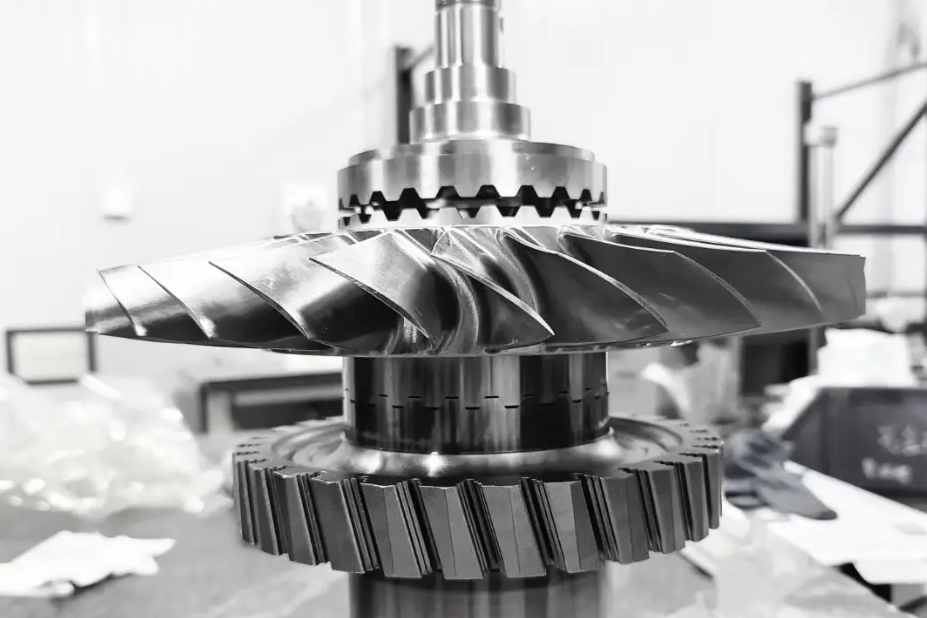
Ao usinar pás de compressor de Ti-5Al-2.5Sn (Grau 6), por exemplo, utilizamos dispositivos de fixação com suporte de contorno para estabilizar a peça durante a usinagem. Também empregamos análise de elementos finitos para prever a distribuição de tensões e, em seguida, planejamos a sequência de usinagem adequadamente — processando primeiro as regiões mais rígidas e depois as áreas de paredes finas — para minimizar a deformação. Em nossos serviços de usinagem de 5 eixos, otimizamos ainda mais as orientações da ferramenta para garantir que as forças de corte sejam direcionadas ao longo das direções mais rígidas da configuração.
Das Propriedades ao Processo: A Filosofia da Neway para Usinagem de Titânio de Alto Desempenho
Na Neway, desenvolvemos uma metodologia abrangente de usinagem de titânio que integra estreitamente as propriedades do material com o design do processo. Desde o início — seleção do material — consideramos o ambiente de aplicação final do componente. Para peças estruturais aeroespaciais com requisitos de confiabilidade extremamente altos, podemos recomendar titânio comercialmente puro Grau 2, cuja excelente conformabilidade e soldabilidade são vantajosas para estruturas complexas.
Durante o desenvolvimento do processo, combinamos serviços de EDM (Usinagem por Descarga Elétrica) com corte convencional para lidar com geometrias desafiadoras. Especialmente em nossos serviços de manufatura de baixo volume, essa abordagem flexível permite resposta rápida a requisitos personalizados, mantendo a qualidade e a consistência.
Nosso sistema de serviço completo (one-stop) garante controle rigoroso em cada etapa, desde o material até o produto acabado. Em serviços de produção em massa, fluxos de trabalho padronizados e monitoramento contínuo do processo garantem que cada peça atenda ao mesmo alto padrão de qualidade. Seja no setor aeroespacial ou automotivo, fornecemos soluções confiáveis de usinagem de titânio apoiadas por expertise profissional e controle rigoroso do processo.
Para componentes que operam em ambientes químicos agressivos, como os utilizados em equipamentos de processamento químico, prestamos atenção especial à preservação da resistência inerente à corrosão do titânio. Através de processos de usinagem otimizados e tratamentos de superfície apropriados, garantimos desempenho estável a longo prazo sob condições exigentes.
Perguntas Frequentes (FAQ)
Quais diferenças de desempenho e usinabilidade existem entre TC4 e TC4 ELI?
Qual método de resfriamento supera melhor a baixa condutividade térmica do titânio?
Como a forma do cavaco pode indicar condições ótimas de usinagem de titânio?
Quais revestimentos de ferramenta funcionam melhor para usinar ligas de titânio?
Quais etapas de usinagem garantem alta resistência à fadiga em componentes de titânio?