Controlling Impeller and Wear Ring Fit in a Small-Batch Pump Project
Controlling Impeller and Wear Ring Fit in a Small-Batch Pump Project
A small-batch closed pump impeller posed a fit-control problem that extended beyond machining any one surface. The product comprised a casting-derived impeller and associated wear rings, with drawing requirements at the interfaces brought together later. Its planned sequence separated casting, machining, assembly, inspection, and balancing. Decisions about the ring-mating fit therefore had to be positioned before each stage changed how the features could be reached or checked. This impeller wear ring machining case study shows how a supplier can structure those decisions for an industrial equipment project: select the right machining condition, place checkpoints before critical transitions, and use each available record for the engineering question it can answer.
Why the Fit Problem Extends Beyond One Turning Operation
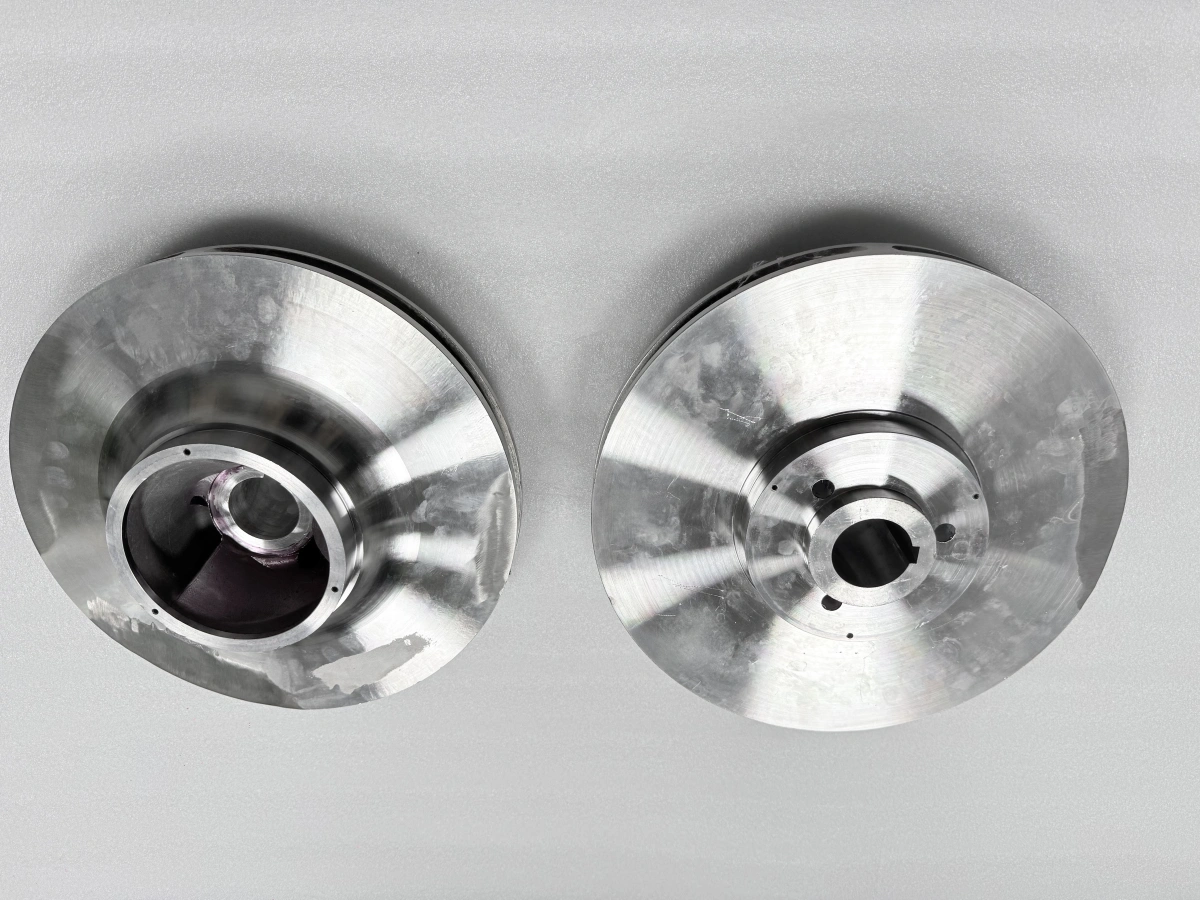
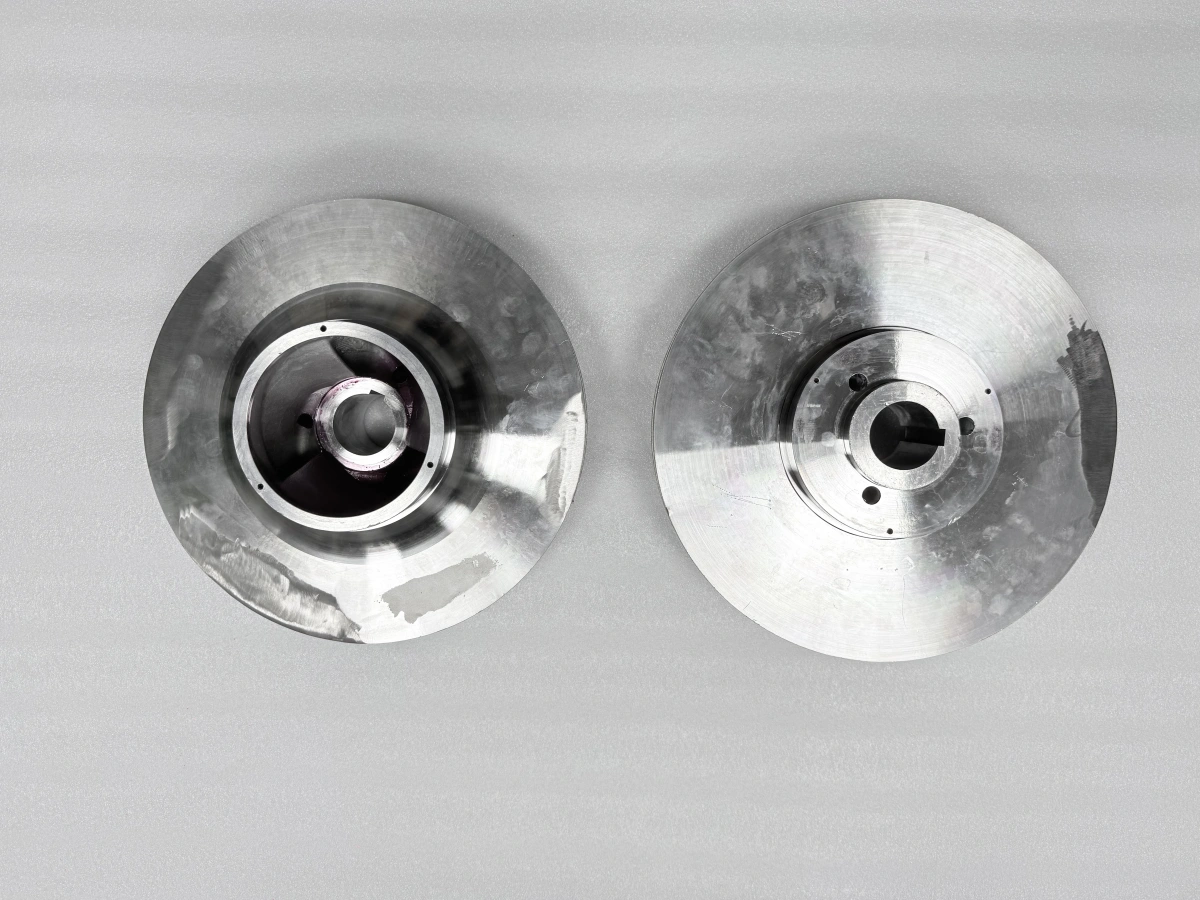
The drawing and the planned inspection stages distinguish a casting-derived impeller body from the interfaces that require later machining. The broader CNC machining question is therefore not how to turn the whole impeller from solid stock. It is how to prepare the specified bores, faces, and ring-related surfaces so the wear-ring fit remains traceable when the parts are brought together. Casting-stage geometry, separately machined features, and the assembled fit each carry a different manufacturing context.
The wear rings create the decisive boundary. They can be considered as separate components during their own machining, yet their working surfaces must align with the impeller mating features defined by the drawing. Engineering discussion for this project also identified assembly finish-machining as a possible method for controlling a common datum and fit relationship. That possibility changes the planning question from “Which feature is turned next?” to “Should separate parts or the assembly govern the final machining?”
Convert the Drawing Relationship into a Machining-State Decision
A suitable method would first group each relevant feature by when it is controlled: at casting review, during separate machining, or after assembly. This keeps precision machining focused on the impeller-to-ring fit rather than on isolated features. The review should identify which drawing features are accessible before assembly, which stock must remain for later work, and whether the intended fit can be reproduced while the parts remain separate.
If separate machining can maintain the fit, the impeller and rings may follow their own controlled operations before assembly. If the assembled condition governs it more directly, engineering should evaluate a shared finishing setup. The choice would depend on drawing intent, available machining stock, access to the interface, and a workholding condition that represents the intended assembly reference. This is the first method decision because every later checkpoint depends on it.
Checkpoint One: Review the Casting-to-Machining Handoff
The first checkpoint should occur before the casting-derived interfaces are committed. The drawing supplies the machining and mating context, while the available casting dimensional record provides casting-stage context. Used together, they can support a review of which surfaces remain casting-derived, which interfaces are intended for machining, and which areas must stay available for the later ring-mating decision. The casting record does not replace the drawing; it brings casting documentation into the setup review before machining removes the opportunity to change the approach.
At this point, the proposed setup should also be checked against the next operation. The review would identify the impeller reference used for the relevant bore or face, the holding condition needed to reach that interface, and the feature that the following operation will use. This keeps the first setup tied to the specific wear-ring fit shown for the assembly instead of allowing a convenient holding surface to become the controlling reference.
Checkpoint Two: Review the Impeller and Wear Rings as a Mating Set
Before ring-related machining is released, the impeller body and wear rings should be reviewed as one interface set even when they are still separate parts. A turned-part axis and workholding plan would state the axis and axial reference used for the impeller interface, the corresponding reference for each ring, and whether the setup represents a free component or the assembly. This checkpoint asks whether separate machining leaves a direct, inspectable path back to the drawing requirement or whether assembly should supply the common reference.
The small-batch basis makes this checkpoint especially valuable. A mismatch in method selection would affect the limited set without the long production history available in a repeat program. The practical response is to settle the ring-mating strategy before final stock is consumed: keep separate machining when the relationship remains reproducible, or carry the decision forward to an assembly-state review when it does not.
Checkpoint Three: Decide Whether Assembly Finishing Belongs in the Route
The drawing fit and the recorded technical discussion support assembly finish-machining as a conditional option. If the relevant fit is governed in the assembled condition, a common reference can be established, the interface is accessible, and suitable stock remains, the supplier may select a shared finishing operation. For an internal bore or seat, CNC boring may be considered as part of that route. When those conditions are not present, the method should remain with separately controlled interfaces followed by the planned assembly and inspection stages.
This checkpoint should be resolved before the route moves from assembly planning to final interface machining. It would identify the setup condition, the drawing fit being established, the surfaces included in the operation, and the dimensional or assembly record expected afterward. That makes the decision traceable without turning an optional assembly method into a default instruction for every impeller project.
Use the ITP Stages as Engineering Gates
The customer inspection and test plan lists planned casting, machining, assembly, inspection, and balancing stages. A practical pump assembly process control approach would use those stages as gates for the decisions above. The casting gate would connect the drawing to the available casting record. The machining gate would confirm the selected part condition and ring-mating method. The assembly gate would confirm whether the interfaces remain separate or enter a shared finishing setup. The later inspection and balancing gates would identify the part or assembly configuration that each record is meant to describe.
This sequence keeps each engineering question close to the point where it can still influence the route. The ITP tells the team what needs to be controlled at that stage, while the project file shows which records are presently available for review.
Read the Available Records by Their Decision Purpose
The project file contains a casting dimensional record, radiographic and penetrant examination records, dimensional and assembly records, and a balancing record. In this case, their value comes from placing each beside the correct stage. The casting record supports the pre-machining review. The examination records document their respective examination contexts. The dimensional and assembly records carry the part or assembly context they describe, and the balancing record belongs to the balancing stage, where configuration matters to interpretation.
A focused quality assurance review should therefore ask which engineering question a document can answer. A casting-stage record cannot define the later impeller-to-ring fit by itself. An examination record does not replace the machining or assembly record. A balancing record cannot establish which interface method was selected earlier. Reading the records in ITP order gives each document a clear purpose and keeps the fit decision linked to the production condition documented at that point.
Concentrate Small-Batch Control at the Relevant Transitions
In low-volume manufacturing, control is most useful before an irreversible change in production condition. For this small batch impeller manufacturing case, the practical checkpoints would be the casting-to-machining transition, the separate impeller-and-ring review, and the choice between separate or assembly-state finishing. A concise route should record the drawing or plan reference, the decision due at that point, and the record expected next. This keeps attention on the fit instead of expanding the route into a generic machining procedure.
Review the Fit Strategy Before Releasing Final Turning
Before the final CNC turning scope is released, the drawing fit, selected machining condition, planned ITP stage, and next record should tell one consistent story. For a similar small-batch pump project, Neway can review the impeller and wear-ring drawings together, identify the transitions that affect the fit, and determine whether separate machining or conditional assembly finishing provides the clearer route.