Low-Volume Production Machining: Scale-Up, Cost, and Lot Stability
Low-Volume Production Machining: Scale-Up, Cost, and Lot Stability
Low-volume production machining is a controlled bridge between a proven prototype and repeatable supply. The right route protects the drawing revision, makes setup effort visible, establishes a realistic inspection plan, and shows how a small pilot lot can become a stable recurring lot without silently changing the part. Buyers should define the quantity range, the features that govern fit, the evidence required at each stage, and the conditions that trigger a review. A low-volume manufacturing service review is useful when it explains those control points rather than presenting a generic promise of fast production.
Define the Volume Window Before Choosing the Route
A low-volume program is not defined by a single order quantity. It is a window that includes the pilot, the first repeat lot, likely demand changes, and the point at which a different process becomes economical. State the expected quantities by revision, the forecast horizon, the acceptable split between lots, and whether parts will be released in one shipment or staged. A quantity of 20 pieces with a six-month forecast has a different planning problem from 200 pieces needed every month. Both are low volume, but fixture amortization, material purchasing, inspection sampling, and inventory exposure behave differently.
Separate confirmed demand from an estimate. Record the minimum and maximum lot sizes, likely engineering-change date, and storage conditions for unfinished or finished stock. This lets a supplier response show which assumptions are commercial and which are technical, without treating a low first quote as proof of long-term stability.
Give Pilot and Repeat Lots Different Acceptance Meaning
The pilot answers whether the design, process, fixture, and measurement plan work together. A repeat lot answers whether the same controls continue to work after material replenishment, tool wear, operator changes, and time between orders. Do not use a pilot report as an automatic capability study for every future lot. Instead, state which characteristics must be reconfirmed and which records may be sampled after the route is qualified. This distinction protects both sides when a small build is used to learn rather than to make a broad statistical claim.
Translate Design Intent Into Low-Volume Controls
Begin with interfaces, not with a machine list. Mark locating faces, sliding fits, threaded connections, load-bearing surfaces, sealing boundaries, and cosmetic zones on the controlled drawing. For each feature, identify the acceptance characteristic, the measurement state, and the consequence of drift. A hole that locates a cover may need a positional relationship to a datum; a hole that only clears a fastener may have a different risk. The same visible geometry can therefore require different controls depending on function.
Write the functional map before deciding how many operations to buy. The map should connect each critical characteristic to a datum scheme, an operation, a support condition, and a verification method. If a feature is accessible only after reorientation, note the transfer datum and the evidence that confirms it. If a thin wall can relax after unclamping, define whether it is measured supported, free, or in an assembled state. These notes prevent a low-volume route from becoming a collection of isolated dimensions that pass individually but fail at assembly.
Protect Revision Meaning Across Small Lots
Keep the drawing, model, inspection template, toolpath reference, and packaging label on one revision identifier. Small lots are vulnerable to mixed revisions when material is kitted early or parts wait in staging. The receiving record should identify the revision delivered, not only the revision quoted. If an urgent change is approved, isolate affected units and define a new first-piece check.
A CNC prototyping workflow can help expose revision risk, but the prototype file and the production file must remain distinguishable. A prototype drawing may contain temporary dimensions or learning notes that are not release requirements. The handoff should state which observations became controlled requirements and which were intentionally discarded.
Select a Process and Fixture That Can Repeat the Small Lot
Process selection should reflect feature access, material behavior, and the amount of setup repetition expected. Milling may provide efficient access to prismatic faces; turning may control rotational relationships; boring or grinding may be appropriate when a later operation must establish an internal or surface reference. A CNC milling route or turning route is not automatically better because it uses fewer operations. The route is stronger when every operation has a reason tied to a characteristic and a measurable handoff.
For a short run, fixture economics include design, tryout, storage, maintenance, replacement contact qualification, and reload time after a pause. A simple locating scheme with a documented datum chain may be safer than a complex nest that hides contact conditions. Ask how chips, burrs, or clamp direction alter seating, and require a check rather than a generic repeatability claim.
Make Fixture Economics Visible
| Cost or risk item | Question for a low-volume quote | Evidence to retain |
|---|---|---|
| Initial fixture work | Which design, build, and tryout activities are one-time? | Approved fixture drawing and revision |
| Reload and setup | What changes when the lot is split or paused? | Setup sheet with datum and support checks |
| Maintenance | Which contacts wear and what triggers requalification? | Maintenance and replacement record |
| Storage | How is the fixture identified and protected between lots? | Asset label and storage condition |
Use the table as a comparison aid, not a universal cycle-time promise. Compare dedicated fixtures, modular jaws, probing, or manual arrangements by evidence and assumptions. If a fixture is shared, require a positive configuration check so one revision cannot be mistaken for another.
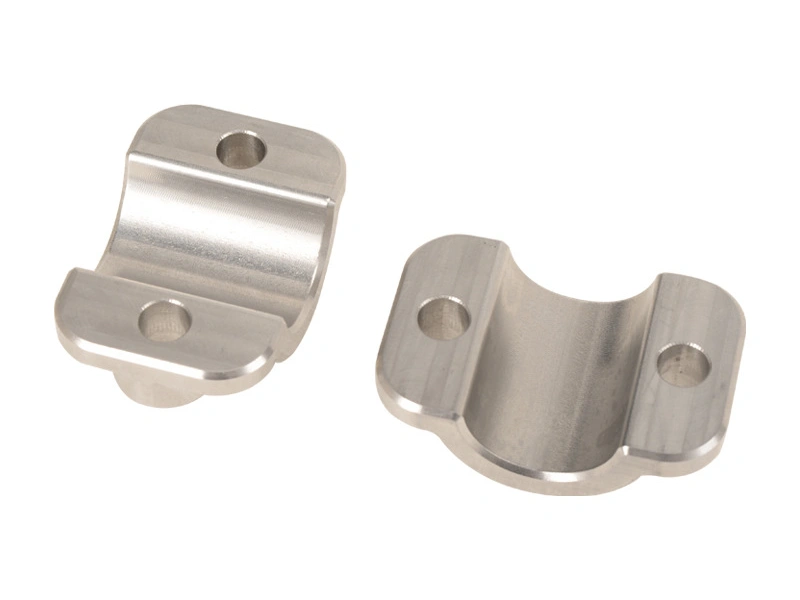
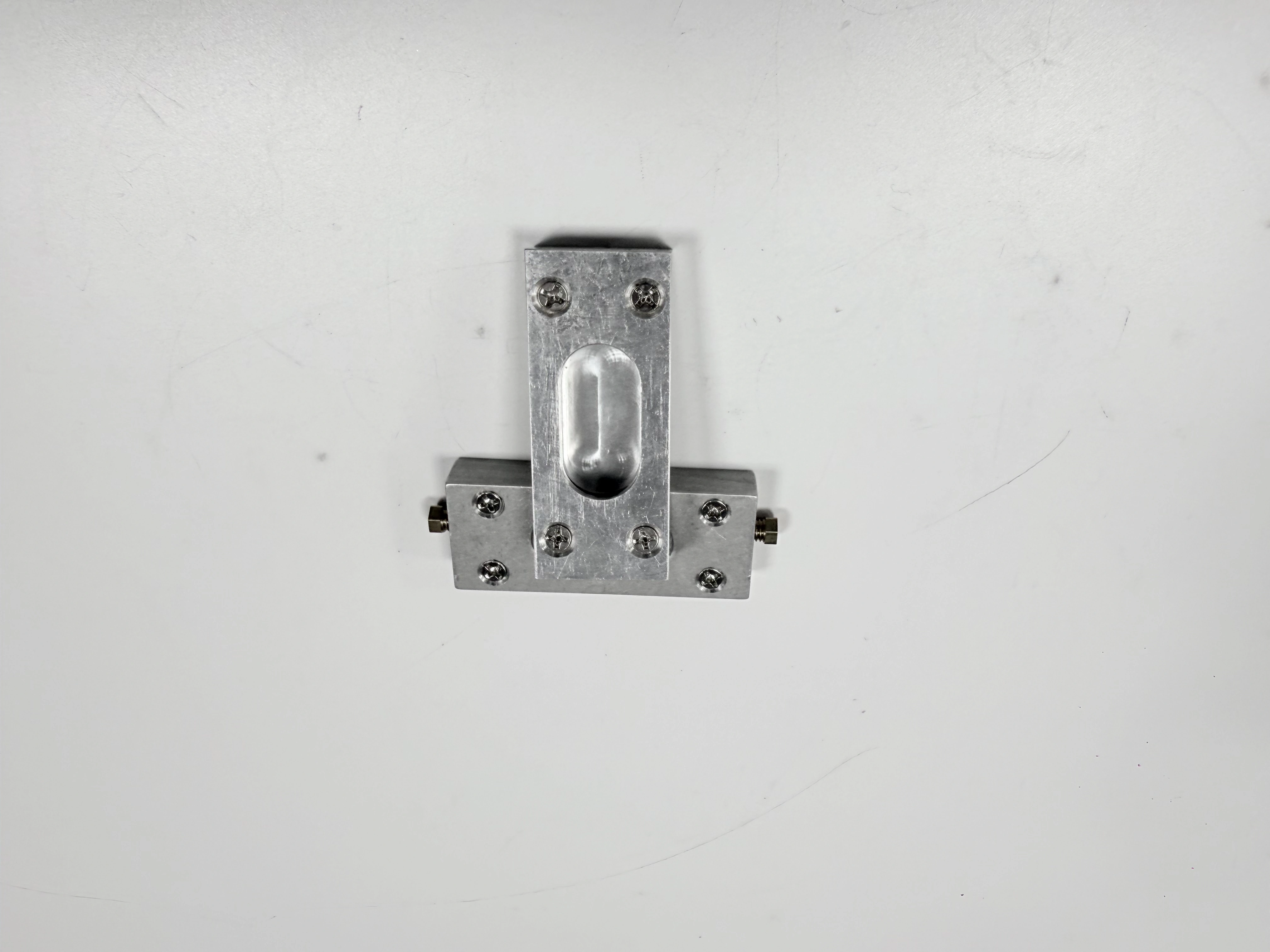
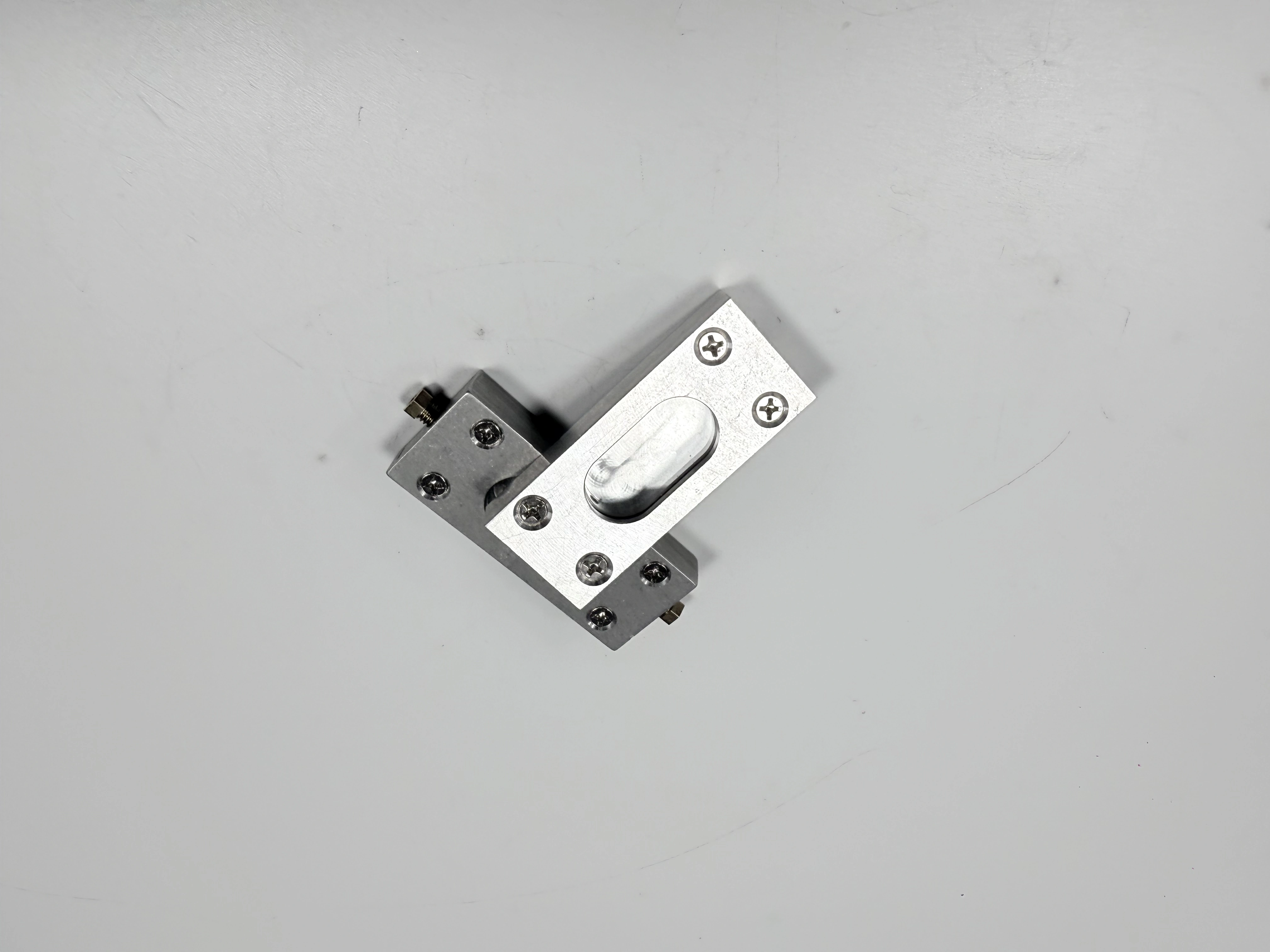
The pictured clamp-like assembly illustrates why support details matter. The visible base, upright plate, rounded raised pad, screws, and side hardware show geometry, but they do not prove how the component is located or loaded. A buyer should identify which face is functional, whether the screws are supplied hardware, whether the raised pad is a contact or clearance feature, and which assembled condition defines acceptance. Keep those questions in the drawing and RFQ instead of inferring a use from the photograph.
Control Material, Stock, and Intermediate State
Small orders can be disproportionately affected by material purchasing. State the material designation, condition, stock basis, certificate scope, and whether the supplied stock may be shared across revisions. If the design allows an alternate grade or condition, define the approval path before purchasing. A material certificate supports identity within its stated scope; it does not establish final dimensions, hardness after processing, surface roughness, or assembly fit.
Allowances should be tied to the operation that consumes them. A roughing allowance may protect a later finish cut, but leaving excessive stock can increase distortion or extend cycle time. If heat treatment, coating, or another outside process follows machining, state the before-and-after measurement requirements and the surfaces that must be masked. A controlled aluminum machining reference or a stainless-steel machining reference can frame questions about work hardening, burrs, and heat, but the drawing controls the actual material requirement.
Record State Transitions, Not Just Final Results
For a low-volume lot, note when material changes from raw stock to rough-machined, heat-treated, coated, cleaned, or packaged condition. The measurement method may be valid in one state and misleading in another. A flatness check on a restrained part can hide relaxation after release; a thread check before coating may not represent the delivered condition. State the condition in the inspection record and link any outside-process certificate to the part or lot identifier.
If a supplier proposes a substitute, compare its effect on tool wear, burr behavior, surface response, and downstream inspection. Do not approve substitution because the two materials look similar or because the first pilot assembled. Require a documented review of affected CTQs and a defined first lot after the change. This keeps cost reduction from becoming an undocumented process change.
Build a Pilot Plan That Produces Transferable Learning
A useful pilot plan names the question each check must answer: datum transfer after reorientation, thin-wall movement after unclamping, thread cleanliness after washing, or coating growth at a mating surface. Assign an owner, record, and decision rule to each question. Avoid checks that do not address a defined risk; a long list can obscure the characteristics that govern release.
Use a first-piece sequence that allows correction before the entire lot is cut. Confirm the revision, material identity, fixture configuration, tool list, and measurement state before running the first unit. If an adjustment is made, identify whether it changes the process definition or only corrects a documented offset. Retain the pre-adjustment result when it helps explain the decision. This makes the pilot a controlled learning event rather than an untraceable trial.
When a functional check is required, define the mating hardware, load, temperature, fluid, or cycle condition. A dimensional report cannot silently prove a functional requirement. Conversely, a fit check cannot prove every location or form characteristic. Keep the evidence types separate and explain how they combine for release.
Stabilize the Lot Process After the Pilot
Lot stability is demonstrated by consistent controls over time, not by a single attractive sample. Set the inspection frequency for critical features, the reaction to a drift signal, and the conditions that require expanded inspection. A small lot may justify 100% checks for a few CTQs while sampling less critical characteristics. The sampling plan should state its basis and should be revisited when quantity, risk, or process state changes.
Tool life should be managed by a measured trigger such as edge condition, count, observed drift, or a documented preventive interval. Do not claim a fixed tool life without evidence from the actual material and geometry. When a tool is replaced, identify the affected feature, confirm the offset or program state, and perform the required recheck before continuing. For a recurring lot, keep the result with the lot identifier so a later issue can be traced to a tool or setup event.
A quality inspection planning reference can help organize characteristic ownership, but it cannot choose the acceptance rule for an unknown drawing. Link each record to the controlled revision, unit or sample, method, instrument, units, and measurement condition. If an outside processor performs a step, retain its batch and certificate information with the same lot index.
State What Sampling Can and Cannot Show
Sampling can show evidence for the inspected units under the stated process and state; it does not prove that an uninspected characteristic is conforming. Define when a failed sample contains the lot, when additional units are checked, and who can approve a deviation. If an assembly relation is critical, decide whether component-level sampling is enough or whether assembled checks are required. Make the boundary visible in the quality agreement so a buyer and supplier use the same meaning.
Separate Setup Economics From Recurring Unit Cost
Compare low-volume quotes using the same scope. Ask bidders to separate design review, fixture, programming, first-article or qualification work, material minimums, machining, inspection, outside processing, cleaning, packaging, and freight. State which charges repeat when the forecast changes and which remain one-time. A low unit price can conceal a large setup charge; a low setup charge can omit the inspection or packaging needed for release.
| Quote category | Low-volume decision question | Change trigger |
|---|---|---|
| One-time engineering | Which work creates the approved route? | New revision or new feature family |
| Recurring conversion | Which operations and checks repeat per unit? | Quantity, material, or state change |
| Outside processing | Who owns processor qualification and records? | Processor, specification, or batch change |
| Logistics | What packaging and delivery assumptions are priced? | Split shipment or storage request |
Use a mass-production planning reference only when demand justifies a capacity discussion. A low-volume program may scale, but should not be priced as a high-volume promise before demand and controls support it. Ask when a new fixture, automation, or inspection strategy would be justified, and record the evidence for that decision.
Screen the Supplier Response on Evidence
Supplier screening belongs in one focused review. Compare whether each candidate explains the datum chain, fixture configuration, material traceability, tool and setup controls, inspection ownership, outside-process handoff, and record delivery for this part. A machine list, generic certificate, or claim of repeatability is not a substitute for a route explanation tied to the drawing. Ask for an anonymized setup or inspection format if proprietary details cannot be shared.
Look for boundaries. A credible response states which features need a special setup, which results are sampled, which assumptions affect cost, and what happens after a drift or change. It identifies who approves an alternate material, a replacement fixture contact, a delayed shipment, or a deviation. This evidence is more useful than a broad promise that every lot will be identical.
Write One RFQ Scope for Pilot and Repeat Lots
The RFQ should attach the controlled drawing and model, revision, quantity window, forecast, material and condition, stock and allowance limits, datums, CTQs, surface and edge requirements, threads, cleaning, outside processing, packaging, labels, sampling, records, and milestone dates. Ask suppliers to identify the proposed route, setup count, fixture assumptions, tool access, inspection methods, and known limitations. Require explicit assumptions instead of allowing missing scope to appear as a lower price.
Request separate pricing for the pilot and a representative repeat lot. Ask what evidence is delivered with the pilot, what may be sampled after qualification, and what event reopens qualification. Require notification before changes to material, fixture, program, tool, route, processor, inspection method, packaging, or ownership. Keep this one RFQ scope as the commercial reference so the same checklist is not repeated in every later section.
A boring operation or grinding route may appear in a supplier proposal as a secondary step. Ask which characteristic requires it, how the datum transfers, and how the changed surface or access condition is verified. Do not treat the process name as evidence that the resulting feature meets the drawing.
Make Delivery Commitments and Inventory Boundaries Explicit
Delivery for a low-volume lot includes material, fixture readiness, programming, first-piece review, inspection, outside processing, packaging, and transport. Ask which assumptions start the quoted lead time. If material is purchased before drawing approval, define who owns the risk; if a lot is split, state whether each shipment needs its own inspection package. A CNC machining route review can clarify which production steps control the schedule.
Inventory can protect continuity, but stored parts must retain revision identity and condition. Define packaging and reinspection requirements where they affect function. A photograph is not proof of quantity or conformity; the shipping index should point to the lot record, revision, certificates, deviations, and actions. Use a quality inspection record plan to make that index auditable.
Use the Pictured Clamp as a Planning Scenario
The paired images show a compact silver assembly with a rectangular upright plate, a rounded raised feature, a base, multiple screws, and side hardware. The direct and angled views confirm a single physical assembly and different perspectives. They do not show material grade, heat treatment, clamping force, tolerance, intended load, or inspection outcome. Use the image to identify questions about access, support, and assembly state, not to invent an application or capability claim.
For a low-volume plan, ask whether the upright plate is located from the base, whether the rounded feature is functional, whether the side hardware changes the seating condition, and whether acceptance is checked as separate pieces or as an assembly. Identify the datum scheme, the clamping state used for measurement, and the record required for the first unit and repeat lot. If the assembly is only illustrative, say so in the RFQ. This keeps the visual reference helpful while leaving engineering decisions to controlled evidence.
Control Changes and Escalation During the Program
Change control should identify the reason, affected revision or lot, risk to CTQs, evidence required, approver, and resume condition. A new material state, fixture contact, tool, program, processor, inspection method, package, or ship date can affect a low-volume build even when the drawing is unchanged. Hold affected units when the result is missing, uses the wrong revision, or was measured in the wrong state. Document rework, replacement, expanded inspection, deviation, or rejection with the responsible authority.
Define an escalation path before the pilot: who can stop work, approve containment, or require a customer decision. If a supplier proposes a faster route, compare access, datum transfer, inspection evidence, and commercial assumptions with the approved route. Do not resume on a verbal agreement; record the change and first unit or lot that demonstrates it.
Release the Lot With a Clear Stability Decision
Release when revision, material condition, process record, critical measurements, functional checks, outside-process evidence, packaging, and deviation status agree. A pilot may carry a learning action, but it needs an owner and due date before repeat production is called stable. A machine specification, image, certificate, or summary alone cannot establish conformity.
The strongest low-volume decision makes setup effort, recurring cost, inspection boundaries, and change triggers visible. Define the volume window, map design intent to controls, choose a verifiable fixture, separate pilot learning from repeat evidence, normalize one RFQ scope, and tie delivery to lot records. Use the clamp as a geometry prompt; let the drawing and evidence control acceptance.
FAQ