CNC Prototype Parts Quote Guide: Materials, Tolerances, Surface Finish, and Lead Time
CNC Prototype Parts Quote Guide: Materials, Tolerances, Surface Finish, and Lead Time
A usable CNC prototype parts quote requires a controlled geometry revision, material grade and condition, critical tolerances, final surface state, inspection evidence, quantity, and required delivery date. When any of these inputs is missing, price and lead time become assumptions rather than a comparable manufacturing commitment. OEM buyers, design engineers, and sourcing teams should therefore build the RFQ around the prototype's test purpose and failure risks, not around a CAD file alone. The quote should identify what must represent production, what may remain prototype-specific, and which requirements can change only after engineering approval. It should also distinguish a budget indication from a releasable quotation: the first can use documented assumptions, while the second needs settled acceptance inputs and a controlled revision.
The quotation package should let a supplier choose stock, setups, tools, finishing allowances, and measurement methods without guessing which features control function. Buyers preparing a CNC prototype machining quote should state the source-of-truth revision, expected quantity, assembly interfaces, material condition, critical datums, finish state, inspection deliverables, and test deadline. The supplier should return assumptions and exclusions with the price. This discipline shortens clarification, exposes cost drivers before release, and prevents a low initial number from becoming expensive after requirements are finally defined. If several bidders are involved, issue the same clarification log to all of them and require revised offers to identify which question changed cost or schedule.
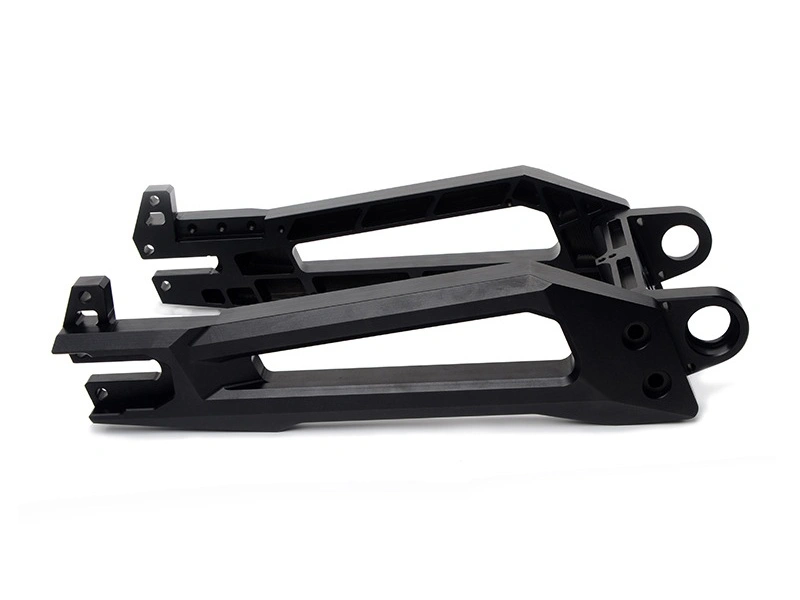
Why CNC Prototype Quotes Differ From Standard CNC Production Quotes
CNC prototype quotes differ from standard production quotes because one-time engineering and setup work is divided across very few parts while the functional evidence may still need production-level discipline. Programming, workholding design, setup proving, tool selection, first-piece measurement, and revision review do not disappear when quantity falls. A one-piece order can also carry more uncertainty than a released batch: interfaces may still change, drawing notes may conflict with the model, and the test team may not yet have separated critical characteristics from cosmetic preferences. A responsible quote makes these uncertainties visible instead of hiding them in a single unit price. It also identifies whether the first part is itself the test article or whether a sacrificial setup piece, qualification feature, or measurement trial is included.
Repeat production normally starts from an approved process baseline, known material supply, established inspection plan, and controlled change history. Prototype work may start before those controls exist. The supplier must decide whether temporary soft jaws, modular workholding, or dedicated fixtures are appropriate; whether the requested stock form is available; and whether finish or heat-treatment distortion must be included in the machining and measurement plan. Buyers should ask each bidder to state setup count, material basis, inspection scope, finish responsibility, and revision validity. Quotes are comparable only when those boundaries match. A lower price based on omitted final-state inspection is not equivalent to a higher price that includes it. Likewise, one quote based on available plate and another based on a specified forging do not represent the same material evidence even when the alloy designation appears similar.
Files Needed for a CNC Prototype Quote
A complete CNC prototype RFQ combines a native or neutral 3D solid with a controlled 2D drawing and a short requirement statement. The model defines machinable geometry, while the drawing governs dimensions, datums, threads, surface texture, finish, and acceptance notes that geometry alone cannot communicate. The requirement statement explains assembly and testing purpose, identifies mating parts, names the characteristics whose failure would invalidate the test, and states whether substitution needs approval. File names, revision identifiers, units, and precedence rules must agree. If the model and drawing conflict, the supplier should stop and request disposition rather than choose silently. Reference specifications should include the applicable revision or controlled excerpt, and proprietary information unnecessary for quoting should be removed through the buyer's normal document-control process.
RFQ Input and Control | Quote Use, Missing-Input Risk, and Required Supplier Return |
|---|---|
Controlled 3D solid with units, revision, and intended geometry | Supports access, setup, stock, and tool-reach planning; a mesh or ambiguous revision can hide geometry errors, so the supplier should identify the file actually priced and any repaired geometry. |
2D drawing with datums, tolerances, threads, and acceptance notes | Defines requirements the model cannot govern; missing precedence creates inspection disputes, so conflicts, omitted dimensions, and assumed defaults should be returned before release. |
Material grade, condition, stock form, and substitution rule | Controls sourcing, machining response, and test relevance; an unspecified condition can invalidate comparison, so availability, certification basis, and any proposed substitute need explicit disposition. |
Prototype quantity, lot split, and likely follow-on demand | Changes fixture, programming, and inspection amortization; an undefined lot basis distorts unit price, so each quoted quantity should carry its own setup and validation assumptions. |
Final surface treatment, masking, cosmetic boundary, and color control | Sets machining allowance and final-state risk; quoting an as-machined state can omit distortion or buildup, so included operations, protected features, and exclusions must be listed. |
Critical characteristics, datum scheme, fits, seals, and test interfaces | Directs process control and measurement effort; treating every dimension equally wastes cost, so the supplier should confirm the features driving setups, tools, and acceptance. |
Inspection method, report format, sampling, and final measurement state | Defines acceptance evidence; a generic report request can be priced inconsistently, so instruments, coverage, traceability, and post-finish timing should be stated. |
Functional test purpose, failure modes, required date, and delivery scope | Protects evidence while allowing controlled tradeoffs; without this context, savings or acceleration may remove test value, so deviations require an approval owner and validation action. |
A package-level revision register should accompany these inputs when several files are exchanged. Record the model, drawing, specification, and finish instruction used for quotation, then freeze them for supplier comparison. A later revision is a change request, not a clerical replacement, because it can alter stock, setups, tooling, inspection, or delivery. The impact review should identify the affected feature, material condition, datum, finishing allowance, and final measurement state, then separate scrapped work from reusable work. It should also state whether the quoted date survives the change or needs a new release milestone. This prevents a minor drawing revision from hiding a major process or acceptance change. Buyers who need the wider handoff sequence can use from CAD to finished part as a process reference. The RFQ should still name the current authority, unresolved questions, and the person allowed to approve a deviation. Require the supplier to return a marked assumption register even when no questions remain; a blank register is useful evidence that the priced scope was reviewed rather than inferred.
Main Cost Drivers in CNC Prototype Machining
The main cost drivers are not material mass alone; they are the operations and controls needed to convert the specified stock into acceptable final-state evidence. Material grade, temper or heat-treatment condition, stock form, and minimum purchase quantity affect both availability and cutting behavior. Geometry drives setup count, workholding access, tool reach, stock removal, deburring, and the chance that thin or interrupted features move after unclamping. A deep cavity may demand long tools and conservative cuts, while a part with features on many faces may require additional setups and datum transfers. The quote should identify which of these conditions, rather than a generic complexity label, governs price. Material comparison must preserve test relevance: substituting another alloy, polymer grade, temper, or stock route may change stiffness, thermal response, wear, or residual-stress behavior even if machining becomes cheaper.
Tolerance and finish requirements create cost when they change the manufacturing or validation route. A tight relationship across separate setups may require a stronger datum strategy, controlled reclamping, and additional measurement. Surface treatment can require masking, pre-finish allowance, rack or contact planning, and final-state remeasurement. Inspection cost depends on characteristic count, accessibility, reporting detail, fixture needs, and whether acceptance occurs before or after finishing. Urgency adds risk when material, outside processing, metrology, and shipping must be compressed together. Ask suppliers to separate material, machining, special process, inspection, and delivery assumptions so a buyer can compare technical scope instead of comparing unexplained totals. Also request price effects for quantity alternatives only when revision, setup strategy, and inspection basis remain the same; otherwise the apparent volume saving may come from a different technical scope.
How to Reduce CNC Prototype Cost Without Affecting Testing
Reduce CNC prototype cost without weakening testing by linking every requirement to a failure mode and validation method before relaxing it. First freeze the interfaces, material behavior, load path, sealing surfaces, datum relationships, and environmental exposure needed for the test. Then classify other dimensions, surfaces, and cosmetic details as noncritical only when an engineer owns that decision. This prevents a supplier from lowering price through an unapproved material condition, omitted finish, altered interface, or measurement shortcut. The savings proposal should state the technical change, expected manufacturing effect, evidence affected, validation action, approval owner, and the condition that triggers a return to the original requirement. Capture accepted changes in a quote revision so purchasing cannot release an obsolete scope after engineering approves the cheaper route.
Start with changes that do not alter the evidence sought: remove blanket tolerances from nonfunctional geometry, use standard stock sizes where the resulting machining datum remains valid, avoid cosmetic finishing on surfaces outside appearance evaluation, and group quantities only when the same revision and process route apply. Review tool access, unnecessary deep pockets, small internal radii, thin unsupported walls, and redundant inspection entries before release. The existing DFM for CNC machining reference can frame manufacturability questions, but the current RFQ must document which recommendation is accepted and why it does not compromise the planned test. Reject a saving when it changes the failure mode under study or makes the result impossible to trace to the intended material and interface state.
Tolerance reduction should be selective and datum-aware. Preserve the fit, seal, alignment, motion, or load-transfer relationship that controls function; relax unrelated surfaces only after confirming they cannot bias assembly or measurement. Do not infer finished-part capability from machine positioning or instrument resolution. Define the characteristic, datum reference frame, measurement state, method, and acceptance rule instead. Buyers can review CNC machining tolerances when separating design intent from a default title-block tolerance. The supplier should price the critical set explicitly and flag any requirement that needs a different setup or validation route. For complex profiles or inaccessible features, confirm how measurement uncertainty, fixturing, and data reduction affect the acceptance statement rather than requesting a report name alone.
Surface finish decisions require the same evidence logic. As-machined, blasted, polished, anodized, plated, or passivated states can change appearance, roughness, edge condition, dimensions, masking needs, and measurement timing. If the test depends on friction, sealing, coating thickness, corrosion exposure, electrical contact, or final fit, the specified state cannot be removed merely to lower price. If appearance is not under evaluation, cosmetic coverage may be reduced with written approval. The existing CNC machined parts surface finishes reference helps identify questions, while the RFQ must still define the actual finish, protected features, allowable contact marks, and final-state inspection requirement. State whether roughness applies before or after treatment and whether coating thickness belongs inside a dimensional limit; otherwise machining and finishing suppliers may interpret the same callout differently.
What Lead Time Should Buyers Expect for CNC Prototype Parts?
CNC prototype lead time should be quoted as a dated sequence with stated prerequisites, not as an unsupported standard number. The sequence normally includes RFQ clarification, revision freeze, material confirmation, programming and workholding preparation, machining, deburring, outside finishing, final-state inspection, report approval, and shipment. Each stage has a different dependency. Machining cannot start against conflicting files; finishing cannot start until masking and allowance are confirmed; inspection cannot close until the acceptance state and method are known. The supplier should state when the clock begins, which buyer responses stop it, and whether the delivery date means shipment or receipt. A schedule should also distinguish planned processing time from queue risk, buyer approval time, and recovery allowance after a nonconformance.
Material availability and outside processing often govern the critical path more than cutting time. A readily available stock form may shorten sourcing, while a specific grade, condition, size, certificate, or low minimum purchase quantity may require an alternative plan. Multiple setups, difficult workholding, thin geometry, long-reach tools, or first-piece correction add machining uncertainty. Finish queues, masking, coating buildup, and final-state remeasurement add downstream dependencies. Expediting only the machine step does not guarantee an earlier accepted part. Ask for a milestone plan, risk owner, latest approval dates, and the schedule effect of each open question before comparing suppliers. When a design change arrives, require a documented disposition covering work already completed, reusable stock or fixtures, revised inspection, and the new release date.
An integrated one-stop CNC machining service may reduce handoff interfaces when machining, finishing, inspection, and delivery are coordinated under one plan, but integration alone is not proof of a shorter lead time. The quote should still name outside processes, inspection release points, transport assumptions, and contingency for rejected or changed work. An illustrative planning scenario is a thin-wall aluminum housing requiring anodize and final bore verification: the useful schedule protects stock confirmation, stress-sensitive machining, finish allowance, and post-anodize measurement. The buyer releases the date only after those dependencies and acceptance evidence are explicit. If the functional test can use an as-machined article first, treat a later finished article as a separate controlled lot instead of silently changing the acceptance state midway through production.
Submit Your CNC Prototype RFQ to Neway
Before releasing a CNC prototype RFQ, verify that the model, drawing, revision, units, material condition, quantity, critical characteristics, finish, inspection deliverables, test purpose, and required date tell one consistent story. Mark unresolved items as questions rather than letting suppliers make different assumptions. Require each quotation to return the priced revision, material and stock basis, setup or process assumptions, included finishing, inspection coverage, exclusions, validity conditions, and lead-time milestones. This return package gives engineering and sourcing a common basis for award, while also creating a controlled starting point for later prototype changes or production transfer. Use a release checklist with named engineering, quality, and purchasing owners so commercial approval cannot bypass unresolved technical acceptance conditions.
Use the CNC prototype machining quote review to test whether the requirement package supports the intended assembly or functional decision. Award should follow technical comparability, evidence coverage, change control, and schedule credibility as well as price. Hold release when a low quote depends on an unstated material substitution, omitted final-state inspection, uncontrolled drawing conflict, or undefined finish. Release when the supplier's assumptions match the test plan and every critical deviation has an owner, validation method, and acceptance decision. That boundary protects both prototype value and the next engineering step. After award, preserve the priced baseline and route every revision through impact review; this keeps the eventual test result tied to the part that was actually ordered.
FAQ