Is CNC machining better than 3D printing for precision prototype parts?
Is CNC machining better than 3D printing for precision prototype parts?
Not universally. CNC machining is usually better for precision prototype parts when the test depends on wrought or otherwise specified stock, machined datum relationships, accurate mating interfaces, threads, sealing faces, or controlled surface condition. Choose CNC machining prototyping when those characteristics must represent the intended part and can be reached, held, and inspected by a practical subtractive route. Choose 3D printing services when internal channels, consolidated geometry, rapid design iteration, or low-waste shape validation matter more than matching a machined production state. The decision should follow the test requirement, material/process condition, geometry, post-processing, measurement plan, quantity, and schedule rather than a generic precision claim.
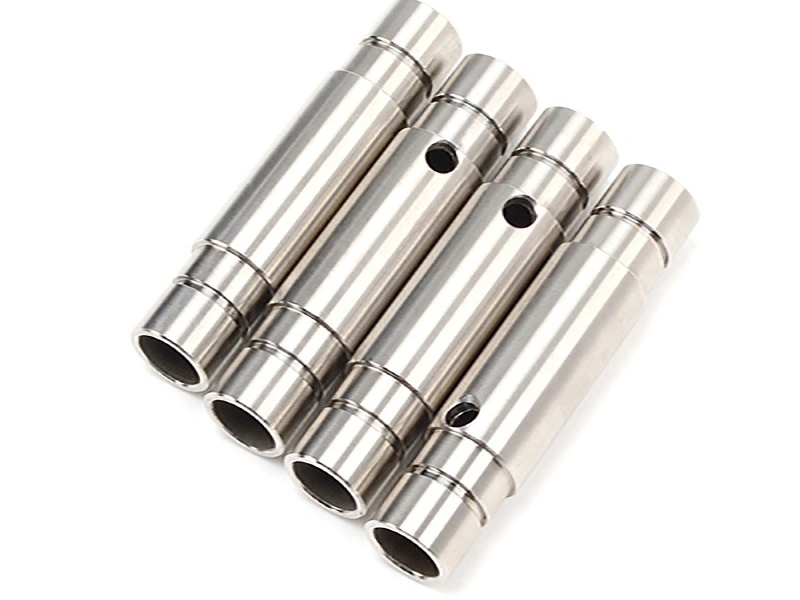
Prototype Requirement | CNC Machining Decision | 3D Printing Decision |
|---|---|---|
Representative material behavior | Prefer CNC when the approved grade, temper, heat treatment, stock form, or directional properties affect the result. | Use printing only when the selected process, feedstock, build orientation, density, and post-treatment represent the required behavior or when the test does not depend on them. |
Critical mating interfaces | Prefer CNC for accessible datums, bores, planar contacts, bearing seats, and fits that need a defined machining and inspection state. | Printing may be suitable for general fit; critical interfaces may need allowance and secondary machining, with the final datum and measurement route specified. |
Threads and sealing surfaces | Prefer machined threads, grooves, faces, and controlled roughness when torque, leakage, wear, or assembly evidence depends on them. | Printed or inserted features can serve selected tests, but porosity, anisotropy, stair-stepping, support removal, and post-machining must be assessed. |
Complex internal cavities | CNC access may require split construction, plugs, special tooling, or an impractical setup; evaluate whether those changes invalidate the intended geometry. | Additive routes can create enclosed channels and consolidated shapes, subject to support, powder or resin removal, minimum feature, inspection, and surface limitations. |
Fast appearance validation | CNC can provide representative stock and machined appearance, but programming, fixturing, material purchase, and finishing may add work that the review does not need. | Printing is often efficient for shape, ergonomics, packaging, and visual iteration when material properties and final interfaces are outside the decision. |
Functional testing | Use CNC when the failure mode depends on specified material state, loaded geometry, interfaces, threads, seals, or machined surface condition. | Use printing when the additive process is representative or when the test plan explicitly accounts for its material, orientation, porosity, finish, and post-process differences. |
Transition to small-batch supply | A controlled CNC route may extend into small-batch supply after repeatability, capacity, tooling, inspection, and lot controls are separately verified through low-volume manufacturing | Review whether additive remains the production route. If production changes process, material, orientation, machine, or post-treatment, qualify the new differences rather than treating the prototype as automatic approval. |
1. Choose CNC when precision and function are the priority
Choose CNC when the acceptance question depends on features that a subtractive process can establish and inspect reliably. Examples include a bore located from functional datums, a flat sealing face, a thread that carries assembly torque, or a bearing seat that controls motion. The drawing should define the characteristic, datum reference, surface state, and inspection method; the supplier should confirm stock condition, setup strategy, tool access, and any proposed deviation. A precision machining service is not evidence by itself that every requested limit is achievable or economical. Capability depends on material, geometry, workholding, tool reach, thermal conditions, finishing, measurement, and lot requirements. Use the measured prototype to answer its stated test, not to infer production capability from one conforming result.
2. Choose 3D printing when speed and complex geometry matter more
Choose 3D printing when additive freedom or iteration speed is essential to the decision. Internal passages, lattices, consolidated assemblies, organic paths, and multiple concept variants may be impractical to machine from one piece. Selection still requires a named process and material condition because printed parts can vary with build orientation, layer strategy, support contact, cure or heat treatment, porosity, and removal access. Define which surfaces are as-built, finished, or secondarily machined and how trapped material will be cleared and verified. For a shape or packaging review, those differences may be acceptable. For pressure, fatigue, wear, thermal, optical, or sealing tests, they may control the result and need direct validation rather than an assumption that all printed materials behave alike.
3. CNC is usually stronger for production-like prototype validation
CNC often provides stronger production-like evidence when the intended product is also machined from equivalent material and the same functional characteristics can be reproduced. Even then, compare the prototype and production plans: billet versus near-net stock, temporary versus production workholding, setup count, tool strategy, heat treatment sequence, finish source, and inspection sampling may differ. The linked CNC machining vs 3D printing discussion can frame process selection, but the RFQ must name the current test and acceptance evidence. Record unrepresented production risks. A CNC prototype can verify fit or function without proving production throughput, process capability, scrap rate, tool life, or long-run dimensional stability.
4. The best decision should follow the test goal
Build a decision matrix from the failure mode backward. List the test purpose, required material state, loaded or mating features, surface condition, environment, measurement method, and pass or fail criteria. Then compare CNC, additive, and a hybrid route against each requirement, including post-processing, inspection access, lead-time dependencies, and what each option cannot prove. A hybrid program may use printed parts for envelope and iteration checks, then machined parts for critical interfaces and final functional evidence. It can also print near-net geometry and machine selected datums or seals when the combined process represents the intended route. Use prototyping services only after the supplier returns the actual process, material, orientation or stock, finishing, inspection, assumptions, and deviations for buyer disposition.
The better process is the one that produces sufficient, traceable evidence for the next decision with acceptable technical risk, cost, and time. Send controlled CAD and drawing revisions, quantities, material and condition, critical characteristics, final-state requirements, test conditions, and reporting needs. Ask for separate routes when uncertainty remains: a rapid geometry model, a functional CNC part, an additive part with machined interfaces, or another justified combination. Engineering should approve any substitute before manufacture and state the conclusion each version may support. That discipline prevents a visually successful model from being mistaken for functional validation and prevents unnecessary machining controls from consuming budget on a question that a simpler additive part could answer.