Titanium Alloy
Material Introduction
Titanium Alloy is a high-value engineering material family used in CNC machining when the application requires a strong strength-to-weight ratio, corrosion resistance, biocompatibility, or dependable performance under demanding thermal and mechanical conditions. Compared with stainless steel and many nickel alloys, titanium alloys are often selected when the part must stay lightweight without sacrificing structural reliability.
This family includes Titanium Alloy TA1, Titanium Alloy TA2, Ti-6Al-4V (TC4), Ti-3Al-8V-6Cr-4Mo-4Zr (Beta C), Ti-6Al-2Sn-4Zr-2Mo (Grade 4), Ti-5Al-2.5Sn (Grade 6), Ti-6Al-2Sn-4Zr-6Mo (Grade 7), Ti-3Al-2.5V (Grade 12), Ti-5Al-5V-5Mo-3Cr (Ti5553), Ti-6.5Al-1Mo-1V-2Zr (TA15), Ti-10V-2Fe-3Al (Grade 19), Ti-6Al-4V ELI (Grade 23), Ti-8Al-1Mo-1V (Grade 20), 11Cr-3Al (TC11), Ti-15V-3Cr-3Sn-3Al (Ti-15-3), Ti-7Al, and Ti-4Al-2V. These grades are widely used for aerospace brackets, housings, structural parts, fasteners, medical components, oil and gas hardware, and other precision-machined titanium alloy parts.
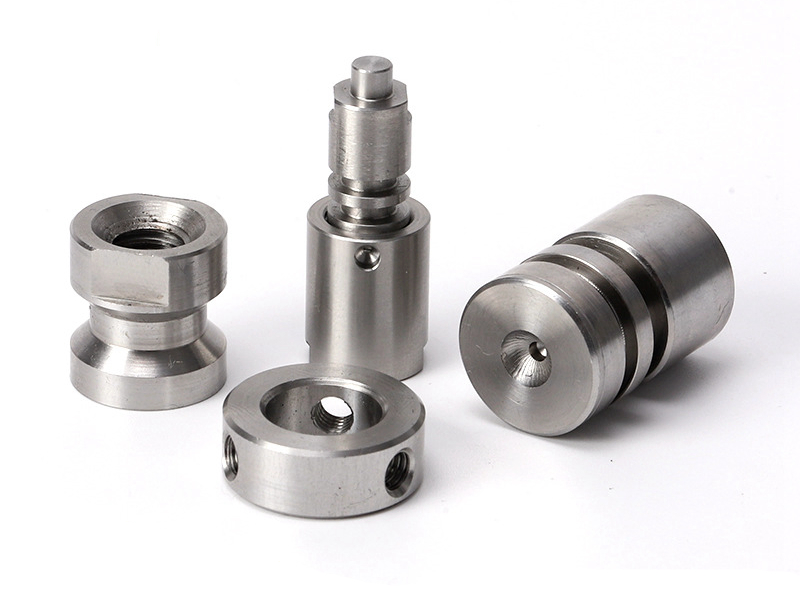
International Naming Table
Region / Standard | Naming / Designation |
|---|---|
Commercial Material Family | Titanium Alloy |
Commercially Pure Titanium | TA1, TA2 |
Alpha-Beta Titanium | TC4 / Ti-6Al-4V, TA15, TC11, Grade 23 |
Beta / Near-Beta Titanium | Beta C, Ti5553, Grade 19, Ti-15-3 |
High-Temperature / Structural Titanium | Grade 4, Grade 6, Grade 7, Grade 20 |
Typical Component Reference | Aerospace structural parts, turbine parts, medical implants, housings, fasteners, lightweight mechanical components |
Alternative Material Options
Titanium Alloy belongs to a high-performance lightweight metal family, but substitute selection should always be based on engineering function rather than weight reduction alone. The comparison should include required strength, corrosion resistance, fatigue behavior, operating temperature, machinability, cost target, and whether the application is aerospace, medical, marine, or industrial.
Potential alternatives may include Aluminum Alloy when lower density and lower cost are more important than absolute strength, Stainless Steel when corrosion resistance is needed but weight is less critical, and Inconel Alloy when the part must withstand significantly higher operating temperatures. Final substitute selection should always be approved according to actual service conditions and engineering requirements.
Design Intent of Titanium Alloy
Titanium Alloy was developed for applications requiring a balance of low density, high mechanical performance, corrosion resistance, and long-term service reliability. In engineering use, titanium components are often selected when the design must reduce system weight while still handling structural load, cyclic stress, harsh media, or human-contact requirements.
The design intent of Titanium Alloy is different from general-purpose structural metals. It is chosen for critical applications where strength-to-weight ratio, corrosion resistance, and stable performance matter more than easy machining. Because many titanium parts are used in aerospace, medical, or precision industrial systems, dimensional control, fatigue-sensitive surface quality, burr control, and process stability are essential during machining.
Chemical Composition (wt%)
Alloy Group | Typical Main Alloying Elements |
|---|---|
Commercially Pure Titanium | Ti with controlled O, Fe, C, N, H residuals |
Ti-6Al-4V Family | Al, V |
Alpha / Near-Alpha Titanium | Al, Sn, Zr, Mo, V depending on grade |
Beta / Near-Beta Titanium | V, Mo, Cr, Fe, Al, Sn depending on grade |
Medical Low-Interstitial Titanium | Ti-6Al-4V ELI with tighter interstitial control |
Grade-Specific Note | Exact composition should be confirmed by certified material specification before production |
Note: Titanium alloy composition should always be verified against the customer drawing, ASTM / AMS / GB requirement, or certified material record before manufacturing.
Physical Properties
Property | Typical Reference |
|---|---|
Material Type | Lightweight high-performance metal alloy family |
Primary Manufacturing Route | Precision CNC machining from bar, plate, billet, forging, or preform stock |
Density | Lower than steel and nickel alloys, supporting lightweight structures |
Corrosion Resistance | Excellent in many marine, chemical, and biomedical environments |
Strength-to-Weight Ratio | One of the main reasons titanium is selected for aerospace and high-performance parts |
Heat Sensitivity in Machining | Requires controlled cutting conditions due to low thermal conductivity |
Biocompatibility | Important for selected medical and implant-related grades |
Mechanical Properties
Property | Engineering Relevance |
|---|---|
High Strength-to-Weight Ratio | Supports lightweight structural components in aerospace and high-performance equipment |
Fatigue Resistance | Important for cyclic loading, rotating parts, and structural safety |
Corrosion Durability | Supports long-term service in marine, chemical, and humid environments |
Temperature Capability | Some grades support elevated-temperature service better than standard structural metals |
Machining Sensitivity | Requires strong setup stability, coolant control, and appropriate tool strategy |
Surface Integrity Relevance | Critical for fatigue-sensitive aerospace and medical applications |
Material Characteristics
Titanium Alloy is characterized by a combination of low density, high specific strength, strong corrosion resistance, and dependable long-term durability in demanding service environments. Alpha and alpha-beta grades are often used for aerospace structures and general high-performance components, while beta and near-beta grades are chosen when higher strength or formability-related advantages are required. Medical and low-interstitial grades are especially relevant where biocompatibility and tighter impurity control matter.
The alloy family is especially relevant for lightweight parts where structural efficiency is important. However, titanium is also known for difficult machining behavior caused by low thermal conductivity, high chemical reactivity at the cutting zone, and strong sensitivity to tool condition. For critical components, machining strategy must account for burr control, edge quality, surface damage avoidance, and dimensional stability throughout production.
Manufacturing Process Performance
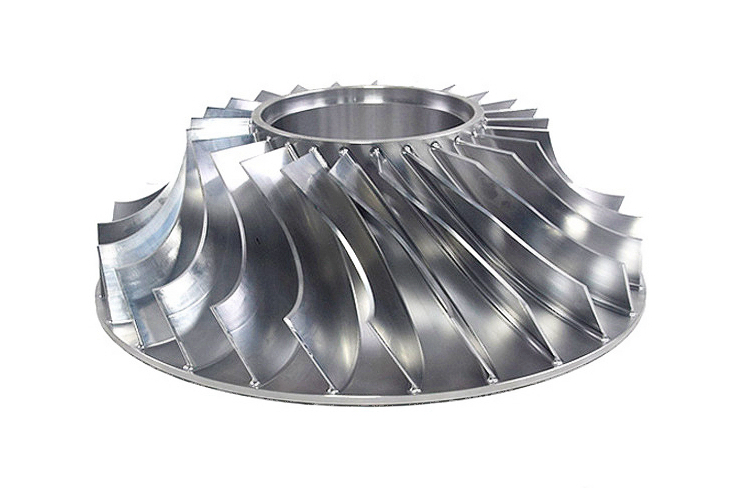
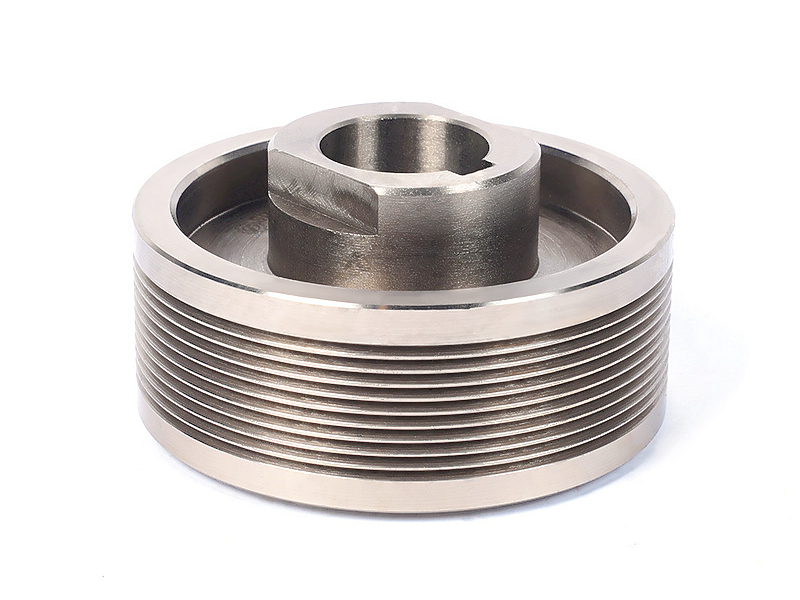
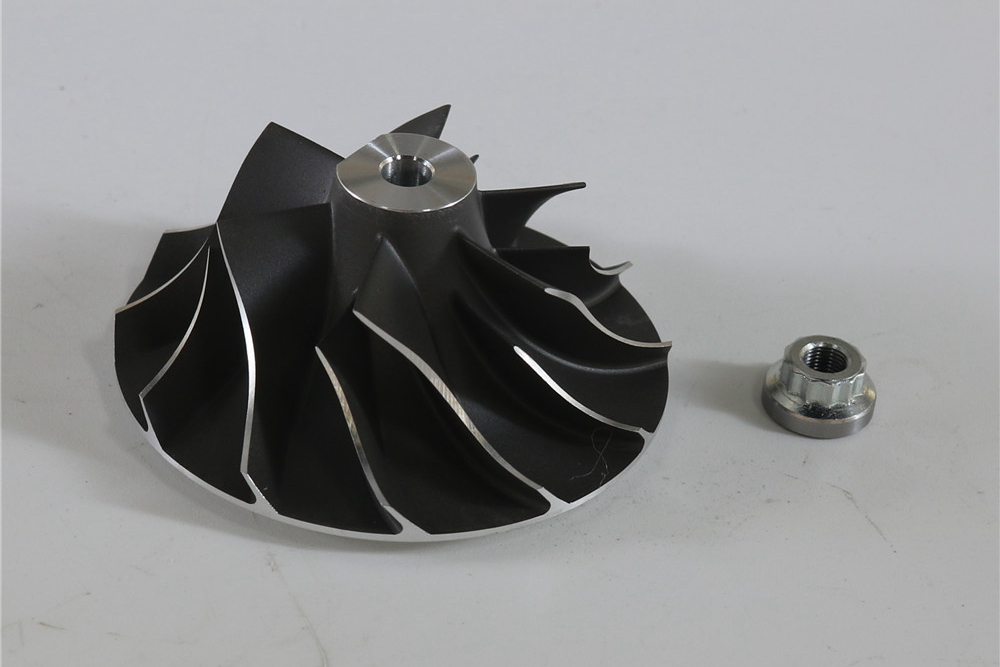
Titanium Alloy is primarily associated with precision-machined components. For new production, titanium CNC machining is an appropriate route for brackets, housings, structural parts, shafts, fasteners, medical components, turbine details, and other custom titanium alloy parts. Depending on geometry, CNC milling, turning, drilling, boring, and grinding may be required to achieve tolerance and feature accuracy.
After rough machining, controlled finishing is usually required for datums, bores, sealing surfaces, threads, assembly interfaces, and fatigue-sensitive features. For complex titanium components with multi-face geometry, multi-axis machining may be used for improved access and reduced setup error. Inspection should be integrated throughout the manufacturing route because titanium parts are sensitive to heat input, burr formation, tool wear, and surface-integrity variation.
Applicable Post-processing
Titanium Alloy components may require stress relief, heat treatment, grinding, edge refinement, dimensional verification, and surface treatment depending on the selected grade and service requirement. For fatigue-sensitive or contact-critical parts, post-processing should focus on burr removal, edge quality, and control of machining-induced damage. For aerospace and medical parts, process control after machining is often as important as the rough machining route itself.
If the application requires improved surface performance, corrosion behavior, or specialized appearance, titanium parts may also be evaluated for titanium surface treatments. Final validation through inspection and, where necessary, CMM-based dimensional verification is recommended for high-value titanium components, especially when tolerance, fatigue life, or assembly fit determines functional success.
Common Applications
Titanium Alloy is used in aerospace, medical, power generation, oil and gas, marine, robotics, and high-performance industrial components. Typical applications include aircraft structural parts, turbine-related parts, medical implants and instruments, lightweight housings, precision shafts, fasteners, fluid-handling parts, and corrosion-resistant custom-machined components.
In these applications, titanium parts must combine weight reduction with structural durability and environmental stability. The alloy family is suitable when the design requires better corrosion resistance than carbon steel, lower density than stainless steel, and more practical structural capability than most lightweight plastics or aluminum in severe service conditions.
When to Choose Titanium Alloy
Choose Titanium Alloy when the application requires a lightweight structural metal with strong corrosion resistance, dependable fatigue behavior, and high mechanical performance. It is most suitable when aerospace-grade efficiency, medical compatibility, marine durability, or long-term structural reliability are more important than easy machining or low raw material cost.
If Titanium Alloy is not necessary, substitute materials should not be selected by weight or strength alone. Aluminum alloys, stainless steels, or superalloys may be considered only after comparing load, temperature, corrosion environment, fatigue requirement, and manufacturing cost. For new components, the safest approach is to confirm the exact titanium grade, drawing requirement, heat-treatment status, surface requirement, inspection standard, and final service condition before production.
Engineering Selection Note
Titanium Alloy should be evaluated as an engineering material family rather than a general lightweight metal. For RFQ evaluation, customers should provide the 2D drawing, 3D model, material grade, service environment, load condition, temperature, quantity, surface finish requirement, inspection requirement, and whether the part is for prototype or production. This allows NewayMachining to determine whether titanium machining, multi-axis processing, post-machining heat treatment, surface treatment, or advanced dimensional verification is appropriate for the component.
Explore Related Blogs