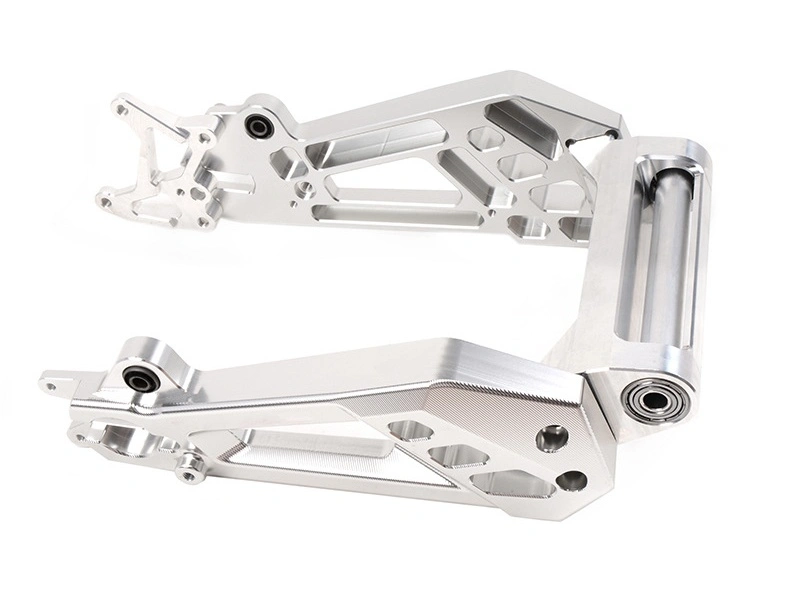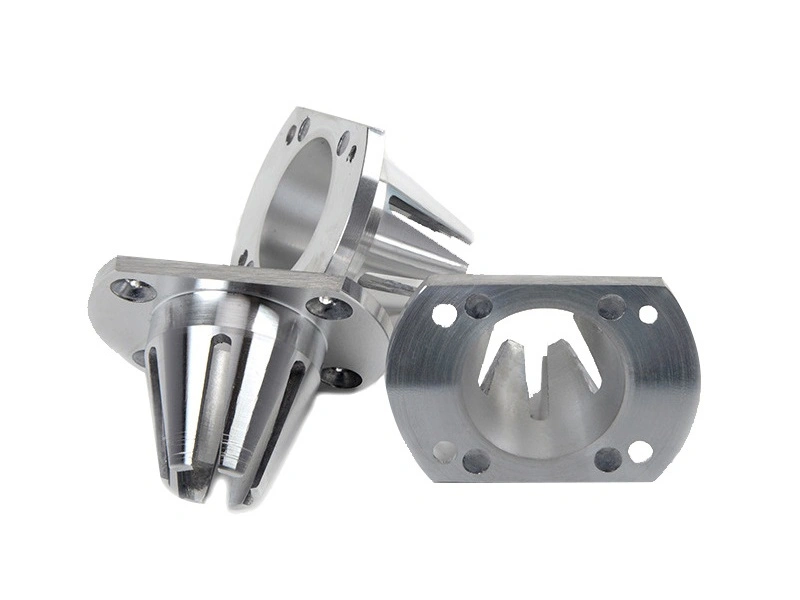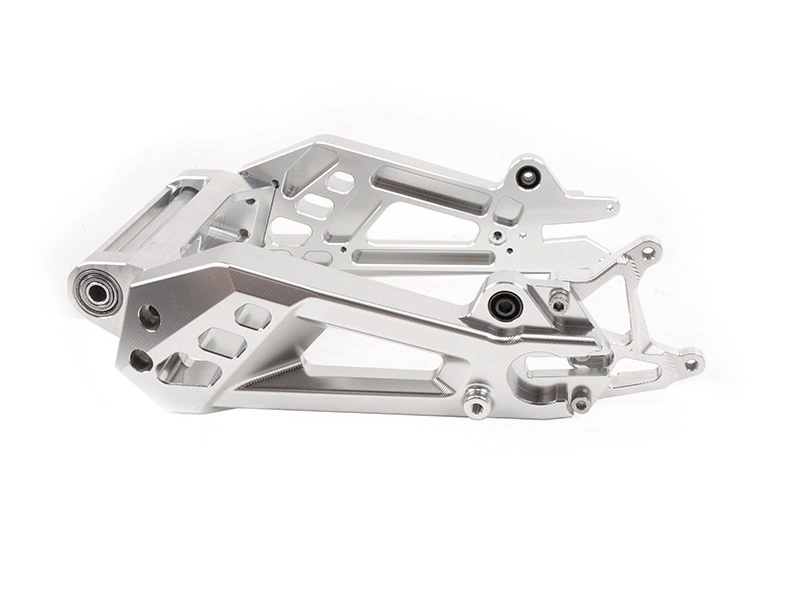
Aluminum Alloy
Aluminum Alloy CNC Machining Materials Introduction
Aluminum Alloy is one of the most versatile material families in precision manufacturing, offering an attractive combination of low density, good thermal conductivity, corrosion resistance, formability, and broad machinability. Different aluminum grades are engineered for very different priorities, from high electrical conductivity and corrosion resistance to high cutting efficiency, weldability, seawater durability, or aerospace-grade strength.
In CNC machining, aluminum alloys are widely used for housings, brackets, fixtures, heat sinks, structural members, manifolds, consumer product parts, aerospace hardware, automotive components, and prototype-to-production applications. The broad aluminum family includes commercially pure grades such as Aluminum 1050 and Aluminum 1100, free-machining grades like Aluminum 2011, structural aerospace alloys such as Aluminum 2014 and Aluminum 2024, corrosion-resistant sheet and marine grades like Aluminum 5052, Aluminum 5083, Aluminum 5083-H116, Aluminum 5083-H321, and Aluminum 5086, general engineering grades such as Aluminum 6060, Aluminum 6061, Aluminum 6061-T6, Aluminum 6063, and Aluminum 6082, ultra-high-strength grades such as Aluminum 7050, Aluminum 7055, Aluminum 7075, and Aluminum 7075-T6, plus casting-related material options like Aluminum ADC12 (A380).
Aluminum Alloy Similar Grades Table
The table below lists the aluminum alloy grades covered in this material family and their typical classification references:
Alloy Series | Representative Grades | Typical Characteristics |
|---|---|---|
1xxx Series | Aluminum 1050, Aluminum 1100, Aluminum 1100-H14 | High purity, strong corrosion resistance, good conductivity, relatively low strength |
2xxx Series | Aluminum 2011, Aluminum 2014, Aluminum 2024 | Higher strength, good structural performance, some grades optimized for machinability |
3xxx Series | Aluminum 3003, Aluminum 3103 | Good formability, moderate strength, corrosion resistance |
4xxx Series | Aluminum 4045 | Silicon-containing alloy family, often associated with thermal and joining-related applications |
5xxx Series | Aluminum 5052, Aluminum 5083, Aluminum 5083-H116, Aluminum 5083-H321, Aluminum 5086 | Excellent corrosion resistance, marine suitability, good weldability |
6xxx Series | Aluminum 6060, Aluminum 6061, Aluminum 6061-T6, Aluminum 6063, Aluminum 6082 | Balanced strength, machinability, corrosion resistance, broad engineering use |
7xxx Series | Aluminum 7050, Aluminum 7055, Aluminum 7075, Aluminum 7075-T6 | Very high strength, aerospace and high-load structural performance |
Cast Aluminum | Aluminum ADC12 (A380) | Common cast-grade aluminum used where good castability and machining are both needed |
Aluminum Alloy Comprehensive Properties Table
Category | Property | Value |
|---|---|---|
Physical Properties | Density | Typically 2.66–2.85 g/cm³ depending on grade |
Melting Range | Typically 475–655°C depending on alloy family | |
Thermal Conductivity | Generally high, with commercially pure grades exceeding many structural alloys | |
Specific Heat Capacity | Typically about 880–960 J/(kg·K) | |
Thermal Expansion | Typically 22–24 µm/(m·K) | |
Chemical Composition / Alloying | Main Base Metal | Aluminum (Al) |
Common Alloying Elements | Copper, Magnesium, Silicon, Manganese, Zinc, Iron | |
1xxx Series | High-purity aluminum with minimal alloying | |
2xxx / 7xxx Series | Higher-strength alloy systems often used for structural performance | |
5xxx / 6xxx Series | Strong balance of corrosion resistance, weldability, and machinability | |
Mechanical Properties | Tensile Strength | Ranges from low in pure grades to very high in 7xxx aerospace grades |
Yield Strength | Highly grade- and temper-dependent | |
Corrosion Resistance | Generally good, especially in 1xxx, 5xxx, and 6xxx families | |
Machinability | Good to excellent in many grades, especially Aluminum 2011 and Aluminum 6061 | |
Strength-to-Weight Ratio | Excellent, especially in 2xxx and 7xxx structural grades |
CNC Machining Technology of Aluminum Alloy
Aluminum alloy parts are commonly produced through CNC milling, CNC turning, CNC drilling, CNC boring, and where surface finish or geometric control is critical, CNC grinding. Many aluminum grades are highly compatible with fast feed rates, efficient material removal, and cost-effective machining, which makes them suitable for both rapid prototyping and scaled production.
More complex parts can also benefit from multi-axis machining, especially when thin walls, cosmetic surfaces, compound angles, or one-setup accuracy are important. For conductive, lightweight, and dimensionally sensitive components, aluminum is one of the most production-friendly metal families in modern machining.
Applicable Process Table
Technology | Precision | Surface Quality | Mechanical Impact | Application Suitability |
|---|---|---|---|---|
CNC Milling | Typically ±0.01–0.05 mm | Ra 0.8–3.2 µm | Excellent for pockets, housings, contours | Brackets, frames, housings, plates |
CNC Turning | Typically ±0.01–0.03 mm | Ra 0.8–3.2 µm | Efficient for rotational parts | Shafts, bushings, rings, spacers |
CNC Drilling | Typically ±0.02–0.08 mm | Application dependent | Good for fast hole-making | Mounting holes, ports, internal passages |
CNC Boring | Typically ±0.01–0.03 mm | Good to excellent | Improves bore accuracy and roundness | Precision housings, valve bodies, bearing seats |
CNC Grinding | Typically ±0.005–0.01 mm | Ra 0.2–0.8 µm | Used for critical finish control | Flatness-critical and sealing interfaces |
Aluminum Alloy CNC Machining Process Selection Principles
When the project prioritizes general-purpose machinability, cost efficiency, corrosion resistance, and availability, Aluminum 6061 is usually the most practical starting point. It offers a strong balance of machinability, structural capability, and finishing compatibility across prototypes, fixtures, housings, and industrial parts.
When higher strength and better performance under structural load are required, aerospace-oriented grades such as Aluminum 2024, Aluminum 7050, and Aluminum 7075-T6 are more suitable, especially for aerospace, automotive, and high-load mechanical applications. These grades typically trade some corrosion resistance and cost simplicity for improved strength-to-weight performance.
For marine or highly corrosive environments, magnesium-rich grades such as Aluminum 5052 and Aluminum 5083 are preferred because they provide stronger corrosion resistance and reliable service in wet or seawater-related applications. For extruded profiles, cosmetic structures, and architectural-style parts, Aluminum 6060 and Aluminum 6063 are often selected for their clean appearance and practical fabrication balance.
Aluminum Alloy CNC Machining Key Challenges and Solutions
One common challenge in aluminum machining is burr formation, especially around drilled holes, threads, and thin-wall edges. This can be reduced through optimized cutting parameters, proper tool geometry, and planned deburring operations, particularly when parts must meet cosmetic or assembly-critical standards.
Another frequent issue is deformation in thin-wall or large flat components because aluminum’s lower stiffness compared with steel can allow movement during clamping and machining. The solution is to use balanced fixturing, lighter finishing passes, staged material removal, and part geometry planning that preserves temporary stiffness until final finishing is complete.
Some aluminum grades can also experience built-up edge or surface smearing if tools are not sharp or chip evacuation is poor. This is especially relevant in softer grades such as 1050, 1100, and similar high-purity families. Stable cutting, clean lubrication strategy, and grade-specific tooling help maintain surface quality and dimensional consistency.
Where final appearance, wear behavior, or corrosion performance matters, post-processing selection is important. Aluminum alloys are highly compatible with surface engineering routes such as anodizing, and for many parts the final performance depends on coordinating machining allowance, edge condition, and coating thickness from the beginning of the manufacturing plan.
Industry Application Scenarios and Cases
Aluminum alloys are used across a wide range of industries because different grades support very different performance priorities:
Aerospace and Aviation: High-strength grades such as 2024, 7050, 7055, 7075, and 7075-T6 are used for lightweight structural parts, brackets, housings, and support hardware requiring strong strength-to-weight ratios.
Automotive: Aluminum 6061, 6063, ADC12, and other engineering grades are used for lightweight mechanical parts, enclosures, brackets, and thermal components that support fuel efficiency and product integration.
Consumer Products: Aluminum 6063, 1100, and 5052 are often used for visible parts, electronics housings, frames, panels, and cosmetic structures combining light weight with corrosion resistance.
Industrial Equipment: Aluminum 6061, 6082, 2011, and related grades are widely applied in fixtures, manifolds, automation frames, instrument parts, and customized functional components.
Oil and Gas: Corrosion-resistant and lightweight aluminum parts may be selected for housings, covers, support structures, and non-extreme-temperature equipment where weight and serviceability are important.
A typical aluminum manufacturing workflow may begin with rapid stock removal in billet, plate, extrusion, or cast form, followed by hole making, contour finishing, cosmetic optimization, and then optional treatment for corrosion resistance or appearance. Because the family includes everything from soft pure aluminum to aerospace-grade structural alloys, aluminum remains one of the most flexible material platforms for custom precision manufacturing.
Explore Related Blogs