
Usinagem CNC de 5 eixos de alta precisão para carcaça de câmera Olympus TG4 em alumínio 6063
Contexto do Projeto: Carcaça de Alto Desempenho para Equipamentos Ópticos
Olympus precisava de uma carcaça externa leve, porém estruturalmente robusta, para sua série TG4 — uma câmera digital resistente e à prova d'água, conhecida por suportar ambientes externos severos. A Neway foi selecionada como parceira de usinagem CNC para fornecer essa carcaça em alumínio por meio de um fluxo de fabricação altamente coordenado e em múltiplas etapas, equilibrando tolerâncias rigorosas com estética premium.
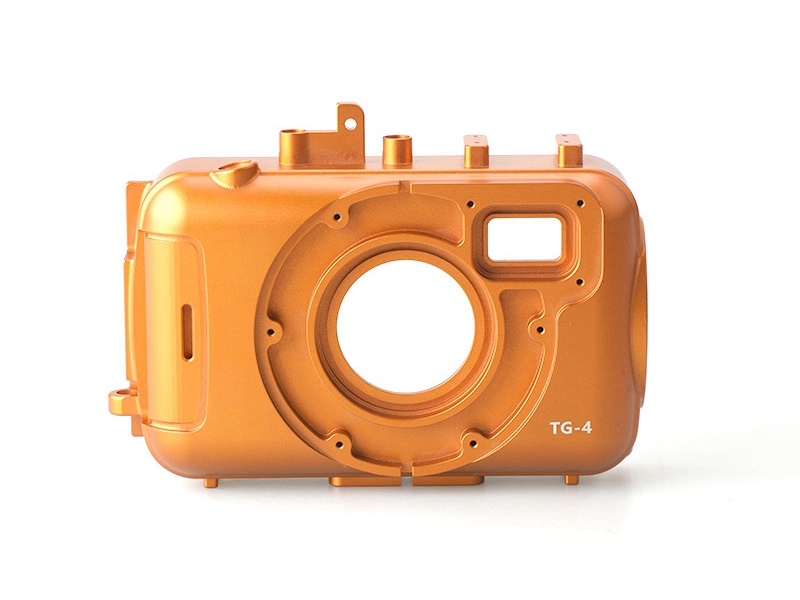
Por que o Alumínio 6063 foi Selecionado
O Alumínio 6063 foi escolhido por seu excelente equilíbrio entre resistência, resistência à corrosão e compatibilidade com tratamentos de superfície. Comumente utilizado em aplicações arquitetônicas e eletrônicos de consumo, essa liga apresenta:
Propriedade | Valor |
|---|---|
Resistência à Tração | ≥190 MPa |
Alongamento | ≥8% |
Densidade | 2.7 g/cm³ |
Adequação de Acabamento Superficial | Excelente para anodização e jateamento |
Sua excelente resposta à anodização e estabilidade dimensional sob usinagem de alta precisão o tornam ideal para carcaças TG4. Saiba mais sobre Usinagem CNC de Alumínio 6063.
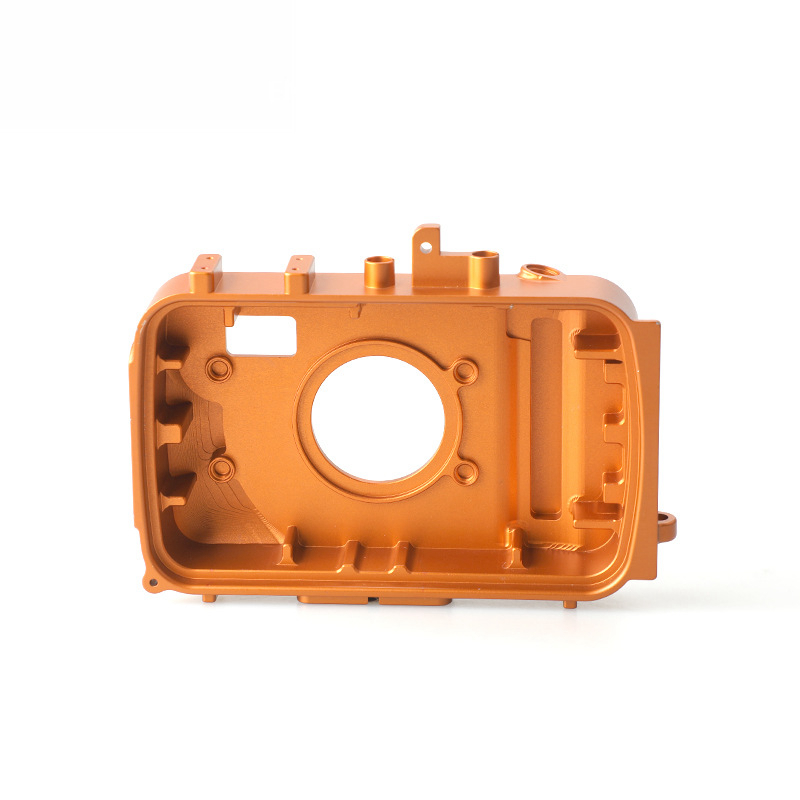
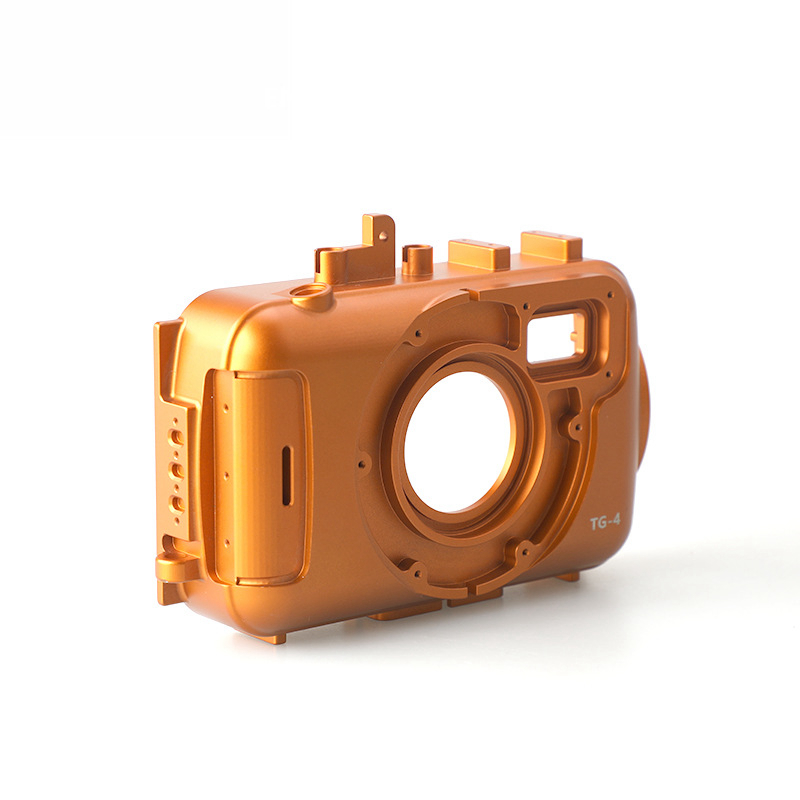
Fluxo de Processo: Combinando Eficiência e Precisão
Fresamento CNC de Desbaste em 3 Eixos
A usinagem inicial de desbaste foi realizada utilizando fresamento CNC de 3 eixos para remover eficientemente o material excedente e estabelecer a geometria base, preservando margem crítica para detalhamento fino.
Usinagem de Precisão CNC de 5 Eixos
As geometrias complexas da carcaça — contornos rebaixados, raios apertados e undercuts — foram finalizadas com fresamento CNC de 5 eixos. Isso permitiu acesso multidirecional das ferramentas com precisão de ±0,01 mm, eliminando erros de reposicionamento e melhorando a produtividade.
Sequência de Acabamento de Superfície
Para atingir a estética premium exigida pela Olympus, uma série de etapas de tratamento de superfície foi aplicada:
Jateamento – Proporciona uma textura fosca uniforme de ~Ra 1,6 μm.
Anodização – Melhora a resistência à corrosão e a consistência de cor (espessura de 10–15 μm).
Marcação a Laser – Aplicação do logotipo da marca e identificação da peça com alto contraste e permanência.
Garantia de Qualidade e Inspeção
Inspeção Dimensional: Todas as características críticas foram verificadas com uma CMM com repetibilidade de ±2 μm.
Controle de Qualidade de Superfície: A espessura após anodização foi verificada com medidores de corrente parasita.
Inspeção Estética: Todas as superfícies visíveis atenderam às normas ISO 1302 de acabamento superficial e à classificação estética da Olympus.
Resultado e Feedback do Cliente
A Neway entregou mais de 500 carcaças TG4 de alta precisão na produção inicial. A Olympus confirmou que os componentes atenderam a todos os requisitos funcionais e estéticos sem necessidade de ajustes adicionais. A combinação de usinagem avançada e tratamento de superfície integrado resultou em menor tempo de ciclo e excelente consistência visual entre lotes.
Por que escolher a Neway para projetos complexos de carcaças de câmera CNC
Usinagem CNC de Alumínio: Nossas capacidades avançadas de usinagem multi-eixos permitem a produção eficiente de geometrias complexas, garantindo precisão em todas as superfícies e curvaturas.
Serviço de Usinagem de Precisão: Trabalhamos com tolerâncias de até ±0,005 mm, garantindo repetibilidade e precisão para peças de montagem crítica, como carcaças de câmera.
Serviço de Fabricação Completa: Desde o desbaste inicial em 3 eixos até anodização final e marcação a laser, oferecemos um processo totalmente integrado sob o mesmo teto.
Perguntas Frequentes
O que torna o Inconel 718 particularmente adequado para aplicações aeroespaciais?
Inconel 718 é ideal para aplicações aeroespaciais porque combina alta resistência, excelente resistência à corrosão e desempenho confiável em temperaturas extremas.
Quais técnicas de usinagem CNC são melhores para o Inconel 718?
Os melhores métodos incluem usinagem CNC, usinagem multi-eixos, fresamento CNC de 5 eixos e EDM.
Como diferentes tratamentos de superfície impactam o desempenho do Inconel 718?
Diferentes tratamentos incluem revestimentos térmicos, revestimentos PVD, galvanização e eletropolimento.
Quais são os principais fatores ao usinar geometrias complexas em Inconel 718?
Os principais fatores incluem controle térmico, desgaste da ferramenta, precisão dimensional e acesso a áreas difíceis. Usinagem multi-eixos e usinagem CNC personalizada são essenciais.
