Selective Laser Sintering (SLS) | Metal Parts 3D Printing Service
Introduction: When Metal SLS Fits Precision Metal Parts
Selective Laser Sintering (SLS) for metal parts is most useful when a buyer needs complex metal geometry, internal channels, lattice structures, part consolidation, or low-volume functional prototypes that are difficult to machine or cast. In buyer language, “metal SLS” often refers to laser powder bed fusion processes such as DMLS, SLM, or LPBF. The process can produce dense metal parts, but it is not a shortcut around engineering validation. Alloy qualification, powder control, build orientation, supports, heat treatment, HIP, machining, surface finishing, and inspection decide whether a printed part is only a prototype or a release-ready metal component. Buyers should define the geometry reason for additive manufacturing, the required alloy condition, critical surfaces, load case, inspection method, and downstream machining needs before quoting. This page focuses on the sourcing decision for metal SLS service, not on replacing dedicated alloy datasheets, medical submissions, aerospace qualification plans, or CNC tolerance negotiations.
Metal SLS Technology Explained: From Powder Bed to Qualified Part
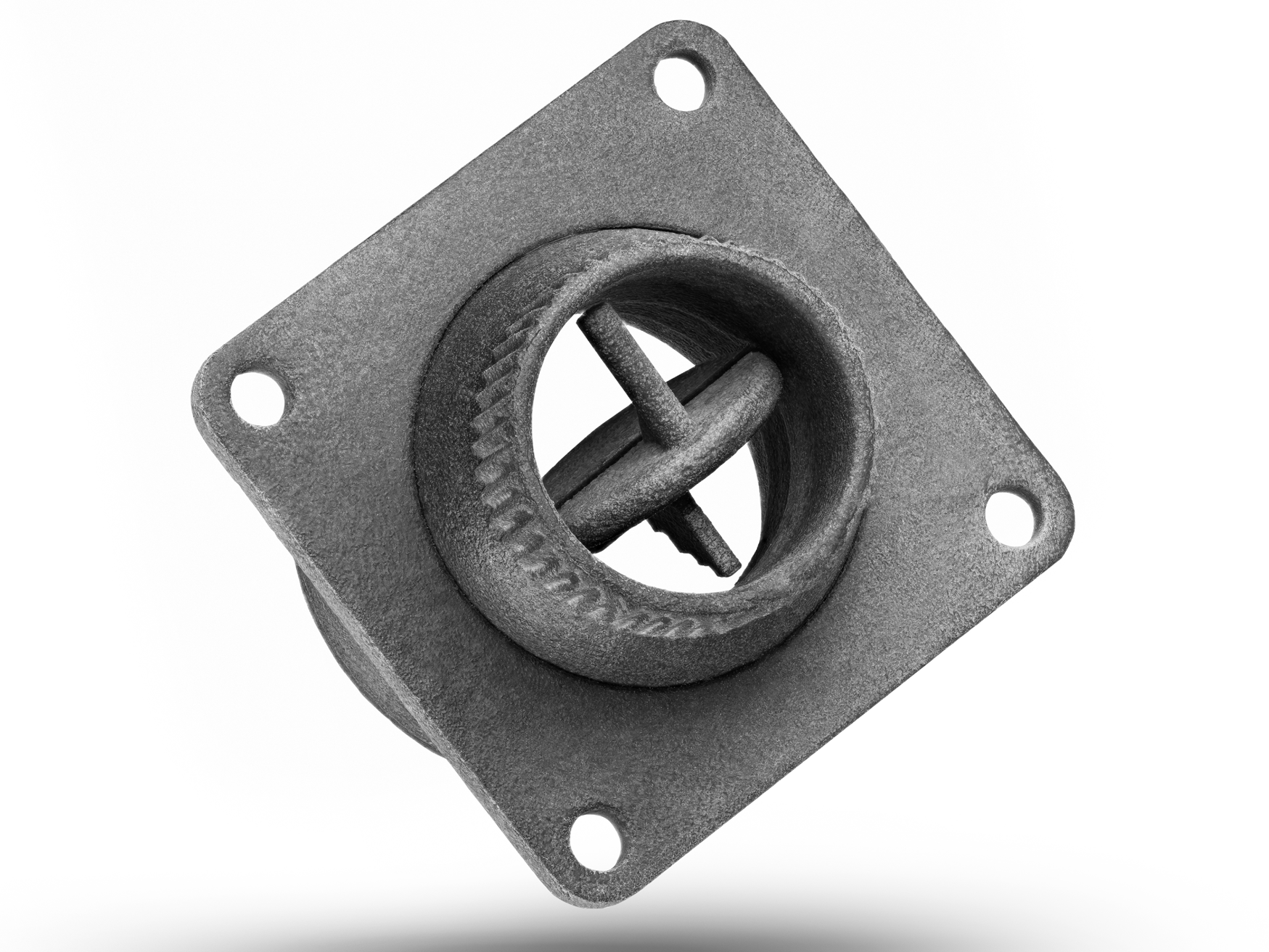
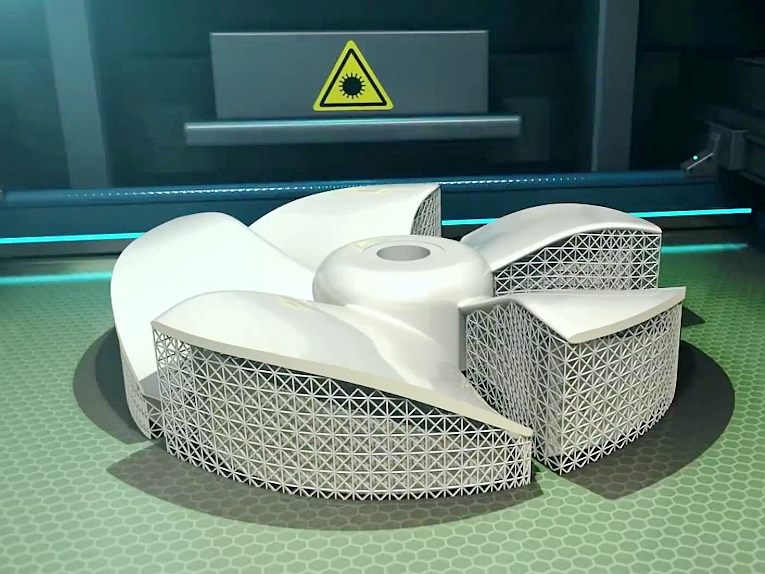
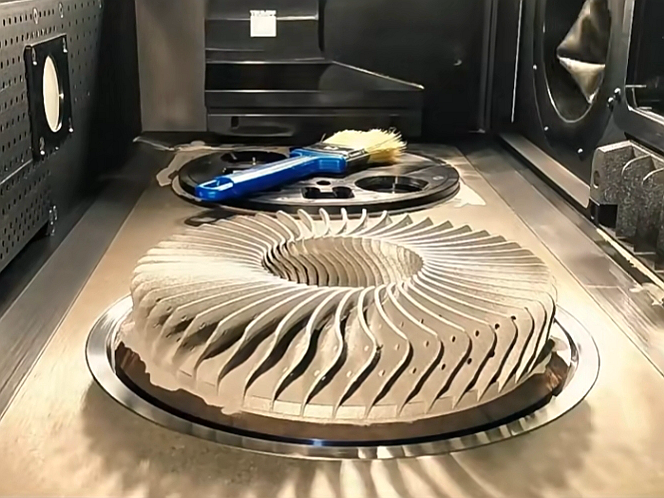
Metal SLS, DMLS, SLM, and LPBF use a focused laser to fuse selected regions of a thin metal powder layer inside an inert build chamber. Each layer follows sliced CAD data, and the next powder layer is spread after the previous layer is fused. The part grows from the build plate together with support structures that anchor overhangs, conduct heat, and reduce distortion. The process can create internal passages and exterior features that are not reachable by standard cutting tools, but every added feature also creates powder-removal, support-removal, and inspection questions.
A complete workflow begins with CAD review, additive manufacturability review, orientation selection, support design, powder selection, parameter selection, and build layout. The build chamber is usually protected by argon or nitrogen, depending on alloy and machine requirements, to reduce oxidation risk during melting. During printing, laser power, scan speed, hatch spacing, layer thickness, recoater behavior, oxygen level, powder condition, and thermal history influence density and residual stress. Once the build is finished, the part may need cooldown, depowdering, stress relief, base-plate separation, support removal, heat treatment, HIP, machining, surface finishing, and inspection. Build records, powder lot traceability, witness coupons, and inspection reports are often needed when the part is more than a visual prototype.
Metal powder bed fusion is related to polymer SLS in layer-by-layer logic, but the engineering risk is higher because the powder melts or fuses into a structural metal part. As a high-value process within the broader 3D Printing service range, metal SLS should be selected when geometry, lead time, or part consolidation creates value that offsets build cost, post-processing effort, and qualification work. The RFQ should mark as-built surfaces, machined surfaces, support-allowed zones, internal cavities, powder escape holes, and datum features. It should also state whether acceptance is based on appearance, fit, pressure, fatigue, temperature exposure, corrosion, or regulatory documentation. If the design has no additive-only feature, a conventional route should be priced in parallel.
Key Materials for Metal SLS and Their Properties
Metal SLS material selection should start with the application requirement and the qualified powder route, not only with a familiar wrought or CNC machining grade. Some alloys have mature LPBF parameter sets and post-processing routes, while others need special powder chemistry, crack-control strategy, or a different manufacturing process. Buyers should ask whether the exact alloy, heat treatment, surface finish, and test coupons are qualified for the machine and build orientation. The same alloy name can behave differently as powder, as-built metal, HIP-treated metal, machined stock, or forged/wrought material.
Among stainless steels, Stainless Steel SUS316L is often considered for corrosion-resistant prototypes, manifolds, housings, and medical or fluid-handling components. The buyer should still confirm whether the part needs an additive 316L route or a machined 316L route, because surface roughness, internal porosity, heat treatment, and final passivation can differ. For pressure or fatigue applications, tensile strength alone is not enough; leak testing, CT inspection, surface finishing, and proof testing may be required.
Tool steels and mold steels are attractive when the design needs conformal cooling inserts, wear-resistant tooling sections, or thermal-control features connected to Rapid Molding. Additive manufacturing can place cooling channels closer to a mold surface than drilled holes, but channel diameter, powder removal, polishing, heat treatment, and final machining must be planned together. The engineering decision is not only whether the insert can be printed; it is whether the printed insert can be cleaned, hardened, finished, and inspected without damaging the cooling geometry.
Nickel alloys are used when high temperature, oxidation, corrosion, or pressure resistance drives the requirement. Inconel 718 is often selected for strength after suitable heat treatment, while Inconel 625 is valued for corrosion and oxidation resistance. These alloys can be demanding in powder handling, residual stress, support removal, HIP, and machining. Buyers should specify whether the part is for a hot test, pressure boundary, fixture, prototype, or production-intent component.
Titanium alloys are important when strength-to-weight ratio, corrosion resistance, and biocompatibility are part of the design target. Ti-6Al-4V (TC4) is widely used in aerospace and medical development, but implant or flight hardware needs a controlled device or aerospace qualification route. Powder oxygen pickup, build orientation, HIP, surface texture, and fatigue testing matter. A printed titanium concept model should not be treated as a released implant or flight component without the required documentation.
Aluminum alloys require careful route selection. Aluminum 6061 and Aluminum 7075 are familiar CNC materials, but the same wrought grades are not automatically easy LPBF materials. Some additive aluminum alloys use modified chemistry or different AM-qualified grades to control cracking and density. If a buyer starts from a 6061 or 7075 drawing, the supplier may recommend CNC machining, an AM-specific aluminum alloy, or a design change before printing.
Five Buyer Decisions When Choosing Metal SLS
Metal SLS gives the most value when it answers a specific manufacturing question that conventional processes cannot answer well. The decision should be based on geometry, consolidation, lead time, validation scope, and post-processing capacity rather than a general preference for additive manufacturing. A useful first question is simple: what feature justifies the additive route? Good answers include an internal cooling channel, a weight-saving lattice, a one-piece manifold, a patient-matched porous zone, or a low-volume metal shape that would need several setups by CNC.
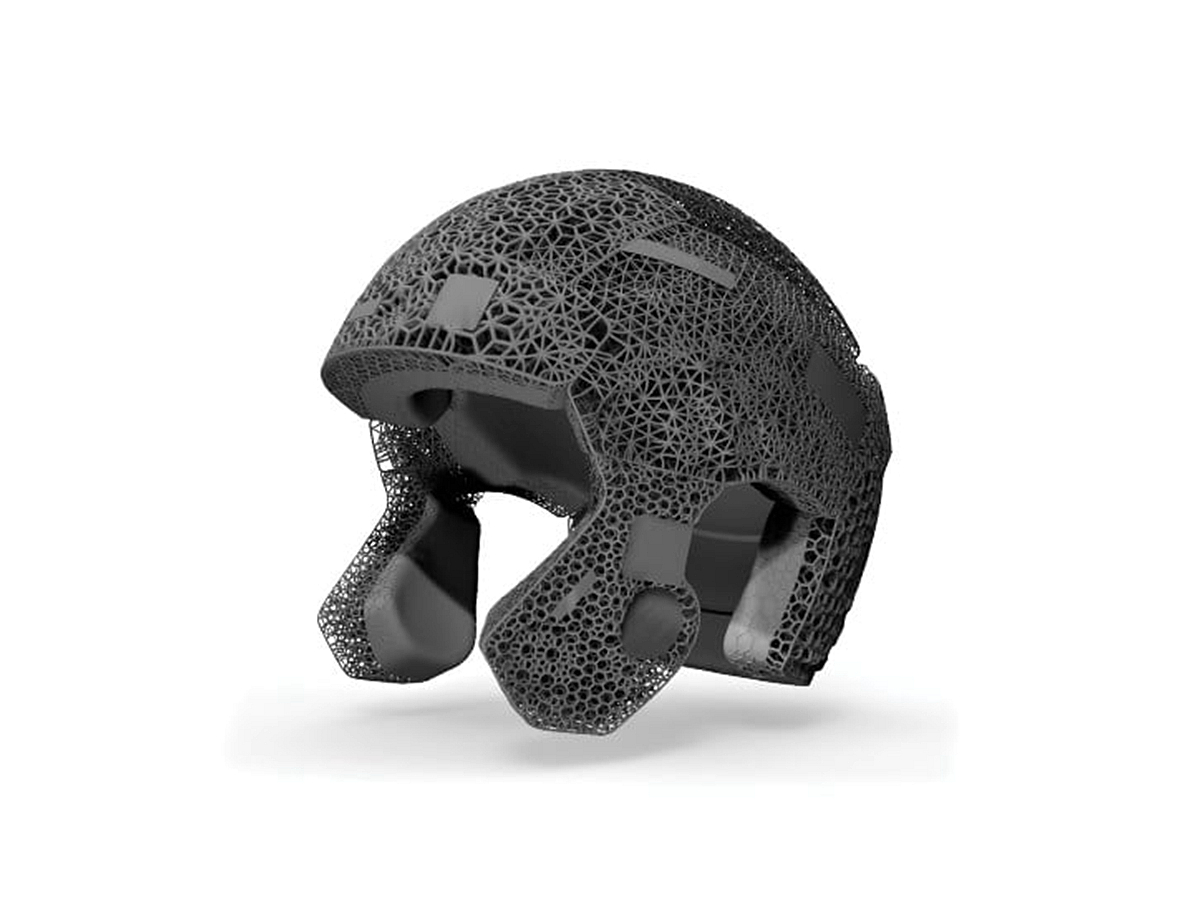
The first advantage is design freedom for functional geometry. Metal SLS can create conformal cooling channels, lightweight lattice structures, topology-optimized brackets, internal manifolds, and integrated features that are difficult or impossible to cut from a solid block. The buyer should still check powder removal, support removal, surface roughness, and inspection access before accepting the design.
Material performance can be strong when alloy, powder, parameters, heat treatment, and inspection are qualified. Metal SLS parts may reach useful density and strength for demanding tests, but density alone does not prove fatigue performance, impact toughness, or pressure integrity. A drawing should define test coupons, build orientation, NDT, heat treatment, surface finish, and whether HIP is required.
Functional integration and part consolidation can reduce assembly count, leak paths, fasteners, welds, and alignment steps. A manifold that was once drilled and plugged may become a single printed flow body. The buyer should compare the benefit against the added risks: trapped powder, inaccessible supports, internal roughness, inspection cost, and more complex design approval.
Metal SLS also supports fast iteration because no mold is required. For low-volume manufacturing Service, the process can be useful when part geometry is complex and quantities are too low for tooling. If the part is simple, large, and tolerance-heavy, CNC machining or casting may still be more economical.
Material utilization can be favorable for expensive alloys because unfused powder may be recovered, sieved, tested, and reused under controlled rules. The recovered powder is not automatically equivalent to virgin powder. Oxygen, moisture, particle size distribution, contamination, and reuse count must be controlled, especially for titanium, nickel alloys, medical devices, and aerospace applications.
Key Post-Processing Steps for Metal SLS Parts
Post-processing is part of the metal SLS manufacturing route, not a cosmetic afterthought. A printed metal part normally needs depowdering, stress relief, base-plate separation, support removal, heat treatment, surface finishing, machining, and inspection. The order matters because cutting the part from the plate before stress relief can release residual stress and move datums. If a quote does not define the post-processing route, the quoted part is not yet fully specified.
Heat treatment changes residual stress and microstructure, and it must match the alloy and acceptance condition. Tailored Heat Treatment for CNC Machining concepts are relevant because metal parts often need stress relief, solution treatment, aging, or precipitation hardening. The buyer should specify whether the requirement is as-built, stress-relieved, aged, HIP-treated, or machined after heat treatment.
HIP may be specified for fatigue-critical, pressure-critical, aerospace, or medical applications when closed internal porosity must be reduced. HIP cannot repair poor chemistry, open surface-connected flaws, trapped powder, or a bad design. It should be paired with inspection evidence such as density checks, metallography, CT, tensile coupons, or fatigue coupons when substitution for wrought or forged material is being considered.
Surface finishing is selected according to function. Electropolishing for Precision Parts can reduce peaks and improve corrosion behavior on suitable alloys and accessible surfaces. For smoother cosmetic or mating surfaces, the CNC Part Polishing Service can support final finishing. Critical bores, seal lands, threads, bearing seats, and datums often need machining rather than only polishing.
Metal SLS vs. Other Metal Manufacturing Processes
Metal SLS should be compared with CNC machining, casting, forging, welding, and hybrid manufacturing by part geometry and risk. It is not universally better or worse; it solves a different problem. Use metal SLS when internal geometry, weight reduction, consolidation, or low-volume complexity is the main value. Use conventional manufacturing when the part is simple, large, high-volume, or driven by mature wrought or forged allowables. A practical sourcing review often asks for two routes: additive plus finishing, and a conventional or hybrid alternative.
Compared with CNC machining, metal SLS is stronger for internal channels, lattices, and shapes that cannot be reached with tools. Conventional precision machining services are usually better for flat faces, tight bores, threads, simple blocks, and high-repeatability tolerance control. Many metal SLS projects still need CNC machining after printing, so the cost comparison should include both additive build and subtractive finishing.
Compared with casting, metal SLS avoids tooling and can change quickly during development. Casting can still be more economical for larger batches or very large parts once tooling is justified. Metal SLS can offer better design iteration and local complexity, while casting may offer larger part size and lower unit cost at scale. The right choice depends on quantity, alloy, geometry, tolerance, surface finish, mechanical testing, and inspection burden.
In production-intent work, hybrid manufacturing is often the practical route. Metal SLS can make the near-net complex body, then Multi-Axis Machining Services can finish datums, seal faces, threads, bearing seats, and precise interfaces. This preserves additive geometry while giving buyers familiar CNC control where tolerance and surface integrity matter most. Hybrid planning should happen before printing, because stock allowance, support position, and datum strategy are hard to fix after the build.
Applications of Metal SLS in High-End Industries
In aerospace, metal SLS is useful for lightweight brackets, small ducts, manifolds, heat exchangers, fuel nozzles, and topology-optimized parts when qualification requirements can be met. Aerospace and Aviation projects must still control material allowables, powder lot, build orientation, NDT, fatigue evidence, surface finish, and traceability. Weight reduction is valuable only when the printed route also satisfies strength, inspection, and documentation requirements.
In medical device work, metal SLS can support patient-matched models, porous titanium structures, orthopedic trial parts, surgical instruments, and implant concepts. In Medical Device manufacturing, an implantable part needs device-specific material, process, cleaning, biocompatibility, sterilization, and regulatory documentation. A printed titanium prototype should be separated from an implant-grade release route unless the full quality system and submission requirements are in place.
In automotive and motorsport development, metal SLS is useful for manifolds, brackets, cooling features, lightweight housings, and thermal management prototypes. Automotive buyers should define whether the part is for packaging review, dyno testing, short-run competition use, or production transfer. Heat, vibration, pressure, fatigue, and surface cleanliness requirements determine whether the printed part is acceptable or whether CNC, casting, forging, or molding is needed. A racing prototype may tolerate a shorter validation path than a production safety component.
Neway’s Metal SLS Capabilities and Quality Commitment
A Neway metal SLS project should start with a manufacturability review rather than a direct print order. The useful review covers alloy route, geometry reason for additive manufacturing, support strategy, powder removal, heat treatment, HIP requirement, machining allowance, inspection plan, and the final decision the prototype or part must support. The goal is to determine whether metal SLS, CNC machining, casting, hybrid manufacturing, or another route is the best manufacturing answer.
Neway's One Stop Service Service can be framed as a workflow question: design review, additive manufacturing route, heat treatment, machining, finishing, inspection, and sourcing handoff. Buyers should provide a STEP file, drawing, quantity, alloy requirement, target condition, critical surfaces, surface roughness, tolerance zones, load case, pressure or fatigue requirement, and any required inspection method. If the risk is high, the first deliverable should be a feasibility review or test coupon plan before a full part build. A strong RFQ separates prototype goals from production goals so the supplier does not quote the wrong documentation scope.
Conclusion: Use Metal SLS Where Its Geometry Advantage Is Real
Metal SLS is valuable when the design needs internal channels, lattice structures, weight reduction, part consolidation, or fast low-volume metal prototypes that conventional tools cannot provide efficiently. It is not a universal replacement for CNC machining, casting, forging, or molded production routes. The buyer's next step is to define the alloy, geometry purpose, build envelope, support and powder-removal plan, heat treatment, machined datums, surface finish, inspection method, and acceptance tests. When those inputs are clear, metal SLS can be evaluated as a controlled manufacturing route rather than a broad promise. If those inputs are not clear, the safest next action is a manufacturability review, not a production order. For borderline cases, request a small coupon, a feature sample, or a hybrid quote before committing to a full build. For cost control, ask the supplier to show which surfaces remain as-built, which are machined, which tests prove the additive feature, and which risks remain open. That short review prevents an expensive print from answering the wrong question and separates a geometry prototype from a production-intent component with material evidence before purchase. Use this evidence to decide whether to print, machine, cast, redesign, or run a smaller feature sample before spending the full build budget.
FAQs
Can heat-treated metal SLS parts match the strength of forged components?
What support materials are used in metal SLS, and how hard are they to remove?
Can metal SLS make complex parts with internal cavities, and how is powder removed?
Can SLS titanium parts be used as implants, and what post-processing?
What is the typical build volume of metal SLS machines, and how are larger parts handled?