Can heat-treated metal SLS parts match the strength of forged components?
Heat-treated metal SLS parts can match a forged component's specified room-temperature tensile strength for some alloys, but heat treatment alone does not establish equivalent fatigue life, fracture toughness, impact resistance, or part reliability. In metal procurement, "metal SLS" usually refers to laser powder bed fusion routes marketed as DMLS or SLM rather than polymer SLS. A valid comparison requires the same alloy specification and condition, representative build-orientation coupons, defined surface and defect limits, and tests that reflect the service load. Buyers should compare the exact property and acceptance requirement, not a generic claim that one process is stronger.
The Strength Paradox: Tensile Strength vs. Toughness
Static tensile equivalence is possible, while toughness and fatigue equivalence must be demonstrated separately. Laser powder bed fusion can create fine solidification structures, and alloy-specific aging or solution treatment can adjust strength and ductility. For Ti-6Al-4V or Inconel 718, qualification must use the applicable material specification, thermal route, test direction, temperature, and specimen condition. The historical ASTM F3122-14(2022) guide identifies anisotropy, porosity, specimen preparation, alignment, environment, speed, and temperature as factors that affect reported AM properties. Subsequent heat treatment can relieve stress or transform microstructure, but a passing tensile coupon does not qualify a notched, threaded, thick-section, or fatigue-critical part.
The harder comparison concerns toughness and fatigue strength. Forging and laser powder bed fusion create different microstructures, defect populations, surface conditions, and crack paths. Those differences remain relevant even when two tensile certificates show similar yield and ultimate strength.
Forged Components: Forging is usually the lower-risk route for impact loading, long fatigue life, fracture-critical load paths, or designs supported by mature forged allowables. Plastic working can refine the structure and align grain flow with the part, but laps, inclusions, machining damage, and poor heat treatment still require control and inspection.
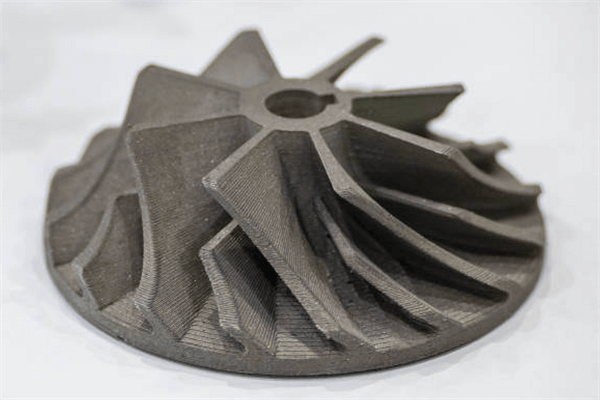
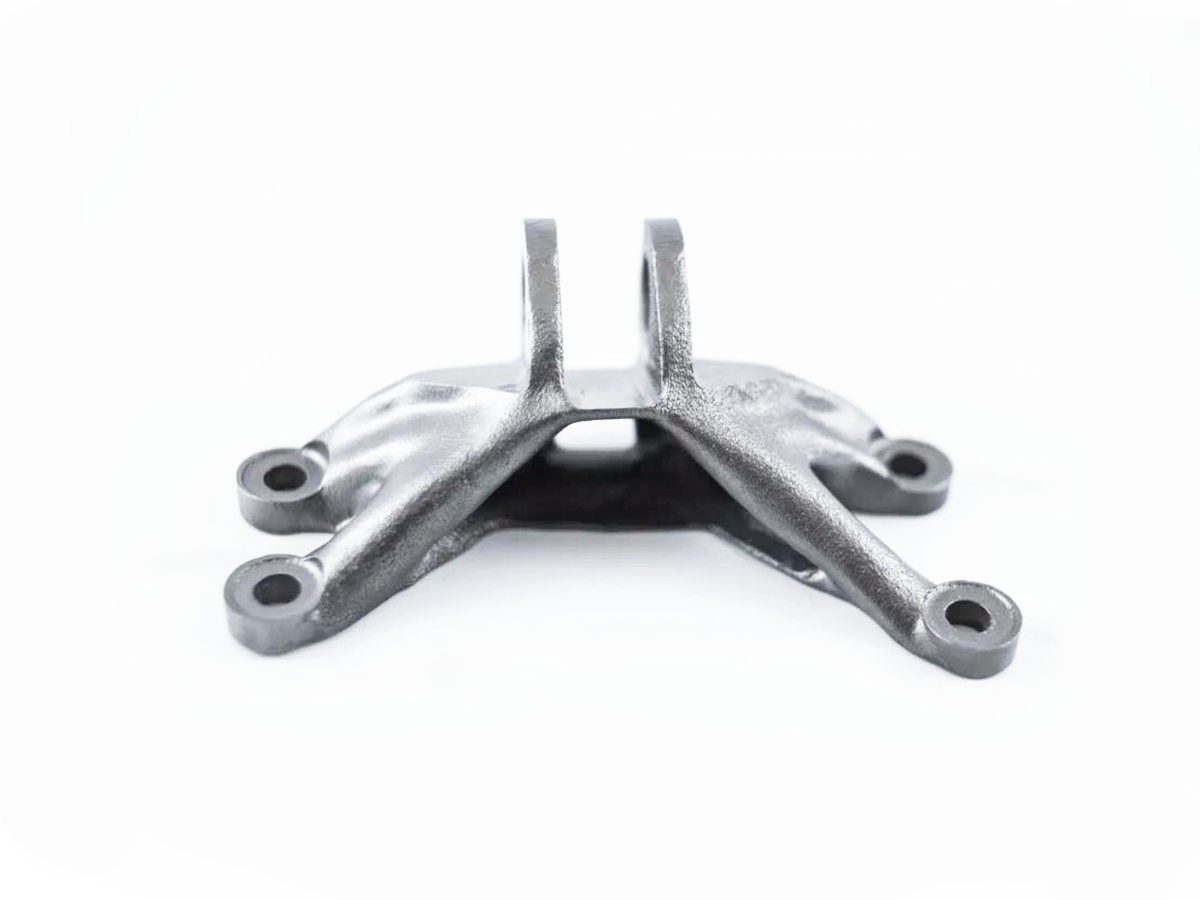
Metal SLS Parts: Laser powder bed fusion earns consideration when internal channels, part consolidation, low-volume complexity, or weight reduction justify a separate additive qualification plan.
Internal Defects: Lack-of-fusion flaws, keyhole pores, trapped gas, and surface-connected discontinuities can initiate cracks. Hot isostatic pressing (HIP) can reduce suitable closed internal porosity, but it cannot restore contaminated chemistry, repair every surface-connected flaw, or rescue an unqualified build.
Anisotropy: Build direction, scan strategy, local thermal history, supports, and surface finish can change directional behavior. Qualification coupons should represent the production orientation and thermal lot; fatigue-sensitive regions also need the specified final surface condition rather than an as-built-versus-polished data mismatch.
The Role of Hot Isostatic Pressing (HIP)
HIP can improve the consistency of qualified metal powder bed fusion material by reducing closed internal porosity, but HIP does not by itself prove equivalence to a forging. ASTM F3301-18a specifies thermal post-processing requirements for listed powder bed fusion alloys; the selected cycle still has to match the alloy and required material condition. After HIP, separate solution treatment or aging may be needed. Acceptance evidence should match the drawing risk: lot-representative tensile coupons for static loads, metallography or density checks for process control, X-ray computed tomography where internal flaw limits are justified, and fatigue or fracture testing when those properties govern. The inspection method, detectable flaw size, sampling plan, and reject criteria must be agreed before production.
Comparison of Key Properties
Property | Forged Components | Heat-Treated Metal SLS (with HIP) |
|---|---|---|
Tensile/Yield Strength | Compare the specified alloy, heat-treated condition, test direction, and temperature | Can meet the same requirement when production-representative coupons and lots are qualified |
Ductility (% Elongation) | Usually supported by established wrought or forged specifications | Verify orientation, gauge preparation, porosity, and the complete thermal cycle |
Fatigue Strength | Often preferred where mature allowables match the load spectrum and finish | Require representative surface condition, stress ratio, environment, flaw limits, and S-N evidence |
Impact Toughness | Lower substitution risk when impact data and grain-flow direction are qualified | Do not infer impact or fracture performance from tensile strength alone |
Microstructure | Worked structure and grain flow depend on the forging route and part geometry | Build history changes after HIP and heat treatment but remains part of qualification |
Geometric Freedom | Limited by billet flow, dies, draft, machining access, and production volume | Strongest case for channels, lattices, consolidated assemblies, and topology-optimized forms |
Engineering Guidelines for Selection
Choose Forging for Ultimate Performance: Retain forging when impact, high-cycle fatigue, crack growth, or a safety-critical load path controls and the design already relies on forged allowables. A process change then requires engineering requalification, not a supplier statement that additive tensile strength is similar.
Choose Metal SLS for Complexity and Integration: Consider metal SLS when geometry creates measurable value, such as internal cooling passages, consolidated nozzles, patient-specific forms, or lightweight brackets. These benefits matter in aerospace and medical applications only when the material route, risk classification, and acceptance plan are approved together.
Use a Hybrid Approach: Build the inaccessible geometry additively, then use CNC Machining for datums, sealing faces, bearing seats, threads, or fatigue-sensitive surfaces. The drawing should distinguish as-built and machined surfaces, preserve inspection access, and state whether final NDT occurs before or after material removal.
A heat-treated metal SLS part is a credible forging substitute only after the required static, cyclic, toughness, and defect criteria have been matched for the finished configuration. ISO/ASTM 52901 provides a useful purchase framework for exchanging part definition, feedstock, final-property, inspection, and acceptance requirements. The RFQ should name the alloy specification, build orientation, HIP and heat-treatment route, surface condition, coupon location, load spectrum, test temperature, CT or NDT criteria, sampling plan, and whether the request is a form-fit prototype or a structural forging replacement.