Parts Machining Guide: From Drawing Review to Final Inspection
Parts machining is a controlled route that converts an approved drawing and material specification into an inspected component through process planning, workholding, staged cutting, finishing, and final verification. Buyers evaluating cnc machining services should look beyond whether a supplier can cut the nominal shape. The decisive questions are how critical features are tied to datums, how material and post-processing affect the route, where distortion or burrs can appear, and which inspection method proves the final requirement. A reliable order starts with one controlled data package and ends with evidence matched to the part's actual function.
The workflow must also fit the production stage. A prototype route may use flexible fixtures and extensive engineering review, while repeat production may justify dedicated workholding, tool-life controls, and a defined sampling plan. Neither route is automatically better. The buyer should identify critical-to-function features, expected quantities, final surface state, inspection records, and approved change rules before accepting the quotation. Those inputs let the supplier distinguish necessary control from avoidable precision and expose technical assumptions before material is committed.
What Parts Machining Means from a Buyer Perspective
From a buyer perspective, parts machining means purchasing a verified manufacturing result, not reserving time on a particular machine. Raw stock may be bar, plate, billet, tube, casting, or forging, and the route may combine milling, turning, drilling, boring, grinding, deburring, heat treatment, or surface finishing. The selected sequence depends on the dominant geometry, material grade and condition, feature accessibility, datum relationships, tolerance, roughness, order quantity, and final acceptance state.
The supplier converts those requirements into operations, fixtures, tooling, intermediate checks, finishing allowances, and final inspection. Dimensional tolerance limits size variation; a datum establishes the reference for orientation or location; surface roughness describes texture under a specified measurement method. These controls are related but not interchangeable. A smooth bore can still be out of position, and a correctly sized face can still fail flatness or coating requirements. Buyers should require the quotation and inspection plan to address the control that protects function.
Step 1: Drawing Review Is the Foundation of Parts Machining
Drawing review is the first production control because it establishes what must be made, what must be measured, and what remains unclear. The review compares the 2D drawing with the 3D model, confirms revision alignment, identifies governing dimensions and datums, and checks whether material, heat-treatment, surface-finish, coating, thread, edge, and inspection notes describe the released condition. It also examines tool access, deep pockets or holes, thin walls, burr-sensitive intersections, and features that may move after unclamping.
The review should produce questions and decisions, not silent assumptions. Tight requirements belong on features whose variation changes fit, sealing, motion, load transfer, or assembly. A thread near a thin wall may need an access or strength review; a coated bore needs a defined final dimension and masking or allowance decision. Dominant geometry then helps select general cnc machining services, rotational CNC turning, or feature-focused CNC drilling. The buyer should close conflicts before authorizing production and record any approved deviation against the correct revision.
Drawing Review Focus | Manufacturing Decision | Buyer Confirmation | Failure Mode if Missed |
|---|---|---|---|
Critical dimensions | Assign finishing operation and measurement stage | Identify functional limits and final acceptance state | Unnecessary control or a missed mating requirement |
Datum structure | Define locating, setup transfer, and inspection alignment | Confirm assembly reference and geometric relationship | Correct size measured from the wrong reference |
Hole and thread layout | Select access direction, tool, sequence, and burr control | Specify thread system, engagement, gauge, and intersecting-hole condition | Position error, trapped burr, broken tool, or assembly failure |
Wall thickness and rigidity | Plan support, staged stock removal, and post-unclamp check | Mark load paths, cosmetic zones, and acceptable free-state condition | Chatter, deflection, distortion, or datum shift |
Finish and coating requirements | Reserve allowance, define masking, and select final inspection stage | State treated zones, roughness, color/class, and post-finish dimensions | Coating changes fit or an acceptable surface is damaged later |
Step 2: Process Planning Converts the Drawing into a Machining Route
Process planning converts the reviewed requirements into an ordered route with defined setups, datum transfers, stock allowances, tools, controls, and inspection points. Roughing removes bulk material but can release residual stress. Semi-finishing establishes stable references and leaves controlled stock. Finishing protects the features that set fit, position, roughness, or contact. The plan should also state when deburring, heat treatment, coating, cleaning, and final measurement occur because those operations can change size or surface condition.
Consider an engineering scenario, not a claimed customer case: a thin-wall aluminum housing has an internal bore located from a mounting datum and receives anodizing after machining. Heavy material removal can move the walls after unclamping, while coating can reduce bore size. A defensible route roughs the cavity symmetrically, allows the part to stabilize, finishes the mounting datum and bore in a controlled relationship, checks the free-state geometry, and verifies the specified dimension in the required pre- or post-anodize state. The buyer decision is whether the functional bore needs masking, allowance, or final machining after treatment.
Planning changes when a project moves from prototyping to mass production. Prototype work favors adaptable setups and design feedback. Production adds repeatable workholding, controlled tool changes, defined check intervals, revision discipline, and containment rules. Buyers should request a route review before scaling if the prototype used temporary datums, manual fitting, extensive hand finishing, or inspection that cannot support the expected lot.
Step 3: Fixture Design Controls Repeatability and Stability
Fixture design controls where the part sits, how force enters it, which datum is reproduced, and whether cutting loads can move or distort the workpiece. A rigid clamp is not automatically a good clamp. Too little support permits vibration; too much force can deform a thin part into a temporary shape that changes after release. Chips or burrs under a locating surface can also shift every feature produced from that setup.
Fixture planning should define locators, supports, clamp direction, access, part protection, cleaning, and verification after transfer. Plates and housings may need distributed support; shafts may need centers, soft jaws, or steady support; visible surfaces may require protected contact. The supplier should confirm critical geometry in the free state when clamping can mask distortion. For repeat orders, fixture identification, wear checks, and approved replacement criteria become part of the control plan rather than informal shop knowledge.
Part Type | Fixture Strategy | Main Risk | Validation Action |
|---|---|---|---|
Flat plate or bracket | Locate from functional references with distributed support | Flatness changes after release or datum mismatch | Check free-state flatness and reference relationship |
Thin-wall housing | Low-distortion support with staged or balanced clamping | Wall deflection, chatter, and local clamp marks | Measure after unclamping and after relevant finishing |
Shaft or pin | Soft jaws, centers, or steady support matched to length | Runout, bending, jaw distortion, or reference loss | Verify concentric features from the drawing datum |
Valve block or manifold | Indexed or repeatable multi-face location | Cumulative position error and cross-hole burrs | Inspect hole relationships and clean intersecting passages |
Small precision component | Custom nest with controlled gripping and protected surfaces | Part movement, marking, or inconsistent seating | Confirm seating, feature location, and cosmetic acceptance |
Step 4: The Machining Stage Varies by Part Shape
The machining stage should follow the feature mix rather than force every part into one process. Dominant geometry selects the primary method, while local requirements select secondary operations. Material condition, tool reach, wall stiffness, burr location, setup count, and inspection access can change the preferred route even for visually similar parts. A buyer should compare quotations by proposed route and assumptions, not by machine name alone.
Prismatic Parts
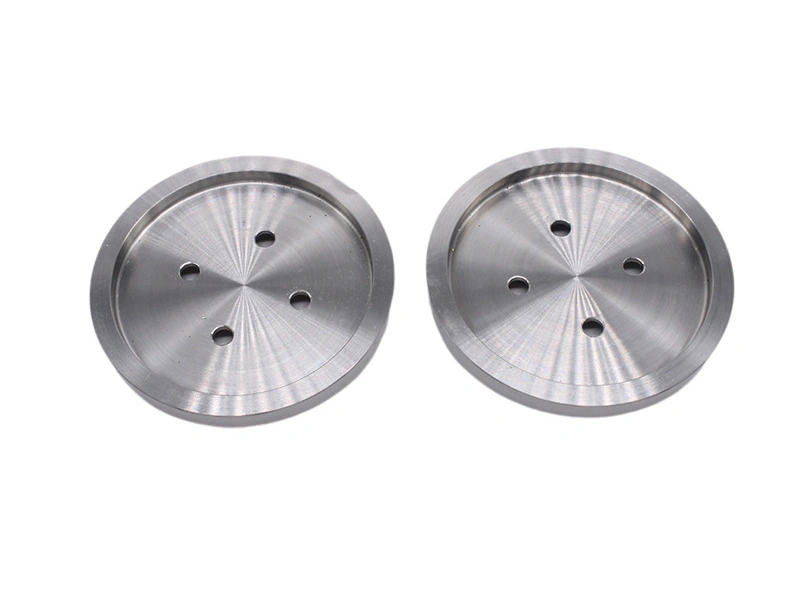
Prismatic brackets, bases, housings, and blocks usually begin with milling because flat faces, pockets, slots, and multi-face features dominate. Their risks include thin-wall movement, deep-pocket deflection, inaccessible corner radii, and position loss between setups. Supplementary CNC drilling may control hole creation, but reaming, boring, tapping, or thread milling can be required when fit, position, or thread function exceeds a drilled-hole result. Inspection should reproduce the functional datum scheme rather than use the most convenient shop surface.
Rotational Parts
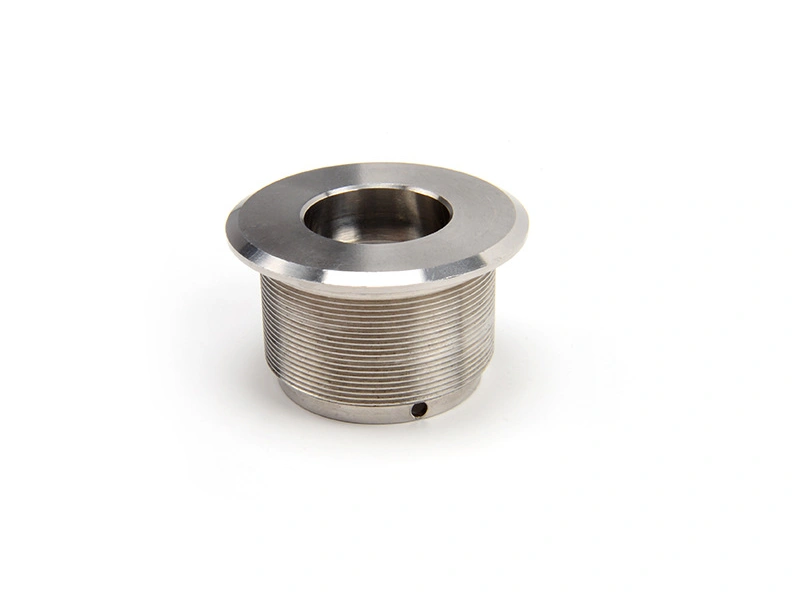
Shafts, pins, bushings, nozzles, and sleeves usually favor CNC turning because diameter, shoulder, groove, taper, and thread relationships share a rotational axis. The control plan must separate diameter size from roundness, runout, and coaxiality. Long or slender parts can deflect under cutting force, and chucking can distort thin rings. Buyers should identify bearing, sealing, or mating diameters and specify how their relationships will be measured.
Hole-Intensive Parts
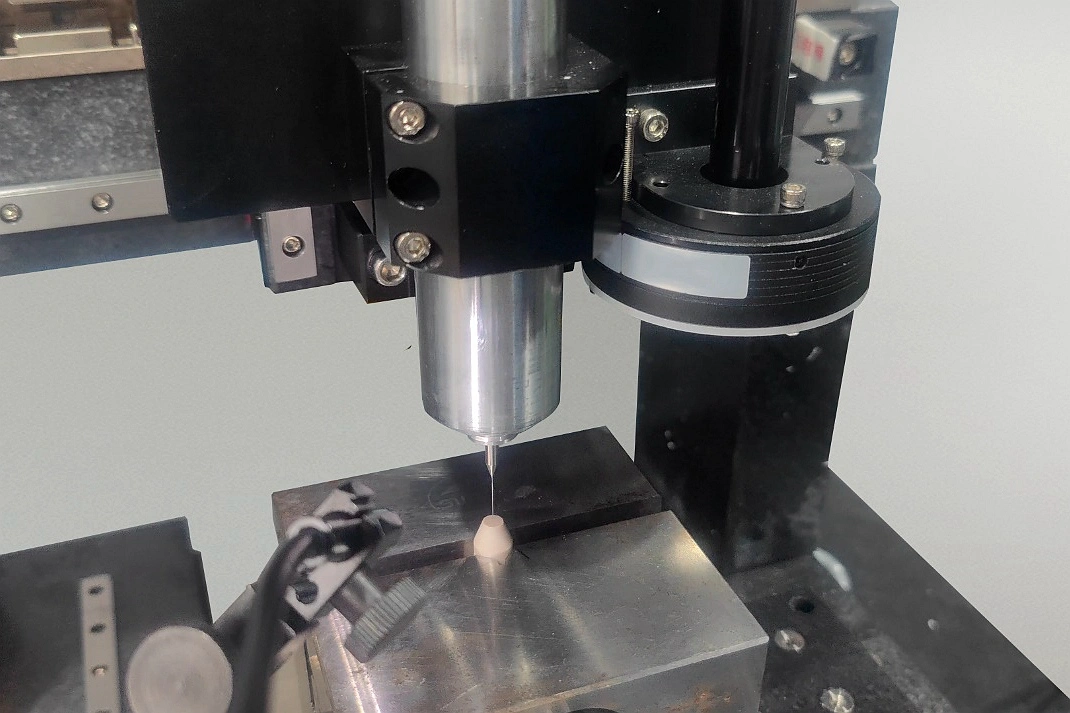
Manifolds, valve blocks, fixtures, and connection parts may be defined more by their hole network than by the outer profile. Hole depth, diameter, direction, intersection, straightness, thread engagement, chip evacuation, and burr containment drive the route. A cross-hole can leave debris or a burr inside a passage that an external inspection cannot see. The RFQ should identify fluid paths, cleanliness requirements, plug or thread standards, leakage criteria, and any bores that need a finishing or functional test.
Complex Multi-Face Parts
Multi-face parts need a deliberate setup and datum-transfer strategy. Reducing setups can improve feature relationships, but one-clamping machining is not automatically superior if access, tool length, workholding, or inspection becomes unstable. The supplier should explain which critical faces are completed from a common reference, which features require repositioning, and how transfer error is verified. Buyers should also distinguish machine positioning specifications from the finished-part tolerance demonstrated by the actual route.
Part Geometry | Primary Route | Critical Control | Buyer Verification |
|---|---|---|---|
Prismatic block or housing | Milling with feature-specific hole operations | Datum transfer, wall stability, pocket access, and hole position | Free-state geometry and critical feature relationships |
Shaft or sleeve | Turning with selected finishing operations | Diameter, roundness, runout, coaxiality, and thread function | Functional diameters measured from the specified reference |
Manifold or valve body | Drilling, milling, threading, deburring, and cleaning | Hole intersection, sealing surfaces, burrs, and passage cleanliness | Position, thread/seal criteria, cleanliness, and specified test |
Thin-wall enclosure | Staged milling with low-distortion support | Material release, clamp force, chatter, and coating allowance | Dimensions after release and in the required finish state |
Multi-face precision part | Indexed or controlled multi-setup machining | Common datums, access, fixture repeatability, and cumulative error | Position/profile results using the drawing datum scheme |
Step 5: Inspection Confirms the Part, Not Just the Process
Inspection confirms whether the finished part meets the released requirement; it does not prove quality merely because a sophisticated instrument was used. The method must match feature type, tolerance, datum, accessibility, surface condition, and required uncertainty. First-article checks verify the setup and interpretation. In-process checks monitor selected drift-sensitive features. Final inspection verifies the part after the operations that can change size, geometry, burr condition, cleanliness, or appearance.
The buyer should define report scope, sampling or full-inspection requirements, gauge or method expectations where function demands them, and the response to a failed result. A bore may require size, position, roughness, or leakage verification depending on its purpose; one measurement cannot substitute for all four. When drift appears, the supplier needs a reaction plan that stops or contains affected work, inspects back to the last accepted point, corrects the cause, and records restart approval. This evidence connects production control to assembly performance without treating paperwork as a substitute for engineering.
Lead Time, Quality Control, and Rework Risk
Lead time is determined by the complete route, not cutting time alone. Material availability and condition, drawing clarification, fixture preparation, setup count, tool access, intermediate stabilization, outside processing, inspection, and required records all add real work. The supplier should separate known operations from assumptions and identify long-lead material or post-processing before order release. A shorter estimate based on missing requirements is not a more efficient route. Before approval, purchasing should request the owner, dependency, sequence, and release evidence for each external or inspection handoff. This does not guarantee a date, but it exposes schedule-sensitive operations and creates a basis for managing delayed inputs or revisions.
Rework risk rises when datum logic, finishing allowance, tool wear, fixture seating, or revision control is weak. Some errors can be corrected; others cannot be repaired without changing material condition, geometry, or approved surface. Buyers should ask how nonconforming work is contained, who authorizes repair or use-as-is decisions, and whether the original acceptance requirement is still met. Total sourcing risk is better judged from route clarity, validation, and change control than from initial price alone.
Production Factor | Schedule Effect | Quality Control | Buyer Action |
|---|---|---|---|
Material readiness | Grade, condition, stock form, and certificates can delay release | Verify identity, condition, traceability, and approved substitution | State exact specification and certificate requirement in the RFQ |
Fixture preparation | Design and validation add front-end time | Control location, clamping, support, and free-state result | Review fixture strategy for thin, visible, or repeat-order parts |
Toolpath and setup planning | Access, transfers, and finishing stages determine cycle and queue | Protect datum relationships, stock allowance, and critical surfaces | Request route assumptions and critical-feature controls |
Inspection depth | Method, feature count, sampling, and reports affect verification time | Match measurement method and stage to acceptance risk | Define scope, records, sampling, and final measurement state |
Post-processing coordination | Heat treatment, coating, cleaning, and transport add handoffs | Control allowance, masking, handling, and post-process verification | Specify treated zones and dimensions affected by the final state |
How Parts Machining Scales from Prototype to Production
Parts machining scales from prototype to production by converting flexible, engineer-dependent decisions into repeatable controls without losing the design evidence learned during prototyping. The prototype should confirm geometry, interfaces, material behavior, finish, inspection method, and unresolved design risks. Buyers should record any manual adjustment, temporary datum, substitute material, or relaxed acceptance condition that would prevent the sample route from representing production.
For mass production, the released route needs stable fixtures, controlled programs, tool-life or trend monitoring, defined inspection frequency, traceable revisions, and reaction/containment rules. A pilot or low-volume stage can verify those controls before scale. The transfer is ready when the supplier can explain what is fixed, what is monitored, what triggers requalification, and which records demonstrate repeatability for the buyer's required lot.
Conclusion: Parts Machining Is a Controlled System, Not a Single Operation
Parts machining is a controlled system that links one approved data package to drawing review, material verification, route planning, fixture control, staged machining, finishing, inspection, and nonconformance response. The correct route depends on part geometry, material state, functional datums, final surface condition, quantity, and acceptance evidence. Buyers reduce sourcing risk by comparing suppliers on those decisions rather than assuming that a machine type, inspection device, or low quote guarantees the finished result.
Before releasing an order for cnc machining services, provide matched 2D and 3D files, revision, material/condition, quantities, critical features, finish state, inspection scope, records, and approved change rules. Then require the supplier to identify route assumptions, control points, external processes, validation methods, and scale-up limits. That review gives purchasing and engineering a defensible basis for approving the process from first article through repeat delivery.
FAQ
What should buyers check first during drawing review for machined parts?
How does part shape affect the choice between milling, turning, and drilling?
Why is fixture design so important for repeat machining quality?
What factors most often increase lead time or rework risk in parts machining?
How should a machining process change when moving from prototyping to mass production?