One-Stop CNC Machining Service for Custom Machined Parts
One-Stop CNC Machining Service for Custom Machined Parts
A one-stop CNC machining service is most useful when one accountable route must connect drawing review, machining, outside processes, final inspection, packaging, and delivery for custom machined parts. It is not automatically the best sourcing model. The route earns its value when the supplier can identify every handoff, control the requirement revision, preserve part and lot identity, verify the delivered condition, and provide evidence that supports release. OEM engineers and sourcing teams should compare that control with the concentration risk of placing several operations under one commercial owner. A specialist or split-source route remains preferable when a critical process, capacity source, compliance obligation, or recovery option cannot be controlled within the proposed network.
Start by defining the finished deliverable rather than asking only whether a supplier owns machines. A useful one-stop CNC machining service proposal should return a route map, drawing-specific DFM decisions, internal and external process boundaries, phase gates, measurement methods, change controls, capacity assumptions, and the records supplied with each lot. This lets procurement compare quotations on the same revision, material condition, finish, acceptance criteria, packaging, and delivery terms. It also exposes where a single owner can reduce interface failures and where independent specialists or alternate sources reduce technical and continuity risk. The buyer's decision should follow the evidence for the actual part family, not a generic process list or a promise of convenience.
What Does One-Stop CNC Machining Service Mean?
One-stop CNC machining means one contractual owner coordinates the approved manufacturing and verification route through delivery, including work performed by qualified external processors. It does not mean every operation must be in one building, nor does it transfer design authority from the buyer. The scope begins with the controlling CAD, drawing, specifications, purchase-order requirements, and revision hierarchy. It then defines material and stock condition, DFM questions, process sequence, workholding and datum transitions, finishing allowances, inspection stages, nonconformance authority, packaging, and release records. When a process is outsourced, the prime supplier remains responsible for requirement flowdown, source control, lot traceability, certificate review, transport protection, and disposition unless the contract states a different responsibility.
The machining portion may combine material procurement, CNC machining, setup planning, deburring, cleaning, grinding, EDM, heat treatment, coating, marking, assembly, and inspection. The actual route must follow geometry, material condition, quantity, critical characteristics, final finish, and use environment. Prototype tools or manual operations should be identified as temporary when they cannot represent later production. Production-intent fixtures, programs, control plans, and measurement methods require their own release evidence. The supplier should also identify exclusions, buyer approvals, tooling ownership, special-process sources, change-notification triggers, and the event that starts quoted lead time. The baseline closes only when technical questions, quotation assumptions, accepted deviations, and purchase-order requirements refer to the same revision. The route should show how a changed dimension, material source, finish specification, or demand level reaches programs, work instructions, processors, inspection plans, and material already in progress. It should also define who can stop work, approve a deviation, segregate affected lots, and authorize restart. These controls matter because one commercial interface can still conceal several uncontrolled technical interfaces. Without those boundaries, one-stop describes purchasing convenience rather than a controlled finished-part deliverable.
Why Buyers Choose a One-Stop CNC Machining Supplier
Buyers choose one route when failures are likely to occur at the interfaces between machining, finishing, inspection, documentation, and delivery. A machined bore can meet its requirement before coating and fail afterward. A cosmetic face can be damaged during transport to an outside processor. A datum established for in-process control may not be accessible in the final state. A certificate can match the purchase order but not the physical lot. One accountable owner can close these gaps only when responsibilities and records are explicit. Fewer purchase orders alone do not prove lower risk, better quality, or shorter lead time.
Route Risk to Test | Evidence Required Before Award |
|---|---|
Requirements change between process owners | Revision hierarchy, approved route, flowdown records, obsolete-document control, and named decision authority |
Machining allowance conflicts with the final finish | Process-specific buildup or removal allowance, masking plan, final-state acceptance method, and reaction limits |
In-process results do not represent delivered parts | Inspection stage, datum setup, method suitability, final condition, sampling rule, report format, and disposition owner |
Prototype success hides scale-up constraints | Temporary-method register, production-intent trial, rate and mix assumptions, bottleneck evidence, and phase-gate criteria |
A single network creates continuity exposure | Qualified alternate sources, containment path, recovery time assumptions, protected tooling and data, and requalification rules |
Use the table as a pre-award audit rather than a list of claimed advantages. Ask each supplier to apply it to a representative part and return the affected requirement, failure mode, prevention control, detection method, owner, record, and release decision. Compare the response with the quotation exclusions and route map. A one-stop supplier may reduce coordination work when it controls these interfaces, while a split route may preserve stronger technical depth or recovery options. Test the response to a simulated late defect as well as the normal route. The supplier should trace the suspect lot, protect other work, notify the buyer, contain internal and external inventory, preserve evidence, and distinguish correction from root-cause action. Review whether outside processors participate in that response and whether the prime supplier can obtain records promptly. A route that works only while every result is conforming does not demonstrate control. Total delivered risk includes scrap after finishing, repeated approvals, delayed external processes, reinspection, expedited freight, containment, and loss of traceability. Unit price should be normalized to the same finished condition before it influences the award.
Manufacturing Processes Included in One-Stop CNC Machining
The included processes are the operations needed to create, protect, verify, and deliver the specified part, not every process shown on a supplier website. Route design begins with material specification and condition, stock form, part envelope, critical features, datum scheme, surface requirements, quantity scenarios, and production phase. Material and geometry change the route boundary. Thin walls can move after unclamping, deep pockets can restrict tool stiffness and chip evacuation, intersecting holes can create burrs that are difficult to see, and stock condition can influence distortion after removal. Hardened material, cast surfaces, long slender features, sealed passages, or inaccessible inspection datums can justify grinding, EDM, special workholding, staged inspection, or a specialist source. The supplier should identify these conditions on the drawing rather than claim one standard route for every part. It then assigns roughing, stress-relief or stabilization where specified, finishing, deburring, cleaning, special processes, marking, inspection, and packaging. Each operation needs an entry condition, output condition, owner, acceptance evidence, and response to a nonconforming or drifting result. This structure prevents a broad capability claim from replacing an order-specific manufacturing plan.
Core CNC Machining Processes
Core subtractive operations are selected by feature access and control strategy. CNC milling suits prismatic faces, pockets, hole patterns, and contoured features when setup and tool access support the datum plan. CNC turning suits rotational geometry, but milled cross-features, secondary datums, or distortion after material removal may require additional setups. multi-axis machining can reduce transfers and improve access, yet fewer setups do not by themselves guarantee final tolerance. Workholding stiffness, clamping sequence, stock variation, thermal condition, tool wear, burr control, probing strategy, and inspection timing remain relevant. The route should state which characteristics are controlled in each setup and how relationships are preserved after unclamping or later processing.
Special Support Processes
Support processes belong in the route only when they solve a defined requirement or production risk. EDM can address inaccessible slots or hard-material features, grinding can control selected finished surfaces, and additive or molded routes can support design learning or bridge production when their output is not misrepresented as production-equivalent evidence. Heat treatment, plating, anodizing, passivation, paint, marking, testing, and assembly often involve external specialists. The contract should identify approved sources, applicable specifications, pre-process condition, protected zones, test coupons or certificates where required, post-process inspection, and lot segregation. ISO 9001:2015 clause 8.4 provides a useful boundary for controlling externally provided processes, products, and services; it does not prove that a particular processor or lot meets the drawing.
Surface Finishing and Inspection for Finished CNC Parts
Finishing and inspection must be planned around the delivered state because a pre-finish dimension or visual check cannot establish every post-finish requirement. Coating buildup, material removal, heat exposure, masking, rack contact, blasting, polishing direction, cleaning, and handling can alter fit, appearance, roughness, or datum accessibility. The route should identify which surfaces are functional, cosmetic, sealed, bonded, grounded, threaded, or excluded from treatment. It should also define allowances, plugs or masks, comparison standards, certificate requirements, cleaning limits, touch-up authority, and protection through shipment. A supplier cannot infer these requirements reliably from a finish name alone.
The available finish families and their selection questions are outlined in CNC machined parts surface finishes. Use that information to prepare the RFQ, then make the purchase order and drawing control the actual part. State material and condition, finish specification, class or color where applicable, treated and excluded surfaces, buildup-sensitive features, cosmetic zones, sampling, acceptance reference, certificate needs, and packaging protection. If the buyer allows equivalent finishes or sources, the approval path and revalidation evidence should be written rather than assumed.
Inspection evidence must match the characteristic, tolerance basis, process state, and decision being made. Machine positioning data, controller resolution, repeatability claims, or CMM resolution are not finished-part tolerance guarantees. The plan should connect drawing datums to fixturing and measurement setup, select equipment and method suitable for feature access and uncertainty, identify environmental or stabilization needs where relevant, and define sampling and record retention. Method suitability should be challenged before an outlying result becomes a shipment dispute. A flexible part can change under fixture force, a coating can obstruct a datum target, and a small internal feature can require a different method from an accessible external surface. Correlation work is useful when supplier and buyer methods can produce materially different decisions. The contract should state which method governs acceptance, how disagreement is investigated, and whether destructive or outsourced testing consumes separate samples. Final release should reconcile the inspection report, certificates, deviations, rework history, lot identity, and physical quantity. ASME Y14.5-2018 can define geometric dimensioning and tolerancing requirements when invoked by the drawing, but it does not choose the measurement method. AS9102C first article forms apply only when contractually required and do not replace ongoing process control or final lot acceptance.
Finished-Part Control | Order-Specific Confirmation |
|---|---|
Anodized aluminum surfaces | Alloy and condition, finish specification, class or color, masking, buildup-sensitive features, final dimensions, and cosmetic reference |
Polished functional or cosmetic zones | Starting condition, directional or roughness requirement, edge protection, comparison method, cleaning, and acceptance authority |
Passivated stainless components | Material grade, invoked specification, precleaning, prohibited contamination, certificate or test requirement, and post-process handling |
Blasted textures | Media and condition, protected features, visual reference, lot consistency, embedded-media risk, cleaning, and packaging separation |
Powder-coated assemblies | Coating system, color and appearance reference, thread and fit masking, cure constraints, thickness-sensitive interfaces, and damage repair rule |
Dimensional inspection | Characteristic, datum setup, process state, measurement method, equipment suitability, sampling, result format, and disposition authority |
First article evidence | Required format, drawing revision, ballooning convention, accountable process, full or partial trigger, and buyer approval gate |
Material and process certificates | Specification, grade and condition, heat or lot link, processor identity, reported results, exceptions, and physical-lot reconciliation |
Surface and delivery release | Roughness or visual method, cleanliness, preservation, packaging orientation, lot identity, document pack, and receipt condition |
When Is One-Stop CNC Machining More Efficient Than Separate Suppliers?
One-stop CNC machining is more efficient when the cost and risk of coordinating interfaces exceed the value of managing specialists directly. Strong candidates include part families with several dependent setups, an outside finish that changes critical dimensions, final-state inspection, controlled documentation, protective packaging, and repeated deliveries. Efficiency must be measured at the delivered condition: engineering response time, approval loops, queue exposure, yield after the last process, containment speed, record completeness, and on-time release. Capacity evidence must use the buyer's expected rate, mix, lot size, shift pattern, inspection load, and outside-process demand rather than an annual machine-hour total. Review the constrained operation, demonstrated cycle and setup assumptions, tool and fixture availability, maintenance exposure, staffing, inspection throughput, external queues, and recovery scenario. A production gate can require a representative run, complete records, stable results, and closure of open actions before volume increases. Forecast changes should trigger a renewed capacity review when they alter the bottleneck or contingency. A single purchase order is not efficient if weak flowdown causes rework or if one unavailable processor stops every part in the family.
Use a representative route trial before awarding broad lifecycle scope. Consider an aluminum instrument chassis with machined connector openings, threaded inserts, masked electrical contact pads, black anodize, critical mounting datums, and cosmetic faces. The trial should test stock condition, setup sequence, burr removal, masking instructions, finish allowance, insert timing, final datum access, measurement after anodize, visual protection, lot records, and the response to a trend or damaged face. Release later low-volume or production work only when the required evidence closes the identified risks. Retain a specialist, alternate processor, or second source when technical depth, regulated approval, surge capacity, geographic continuity, or recovery performance is stronger outside the one-stop network.
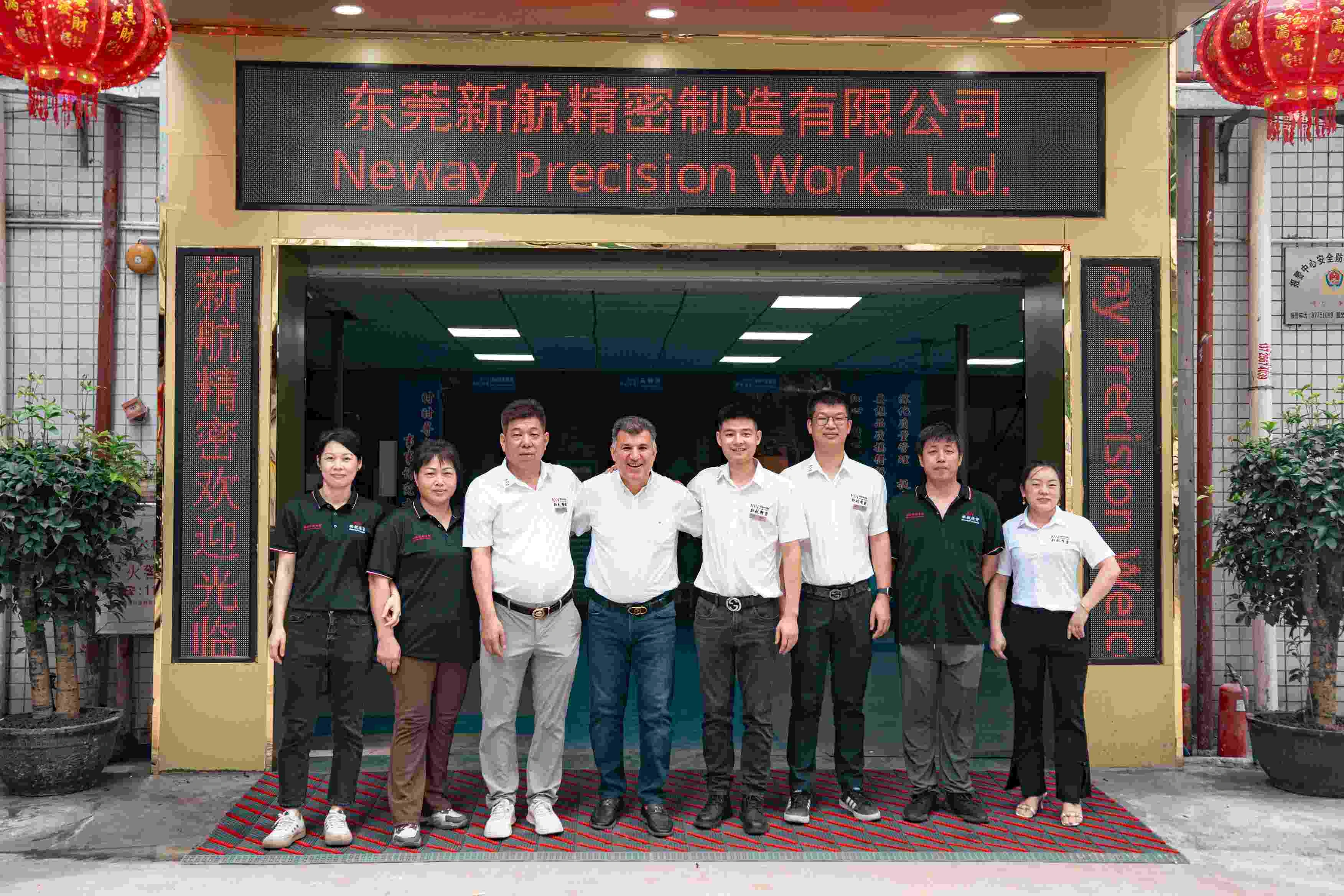
Get Finished Custom Machined Parts From Neway
Prepare the inquiry as a finished-part contract. Provide revision-controlled CAD and drawings, requirement hierarchy, material specification and condition, prototype and production quantity scenarios, critical and cosmetic characteristics, finish and masking details, inspection and certificate requirements, assembly or testing scope, packaging, delivery terms, forecast assumptions, and regulated flowdowns. Define acceptance at receipt as well as at supplier release. Packaging must protect the specified surfaces and features for the planned transport and storage route, while labels and documents must preserve part, revision, lot, quantity, and certificate linkage. State whether mixed lots, substitutions, partial shipments, repaired finish, or open deviations are permitted. Identify the event that starts lead time and the evidence required before shipment, because an approved drawing, material arrival, or deposit can create different schedules. Ask for a route map, DFM decision log, internal and external process boundary, temporary-method list, phase gates, measurement plan, capacity and bottleneck evidence, change-notification rules, contingency, reaction plan, assumptions, deviations, exclusions, tooling ownership, and release package. Missing inputs should become documented questions rather than silent supplier assumptions.
When evaluating Neway for a one-stop CNC machining service, apply the same evidence standard used for any supplier. Confirm that the proposed route matches the actual material, geometry, volume, finish, inspection, and delivery risks; identify work performed externally; and agree who approves changes and nonconformances. Compare the returned scope with qualified specialist or split-source alternatives. Award one-stop responsibility only where the route, records, phase gates, capacity assumptions, and recovery plan support the finished custom machined parts. That decision creates a defensible next step without treating a broad capability statement as proof of order-specific control.
FAQ