How to Get a Quote for Custom Prototype Parts: Files, Materials, Tolerances, and Lead Time
How to Get a Quote for Custom Prototype Parts: Files, Materials, Tolerances, and Lead Time
To get a usable quote for custom prototype parts, submit one released 3D model and 2D drawing revision, the exact material and condition, quantity, protected features, finish, inspection evidence, and a defined delivery event. The supplier must also state material, process, tolerance, outside-processing, and schedule assumptions. A price is not ready for release when it depends on an unapproved material substitute, an undefined datum, or an inspection scope that differs from the drawing. Buyers should close each exception in writing before comparing price or authorizing manufacture. The quote response should identify its validity period and the design, material, quantity, or delivery changes that require repricing.
A complete RFQ creates an equal technical baseline; it does not require every dimension to be tight or every inspection record to be extensive. The package should distinguish functional requirements from adjustable details and state who may approve a deviation. When requesting custom prototyping services, ask each supplier to return the quoted revision, process route, included operations, evidence deliverables, start event, finish event, and unresolved questions. That response lets engineering and purchasing compare the same scope instead of choosing between prices built on different assumptions. Record the accepted DFM changes, substitutions, concessions, and schedule dependencies with the purchase release. If the buyer later changes a protected input, the supplier should stop the affected work, assess cost and evidence impact, and obtain approval before using the change.
Why Prototype Quotes Vary Between Suppliers
Prototype quotes vary because suppliers convert the same design into different manufacturing and verification assumptions. One quote may include certified stock, a dedicated fixture, final-state inspection, an outside finish, and a dimensional report. Another may assume commercial stock, general tolerances, inspection before finishing, and no report. Geometry also changes the route: tool access, setup count, workholding, thin-section movement, deep features, and burr control can determine more of the cost than raw material. Delivery dates diverge when suppliers define the schedule start or completion event differently. Capacity availability can affect the offered date, but it does not replace a route-level explanation of material release, programming, setup proof, machining, outside processing, inspection, and shipment.
Compare an assumption register before comparing totals. Each quote should identify the controlled model and drawing revision, material grade and state, stock form, process route, quantity, finish, critical characteristics, inspection state, report scope, packaging, and delivery basis. It should also list exclusions, buyer-supplied items, permitted substitutions, and questions that remain open. A low number based on inspection before coating is not equal to a price that includes inspection after coating. Purchasing should hold release until technical reviewers accept the route and every exception that could change fit, function, evidence, or schedule. Normalize taxes, freight, tooling ownership, reusable fixture charges, programming, outside-process minimums, inspection reports, and rework responsibility. A quote that separates these items is easier to compare and easier to revise without hiding a reduced scope.
Quote dependency | Scope the supplier must price | Buyer confirmation before release |
|---|---|---|
Material release | Exact grade, condition, stock form, size, certification need, verified availability, and any proposed alternative | Approve the material evidence and name who may authorize a substitution |
Tolerance acceptance | Datums, critical characteristics, geometric controls, surface texture, final part state, and measurement method | Confirm which evidence releases the part and which dimensions may use general limits |
Surface finish | Finish specification, preparation, masking, dimensional allowance, appearance criteria, outside processing, and reinspection | Accept samples or criteria and define disposition for color, coverage, or dimensional failure |
Geometry complexity | Setup plan, workholding, tool access, deep features, thin sections, deburring, and first-part proof | Resolve requested design changes and preserve features that control the intended test |
Inspection requirements | Measured characteristics, sampling, equipment or method, report format, material records, and review timing | State who reviews the evidence and whether approval is required before shipment |
Delivery urgency | Quoted start event, critical-path dependencies, first-part release, accepted quantity, shipment event, and transit basis | Confirm the required event and the conditions that trigger a revised date |
CAD Files Needed for Prototype Manufacturing
The RFQ should contain one controlled solid model that represents the quoted geometry. STEP or STP is widely exchanged, while X_T, IGS, or a native file may be useful when both parties can preserve the intended geometry. File type alone does not make the model authoritative. Name the revision, units, and configuration; suppress obsolete alternatives; and identify whether model-based dimensions or the 2D drawing govern a conflict. The supplier should confirm that the imported body is complete and report any open surfaces, lost features, duplicate bodies, or scale mismatch before route planning. Use stable file names or a transmittal that maps every attachment to the released revision. If a corrected file is sent, withdraw the old release and require written confirmation of the replacement; an email attachment with the same name can otherwise leave purchasing and programming on different geometry.
An STL mesh can describe shape for an additive review, but facet resolution and missing feature definitions can make it unsuitable as the sole authority for a machined tolerance, thread, sealing surface, or datum relationship. Provide exact geometry when those characteristics affect the test. If manufacturing data appears in both 3D and 2D, specify the precedence rule rather than asking the supplier to guess. The wider CNC machining quote workflow should then connect the accepted files to DFM questions, the quoted route, revision control, first-part evidence, and final delivery. A supplier finding a conflict should identify the exact feature, explain the cost or acceptance consequence, propose a disposition, and wait for the authorized response. The answer becomes part of the quote baseline so the same ambiguity does not return during inspection.
Why 2D Drawings Still Matter for Prototype Parts
A 2D drawing remains important because the solid model does not automatically define acceptance. The drawing should identify datums, critical dimensions, geometric controls, threads, surface texture, edge requirements, material condition, heat treatment, finish, inspection state, and applicable notes. When the drawing invokes ASME Y14.5 or ISO 1101, state the applicable edition and use the selected convention consistently; the standard defines the geometric language, while the RFQ still needs an agreed measurement and reporting method. Mark reference information so it is not priced as an acceptance requirement. Define general tolerances and the treatment of untoleranced model geometry. If only selected features require records, mark them; asking for a full report without a feature list can create cost without improving the release decision. The drawing and RFQ should also distinguish inspection evidence from functional test evidence, since a dimensionally conforming part can still fail its intended assembly or operating test.
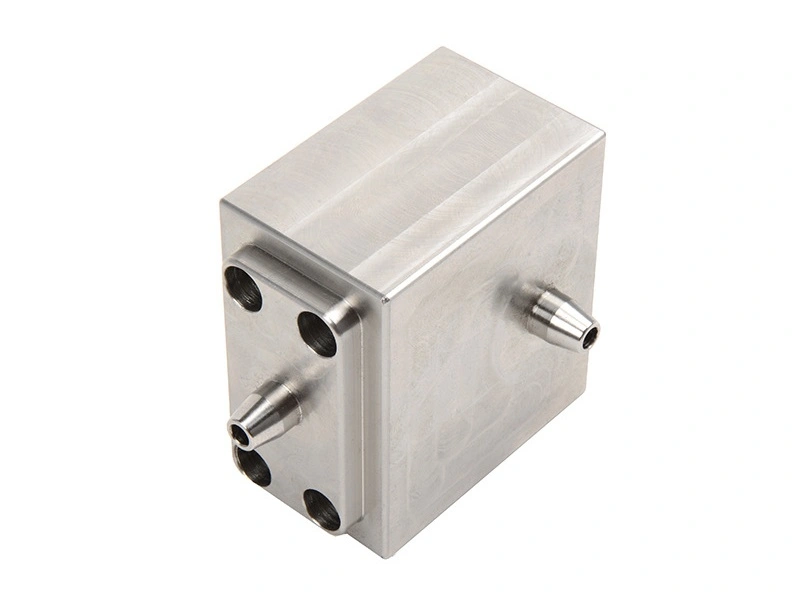
Consider a hypothetical thin-wall aluminum manifold used to check port alignment and sealing after anodizing. The model defines the ports, but the quote is incomplete unless the drawing identifies the datum scheme, sealing-face texture, bore limits, thread requirements, coating allowance, and inspection after unclamping and finishing. A bore measured while the wall is restrained may move in the free state, and coating can change a fit. The buyer should therefore require final-state evidence and name who can accept a deviation. This scenario is a planning example, not a Neway customer case; the underlying distinction between size, datum relationship, surface condition, and inspection scope is explained further in CNC machining tolerances. The quote should state what happens if the first part moves after unclamping or misses the post-finish bore limit. A useful response names the containment action, review evidence, rework boundary, schedule effect, and person authorized to accept or reject a concession.
How Material Selection Affects Prototype Cost and Delivery
Material affects a prototype quote through grade, condition, product form, verified availability, machinability, residual stress, finishing compatibility, inspection, and the functional test. Do not request only "aluminum," "stainless," or "plastic." State the specification and condition required, whether certification is needed, and whether the stock route must represent production. A substitute may reduce cost or waiting time for a geometry review, but it cannot validate strength, stiffness, thermal response, wear, corrosion, sealing, or finish behavior when the changed material property controls the result. Ask the supplier to distinguish stock found in a catalog from stock physically verified for the order. The quote should identify certificate type, lot traceability, cut allowance, minimum-purchase effect, and whether heat treatment or testing occurs before or after machining. If material availability changes, the buyer should receive the proposed alternative and affected validation boundary before the route or promised date is changed.
Material decision | Condition that belongs in the quote | Risk and buyer action |
|---|---|---|
Aluminum | Specify grade, temper, stock form, residual-stress concern, finish, and whether conductivity or appearance is tested | Do not treat different alloys or tempers as equivalent; approve substitutions and inspect after the required finish |
Stainless steel | Specify grade, condition, product form, passivation or other finish, environment, and material-record requirement | Confirm corrosion, magnetic, strength, and surface assumptions before accepting a broader material label |
Titanium | Specify grade, product form, direction when relevant, surface state, certification, and test load or environment | Separate geometry validation from material-performance approval and release only documented alternatives |
Plastic | Specify resin grade, reinforcement, conditioning, color requirement, stock form, service temperature, and finish | Review moisture, creep, warping, clamping, and thermal effects; define the state used for inspection and testing |
Superalloy | Specify the exact alloy, heat-treatment state, product form, certification, critical surfaces, and inspection evidence | Verify stock and route assumptions before promising a date; do not infer performance from a family name |
Material selection should be closed together with machining, finishing, and inspection rather than handed between separate assumptions. When evaluating one-stop CNC machining service options, ask for a route that identifies material receipt and verification, setup proof, machining stages, outside processes, final-state inspection, nonconformance response, and shipment release. The buyer should see which steps are included, which are subcontracted, and which evidence accompanies the parts. That workflow matters more than a broad claim that one material is always faster or cheaper. For a production-representative prototype, record any difference between prototype stock and the intended casting, forging, molding, or other production route. A successful machined-stock test validates only the conditions it actually represents; it does not prove future batch capability or route-specific defects are controlled.
How to Reduce Prototype Manufacturing Cost Before Quoting
Reduce prototype cost by defining the test contract before removing requirements. Identify the load path, mating stack, protected datums, sealing or bearing interfaces, threads, surface condition, operating environment, measured output, and acceptance evidence. Requirements outside that boundary may be candidates for wider tolerances, simpler geometry, fewer cosmetic operations, or a different quantity. A change is not a saving if it alters the failure mode, makes the result unrepresentative, or forces a second prototype. Put every temporary simplification on the controlled model or drawing and define when revalidation is required. Ask for the cost delta and route consequence of each proposed change rather than accepting a bundled lower total. This shows whether the saving comes from material, setup count, cutting time, tooling, outside processing, inspection, or evidence scope and lets engineering reject only the unsafe part of a proposal.
Use DFM to expose cost drivers rather than to relax requirements indiscriminately. Deep pockets, small internal radii, thin walls, restricted tool access, multiple orientations, and inspection access can add setups or special tools. Ask the supplier to show the affected feature, proposed change, route impact, functional risk, and validation needed after approval. Compare one-piece and small-batch pricing only after quantity purpose is clear; additional parts may support destructive tests or variation checks, but they do not replace an acceptance plan. These decisions follow the practical boundary described in DFM for CNC machining. Separate nonrecurring programming, fixture, and inspection-plan costs from repeat-part costs. The separation helps buyers understand what can be reused after a revision and what must be rebuilt when a changed datum or protected feature invalidates the original route.
Finish can be removed only when it lies outside functional acceptance. Coating thickness may alter a fit, masking may define an electrical or sealing surface, preparation may control adhesion, and texture may affect friction or appearance review. State the substrate condition, finish specification, masking boundary, dimensional allowance, color or texture criteria, and inspection timing. If an unfinished prototype is accepted for an early test, record which conclusions remain open. Use the existing CNC machined parts surface finishes reference to frame options, then require the quote to price the exact approved finish rather than a generic label. Define whether the outside processor is included, who supplies coupons or samples, how rejected appearance is judged, and whether rework is allowed on a functional surface. These decisions prevent a nominal finish line from hiding a second schedule and acceptance path.
Prototype RFQ Checklist
The RFQ checklist should function as a release record, not a list of files that may or may not agree. Every item needs a revision or condition, an owner, and a way to close exceptions. Before manufacture, purchasing and engineering should confirm that the supplier quoted the same package, identified conflicts, returned its assumptions, and stated the evidence required for release. The following entries preserve equal scope while leaving room for documented DFM alternatives. Add a response deadline for technical questions and identify who can answer them; waiting for an unauthorized reply can consume more schedule than machining. Define the quote currency, commercial terms, delivery basis, packaging, and validity period separately from the manufacturing content. Preserve the final quote comparison and approval so a later order does not silently reuse an obsolete revision, expired stock assumption, or superseded inspection plan.
RFQ item | Release content and confirmation |
|---|---|
3D CAD file | Provide the controlled solid-model revision, units, configuration, and precedence rule; require confirmation that imported geometry is complete |
2D drawing | Define datums, critical characteristics, geometric controls, threads, texture, notes, general tolerances, and acceptance state |
Material | State exact grade, condition, stock form, certification, production-representative needs, and who may approve an alternative |
Quantity | Separate first-part evidence, test or destructive samples, remaining quantity, and the buyer action that releases each stage |
Finish | Specify preparation, masking, allowance, appearance criteria, functional boundary, final-state inspection, and concession authority |
Inspection requirement | List measured features, method, sampling, report and material records, acceptance rules, and review timing before shipment |
Application | Describe the functional test, operating condition, mating parts, failure concern, protected input, output, and acceptance evidence |
Delivery address or country | Define first-part, accepted quantity, shipment or arrival as the required event, plus packaging, destination, and transit responsibility |
Send Your Prototype RFQ to Neway
Release a prototype RFQ only after the technical package and commercial event are aligned. Include the controlled model and drawing, material condition, quantity stages, protected characteristics, finish, inspection and material evidence, test purpose, acceptable alternatives, required delivery event, and deviation authority. Ask the supplier to return a line-by-line assumption and exception list with the quote. Engineering should close function and validation questions; purchasing should close price, schedule, shipping, and included-scope questions. An unresolved exception should remain a hold, not become an invisible production assumption. Define the review sequence for first-part evidence, remaining quantity, final inspection, and shipment. If approval is delayed or a concession is rejected, the schedule should be revised against the stated dependency instead of preserving a date that no longer has a valid route.
A buyer using custom prototyping services should compare the quoted revision, material state, route, included finishing, inspection evidence, delivery basis, and change-control response before selecting a supplier. The best actionable quote is not necessarily the lowest initial total or earliest date. It is the quote whose assumptions match the intended test, whose exclusions are visible, and whose evidence supports a clear release decision. Preserve the accepted quote, files, approvals, and deviations as the baseline for any later prototype revision or production transfer. When moving to a small batch or a different production route, identify which fixtures, programs, material records, finish controls, inspection methods, and functional tests remain applicable. Requote and revalidate the items affected by the change rather than treating prototype conformity as proof of future process capability.
FAQ
What is the best process for custom prototype parts: CNC machining, 3D printing, or rapid molding?
What files are needed to get a quote for rapid CNC prototyping?
Can prototype parts be made with the same material and tolerances as production parts?
How do I reduce the cost of rapid prototyping without affecting functional testing?