Decoding CNC Machining Quotes: Top 10 Factors Impacting Part Cost
Introduction
The top CNC machining quote drivers are material, geometry, tolerance, surface finish, quantity, lead time, tooling, process selection, CAD/CAM clarity, and quality documentation. A quote is not only a price for cutting metal or plastic. It is a summary of risk, process route, inspection effort, and delivery responsibility. For procurement engineers and product developers, the useful way to read CNC machining services pricing is to ask which feature, material condition, tolerance, or document requirement is creating the cost. A clear quote should separate work that protects function from work that only repeats an old drawing habit. Buyers can reduce avoidable cost by sharing the STEP model, 2D drawing, material grade and condition, critical-to-function dimensions, required finish, quantity ladder, and inspection evidence at the RFQ stage.
This article decodes the ten pricing drivers that most often change CNC machining quotes. The goal is not to promise a universal price formula, because each quote depends on material availability, feature access, equipment route, supplier workload, and acceptance rules. The goal is to give buyers a practical review method. For each factor, ask three questions: what changes the machining route, what changes inspection or documentation, and what can be simplified without weakening the part. This boundary matters. A sealing bore, datum face, or safety interface may deserve added cost. A decorative pocket, repeated tight tolerance, or unnecessary coating on a hidden surface may not. A strong RFQ makes those decisions visible before machining begins. It also prevents quote comparison based on incomplete data. If two suppliers assume different raw stock, surface condition, inspection scope, or delivery handoff, their totals are not truly comparable.
1. Material Type and Grade
Material type affects both raw stock cost and the time needed to remove material safely. Easy-machining alloys such as aluminum 6061, usually allow higher cutting rates, stable chip evacuation, and lower tool wear when geometry is accessible. Heat-resistant or high-strength alloys such as Inconel 718 or titanium Ti-6Al-4V, change the quote because cutting heat, work hardening, springback, and tool consumption become larger risks. The buyer should not judge price from the material name alone. Stock form, heat treatment, certification, wall thickness, and finishing state can matter as much as alloy family. A forged or heat-treated blank may require a different roughing plan than bar stock. A thin-walled titanium bracket may cost more to hold than a thicker titanium spacer. Material failure modes also differ. Aluminum may show cosmetic handling marks or anodize-related allowance issues. Stainless steel can add burr and passivation concerns. Nickel alloys can turn tool wear into the main cost driver. Titanium can move after stress is released. The table below is an early RFQ screening tool, not a price guarantee.
Material | Early RFQ Cost Index | Quote Notes and Buyer Checks |
|---|---|---|
Aluminum 6061 | 1.0 baseline | Good machinability; confirm temper, thin walls, anodize allowance, and cosmetic zones. |
Stainless Steel 304 | 1.7–2.2 screening range | Work hardening and burr control can add time; confirm passivation and edge requirements. |
Inconel 718 | 3.0–4.5 screening range | Heat-resistant alloy with high tool wear; confirm stock certification and critical features. |
Titanium TC4 | 2.5–4.0 screening range | Low thermal conductivity and springback; confirm thin walls, threads, and finishing state. |
2. Part Geometry and Complexity
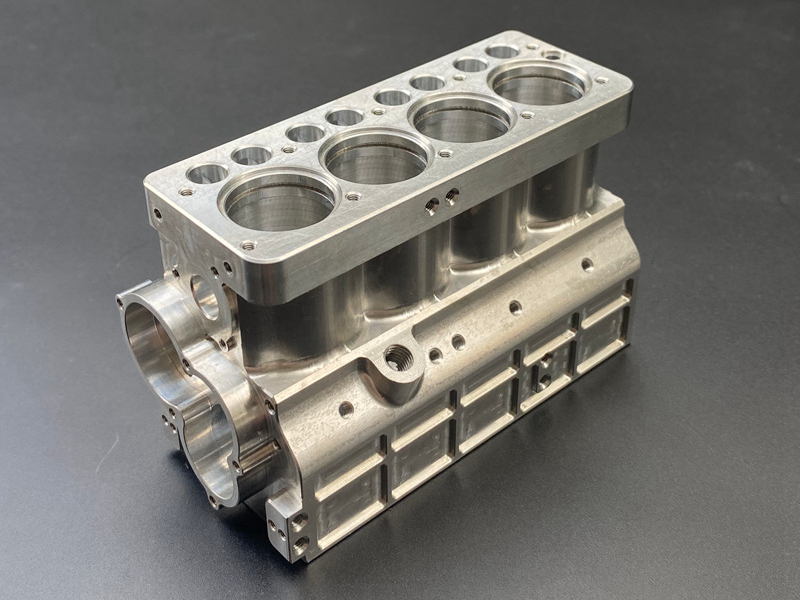
Part geometry affects cost when it changes setup count, tool access, burr risk, and the chance of movement after unclamping. Deep cavities, thin walls, long slots, intersecting holes, undercuts, narrow ribs, and compound angles require more careful toolpaths than simple prismatic shapes. Components requiring multi-axis machining may reduce fixture changes, but they add programming, collision checking, tool reach planning, and higher machine-hour cost. Complexity is justified when it supports sealing, flow, assembly, heat transfer, weight reduction, or safety. Complexity is expensive waste when it only decorates an unseen surface or copies a prototype shape into production without a function. Buyers should ask suppliers to identify which features drive setup time. If a deep pocket can be opened, a non-functional radius can be enlarged, or an unused wall can be thickened, the quote may improve without changing the product’s job. A good geometry review also looks at failure modes. Deep pockets can chatter. Intersecting holes can trap burrs. Thin walls can deflect during cutting or move after unclamping. Hidden grooves can require special tools that slow the whole route. Those risks belong in the quote when the features are functional.
3. Dimensional Tolerance
Dimensional tolerance raises cost when it forces slower finishing cuts, extra inspection, tighter datum control, or a secondary operation. A move from a general tolerance such as ±0.10 mm to a controlled feature such as ±0.025 mm can change the route for a bore, slot, or sealing land. The exact effect depends on material, feature size, depth, wall thickness, and how the dimension is measured. High-precision features, such as bores or fits, may require secondary operations like CNC boring, fine finishing, or dedicated gauging. Tight tolerances on non-functional exterior shapes often add cost without improving assembly. The quote should show whether a tolerance changes cycle time, inspection time, scrap risk, or fixture planning. General tolerance standards can help keep ordinary dimensions rational, while GD&T should clarify datums and functional relationships. Standards do not remove the need to validate difficult features. Buyers should mark critical-to-function dimensions and leave cosmetic or clearance features at rational general tolerances. That decision is often more useful than asking every supplier for the lowest total price.
4. Surface Finish Requirements
Surface finish changes quote cost when it adds a controlled post-process, a cosmetic acceptance rule, or a dimensional allowance after machining. Standard as-machined surfaces may be suitable for hidden mounting faces, clearance geometry, and many functional brackets. Finishes such as anodizing, painting, or thermal coatings add routing, masking, handling, inspection, and sometimes rework risk. Anodize thickness can reduce hole clearance if the drawing does not define pre-finish and post-finish dimensions. Paint or coating build-up can affect bores, threads, mating faces, and datums. Validation may include thickness checks, color limits, adhesion checks, corrosion exposure requirements, or post-finish dimensional inspection. The RFQ should name the required finish, color, thickness range, controlled surfaces, keep-out zones, and final inspection state. If only corrosion protection is needed, the buyer should not pay for cosmetic standards that the part will never use.
5. Quantity and Batch Size
Quantity affects CNC machining quotes because setup, programming, tooling preparation, fixture design, and inspection planning are spread across the order. One prototype absorbs nearly all non-recurring work into one part. A repeat order can amortize the same preparation across many parts, but only if the design, material, finish, and inspection scope stay stable. For small production runs, low-volume CNC machining can balance flexibility with controlled repeatability. The buyer should request price breaks at realistic quantities rather than guessing at annual volume. A useful quote may show prototype price, pilot batch price, and production-lot price. It should also state what changes if the buyer revises the drawing after the first run. Hidden changes to tolerances, coating, or inspection can reset setup work and erase volume savings. Quantity also changes inspection strategy. A prototype may need more engineering review per part, while a repeat batch may use defined sampling if the drawing and purchase order allow it. A clean revision history is often as valuable as a larger order quantity.
6. Lead Time Requirements
Lead time affects price when the requested schedule changes raw material sourcing, machine loading, inspection availability, finishing coordination, or shipping preparation. A normal schedule allows the supplier to group similar work, order material without premium freight, and reserve inspection time after machining. A compressed schedule may require schedule reshuffling, overtime, alternative stock, parallel operations, or extra coordination with outside finishing suppliers. Those actions can be legitimate quote drivers, but they should be visible. Buyers should ask which step controls the critical path: material procurement, fixture build, CAM programming, machining hours, heat treatment, surface treatment, inspection, or documentation. If the schedule is tight, it may be cheaper to relax a non-critical finish, simplify a feature, or accept staged delivery than to rush every part. A schedule can also be protected by approving material substitutes early or releasing long-lead inspection requirements with the drawing. A quote that explains the lead-time driver is safer than a quote that only says “expedite charge.”
7. Tooling and Fixturing
Tooling and fixturing affect cost because the supplier must hold the part securely before cutting can be accurate. Irregular castings, thin-wall blanks, angled faces, small parts, or parts with weak datums may need soft jaws, custom nests, fixture plates, or process-specific workholding. Custom fixtures introduce non-recurring engineering cost, but they can reduce scrap and improve repeatability when the order repeats. A fixture is not automatically wasteful. It is wasteful when a drawing uses an awkward datum scheme that forces complex holding for a non-critical surface. Buyers should ask whether fixture cost is one-time, reusable, or included in unit price. They should also ask which datum features control the first setup and which features must survive unclamping. If roughing changes the shape of a thin part, the quote may need a stress-relief or re-clamp strategy. Fixture planning should connect to inspection planning. A datum that is easy to hold but impossible to measure consistently can still cause rework. That planning protects quality and explains why two suppliers may quote very different fixture costs.
8. Machining Process Selection
The selected process affects quote cost because each route has a different balance of speed, precision, access, tool wear, and inspection effort. Features made by CNC milling, turning, EDM, or grinding should be chosen because the feature needs that route, not because the drawing uses a familiar process name. Milling is often efficient for pockets, faces, slots, and 3D contours. Turning is strong for concentric diameters, grooves, and threads. EDM may be justified for sharp internal corners, hard materials, or features that cannot be reached by a rotating cutter. Grinding may be justified for controlled surface finish, roundness, or tight bearing fits. Multiple processes add transfers, alignment risk, and inspection points. A poor route can make a simple part expensive, while a better route can make a complex part repeatable. A supplier workflow should connect route selection, fixture strategy, machining, deburring, finishing, and final verification before the quote is accepted.
9. CAD/CAM Programming Complexity
CAD/CAM programming complexity affects quotes when the model, drawing, and tolerances do not give a clear manufacturing path. Clean models with defined datums, realistic radii, and consistent drawing notes can be quoted faster. Highly contoured 3D surfaces, blended transitions, tiny radii, undercuts, and ambiguous GD&T require more programming time and more review. Ambiguity is a cost driver because the supplier must either ask questions, make assumptions, or protect the quote with added risk allowance. Buyers should provide native or STEP geometry, a controlled 2D drawing, material condition, revision level, and acceptance criteria. They should also identify cosmetic faces, no-go surfaces, and features that can be changed for tool access. A model that looks complete may still be unquotable if the drawing does not define which surfaces matter. Revision control also matters. If the 3D model, drawing, and purchase notes disagree, the supplier must pause or quote risk. Good CAD/CAM input reduces quote uncertainty before chips are cut.
10. Quality Assurance and Documentation
Quality assurance and documentation affect CNC machining quotes because inspection is work, not a free afterthought. Some parts only need dimensional checks against the drawing. Other parts require CMM reports, material certification, first article inspection, PPAP records, finish certificates, traceability, or compliance to specific documentation standards such as ISO-based quality procedures. The cost depends on how many features must be checked, which instruments are suitable, whether inspection happens before or after finishing, and whether records must be stored or delivered with each batch. Medical, automotive, aerospace, and safety-related parts often need stronger evidence than general industrial brackets. The buyer should define acceptance requirements at RFQ stage instead of adding them after the quote. Measurement method matters because calipers, pins, thread gauges, height gauges, CMM, and functional gauges do not prove the same thing. A late request for full documentation can change lead time because inspection programming, sample selection, certificates, and review all need time. A good quote separates machining cost from evidence cost.
Conclusion
A CNC machining quote is a map of engineering decisions, not a simple price. Material, geometry, tolerance, finish, quantity, lead time, tooling, process route, programming clarity, and quality evidence each change cost in a different way. Buyers can negotiate better with trusted CNC manufacturers when the RFQ shows which features control function and which features can be simplified. The best quote review starts with a part-level question: what must be protected for sealing, motion, alignment, strength, corrosion resistance, appearance, or compliance? Then review the quote line by line against that answer. Keep the cost that protects function. Remove the cost created by unclear drawings, unnecessary tolerances, unused finishes, or avoidable setup complexity. Before approving a supplier, compare quotes in a simple cost-driver review. Name the driver, decide whether it protects function, and write the buyer action beside it. The action may be relaxing a cosmetic tolerance, approving a material substitute, defining post-finish inspection, or accepting a longer schedule. This review exposes a dangerous low quote when inspection, finishing, fixture cost, or certificate work is missing. It also exposes an inflated quote when every non-critical feature is treated like a sealing surface. For internal review, tag each line as functional, manufacturability, evidence, schedule, or optional appearance. Functional and evidence costs usually stay. Optional appearance and avoidable manufacturability costs are candidates for design change. Use the RFQ to ask for alternatives, not only a discount. A useful alternative may be a larger inside radius, one accessible datum, a looser cosmetic profile, a different stock form, or a batch quantity that spreads setup cost. For example, a quote may look high because it includes CMM reporting, anodize masking, and custom soft jaws. If those items protect datum bores, coated threads, and repeat positioning, they are real costs. If those items were assumed because the drawing is unclear, a revised RFQ can lower the price without removing necessary process control. The same review helps identify a low quote that omits deburring, post-finish measurement, or material certification. A low number is useful only when scope and acceptance are equal. Use this review before design release, before supplier selection, and before any major drawing revision. Ask the supplier to flag the top three cost drivers and the design changes that would reduce them. It gives purchasing, design, and quality teams the same clear cost language. That approach improves supplier communication and makes CNC machining cost easier to control without weakening the part.
FAQs
How can I reduce CNC machining costs without compromising function?
What’s the cost difference between CNC aluminum and titanium parts?
Do small tolerance changes significantly affect quote prices?
Is surface treatment always included in CNC machining quotes?
How does part complexity influence machining lead time and cost?