Maîtriser l’usinage CNC des plastiques : 8 propriétés typiques d’usinage
 Introduction : pourquoi comprendre les propriétés des plastiques est la première étape d’un usinage CNC réussi
Dans la fabrication de haute précision, la complexité technique de l’usinage CNC des matières plastiques est souvent sous-estimée. En tant qu’ingénieur procédés senior chez Neway, j’ai été témoin de nombreux échecs d’usinage dus à la négligence des caractéristiques fondamentales des plastiques. Contrairement aux métaux, les plastiques possèdent des propriétés thermiques, mécaniques et chimiques uniques qui influencent directement le choix des procédés et la qualité finale des produits. Réussir l’usinage des plastiques nécessite non seulement des équipements avancés, mais aussi une compréhension approfondie du matériau lui-même.
Dans nos services d’usinage CNC de plastiques, nous suivons toujours une philosophie « material-first ». Chaque plastique technique a sa propre « personnalité » et ce n’est qu’en comprenant pleinement ces caractéristiques que nous pouvons développer la stratégie d’usinage optimale. Du coefficient de dilatation thermique à l’absorption d’humidité, en passant par le module d’élasticité et la sensibilité thermique, chaque paramètre peut devenir un facteur clé de succès… ou d’échec.
Propriété 1 : coefficient de dilatation thermique — le « piège » dimensionnel déclenché par la température
Le coefficient de dilatation thermique (CTE) des plastiques est généralement 5 à 10 fois plus élevé que celui des métaux, et cela doit être pris très au sérieux en usinage CNC. Prenons l’exemple de l’ABS : son CTE est d’environ 80 × 10⁻⁶/°C, alors que celui de l’aluminium n’est que d’environ 23 × 10⁻⁶/°C. Cela signifie que même de faibles variations de température pendant l’usinage peuvent se traduire par des écarts dimensionnels significatifs.
En production, nous maîtrisons l’impact de la dilatation thermique par plusieurs mesures. Tout d’abord, nous utilisons des outils très tranchants et des paramètres de coupe optimisés afin de minimiser la génération de chaleur. Ensuite, nous appliquons de l’air comprimé ou une brumisation de lubrifiant pour favoriser la dissipation thermique, en choisissant soigneusement la méthode de refroidissement afin d’éviter l’apparition de contraintes internes dans les plastiques sensibles au choc thermique. Enfin, nous laissons les pièces refroidir suffisamment dans un environnement à température contrôlée avant l’inspection finale, afin de garantir que les dimensions livrées correspondent aux conditions réelles de fonctionnement.
Propriété 2 : hygroscopicité — le « tueur » dimensionnel caché dans l’air
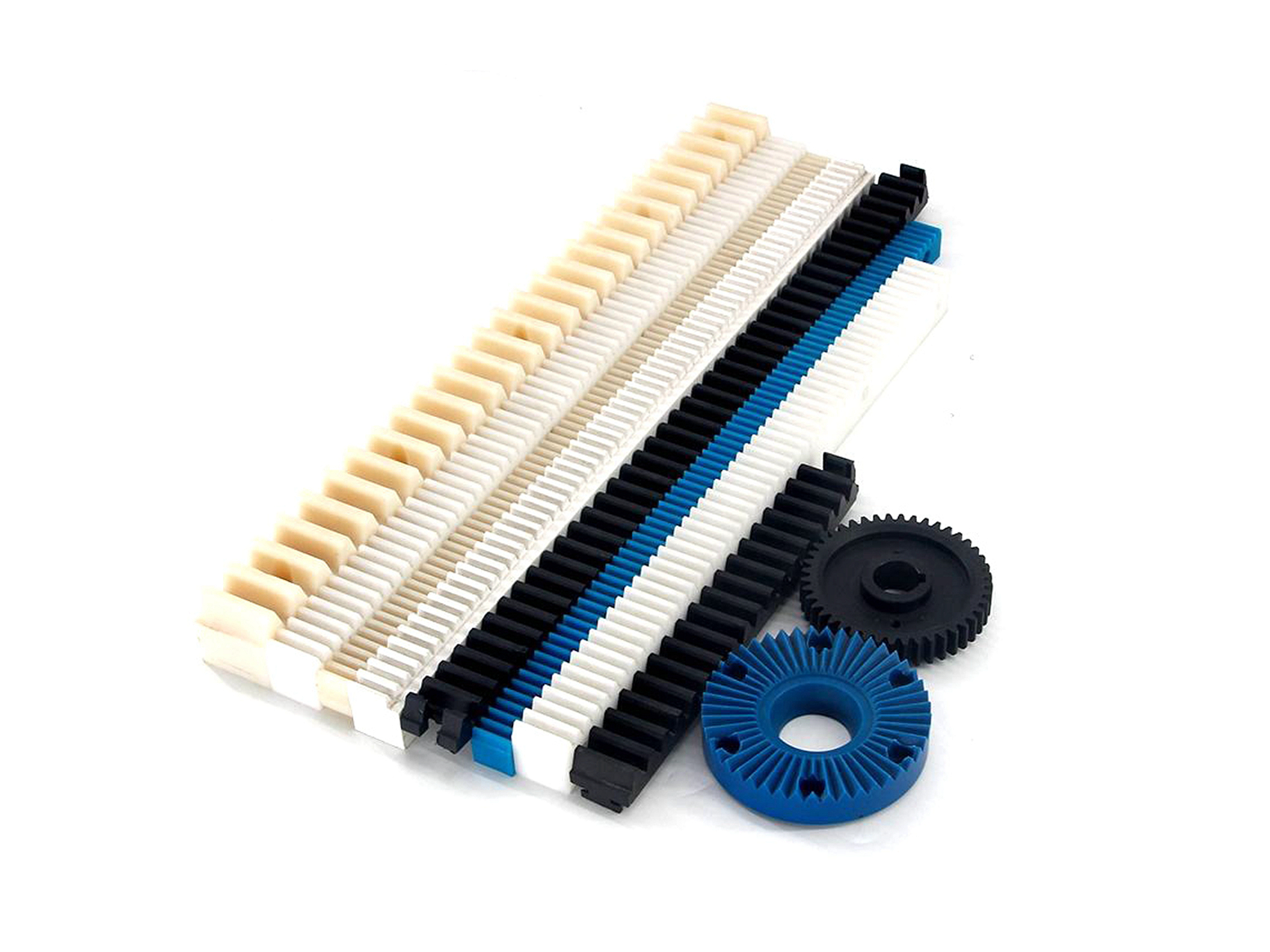
L’absorption d’humidité est une caractéristique inhérente à de nombreux plastiques techniques, le nylon (polyamide) étant l’exemple le plus typique. Le nylon peut absorber jusqu’à environ 8 % de sa masse en eau depuis l’air ambiant, ce qui affecte non seulement sa stabilité dimensionnelle, mais réduit également ses propriétés mécaniques. Nous avons par exemple rencontré un cas où des engrenages en nylon passaient parfaitement le contrôle d’assemblage juste après usinage, mais devenaient trop serrés après deux semaines de stockage — conséquence directe du gonflement induit par l’humidité.
Dans notre système d’usinage, le prétraitement de la matière est la première étape pour garantir la qualité. Pour les matériaux très hygroscopiques comme le nylon, nous procédons à un séchage rigoureux avant usinage, typiquement à 80–100 °C pendant 4–8 heures. L’environnement d’usinage est maintenu dans une plage d’humidité contrôlée pour éviter toute ré-absorption pendant le process. Pour les pièces particulièrement précises, nous recommandons également des alternatives moins hygroscopiques comme le POM, réputé pour son excellente stabilité dimensionnelle.
Propriété 3 : module d’élasticité et retour élastique — les défis liés à la flexibilité
Le module d’élasticité des plastiques ne représente souvent qu’1/100 à 1/10 de celui des métaux, ce qui rend les pièces plastiques beaucoup plus sujettes à la déformation élastique pendant l’usinage. Sous l’action des efforts de coupe, la matière fléchit ; lorsque l’outil passe, elle revient élastiquement, ce qui crée un écart entre les dimensions réelles et les dimensions programmées. Ce phénomène est particulièrement marqué lors de l’usinage de parois minces ou de formes élancées.
Pour y faire face, nous avons développé des stratégies de procédé spécifiques. Côté bridage, nous utilisons des montages sur mesure à faible contrainte, répartissant uniformément les efforts de serrage afin d’éviter les déformations locales. Côté outil, nous choisissons des arêtes très tranchantes avec de grands angles de coupe pour réduire les efforts. Pour les pièces particulièrement sensibles à la flexion, nous appliquons une approche d’usinage par passes successives légères, permettant au matériau de relâcher progressivement ses contraintes internes à l’approche des dimensions finales. Cette méthode est cruciale, en particulier pour nos composants plastiques complexes usinés en multi-axes.
Propriété 4 : sensibilité thermique — un contrôle fin à proximité de la plage de fusion
La plupart des thermoplastiques présentent des plages de fusion relativement étroites, ce qui les rend très sensibles à la température durant l’usinage. Une chaleur excessive peut provoquer fusion, bavures de matière ou même dégradation thermique, générant des fumées nocives ou détériorant les propriétés. Par exemple, le polycarbonate (PC) peut présenter un blanchiment sous contrainte, des stries argentées ou des bulles si la température de coupe n’est pas correctement maîtrisée.
Notre solution repose sur l’utilisation d’outils spécifiquement conçus pour les plastiques, avec de grands goujures d’évacuation de copeaux et des revêtements spéciaux pour minimiser la température de coupe. Côté paramètres, nous combinons souvent des vitesses de broche élevées avec des avances modérées pour concilier rendement et contrôle thermique. Pour les matériaux particulièrement sensibles, nous surveillons la température en temps réel et ajustons les paramètres en conséquence. Cette gestion fine de la chaleur est particulièrement importante dans nos services d’usinage de précision.
Propriété 5 : faible conductivité thermique — le risque d’accumulation locale de chaleur
La conductivité thermique des plastiques est généralement de l’ordre de 1/100 à 1/1000 de celle des métaux. La chaleur générée pendant l’usinage s’évacue donc difficilement et a tendance à s’accumuler dans la zone de coupe. Cette accumulation impacte la précision dimensionnelle et réduit fortement la durée de vie des outils. Nos statistiques ont montré que, dans les mêmes conditions de coupe, la durée de vie des outils en usinage de plastiques peut ne représenter qu’un tiers de celle observée en usinage de l’aluminium.
Pour résoudre ces problèmes de dissipation thermique, nous appliquons plusieurs stratégies. D’abord, nous optimisons la conception des outils en utilisant des arêtes polies et des géométries dédiées afin de réduire la chaleur de frottement. Ensuite, nous améliorons les trajectoires d’outil en adoptant des stratégies de coupe intermittente, laissant le temps à l’outil de refroidir entre deux engagements. Pour l’usinage de cavités profondes, nous utilisons un refroidissement ciblé par air comprimé pour extraire la chaleur de la zone de coupe. Ces mesures jouent un rôle clé dans nos opérations de fraisage CNC.
Propriété 6 : contraintes internes — la « mémorisation » du procédé de mise en forme
De nombreuses pièces plastiques sont usinées CNC à partir d’ébauches issues du moulage par injection ou de l’extrusion, qui contiennent déjà des contraintes internes résiduelles dues à leur procédé de mise en forme. Lorsque l’usinage enlève de la matière, l’équilibre initial de ces contraintes peut être perturbé, entraînant une déformation de la pièce. Cela est particulièrement fréquent au stade du prototypage, lorsque l’on utilise des plaques ou barres standard dont l’état de contrainte peut être très différent de celui du produit moulé final.
Nos contre-mesures reposent sur une sélection rigoureuse des matériaux et sur une conception judicieuse des procédés. Lors de la préparation matière, nous pouvons recourir à l’analyse par lumière polarisée ou à des méthodes similaires pour évaluer les contraintes résiduelles et sélectionner des lots moins contraints. Dans la planification des opérations, nous adoptons des stratégies d’usinage symétriques pour favoriser un relâchement uniforme des contraintes. Pour les pièces déjà déformées, nous pouvons appliquer un traitement thermique de détente contrôlé, en ajustant précisément température et durée afin d’éviter toute dégradation des propriétés du matériau.
Propriété 7 : dureté et résistance à l’usure — un défi pour la durée de vie des outils
Si la plupart des plastiques non chargés sont relativement tendres, les plastiques renforcés constituent un véritable défi pour la durée de vie des outils. Les matériaux renforcés de fibres de verre ou de fibres de carbone — comme certains grades de PEEK — sont extrêmement abrasifs et peuvent user très rapidement les outils conventionnels. Lors de nos essais, pour l’usinage d’un nylon renforcé à 30 % de fibres de verre avec des outils HSS standard, la durée de vie de l’outil n’excédait souvent pas 30 minutes.
Pour les plastiques très résistants à l’usure, nous avons mis en place un système dédié de gestion des outils. Nous utilisons principalement des outils revêtus diamant ou en diamant polycristallin (PCD), dont la dureté permet de résister aux fibres abrasives. Côté paramètres de coupe, nous choisissons des conditions permettant de travailler dans un état légèrement ramolli de la matrice, plutôt que de « labourer » directement les fibres. Parallèlement, nous assurons un suivi strict de la durée de vie des outils afin de les remplacer avant que leur émoussement n’impacte la qualité d’usinage.
Propriété 8 : anisotropie du matériau — différences de résistance selon la direction
Les plastiques renforcés de fibres présentent généralement une anisotropie marquée, c’est-à-dire que leurs propriétés mécaniques varient selon la direction. Cette anisotropie résulte de l’orientation des fibres de renfort au sein de la matrice. Ignorer ce phénomène lors de la conception et de l’usinage peut conduire à des performances incohérentes selon les directions de chargement, voire à des ruptures prématurées.
Notre approche consiste à développer des stratégies de conception et d’usinage différenciées, qui tiennent compte de cette anisotropie. Tout d’abord, nous caractérisons les tendances d’orientation des fibres dans le matériau. Ensuite, lors de la conception des procédés et des montages, nous veillons à aligner autant que possible les zones fortement sollicitées avec la direction principale des fibres afin d’exploiter au mieux la résistance maximale. Dans la définition des trajectoires d’outil, nous évitons les coupes trop agressives perpendiculaires à l’orientation des fibres, afin de réduire les risques de délamination ou d’éclats de bord. Ce contrôle fin est particulièrement important pour les composants structurels destinés à l’industrie automobile.
Solutions d’usinage CNC des plastiques chez Neway : une optimisation des procédés guidée par les propriétés
Chez Neway, nous transformons notre compréhension approfondie des plastiques en solutions d’usinage systématiques. Nous avons développé une base de données matières complète, regroupant les propriétés détaillées et les paramètres d’usinage recommandés pour plus de 50 plastiques techniques. Pour chaque nouveau projet, nos ingénieurs commencent par analyser les caractéristiques du matériau, puis établissent un plan de procédé ciblé.
Nos systèmes de bridage sont conçus spécifiquement pour les pièces plastiques, avec des montages modulaires ����� faible contrainte qui maintiennent les composants de manière fiable sans endommager leurs surfaces. Nous maintenons une température et une humidité constantes dans l’atelier, avec une surveillance en temps réel pour garantir des conditions de procédé stables. Tout au long du flux de fabrication — de l’inspection de la matière première jusqu’au contrôle final — nous appliquons des standards qualité clairs et stricts.
Pour les pièces à exigences particulières, nous proposons également des services de post-traitement professionnels. Par exemple, le polissage de précision permet d’obtenir des finitions miroir, tandis que le revêtement UV améliore la dureté de surface et la résistance aux rayures. Ces services à valeur ajoutée sont particulièrement appréciés pour les composants à fort enjeu esthétique dans les produits de consommation.
Caractéristiques d’usinage et recommandations d’application pour les plastiques techniques courants
Les différents plastiques techniques présentent des comportements d’usinage distincts et exigent des stratégies adaptées. L’ABS est réputé pour son excellente usinabilité globale et convient à de nombreuses applications générales, mais la température de coupe doit être contrôlée pour éviter toute fusion en surface. En tant que plastique haute performance représentatif, le PEEK nécessite des températures de coupe plus élevées et des outils spécialisés, mais sa résistance mécanique et thermique exceptionnelle en fait un choix de premier plan pour les dispositifs médicaux et autres applications très exigeantes.
Lors du choix d’un matériau, nous recommandons aux clients de prendre en compte non seulement les exigences fonctionnelles, mais aussi la faisabilité de l’usinage. Notre équipe d’ingénieurs peut recommander la matière la plus adaptée et concevoir une solution d’usinage optimisée selon votre application, afin de garantir les meilleures performances tout en maîtrisant les coûts.
FAQ
Comment choisir le plastique technique adapté à mon application ?
Quelles tolérances dimensionnelles peut-on atteindre avec l’usinage CNC des plastiques ?
Quelles sont les causes courantes de déformation des pièces plastiques après usinage ?
En quoi le choix des outils diffère-t-il selon les types de plastiques ?
Pourquoi les pièces plastiques usinées CNC nécessitent-elles souvent un post-traitement ?