304 vs 316 vs 17-4PH Stainless Steel: CNC Machining Choices for Strength, Corrosion, and Cost
304 vs 316 vs 17-4PH Stainless Steel: CNC Machining Choices for Strength, Corrosion, and Cost
Choose 304 for CNC parts in moderate environments when general corrosion resistance and route cost are the main priorities. Choose 316 or 316L when confirmed chloride, chemical, washdown, crevice, welding, or cleanability conditions justify a wider corrosion margin. Choose 17-4PH when the part needs substantially higher strength and the drawing can control the product condition, heat treatment, distortion, and final verification. These grades are not direct substitutes. The buyer must compare medium, temperature, load, joining, geometry, surface condition, and required evidence before release. Total cost includes material form, machining behavior, heat or surface treatment, inspection, scrap risk, and change control, so bar price alone cannot identify the lowest-risk option.
A useful comparison of stainless steel CNC machining routes begins with the failure mode. If corrosion or cleaning dominates, define the exposure before choosing between 304 and 316. If yielding, wear, or clamp load dominates, determine whether 17-4PH in a specified final condition is appropriate. Then connect the grade to product form, heat or lot traceability, datum strategy, work-hardening control, deburring, heat-treatment sequence, finishing allowance, passivation, and inspection. 304L and 316L may be relevant when welding or thermal exposure is part of the design, but the lower-carbon suffix does not replace a complete material and process specification. Material purchase price is only one cost line. A 304 route can become expensive if corrosion uncertainty causes redesign, while a 17-4PH route can accumulate thermal processing, hard-state finishing, distortion correction, hardness testing, and batch documentation. Compare quoted routes at the same release condition. State whether dimensions are accepted before or after heat treatment and surface processing, and identify who owns each outsourced operation.
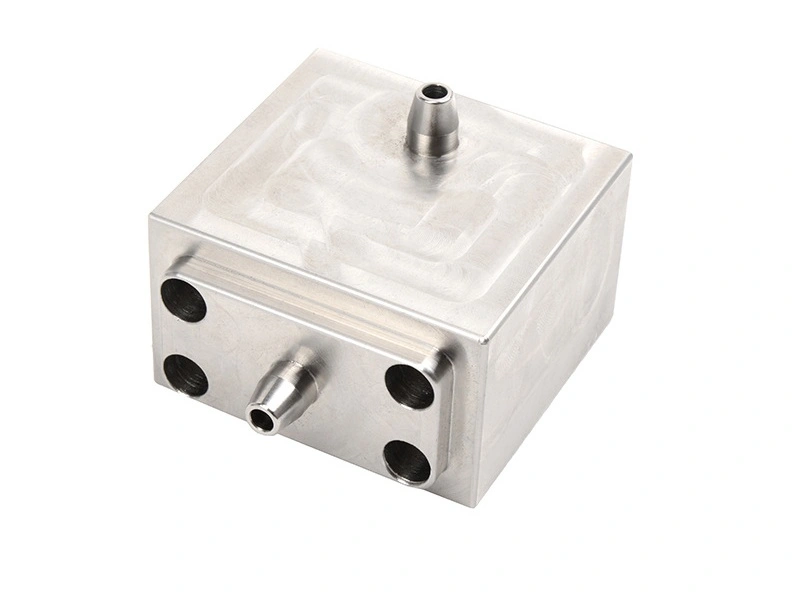
Quick Decision Table for Stainless Steel CNC Parts
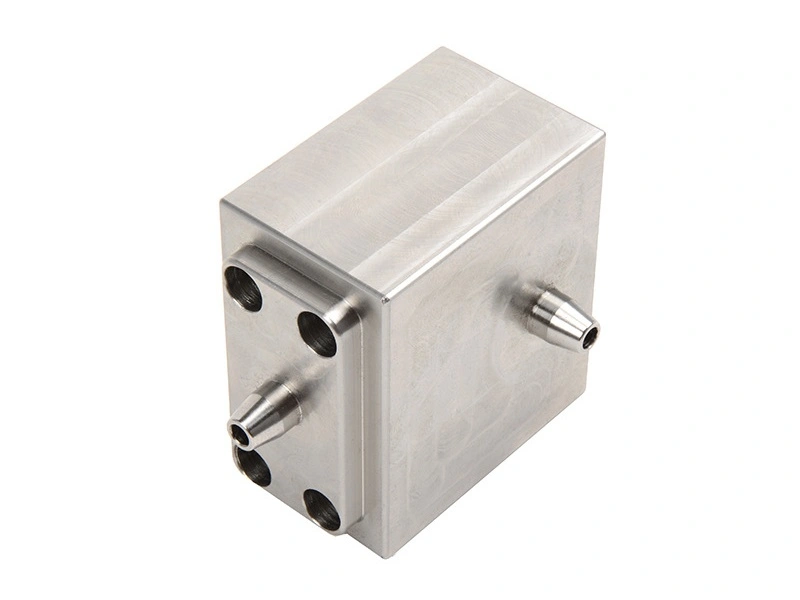
Material | Use Condition | Primary Decision | Machining / Sourcing Consideration |
|---|---|---|---|
304 baseline | Moderate indoor, washdown, food, or industrial exposure without a demanding chloride or chemical condition | Use only when the documented environment and cleaning route fit the general corrosion margin | Control work hardening, burrs, free-iron contamination, surface condition, and heat or lot identity |
304L welded route | Welded assemblies in moderate service where lower carbon supports the approved joining procedure | Confirm weld exposure, filler, heat input, cleaning, and whether 304 corrosion performance remains adequate | Machine critical datums around the joining sequence and verify movement after welding or stress release |
316 corrosion-margin route | Confirmed chloride-bearing, chemical, wet, or crevice-prone service within an approved compatibility envelope | Select for the environment, not because 316 is universally corrosion-proof or automatically required | Define fluid, concentration, temperature, deposits, drainage, passivation, and final surface verification |
316L welded or cleanable route | Welded, hygienic, medical-related, food, or fluid hardware with documented surface and cleaning needs | Use lower carbon as one controlled variable; do not treat it as a complete compliance claim | Specify product form, weld condition, deburring access, electropolishing or passivation, cleaning, and traceability |
17-4PH condition pending | High-load component proposed in Type 630 or SUS630 before the final aging condition is selected | Do not release the grade alone; strength, toughness, corrosion, and dimensional results depend on condition | Quote rough machining, heat treatment, final stock, finishing, hardness, distortion, and lot records together |
17-4PH H900-type priority | Design prioritizes higher strength or hardness and accepts the condition-specific toughness and environment limits | Engineering must approve the exact property and service requirement rather than selecting the label informally | Plan heat-treatment movement, hard-state finishing, edge condition, hardness evidence, and final dimensions |
17-4PH H1025 or H1150 route | Design trades some peak strength for a different toughness, ductility, corrosion, or distortion balance | Match the specified condition to the actual load, impact, temperature, and environmental boundary | Keep condition, heat or lot, thermal batch, hardness, dimensions, and approved substitution on one record chain |
316 versus 17-4PH crossover | Part needs corrosion resistance and strength, but neither requirement alone identifies the correct alloy | Compare the real medium and load; 17-4PH is not a universal upgrade from 316 | Review section size, heat treatment, machining sequence, finishing, inspection, and service-specific corrosion risk |
Alternative grade escalation | 304, 316, and 17-4PH each fail a documented corrosion, strength, temperature, or regulatory boundary | Escalate through a separate material review instead of forcing one of the three grades into service | Require approved compatibility evidence, product availability, machinability, joining, inspection, and change control |
When 304 Is Better Than 316
304 is the better choice when the documented environment is moderate, the design does not rely on a 316-specific corrosion margin, and the complete manufacturing route is simpler or more economical. Typical candidates include housings, brackets, supports, guards, fixtures, and equipment hardware that see controlled indoor exposure or compatible cleaning. The conclusion still needs boundaries. Identify chlorides, condensation, trapped deposits, cleaning agents, temperature, dissimilar-metal contact, and drainage before accepting 304. A smooth open surface can behave differently from a threaded crevice or a blind pocket in the same assembly. If corrosion failure would create a pressure, contamination, or safety consequence, material price should carry less weight than a documented service review. Separate appearance from function. Light discoloration on an external cover may be an appearance issue, while attack at a sealing land or threaded pressure port can change acceptance. The drawing should locate the corrosion-sensitive features and avoid a vague whole-part requirement. If exposure data is uncertain, engineering can approve a compatibility test, a more conservative alloy, or a service inspection plan instead of forcing a price-based selection.
Buyers considering Stainless Steel SUS304 CNC machining should also account for manufacturing behavior. 304 can work harden when a tool rubs, dwells, or cuts with an unstable edge, and it can form persistent burrs at cross holes, slots, and thread starts. Tool wear can change bore size or surface texture before a general visual defect appears. A route should define tool engagement, chip evacuation, deburring access, contamination control, datum transfer, and inspection in the final unclamped state. 304L may support a welded route, but welding sequence, movement, heat tint removal, cleaning, and final acceptance still need separate control. Cost comparison should include tool-life policy, inspection frequency, and the consequence of an inaccessible burr. A small automatic-turned part may favor a different cutting strategy from a thin milled housing, even when both use 304. Ask the supplier which features set tool replacement, how cross-hole edges are verified, and whether passivation occurs before or after the final dimensional and cleanliness checks.
When 316 or 316L Is Worth the Higher Cost
316 or 316L is worth the higher route cost when the service environment creates a corrosion risk that 304 cannot carry with an acceptable margin. The decision should name the fluid or chemical, concentration, temperature cycle, chloride level, aeration, deposits, cleaning chemistry, exposure time, and crevice geometry. Molybdenum helps 316 resist pitting in many chloride conditions, but 316 can still pit or suffer crevice attack outside its suitable envelope. The grade is therefore a conditional choice for fluid connectors, valve features, washdown hardware, medical-related parts, and chemical equipment, not a universal promise of corrosion resistance. Geometry that drains and cleans well may be as important as the nominal alloy. Review threaded joints, gasket lands, press fits, lap joints, blind passages, and deposit traps because local chemistry can differ from the bulk fluid. Temperature and evaporation can concentrate a medium at one feature. When published compatibility data does not match the exact condition, record the uncertainty and require engineering approval, testing, or another alloy review rather than extrapolating a service-life claim.
Compare Stainless Steel SUS316 CNC machining and Stainless Steel SUS316L CNC machining with the joining and finishing route included. 316L is commonly evaluated when welding or thermal exposure makes lower carbon relevant, but the drawing should still specify the exact grade and accepted product form. Both grades can work harden and generate burrs in small passages. If passivation or electropolishing follows machining, define stock effects, edge limits, masking or coverage, rinse and cleaning requirements, measurement stage, and treatment records. A quote that lists 316L material but omits cleaning, hidden-burr verification, and final-state inspection has not resolved the functional risk. Surface texture should be assigned by feature and function, not by one copied value. A sealing face needs a defined measurement direction and mating-interface review, while an internal cleanable bore may need residue and accessibility controls. Tie treatment and inspection records to the accepted lot so a material, machining, or finishing change can be separated during investigation.
When 17-4PH Is the Better Stainless Steel Choice
17-4PH is the better choice when a stainless component needs a defined high-strength condition that 304 or 316 cannot provide, and its corrosion behavior is suitable for the actual environment. Shafts, clamps, structural links, tooling components, actuated parts, and heavily loaded fastener features may justify the precipitation-hardening route. The grade name alone is incomplete. The drawing or material specification should identify Type 630 or SUS630, product form, initial condition, final aging condition, and the property or hardness requirement used for acceptance. H900, H1025, and H1150 represent different tradeoffs, so a supplier should not select among them only to simplify scheduling. Strength should be linked to the actual load case, section, stress concentration, fatigue or impact concern, and service temperature. Corrosion performance should be reviewed separately from strength; selecting 17-4PH for load does not prove suitability in a chloride or chemical medium. If magnetic behavior, wear, or post-treatment coating matters, include those conditions in the material approval rather than assuming that every heat-treated stainless route is equivalent.
A controlled Stainless Steel SUS630 / 17-4PH CNC machining route coordinates rough stock removal, thermal processing, movement allowance, final machining or grinding, surface treatment, and inspection. An engineering scenario shows the issue: a thin 17-4PH clamp may meet dimensions in the solution-treated state and move during aging. The buyer can reduce release risk by defining functional datums, leaving condition-appropriate finish stock, measuring after aging and unclamping, verifying hardness on the accepted batch, and tying the result to heat or lot records. If the supplier proposes a different condition or a machine-to-size-before-aging route, engineering should approve the effect on strength, toughness, distortion, corrosion, and finish before production. Quote review should identify which dimensions receive finish stock and which are accepted after thermal processing without correction. Grinding or hard-state machining may add cost but reduce final geometric uncertainty for selected features. The supplier should also state heat-treatment batch ownership, hardness sampling, scale or discoloration removal, passivation need, and how mixed conditions are prevented.
What Buyers Should Provide Before Quoting Stainless Steel Parts
A stainless steel RFQ should let suppliers price the same technical route. Provide the model and controlled drawing, but also identify environment, load case, material grade and product form, initial and final condition, datums, critical dimensions, surface texture, edge and burr limits, heat or surface treatment, cleaning, inspection, traceability, quantity, and change rules. Separate design requirements from supplier proposals. If the material is not fixed, state the function and approval process for an alternative; if it is fixed, prohibit substitution without written review. This prevents a low quote from omitting heat treatment, final-state finishing, passivation, CMM inspection, or records that another supplier included. Split the decision into at least two approvals. Engineering confirms the material and condition against environment and load; quality confirms whether the proposed gauges, CMM strategy, roughness method, hardness evidence, and traceability can prove conformance. Purchasing compares price and lead assumptions only after those routes match. Require each quote to identify outsourced treatment, sampling, certificates, packaging, exclusions, and the effect of a new heat, lot, or sub-supplier.
Required RFQ Information | Why It Matters |
|---|---|
Working environment | Defines fluid, chloride, chemical, temperature, washdown, deposits, drainage, crevice, and dissimilar-metal conditions |
Corrosion medium | Separates a general 304 baseline from a justified 316 route or a separate compatibility review |
Required strength or hardness | Shows whether 17-4PH is needed and identifies the final condition and acceptance evidence |
Product form and lot identity | Connects bar, plate, forging, supply condition, chemistry, heat treatment, and material certificate to accepted parts |
Surface finish | Assigns feature-specific texture, measurement direction, treatment state, sealing function, and cleanability boundary |
Passivation or electropolishing requirement | Defines pre-cleaning, coverage, masking, material removal, rinsing, final dimensions, and batch verification |
2D tolerances and critical dimensions | Identifies functional datums, thin-wall movement, final-state inspection, CMM scope, and measurement agreement |
Quantity and target lead time | Supports batch planning while keeping heat treatment, inspection, traceability, and change approval visible |
If the project exceeds the corrosion or strength envelope of these three grades, the locked reference to Stainless Steel SUS2205 CNC machining should trigger a separate material review, not an automatic substitution. Duplex stainless steel introduces its own product availability, machining, welding, phase-balance, and inspection questions. The buyer should document why 304, 316, and 17-4PH are unsuitable, then approve the new grade, condition, process route, and evidence package before the quote becomes comparable. The same discipline applies to any higher-alloy or hardened alternative. Record the initiating failure mode, the evidence used for selection, the new risks introduced, and the validation method. A supplier suggestion is useful input, but the drawing authority should control the final material contract and any downstream translation into heat treatment or inspection.
Get Stainless Steel Material Selection Support From Neway
The final selection should connect one material condition to one manufacturing and acceptance route. For 304, verify that the moderate environment and cost objective do not hide a chloride, crevice, or welding risk. For 316 or 316L, verify the actual medium, cleanability, joining, and surface treatment rather than relying on the grade name. For 17-4PH, lock the aging condition, heat-treatment sequence, finish allowance, hardness, dimensions, and traceability. Compare suppliers on that complete route, including outside processors and record handoffs, and require approval before any material, condition, or routing change. Make the cost decision at the same boundary: accepted, treated, cleaned, documented parts at the required quantity. This prevents a machining-only unit price from appearing lower while the buyer carries thermal processing, passivation, inspection, rework, and schedule risk. It also creates a clear basis for evaluating an alternate route without weakening the functional requirements.
Buyers can use the stainless steel CNC machining service route as a reference point while preparing the RFQ, but the purchase decision still rests on the drawing, service evidence, and agreed inspection plan. Send the supplier the model, revision-controlled drawing, environmental and load inputs, candidate grade and condition, finishing and cleaning requirements, quantity, inspection scope, and required certificates. Ask the returned quote to state assumptions and exclusions. That makes strength, corrosion, and cost tradeoffs reviewable before machining starts instead of becoming deviations after parts are complete. Before award, confirm the datum and measurement strategy, treatment sequence, final acceptance state, lot mapping, deviation authority, and change-notification rule. Those confirmations turn a nominal alloy comparison into a controlled procurement decision that design, quality, and purchasing can all audit. Keep the approved route, material certificate, thermal or surface-treatment record, inspection results, and deviation disposition under the same part revision and lot reference.
FAQ
When should 316 stainless steel be used instead of 304 for CNC machined parts?
What should be specified for CNC machined stainless steel fluid fittings and sealing bores?
Is 17-4PH stainless steel suitable for high-strength CNC machined components?
What inspection reports are useful for stainless steel CNC parts used in medical?