How do plating and passivation affect corrosion resistance?
How do plating and passivation affect corrosion resistance?
Plating improves corrosion resistance by adding a protective metal layer, while passivation improves stainless steel corrosion resistance by removing contamination and strengthening the natural chromium-rich passive film. Electroplating is the better route when carbon steel, alloy steel, or copper alloys need a barrier, sacrificial layer, wear surface, or decorative metal finish. Passivation is better when stainless steel already has the right base alloy but needs cleaner surface chemistry after machining. Buyers should choose by substrate, exposure, dimensional allowance, and inspection method.
For CNC machined components, plating can change dimensions because coating thickness builds on external surfaces and inside accessible features. Passivation normally changes size much less, but it cannot make an unsuitable stainless grade survive chloride-rich or chemical exposure. Finish selection should connect the material, machining residue, masking needs, post-finish tolerance, and service environment. The surface finish plan should also define appearance, conductivity, wear, and cleaning requirements.
1. The Main Difference Between Plating and Passivation
Process | How It Protects | Best Suited Materials | Main Purpose |
|---|---|---|---|
Plating | Adds a deposited metal layer over the substrate | Carbon steel, alloy steel, copper alloys, selected metals | Barrier, sacrificial, wear, or decorative protection |
Passivation | Cleans free iron and supports passive oxide formation | Stainless steel and selected corrosion-resistant alloys | Restore corrosion resistance without meaningful coating build |
A quick rule: plating supplies another metal; passivation improves the surface chemistry of an alloy that already resists corrosion. If the drawing cannot accept coating build-up, passivation or another low-build finish should be considered first.
2. How Plating Improves Corrosion Resistance
Plating improves corrosion resistance by separating the environment from the base metal. Zinc on steel can provide sacrificial protection because zinc corrodes before exposed steel. Nickel and chrome are more barrier-oriented, so continuity, adhesion, edge coverage, and porosity control become critical. The buyer should specify coating material, thickness requirement in micrometers, masked areas, and post-plating tolerance.
Plating is useful on steels and other metals that corrode quickly when exposed. It can also support appearance, conductivity, solderability, or wear behavior. Related finish options in surface finishes show how plating fits into a broader finishing strategy, but the corrosion result still depends on the coating system and the service environment.
Plating Type | Corrosion Logic | Typical Benefit |
|---|---|---|
Zinc plating | Sacrificial layer on steel | Protects exposed steel when coating and environment are suitable |
Nickel plating | Barrier layer | Improves corrosion resistance, appearance, and wear surface |
Chrome plating | Hard outer barrier | Adds durability and bright decorative surface |
Other metal plating systems | Barrier or functional deposit | May improve corrosion, conductivity, solderability, or wear |
Plating fails when the deposit is porous, thin at corners, poorly adhered, or damaged in service. Corrosion often starts at scratches, thread roots, sharp edges, or unplated recesses. Drawings and RFQs should call out masking, rack marks, threaded features, inspection surfaces, and any salt-spray or visual acceptance rule.
3. How Passivation Improves Corrosion Resistance
Passivation improves corrosion resistance by cleaning stainless steel and supporting a stable chromium-rich oxide film. Machining, tooling contact, shop handling, or abrasive residue can leave free iron or contamination on stainless surfaces. Those particles can rust first and make a corrosion-resistant alloy appear to fail.
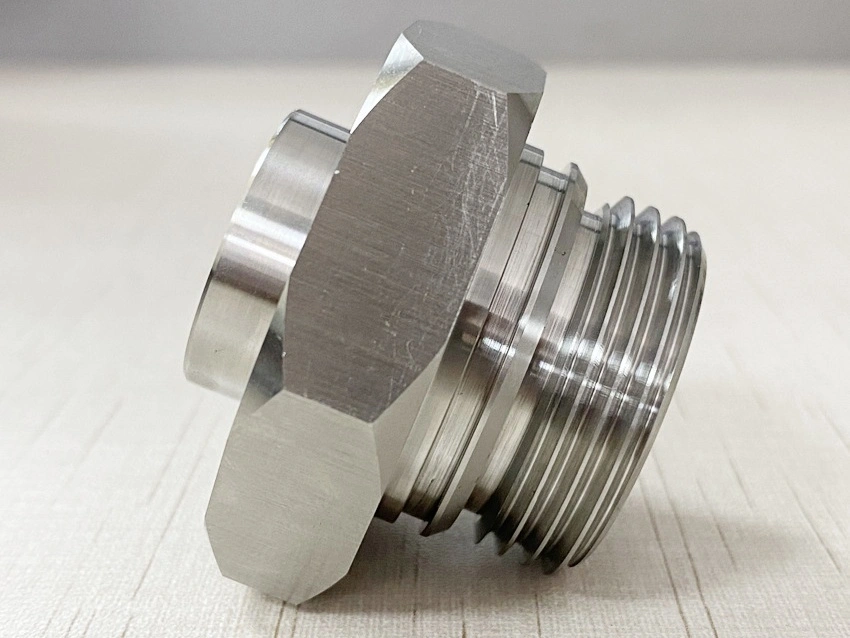
Passivation removes those contaminants and helps restore a cleaner surface on stainless steel CNC machined parts, including SUS304 and SUS316. The process is most useful when the stainless grade is already suitable for the environment. It does not repair poor alloy selection, deep scratches, embedded scale, or severe chloride exposure.
Unlike plating, passivation does not create a visibly thick coating. It is often chosen for precision stainless components because bores, threads, sealing faces, and datum features remain closer to their machined dimensions.
4. Which Process Is Better for Different Materials?
The better process depends first on the substrate. Carbon steel and many alloy steels need plating, conversion coating, or another added protection. Stainless steel usually needs passivation when the goal is corrosion resistance with dimensional stability. Copper alloys and special metals require case review because appearance, conductivity, galvanic contact, and service chemistry may drive the finish.
Base Material | Better Corrosion Strategy | Reason |
|---|---|---|
Carbon steel | Plating or conversion coating | Base metal needs added protection |
Alloy steel | Plating, black oxide, or controlled finish | Substrate is not naturally stainless |
Stainless steel | Passivation, or electropolishing plus passivation | Supports the alloy’s passive film |
Copper alloys | Case-dependent plating | May need barrier, conductivity, or appearance control |
5. How They Differ in Dimensional Impact
Plating has the larger dimensional effect because deposited metal adds measurable thickness. The build can affect threads, close-fit bores, pins, sealing grooves, slots, and press-fit areas. If coating allowance is ignored, a part that measured correctly before finishing can fail assembly after plating.
Passivation has much less dimensional impact because it is a chemical cleaning and surface-conditioning step. That makes passivation attractive for precision stainless parts used in medical, fluid-handling, and sanitary applications. Even so, the RFQ should identify no-touch datums, post-finish inspection dimensions, and any surfaces that need special cleanliness.
6. How They Affect Long-Term Corrosion Performance
Long-term corrosion performance depends on how the finish fails in the real environment. A plated layer can perform well if the deposit remains continuous and adherent. Scratches, corner thinning, pores, worn high spots, or trapped plating chemicals can create local corrosion sites. Sacrificial zinc can still protect some exposed steel, while pure barrier coatings rely more on coating integrity.
Passivated stainless steel behaves differently because corrosion resistance comes from the alloy and its passive film. There is no plated layer to peel off, but stainless steel can still pit, stain, or crevice-corrode when the grade, finish, cleaning chemical, or chloride exposure is wrong. Passivation cannot turn 304 stainless into 316 stainless behavior in marine or chloride-heavy service.
7. When Buyers Should Specify Plating or Passivation
Specify plating when a corrosion-prone metal needs an added barrier, sacrificial layer, decorative metal surface, conductivity control, or wear-related surface improvement. Specify passivation when stainless steel needs cleaner surface chemistry, corrosion resistance, and dimensional stability after machining. The RFQ should list material grade, exposure, coating or passivation requirement, thickness or low-build limit, masking zones, and acceptance test.
This decision often works together with other finishes such as electropolishing, black oxide, or chrome plating, depending on the part’s service conditions. Use one finish stack only after checking galvanic contact, post-finish size, appearance class, cleaning method, and assembly surfaces.
8. Buyer Decision Output
Question | Plating | Passivation |
|---|---|---|
How does it improve corrosion resistance? | Adds deposited metal barrier or sacrificial layer | Cleans stainless surface and supports passive film |
Best for which materials? | Carbon steel, alloy steel, copper alloys when protection is needed | Stainless steel grades already suitable for the environment |
Does it change dimensions? | Yes, coating thickness and edge build must be allowed | Usually minimal, but cleanliness and surface condition still matter |
Main risk if poorly controlled? | Porosity, poor adhesion, corner thinning, masking errors, or damage | Remaining free iron, contamination, wrong alloy, or incomplete cleaning |
Choose plating when the base metal needs another protective metal layer and the design can tolerate coating build-up. Choose passivation when stainless steel needs improved surface chemistry without meaningful dimensional change. For quoting, include the base material, environment, required finish, thickness or low-build requirement, masked zones, post-finish critical dimensions, and corrosion or cleanliness acceptance method.