Is CNC milling suitable for one-off prototype parts?
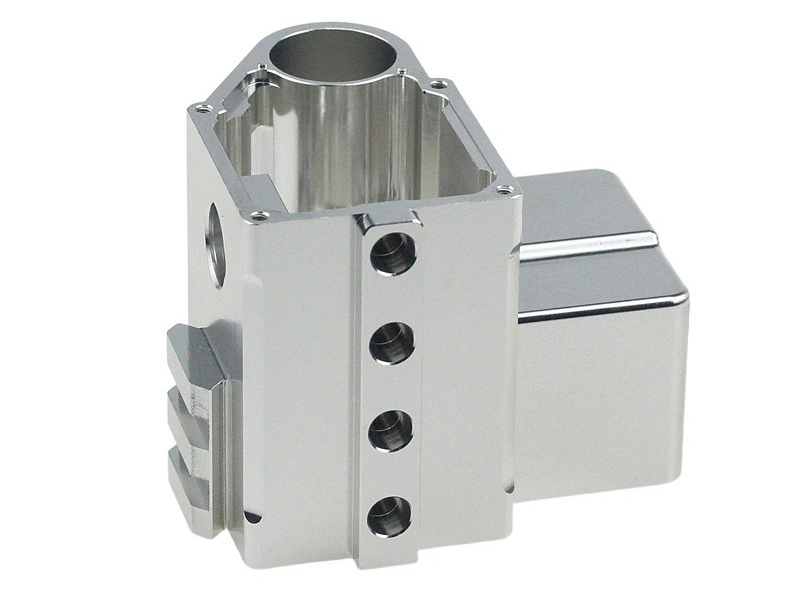
Is CNC milling suitable for one-off prototype parts?
Yes, CNC milling is suitable for one-off prototype parts when the buyer needs production-intent material, reachable geometry, controlled datums, and functional evidence before wider production. A single prototype should answer a defined engineering question, not just show shape. Buyers should send the drawing revision, material grade and condition, critical dimensions, datum scheme, finish requirement, and the decision the prototype must support.
Unlike tooling-based methods, one-off CNC prototyping does not require mold investment or dedicated forming tools. That makes it useful while the design is still changing, when the part must be tested in metal or engineering plastic, or when buyers need a short CAD-to-part route for assembly review. This is where CNC machining prototyping has strong technical value: the sample can expose geometry, tolerance, burr, thread, and fixture risks before the order grows.
1. Why One-Off Prototypes Are a Strong Fit for CNC Milling
One-off prototype parts are a strong fit for CNC milling when the prototype must be dimensionally meaningful enough for assembly, inspection, and functional testing. A prototype bracket, housing, fixture, interface block, or structural support usually has to match the intended design closely enough to test mounting faces, hole patterns, slot width, edge clearance, and part stiffness. CNC milling supports that work because critical features can be machined from the CAD model without waiting for dedicated tooling.
For example, a prototype with flat datum faces, threaded holes, sealing lands, or mating slots can reveal whether the design is ready for repeat machining. Thin walls may move after unclamping, small internal radii may force slower tools, and burrs around threaded or slotted features may affect assembly. Those findings matter more than appearance when the prototype must answer engineering questions rather than visual approval alone.
Prototype Need | Why CNC Milling Works Well |
|---|---|
Real assembly validation | Checks interfaces, hole position, slot width, datum contact, and fastener access |
Functional material testing | Uses the intended aluminum, steel, titanium, plastic, or other machinable stock condition |
Geometry confirmation | Shows whether pockets, walls, radii, and setup access match the CAD intent |
Fast design iteration | Allows a revised file to test the next design risk without new hard tooling |
2. CNC Milling Provides Production-Relevant Material and Geometry Feedback
A one-off milled prototype gives production-relevant feedback when the sample uses the planned material grade, temper, stock form, or heat-treated condition. The buyer can evaluate stiffness, weight, edge condition, thread quality, heat response, and machining marks on the same physical part. If the drawing uses ASME Y14.5 or ISO GPS datum logic, the prototype can also confirm whether the intended datum features are practical to machine and inspect.
This matters when geometry includes thin walls, deep pockets, bosses, sealing faces, or close-tolerance interfaces. One machined prototype can reveal fixture instability, wall movement after roughing, insufficient tool access, finish effects on contact faces, or tolerance callouts that add cost without improving function. The result is not a production capability guarantee; it is controlled evidence for deciding what should change before repeat orders.
3. One-Off CNC Prototypes Help Buyers Verify Cost and DFM Logic Early
A one-piece prototype helps buyers verify cost and DFM logic because the first machining route exposes setup count, tool reach, internal corner size, deburring access, inspection effort, and finish risk. If the part needs many orientations for one feature, the prototype makes that cost driver visible before larger quantities are quoted.
That early feedback helps buyers decide whether the same design should continue as a machined part, be simplified for repeat machining, or later move toward low-volume manufacturing with a more controlled process route. Useful RFQ notes include the expected next quantity, the feature that must not change, surfaces that may be relaxed, and whether prototype inspection should focus on fit, function, or process feasibility.
4. When One-Off CNC Milling Is the Best Prototype Choice
One-off CNC milling is usually the best prototype choice when the part must be functionally tested, assembled with other components, or inspected for true machining feasibility. It is especially useful for custom metal and engineering-plastic parts that require real mechanical performance, threaded features, precision faces, flat datums, or exact dimensional relationships.
Situation | Is One-Off CNC Milling Suitable? | Reason |
|---|---|---|
Prototype must fit into a real assembly | Yes | Functional interfaces and datum contacts are more meaningful than visual shape alone |
Prototype must use production-like material | Yes | Strength, stiffness, thread quality, weight, and finish response can be checked directly |
Design is still evolving rapidly | Yes | Each revision can test a specific risk without committing to a mold or die |
Part will later move to machining-based batch production | Yes | Prototype data can guide fixture, toolpath, tolerance, and inspection planning |
5. When One-Off CNC Milling May Not Be the Best Option
CNC milling is not the best one-off route when the prototype only needs to show appearance, hand feel, or approximate envelope size. A visual model can be faster and cheaper if material behavior, thread quality, datum relationships, and machined surface condition will not be evaluated.
It may also be less useful when the final part will depend on molding, casting, forming, or additive geometry that a milled part cannot represent well. Molded ribs, cast draft, printed lattice structures, and as-formed surfaces may behave differently from a machined substitute. In those cases, the buyer should define the test question first, then choose the prototype method that can answer that question honestly.
6. Practical Guidance for Buyers Ordering One-Off CNC Prototypes
To get the most value from a one-off CNC milled prototype, buyers should identify the features that must be proven. That usually includes assembly datums, threaded holes, sealing or contact faces, wall thickness concerns, cosmetic zones, and any dimension where tolerance or finish may later affect production. The RFQ should state whether the prototype is for fit check, load test, customer approval, machining feasibility, or planning the next batch.
That context lets the machining route focus on the right priorities instead of treating every surface as equally important. The most useful one-off prototype is rarely the part with the tightest possible tolerance everywhere. It is the part that proves the critical geometry, exposes the risky features, and gives the buyer enough evidence to approve, revise, or pause the design before spending more money.
7. Summary
Main Question | Answer |
|---|---|
Is CNC milling suitable for one-off prototype parts? | Yes, when real material, accessible geometry, datum control, and functional validation matter |
Why do buyers choose it? | It converts CAD data into an engineering sample without hard tooling investment |
What is the biggest advantage? | It reveals performance, manufacturability, fixture, burr, and inspection risks early |
What should buyers use it for? | Fit checks, functional testing, tolerance review, material confirmation, and DFM decisions |
CNC milling is one of the strongest options for one-off prototype parts when buyers need an engineering sample rather than a visual model. It can validate real material behavior, machined geometry, datum relationships, and assembly risks before the design moves into repeat machining. The best next step is to define the question the prototype must answer and send the drawing, material, tolerance priorities, and expected next quantity with the RFQ.