How should buyers choose between CNC milling and tooling-based production?
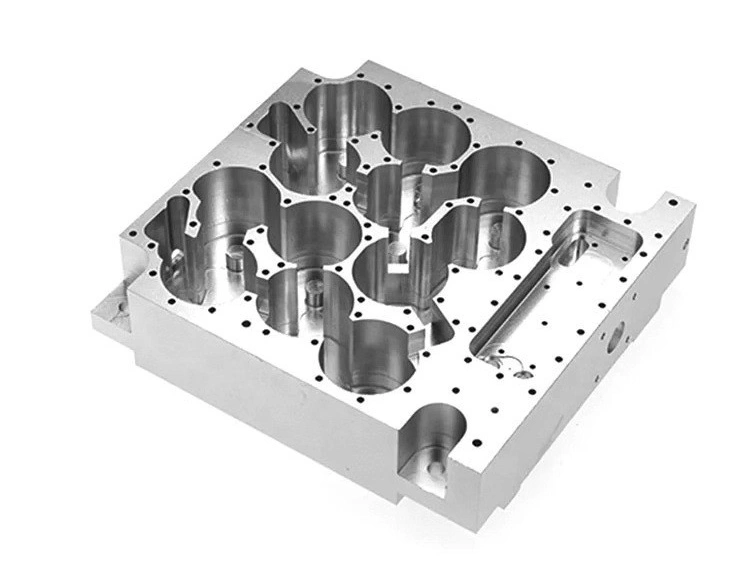
How should buyers choose between CNC milling and tooling-based production?
Buyers should choose between CNC milling and tooling-based production by comparing total project cost, design maturity, quantity stability, lead time, material validation, tolerance risk, and the cost of future changes. CNC milling is usually better for low or uncertain quantities, evolving designs, urgent parts, and production-grade validation. Tooling-based production becomes stronger when the design is frozen, demand is predictable, and tooling amortization can reduce total cost.
A staged route is often the lowest-risk decision. Many projects begin with CNC machining prototyping, move into low-volume manufacturing, and switch only after geometry, demand, inspection criteria, and business volume are proven. Before that switch, buyers must identify which CNC test results remain valid and which material or process characteristics require tooling-route samples.
1. Start with Total Project Cost, Not Piece Price Alone
The first comparison should be total project cost. Unit price alone can hide tooling, fixture preparation, engineering changes, secondary machining, inspection, scrap risk, delay cost, and the financial value of earlier usable parts.
A tooling-based quote may show a lower part price after production starts, but the comparison must also include tooling, trials, secondary machining, qualification, expected scrap, and revision exposure. Compare both routes over the same demand horizon and require the quote to state which costs recur after a drawing change.
Decision Factor | CNC Milling | Tooling-Based Production |
|---|---|---|
Upfront investment | Low setup and programming cost | Higher tooling, trial, and qualification cost |
Unit cost at very low quantity | Usually better | Usually worse because tooling is not amortized |
Unit cost at high stable volume | Usually higher | Usually lower once tooling is absorbed |
Change cost after design revision | Lower through programming and setup changes | Often higher because tooling may need rework |
2. Low or Uncertain Quantity Favors CNC Milling
CNC milling is usually the better option when the order is still in prototype, pilot, bridge, or early repeat range. This is especially true when demand is uncertain, customer approval is still open, or the first release quantity may change after field feedback.
In these situations, buyers preserve flexibility and avoid paying for tooling before demand is proven. Low-quantity programs often remain in CNC longer than expected when the part is complex or each revision still teaches something about cost, fit, function, or inspection.
3. Unfrozen Designs Need Revision Flexibility
If the design may still change, CNC milling is usually safer. A revised slot position, wall thickness, bore size, or datum relationship can often be handled through updated programming and process adjustment. In tooling-based production, a small design change can trigger tool modification, extra delay, or a full tooling remake.
This makes CNC milling valuable during customer validation, engineering optimization, regulatory preparation, and launch-stage development. When buyers are still learning from each build, revision flexibility has real economic value.
Situation | Better Choice | Reason |
|---|---|---|
Design likely to change | CNC milling | Avoids repeated tooling modification cost |
Geometry already stable for long-term production | Depends on volume | Tooling may begin to make economic sense |
Customer still reviewing samples | CNC milling | Keeps engineering flexibility high |
4. Urgent Lead Time Changes the Economics
Lead time can outweigh future unit price when late parts delay tests, repairs, launch builds, or customer approval. CNC milling can start from CAD data without waiting for molds, dies, or dedicated production tools, which makes it strong for fit checks, pilot builds, spare parts, and bridge production.
If schedule risk has high business value, faster machined parts may be cheaper at project level even when tooling could lower future unit cost. Buyers should compare the cost of waiting, not only the quoted part price.
5. Separate Geometry Validation from Process-Dependent Material Validation
CNC milling is useful when an early part must use the specified wrought grade and condition of aluminum, stainless steel, titanium, carbon steel, or engineering plastics. A machined wrought prototype can validate assembly geometry and many machined features, but it cannot prove the material behavior of a casting, forging, molded part, or stamping.
Process-dependent properties need separate approval. Grain flow, porosity, fiber orientation, residual stress, draft, wall fill, and as-produced surfaces can change when the route changes. Buyers should map each functional test to its material and process dependency, then request tooling-route samples for any result that does not transfer.
6. High Stable Volume Can Justify Tooling
Tooling-based production becomes stronger when the design is stable, annual volume is predictable, and the process matches the part geometry. Once tooling investment is spread across enough acceptable parts, repeat unit cost can fall below machining-based production.
This route is most attractive when the part is standardized, repeat demand is dependable, secondary machining is limited, and the buyer values long-run unit cost over flexibility. The break-even point depends on part complexity, tolerance, material, tool cost, trial risk, and inspection requirements, so there is no universal quantity threshold.
Condition | When Tooling-Based Production Becomes Attractive |
|---|---|
Stable demand | When future orders are large enough to absorb tooling cost |
Frozen design | When engineering change risk is low |
Geometry suited to the chosen process | When secondary machining can be minimized |
Long-term cost priority | When the buyer values the lowest repeat unit price |
7. Complexity and Tolerance Can Keep CNC Competitive
Even when volume rises, some parts remain better suited to CNC milling because of geometry or accuracy requirements. Multiple precision faces, tight positional relationships, threaded details, sealing surfaces, and complex pockets may still need secondary machining after a tooling-based primary process. That can shrink the tooling advantage.
If the tooling route still needs substantial machining for functional features, include those operations, datum transfers, scrap exposure, and inspection in the cost comparison. Buyers should also confirm that the tooling-route datum scheme can locate every critical machined feature before treating lower primary-process cost as a saving.
8. Consider the Scaling Path, Not Just the First Order
A smart sourcing decision looks beyond the current order. Buyers should ask whether the part will remain custom low-volume work, grow into repeat batches, or justify a dedicated production process. If growth is uncertain, CNC milling reduces risk. If growth is confirmed, compare a staged strategy and switch only after geometry, demand, and inspection criteria are proven.
This progression avoids premature tooling while preserving a route toward lower future unit cost. The RFQ should include current quantity, annual forecast, design freeze status, material condition, critical tolerances, inspection plan, and delivery deadline. For a planned transfer, add the proposed tooling process, secondary machining, process-specific approval tests, and the event that triggers release of tooling expenditure.
9. Practical Buyer Decision Guide
Decision Signal | Provisional Route | Confirmation Before Release |
|---|---|---|
Fast first articles and design validation | CNC milling | Confirm drawing revision, material condition, and inspection scope |
Low-risk pilot or bridge production | CNC milling | Define which test results can transfer to the later production route |
Lowest long-term unit cost at stable high volume | Tooling-based production | Compare tooling, trials, secondary machining, and qualification over the forecast |
Frequent customer-driven design changes | CNC milling | Price likely revisions and keep drawing change control explicit |
Stable high-demand standardized part | Tooling-based production | Confirm process fit and approve process-specific production samples |
10. Summary
Choose CNC milling when the part is low-volume, still evolving, urgently needed, or requires production-grade material and functional validation without tooling investment. Choose tooling-based production when design is frozen, demand is predictable, geometry fits the process, and volume is high enough for tooling amortization to reduce total cost.
The strongest decision framework compares total project economics rather than isolated unit price. CNC milling is often the safer first-stage route. Tooling-based production becomes the stronger second-stage route only after quantity, design, process-specific material behavior, inspection criteria, and long-term demand are proven.