Stellite Alloy
Material Introduction
Stellite Alloy is a cobalt-based superalloy family used for severe-service parts requiring wear resistance, galling resistance, corrosion resistance, and hot hardness. It is commonly associated with valve trims, seats, bushings, sleeves, sealing rings, cutting edges, turbine hardware, and other components exposed to abrasion, erosion, sliding contact, high temperature, or corrosive media.
For manufacturing projects, Stellite Alloy should be evaluated as a specialized cobalt-based superalloy family for wear-critical and corrosion-critical machining applications. Its cobalt-rich matrix supports high-temperature hardness and resistance to adhesive wear, while chromium improves oxidation and corrosion resistance. Depending on grade, tungsten, molybdenum, carbon, and carbide content contribute to hardness, abrasion resistance, and high-load surface durability. For custom component manufacturing, Stellite parts are typically produced through precision machining of cast, wrought, or preformed stock, followed by finishing, inspection, and application-specific verification.
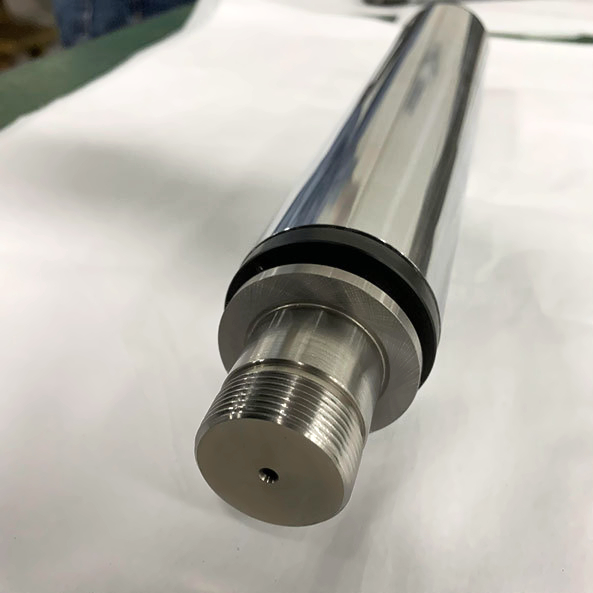
International Naming Table
Region / Standard | Naming / Designation |
|---|---|
Commercial / Industrial Name | Stellite Alloy |
Representative Grades | Stellite 1, 3, 4, 6, 6B, 6K, 12, 20, 21, 25, 31, F, SF12 |
Material Category | Cobalt-based superalloy / wear-resistant cobalt alloy |
Typical Component Reference | Valve seat, valve trim, bushing, sleeve, seal ring, wear insert, turbine hardware |
Primary Manufacturing Route | Precision machining from cast or wrought stock |
Typical Service Position | Wear-critical, sealing, sliding, erosive, corrosive, or elevated-temperature industrial service |
Comparable Alloy Family | Other cobalt or nickel-based wear-resistant and high-temperature alloys |
Alternative Material Options
Stellite Alloy belongs to the cobalt-based wear-resistant superalloy family used for severe-service components. However, substitute selection should be based on engineering equivalence rather than grade popularity. The comparison should include hardness, galling resistance, corrosion behavior, temperature capability, impact loading, machining difficulty, sealing function, and mating-surface conditions.
Potential alternatives may include other cobalt alloys, nickel-based wear alloys, or different hard-facing and high-temperature materials depending on whether the project prioritizes sliding wear resistance, hot hardness, corrosion resistance, or structural toughness. For complex assemblies, precision machining should be planned according to tolerance, sealing performance, and final service condition. Final substitute selection should always be approved according to the actual application requirement and engineering validation criteria.
Design Intent of Stellite Alloy
Stellite Alloy was designed for components operating under severe wear, erosion, galling, corrosion, and elevated-temperature conditions. In practical applications, these parts often face repeated valve opening and closing, high-pressure fluid impact, metal-to-metal contact, abrasive particles, or continuous surface attack where ordinary steels and stainless steels may wear or seize too quickly.
The design intent of Stellite Alloy is different from general-purpose cobalt alloys. It is selected for surface durability, hot hardness retention, anti-galling behavior, corrosion resistance, and long-term dimensional stability in critical wear locations. Because many Stellite parts function at the sealing or contact interface, machining quality, edge control, surface finish, contact geometry, and final inspection are essential for reliable service.
Chemical Composition (wt%)
Element | Typical Role |
|---|---|
Co | Balance matrix, supports hot hardness and high-temperature stability |
Cr | Improves corrosion and oxidation resistance |
W / Mo | Contribute to strengthening and wear-related performance |
C | Supports carbide formation and abrasion resistance |
Ni / Fe | Present in controlled amounts depending on grade |
Other Minor Elements | May vary by grade to balance toughness, hardness, and corrosion behavior |
Note: Exact Stellite chemistry should be confirmed against the selected grade, material standard, customer requirement, or certified material documentation before production.
Physical Properties
Property | Typical Reference |
|---|---|
Material Type | Cobalt-based wear-resistant superalloy |
Primary Manufacturing Route | Machining from cast or wrought stock, depending on grade and part form |
Strengthening Mechanism | Solid-solution strengthening and carbide strengthening |
Service Environment | Wear, erosion, sliding contact, hot fluid, corrosive media, elevated temperature |
Oxidation Resistance | Good, especially for hot-service surface protection |
Corrosion Resistance | Important for valve, pump, and fluid-handling applications |
Wear Behavior | Designed for abrasion resistance, galling resistance, and contact durability |
Mechanical Properties
Property | Engineering Relevance |
|---|---|
Hot Hardness | Helps maintain sealing and contact performance at elevated temperature |
Galling Resistance | Critical for sliding contact, valve trim service, and metal-to-metal interfaces |
Abrasion Resistance | Important for erosive media, particles, and high-wear equipment |
Corrosion Resistance | Supports service in aggressive fluids and industrial process environments |
Surface Durability | Essential for long-term sealing, valve, and sleeve applications |
Machining Difficulty | Requires rigid setup, conservative cutting strategy, and careful tool control |
Material Characteristics
Stellite Alloy is characterized by a cobalt-rich matrix with chromium-driven corrosion and oxidation resistance and carbide-supported wear performance. Depending on the selected grade, the alloy may emphasize abrasion resistance, metal-to-metal wear resistance, hot hardness, or better balance between corrosion resistance and toughness. This makes the family especially useful for valve and sealing components where surface failure is the primary risk.
The alloy is especially relevant for components that must preserve surface geometry and sealing function under aggressive service. Parts exposed to wear should be evaluated for edge breakdown, surface damage, erosion patterns, contact distress, corrosion attack, and dimensional loss before replacement or redesign. Because many Stellite applications are interface-sensitive, machining accuracy and surface condition are directly tied to product life.
Manufacturing Process Performance
Stellite Alloy is primarily associated with severe-service machined components. For new production, precision machining is an appropriate route for valve seats, sleeves, bushings, seals, wear inserts, and other cobalt-alloy parts requiring high dimensional accuracy. CNC turning, CNC milling, drilling, boring, and grinding may be used depending on the part geometry, hardness level, and final sealing or contact requirement.
After rough machining, controlled finishing is usually required for sealing faces, bores, seating angles, contact surfaces, and other application-critical features. For complex parts or difficult access features, multi-axis machining may be considered to improve setup efficiency and feature control. Inspection should be integrated throughout the manufacturing route because Stellite components are sensitive to tool wear, surface damage, dimensional drift, burr condition, and contact-surface integrity.
Applicable Post-processing
Stellite Alloy components may require grinding, lapping, edge refinement, dimensional verification, and application-specific surface preparation depending on the service function and drawing requirement. For sealing and valve-related components, final surface finish and seating geometry are often more important than appearance. For wear-critical parts, contact-area inspection and final dimensional consistency are also essential.
If the part is used in high-temperature or corrosive service, surface cleanliness, dimensional allowance, burr removal, and edge condition should be checked before final assembly. Final validation through quality control and geometry verification is recommended for high-value Stellite parts, especially where sealing, wear, or long-term contact reliability determines service life.
Common Applications
Stellite Alloy is used in severe-service industrial components requiring cobalt-based wear and corrosion performance. Typical applications include valve seats, valve trims, sleeves, bushings, sealing rings, hot-wear inserts, cutting-related parts, turbine wear hardware, and replacement components for oil and gas, power generation, and process-industry equipment.
In these applications, Stellite parts must resist abrasion, galling, erosion, corrosion, and dimensional loss under repeated service. The alloy is suitable for components where contact durability and surface life are more important than low density or low material cost. For replacement manufacturing, the original drawing, selected Stellite grade, service environment, mating material, contact condition, and inspection standard should be reviewed before confirming production.
When to Choose Stellite Alloy
Choose Stellite Alloy when the application requires a cobalt-based superalloy for wear-critical, sealing-critical, corrosion-critical, or elevated-temperature components. It is most suitable when galling resistance, abrasion resistance, hot hardness, and long-term surface durability are more important than lower machining cost or easier processing.
If Stellite Alloy is not required, substitute materials should not be selected by hardness alone. Other cobalt or nickel-based wear alloys may be considered only after comparing contact mode, service temperature, corrosive media, mating material, impact loading, and required life. For new components, the safest approach is to confirm the selected Stellite grade, drawing requirement, tolerance target, sealing requirement, inspection standard, and final operating condition before manufacturing.
Engineering Selection Note
Stellite Alloy should be evaluated as an engineering wear material rather than a general cobalt alloy. For RFQ evaluation, customers should provide the 2D drawing, 3D model, material grade, service environment, mating material, contact mode, temperature, quantity, inspection requirement, and whether the part is for new production or replacement. This allows NewayMachining to determine whether Stellite machining, grinding, multi-axis finishing, geometry verification, and final inspection are appropriate for the component.
Explore Related Blogs