Monel Alloy
Material Introduction
Monel Alloy is a nickel-copper alloy family widely used in CNC machining when the application requires strong corrosion resistance, especially in seawater, salt-containing environments, alkalis, and selected chemical media. Compared with ordinary stainless steel or carbon steel, Monel materials are typically selected when chloride resistance, marine reliability, and long-term resistance to corrosion-related degradation are more critical than minimum raw material cost.
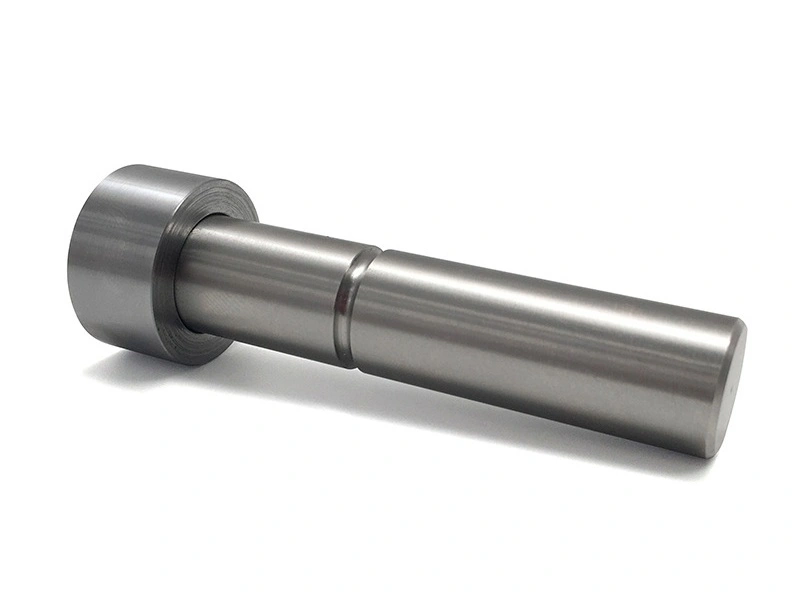
This family includes Monel 400, Monel 401, Monel 404, Monel 450, Monel K500, and Monel R-405. These grades are commonly used for shafts, sleeves, pump and valve components, marine fittings, fasteners, sealing parts, chemical handling hardware, and other custom machined parts requiring nickel-copper corrosion resistance and dependable service in harsh environments.
Material Family Table
Monel Category | Representative Grades |
|---|---|
General Corrosion-Resistant Monel | Monel 400, Monel 401, Monel 404, Monel 450, Monel R-405 |
High-Strength Monel |
Selection Direction
Monel grade selection should be based on seawater exposure, chloride content, chemical media, strength requirement, shaft or fastener loading, wear condition, electrical property needs, and machining complexity. Different Monel grades are not fully interchangeable, because some are optimized for general corrosion resistance while others are selected for higher strength or more specialized electrical or machining-related performance.
For general-purpose corrosion-resistant service, Monel 400 is often the first grade considered. When higher strength is needed in a marine or corrosive environment, Monel K500 is often a better option. For free-machining or specialized application adjustments, Monel R-405 or other niche Monel grades may be evaluated according to the actual part function and service requirement.
Design Intent of Monel Alloy
Monel alloys are designed for severe corrosion-duty service where the part must remain reliable in seawater, salt-bearing systems, chemical handling environments, or corrosive industrial media. Their design intent usually focuses on corrosion durability, marine service life, resistance to stress-related degradation in harsh environments, and dependable performance in fluid-contact components.
The design intent varies by grade. Standard Monel grades are typically chosen for corrosion-focused service, while strengthened grades such as Monel K500 are selected when the part also requires higher mechanical load capacity. In all cases, the alloy is chosen because corrosion resistance and environmental reliability are essential to the function of the part.
General Properties
Property | Typical Engineering Meaning |
|---|---|
Base Alloy Type | Nickel-copper corrosion-resistant alloy family |
Corrosion Resistance | Main reason Monel is selected in marine and chemical-service applications |
Seawater Durability | Important for shafts, fittings, fasteners, and marine-contact components |
Machinability | More difficult than carbon steel and many brasses due to toughness and work-hardening tendency |
Non-Magnetic / Specialty Behavior | Useful in selected industrial, marine, and instrumentation applications |
Environmental Reliability | Critical in pumps, valves, sleeves, fasteners, and marine hardware |
Mechanical Behavior
Property | Engineering Relevance |
|---|---|
Strength | Supports structural, rotating, and pressure-related machined parts |
Toughness | Important for reliable service in harsh marine and industrial environments |
Work Hardening | Important in CNC machining strategy and tool wear control |
Stress-Corrosion Reliability | Important in long-term aggressive fluid and salt-bearing service |
Wear / Surface Integrity | Relevant for shafts, sleeves, seals, and mating features |
Dimensional Stability | Supports sealing surfaces, bores, threads, and precision fluid-system parts |
Material Characteristics
Monel alloys are characterized by strong resistance to seawater corrosion and many aggressive industrial environments, supported by nickel-copper chemistry that provides excellent durability where many common steels would corrode or pit more quickly. This makes the family especially valuable for marine systems, salt-handling equipment, and corrosion-sensitive industrial hardware.
The family is also characterized by more challenging machining behavior than many standard engineering metals. Monel materials can be tough, produce high tool load, and work harden during cutting. This means Monel is chosen because of its service value rather than easy machining. The correct grade should always be selected according to the real operating environment and mechanical demand.
Manufacturing Process Performance
Monel parts are commonly produced through CNC turning, CNC milling, CNC drilling, CNC boring, and where tighter finish or dimensional control is needed, CNC grinding. Complex corrosion-resistant parts may also benefit from precision machining routes when critical bores, threads, sealing faces, or shaft-related geometry must be controlled closely.
Compared with aluminum, brass, or carbon steel, Monel machining requires a more conservative cutting strategy and careful management of heat, work hardening, and tool wear. Production planning should therefore consider the exact Monel grade, part geometry, tolerance target, and whether the part includes threads, deep holes, long shafts, sealing surfaces, or fluid-contact features.
Applicable Post-processing
Monel parts may require deburring, stress-relief-related handling, surface refinement, cleaning, and dimensional verification depending on the specific component function. In corrosion-critical service, the final surface condition is important because burrs, damaged sealing edges, or trapped contamination can negatively affect assembly performance and long-term reliability.
For parts used in marine or chemical environments, post-machining preparation should focus on functional surface quality, dimensional integrity, and readiness for final assembly rather than appearance alone. If the part includes threads, sealing faces, contact surfaces, or rotating fits, final verification should pay close attention to edge quality, bore condition, and surface cleanliness.
Common Applications
Monel alloys are widely used in marine systems, chemical processing, oil and gas, power generation, and industrial equipment requiring strong corrosion resistance. Typical applications include shafts, sleeves, pump parts, valve bodies, fasteners, fittings, marine hardware, sealing components, and custom machined parts exposed to seawater, salt-bearing fluids, or aggressive industrial media.
In these applications, Monel is selected because corrosion-related failure can be more important than simple mechanical overload. The exact grade should be chosen according to whether the part primarily needs general corrosion resistance, marine durability, higher strength, or more specialized machining and service behavior.
When to Choose Monel Alloy
Choose Monel Alloy when the application requires a nickel-copper material with strong seawater resistance, chloride durability, and reliable corrosion performance beyond what many common stainless steels can offer. Monel is especially suitable for custom machined parts in marine systems, pump and valve assemblies, chemical handling equipment, and other severe industrial environments where service life depends heavily on corrosion resistance.
For general marine and corrosive-service applications, Monel 400 is often the first option. For stronger mechanical demand in similar environments, Monel K500 may be more appropriate. For specialized service conditions or machining-related adjustments, other Monel grades should be evaluated according to the real media, load, and assembly requirement. The safest selection method is always to confirm the exact operating environment, temperature, loading, and required life before finalizing the grade.
Engineering Selection Note
Monel Alloy should be selected according to the actual service condition rather than by alloy family name alone. For RFQ evaluation, customers should provide the 2D drawing, 3D model, dimensional tolerance, operating media, salt or chloride exposure, temperature, load condition, surface finish expectation, and whether the part is intended for prototype, maintenance replacement, or production use.
This allows NewayMachining to determine whether general Monel grades or high-strength Monel K500 are the most suitable material route for the project, and whether turning, milling, drilling, boring, grinding, or precision machining is the best process combination for the final component.
Explore Related Blogs