Why Use Low Volume Manufacturing Before Mass Production?
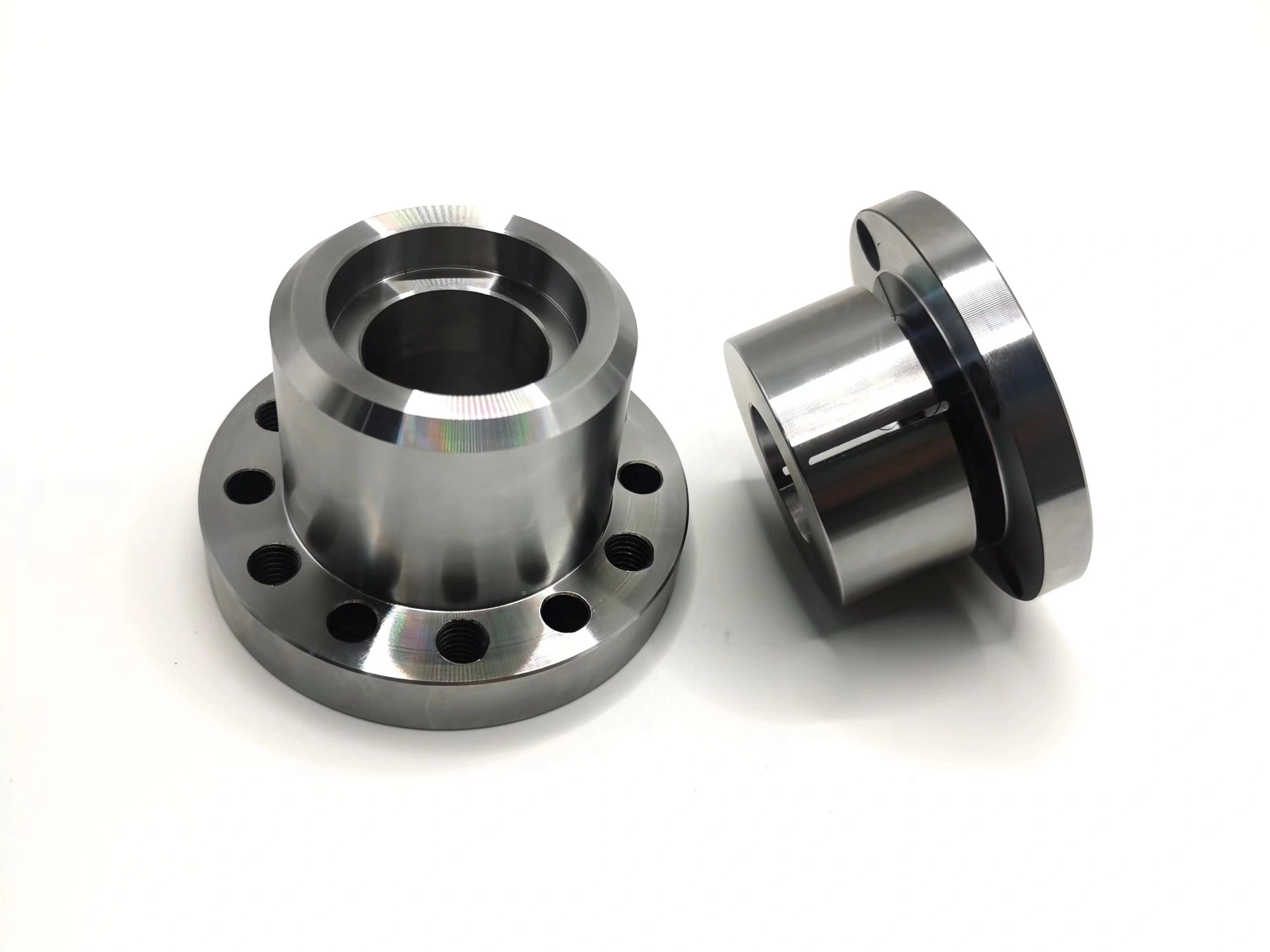
<p><a target="_blank" href="https://www.newaymachining.com/services/low-volume-manufacturing/faq-why-use-low-volume-manufacturing-before-mass-production"><img src="https://www.newaymachining.com/storage/attachments/2026/04/29/Why Use Low Volume Manufacturing Before Mass Production.webp" width="1920" height="1440" loading="lazy"></a></p><h2 id="why-use-low-volume-manufacturing-before-mass-production?">Why Use Low Volume Manufacturing Before Mass Production?</h2><p>Use a <a target="_blank" href="/services/low-volume-manufacturing">low volume manufacturing service</a> before <a target="_blank" href="/services/mass-production">mass production</a> to expose product, process, supply, and commercial risks while the release quantity and investment remain controlled. A successful sample proves only its documented build state. A controlled batch can test whether the released revision, material condition, setup, critical interfaces, final processing, inspection method, and delivery records remain suitable across repeated parts.</p><p>After <a target="_blank" href="/services/prototyping">prototype validation</a>, define the exact uncertainty that the low-volume order must close. The batch may test fixture-loading variation, final-state dimensions, assembly distribution, outside-process handoffs, inspection throughput, or field feedback. Require matched evidence and a named release authority. Low volume reduces exposure only when a failed result triggers containment, correction, and re-verification rather than being accepted as normal short-run variation.</p><h3 id="1.-a-passed-prototype-does-not-mean-batch-production-is-already-stable">1. A Prototype Cannot Show the Full Batch Distribution</h3><p>One prototype can confirm a design or use decision, but it cannot represent every material lot, setup, tool condition, operator action, or finishing cycle expected in repeated manufacture. The released baseline must identify the drawing and model revision, material grade and state, critical features, accepted deviations, and the condition in which the part is inspected.</p><p>A low-volume batch is useful because it creates several opportunities to observe the intended route. First-piece approval checks the setup start; in-process records check risk-sensitive features as work continues; final inspection checks the delivered state. These decisions should remain separate. An acceptable first part does not cover drift caused by tool wear, heat, chips, fixture loading, burr growth, or an outside process.</p><div class="i-typography-table-responsive"><table><tbody><tr><th colspan="1" rowspan="1"><p>Manufacturing Stage</p></th><th colspan="1" rowspan="1"><p>Evidence Available</p></th><th colspan="1" rowspan="1"><p>Reason to Hold or Advance</p></th></tr><tr><td colspan="1" rowspan="1"><p><a target="_blank" href="/services/prototyping">Prototype validation</a></p></td><td colspan="1" rowspan="1"><p>Identified build state, test result, and design response</p></td><td colspan="1" rowspan="1"><p>Advance only when a releasable configuration is defined</p></td></tr><tr><td colspan="1" rowspan="1"><p><a target="_blank" href="/services/low-volume-manufacturing">Low volume manufacturing service</a></p></td><td colspan="1" rowspan="1"><p>First-piece, in-process, final, assembly, change, and delivery records</p></td><td colspan="1" rowspan="1"><p>Hold when batch evidence or responsibility remains unresolved</p></td></tr><tr><td colspan="1" rowspan="1"><p><a target="_blank" href="/services/mass-production">Mass production</a></p></td><td colspan="1" rowspan="1"><p>Transferred route, capacity, tooling, maintenance, inspection, and reaction controls</p></td><td colspan="1" rowspan="1"><p>Release only when scaled conditions and demand are accepted</p></td></tr></tbody></table></div><h3 id="2.-low-volume-manufacturing-verifies-multi-part-consistency-before-scale">2. Repeated Parts Reveal Drift and Setup Sensitivity</h3><p>Low-volume production can reveal whether critical holes, threads, sealing faces, datum relationships, and cosmetic zones respond to the same control plan across a batch. The goal is not identical readings. It is a stable process response within the drawing-defined acceptance rule and under the specified measurement condition.</p><p>Link each result to lot, setup, fixture reference, program revision, tool-control point, and final-processing state when those variables affect the feature. Review trends and nonconformances before another lot is released. If the intended mass-production route changes equipment, fixtures, sources, or measurement methods, the low-volume evidence has a boundary and the affected function needs proportionate re-verification.</p><h3 id="3.-it-also-helps-verify-assembly-efficiency-and-real-batch-performance">3. Multiple Units Test Assembly Variation and Handling</h3><p>A single fitted prototype may hide the combined effect of feature variation across mating parts. A low-volume batch lets the buyer sample different component combinations, assembly stations, fastening sequences, and handling conditions. Record which units were assembled, the mating configuration, acceptance criteria, adjustment or rework, and the disposition of any failed interface.</p><p>Assembly time is useful only when its scope is defined. Separate design-driven difficulty from fixture, work instruction, component mix, packaging, or operator learning. A slower early build does not automatically require a design change, and one fast build does not prove a sustainable cadence. The evidence should support a specific action rather than a broad readiness claim.</p><h3 id="4.-material-batches,-surface-treatment-consistency,-and-inspection-methods-still-need-to-be-proved">4. Final Material, Finish, and Inspection Conditions Need Evidence</h3><p>Material and surface-processing records should be connected to delivered parts. Specify grade, condition, lot identity, approved substitutions, heat treatment, coating, masking, cosmetic criteria, and dimensional allowance. A finish can change dimensions, texture, distortion, or measurement access, so pre-finish results cannot replace final-state acceptance when the drawing controls the finished condition.</p><p>Inspection must also be executable at the required cadence. Define datums, equipment, fixture, environment, sampling or full inspection, report format, and reaction to a failed or trending result. Instrument resolution alone does not prove process capability or conformity. The method must represent the requirement and produce records that the buyer can trace to the released batch.</p><div class="i-typography-table-responsive"><table><tbody><tr><th colspan="1" rowspan="1"><p>What the Low-Volume Batch Tests</p></th><th colspan="1" rowspan="1"><p>Evidence and Buyer Action</p></th></tr><tr><td colspan="1" rowspan="1"><p>Multi-part consistency</p></td><td colspan="1" rowspan="1"><p>Review feature trends by setup, tool state, lot, and acceptance rule</p></td></tr><tr><td colspan="1" rowspan="1"><p>Assembly distribution</p></td><td colspan="1" rowspan="1"><p>Match units, interfaces, adjustment, failures, and approved disposition</p></td></tr><tr><td colspan="1" rowspan="1"><p>Material batch behavior</p></td><td colspan="1" rowspan="1"><p>Trace grade, condition, lot, substitutions, and affected results</p></td></tr><tr><td colspan="1" rowspan="1"><p>Surface processing</p></td><td colspan="1" rowspan="1"><p>Confirm source, masking, allowance, appearance, and final-state release</p></td></tr><tr><td colspan="1" rowspan="1"><p>Inspection method</p></td><td colspan="1" rowspan="1"><p>Approve datum, equipment, condition, frequency, report, and reaction</p></td></tr><tr><td colspan="1" rowspan="1"><p>Delivery system</p></td><td colspan="1" rowspan="1"><p>Verify packaging, traceability, records, cadence, and exception response</p></td></tr></tbody></table></div><h3 id="5.-it-reduces-tooling-investment-risk-if-the-design-is-still-likely-to-change">5. It Limits Tooling Exposure While Changes Are Controlled</h3><p>Do not commit dedicated tooling or a rigid <a target="_blank" href="/services/mass-production">mass production</a> route while an open change can alter geometry, datum strategy, finish allowance, inspection access, or assembly. Compare one-time tooling and qualification cost with the expected lots, change probability, and consequence of obsolete fixtures or gauges.</p><p>A <a target="_blank" href="/services/low-volume-manufacturing">low volume manufacturing service</a> can use proportionate fixtures and staged commitments while preserving the released baseline. The agreement should define tooling ownership, maintenance, storage, replacement, transfer, and what happens when a revision makes the tool unusable. Flexibility without change records merely shifts risk into later requalification.</p><h3 id="6.-it-also-reduces-inventory-pressure-and-batch-rework-risk-when-demand-is-not-fully-confirmed">6. It Controls Inventory and Rework Exposure</h3><p>When demand is uncertain, an authorized small lot can support field use or launch learning without building against the highest forecast. Define the quantity, reorder trigger, material commitment, service-level need, and owner of unused raw material, work in progress, and finished stock. This converts an optimistic forecast into a bounded release decision.</p><p>Inventory control and technical control must remain linked. A revision, nonconformance, or field finding can make stock unusable even when demand remains. The response plan should identify containment, traceability, rework approval, concession, replacement, and disposition. Low volume reduces the number of exposed parts; it does not make an unresolved defect acceptable.</p><h3 id="7.-one-stop-coordination-can-help-buyers-validate-the-full-supply-route-before-scaling">7. Integrated Handoffs Expose Cross-Process Gaps</h3><p>A coordinated <a target="_blank" href="/services/one-stop-service">one-stop service</a> can make machining, deburring, finishing, inspection, packaging, and shipment records easier to connect. Its value is visible responsibility, not an assumption that every process is controlled. Require approved sources, handoff criteria, incoming and final checks, traceability, and the owner of a rejected outside process.</p><p>Compare the low-volume route with the intended scaled route. If a subcontractor, equipment class, fixture, inspection lab, or packaging method changes, record the difference and required validation. A connected short-run supply chain provides useful transfer evidence only for the operations and conditions actually reviewed.</p><h3 id="8.-summary">8. Use the Batch to Close Named Release Gaps</h3><p>Use a <a target="_blank" href="/services/low-volume-manufacturing">low volume manufacturing service</a> before <a target="_blank" href="/services/mass-production">mass production</a> when a controlled batch can close named gaps in repeat manufacture, assembly, final processing, inspection, supply handoffs, tooling, or demand. The benefit is a smaller and more reversible commitment with traceable evidence, not a blanket guarantee of production readiness.</p><p>For the request for quotation, provide the released revision, exact material state, batch purpose and quantity, critical interfaces, datum and measurement rules, finish, assembly or field plan, records, packaging, deviation authority, change notification, and exit criteria. Use prior <a target="_blank" href="/services/prototyping">prototype validation</a> only when it matches the released state. Evaluate an integrated <a target="_blank" href="/services/one-stop-service">one-stop service</a> by its documented controls and handoffs before authorizing the next investment.</p>