When is low-volume manufacturing more cost-effective than tooling or mass production?
When is low-volume manufacturing more cost-effective than tooling or mass production?
Low-volume manufacturing services are more cost-effective than dedicated tooling or mass production when the avoided commitment, inventory, delay, and change exposure exceed the low-volume route's higher recurring cost. This condition often occurs with uncertain demand, evolving requirements, short bridge needs, many variants, or limited lifetime volume. It is not proven by piece price alone. Buyers should compare the same part revision, material, finish, acceptance evidence, delivery plan, tooling ownership, maintenance, qualification, and end-of-program obligations, then model credible demand scenarios before authorizing the route.
The correct comparison uses total program cost and decision risk over a defined horizon. Low-volume production preserves change flexibility and limits finished inventory, while dedicated tooling can lower recurring work after its design, fabrication, trial, qualification, maintenance, and capacity risks are accepted. Mass production also requires stable demand, approved process evidence, and a supply plan able to absorb forecast error. A project should remain low-volume only while those benefits outweigh recurring setup, machining, inspection, outside-processing, and repeated-release costs.
Decision condition | Cost risk and validation action |
|---|---|
Design or specification may change | Tool modification or obsolete inventory can outweigh recurring cost; model the approved change scenarios |
Demand has a wide forecast range | Excess stock and unmet demand carry different costs; compare low, base, and high cases |
Bridge delivery has an end date | Price only the required releases and define the validated transfer event |
Lifetime demand is limited | Tooling may never recover its full ownership cost; test the break-even with accepted units |
Variants share uncertain demand | Dedicated assets can strand capacity by variant; compare common and variant-specific effort |
Production tooling is not yet released | Bridge parts can protect delivery, but require explicit equivalence and revalidation limits |
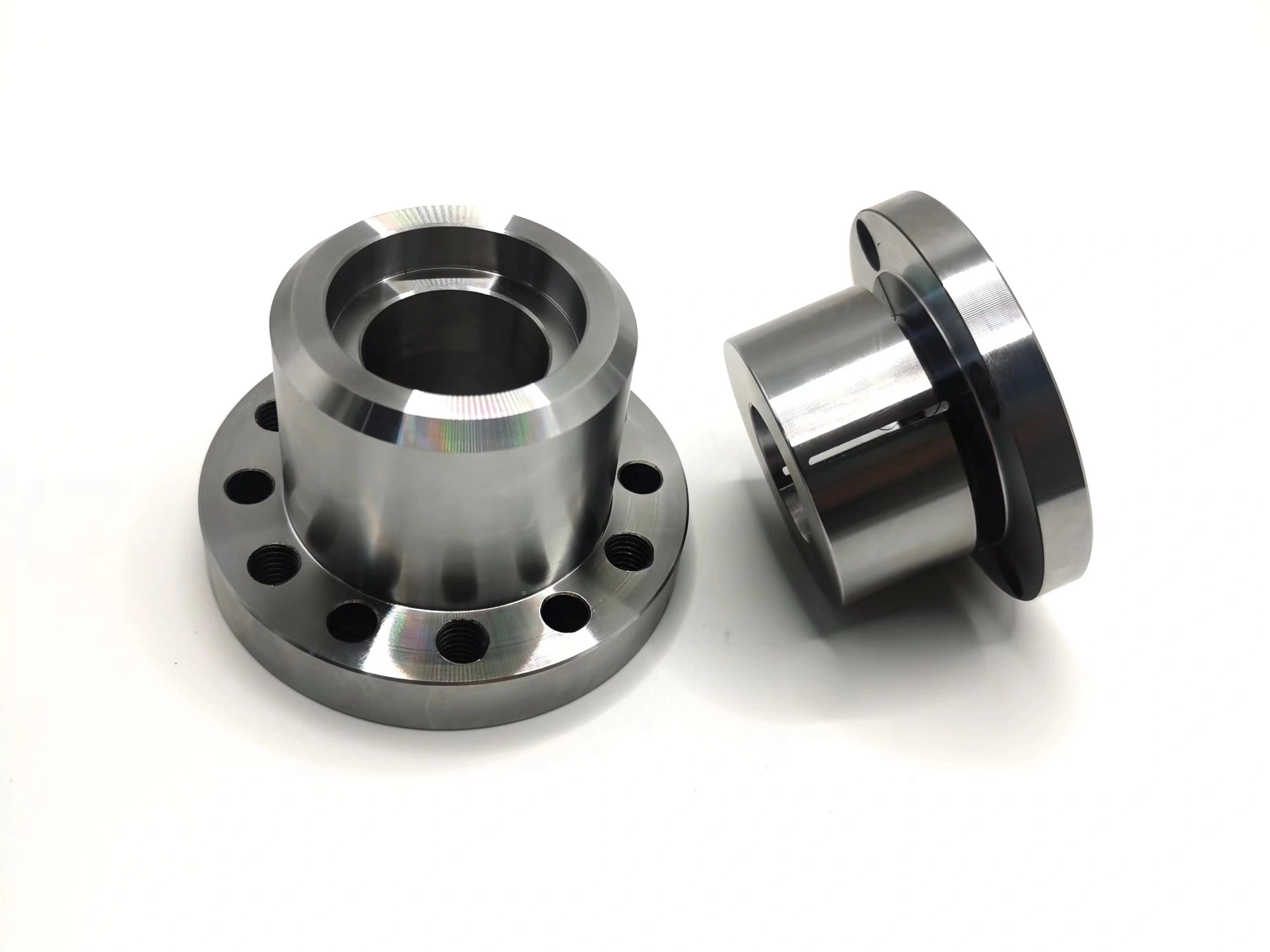
Machined geometry remains the released route | CNC machining remains viable only while quoted process, evidence, capacity, and total cost meet the program case |
1. Delay tooling commitment when change exposure is material
Dedicated tooling can become a stranded asset when interfaces, material, finish, gating, parting, or acceptance requirements change after release. A low-volume route can reduce that exposure because its fixtures and programs may be easier to revise, but flexibility is process-specific and never free. The comparison should include engineering changes, obsolete stock, tool modification, repeat qualification, and delayed delivery under named scenarios. For a hypothetical enclosure with an unresolved connector interface, low-volume machining may protect the next validation release. It does not prove that machining remains economical after the interface freezes. The buyer should define the decision date, approved revision, units at risk, change authority, and evidence needed to release tooling.
2. Use forecast ranges instead of one optimistic volume
Uncertain demand favors low-volume production when avoiding excess tooling and inventory commitment has measurable value. Build low, base, and high demand cases over the same time horizon. Include accepted-part price, nonrecurring work, carrying cost, storage, obsolescence, shortages, expedited replenishment, minimum purchases, and end-of-life stock. Also identify how frequently the forecast can be revised and the supplier can replenish. A high-volume quote based on full asset utilization is not comparable with a low-volume quote based on irregular releases unless both use the same delivery and acceptance assumptions. The buyer should release only the quantity supported by demand confidence and an agreed replenishment response.
3. Treat bridge supply as a controlled temporary route
Low-volume manufacturing can connect prototyping services to a qualified production process while tooling, validation, or supplier readiness is incomplete. The bridge plan must state its end condition, maximum authorized releases, configuration baseline, traceability, and whether bridge parts are interchangeable with later production parts. For polymer components, rapid molding services may represent material and geometry more closely than a machined or printed substitute, but tool class, resin state, gate, shrinkage, finish, and inspection still affect equivalence. Validate the bridge route for its intended use and repeat affected tests when the production route changes a functional condition.
4. Test limited demand against full tooling ownership cost
Limited lifetime or annual demand can make dedicated tooling uneconomic when design, fabrication, trials, qualification, storage, maintenance, repair, transfer, and disposal are included. The break-even calculation should use accepted delivered units rather than theoretical capacity. Low-volume production still carries recurring setup, tool wear, inspection, and outside-process charges, so it is not automatically the lower-cost long-term route. Spare parts and specialized variants may also need long availability with irregular releases; in that case, digital definition, stock continuity, setup retention, and requalification terms matter. Buyers should compare discounted program cost, supply continuity, and change exposure across the expected service period.
5. Transfer when demand and process evidence support commitment
Mass production becomes the stronger economic choice when the released design is stable, demand is credible, the production route is capable under the specified material and geometry, and the organization can use the asset and inventory it funds. The transfer package should define critical characteristics, process controls, final-state inspection, sampling, traceability, packaging, capacity, maintenance, and response to nonconformance. A lower predicted piece price is not enough if qualification, ramp loss, or a different material/process condition is omitted. Before transfer, validate production-tool output against the same functional and acceptance requirements, close deviations, and authorize the change. After transfer, monitor the assumptions that justified the economic decision.
6. Compare scenarios with a common cost and evidence boundary
Build a decision model with the same revision, demand horizon, material, finish, quality evidence, delivery events, packaging, logistics, and commercial responsibility for every route. Separate nonrecurring tooling and qualification from recurring accepted-part cost. Add forecast error, change probability, obsolete inventory, working capital, maintenance, revalidation, capacity shortfall, and transition overlap where they are credible. Record assumptions rather than hiding them in one break-even number. Then define a review trigger, such as stable demand, design release, tooling approval, or cumulative accepted quantity. The buyer can hold, continue, or transfer based on updated evidence instead of treating the initial forecast as permanent.