Low Volume CNC Machining: The Best Option Between Prototype and Mass Production
For buyers who need repeatable functional parts but are not ready to commit to a fixed high-volume route, low volume CNC machining is often the best option between prototype and mass production. It supports pilot sales, qualification, bridge supply, service demand, and specialized batches in the specified material. It fits only when controlled flexibility is worth more than the unit-cost advantage of dedicated tooling.
The decision should not be based on a universal piece count or a quoted part price. Buyers need to compare design maturity, demand confidence, material and finish, critical features, setup and inspection burden, inventory exposure, and the total cost of credible alternatives. CNC machining services can start with limited fixed commitment, but repeated machining from solid may become expensive after the design, process, and forecast stabilize.
What Is Low Volume CNC Machining?
Low volume CNC machining is controlled batch production for parts that have moved beyond one-off design experiments but have not reached a stable scale decision. The route normally uses released CAD and drawings, specified stock material, repeatable programs and workholding, planned deburring and finishing, and inspection tied to functional features. It is production work, even when the lots are small.
The stage is defined by purpose and evidence rather than a fixed quantity. It sits after prototyping has answered the main fit and function questions and before mass production is justified by demand, capability, capacity, and total cost. The same quantity can represent different production stages. Fifty simple brackets may behave like a routine batch, while fifty multi-setup housings with coating and feature-level reports may still carry substantial launch risk. Quantity tiers such as 50, 150, and 300 pieces are quotation scenarios, not universal definitions. The RFQ should state immediate batch tiers, expected annual demand, revision status, material condition, finish, critical dimensions, inspection deliverables, traceability, and the intended use of the parts.
Why Low Volume Machining Fits the Space Between Prototype and Mass Production
A prototype answers whether a design can work. Low-volume machining answers whether the released design can be supplied in repeated lots while technical and commercial uncertainty is reduced. Mass production answers whether a qualified route can deliver required output, capability, and cost. Moving directly from one successful sample to scale skips the evidence needed to separate a good part from a repeatable process.
Low-volume CNC creates that evidence without requiring an immediate mold, die, or product-specific production line. Buyers can observe assembly results, finish-lot effects, tool and fixture behavior, actual consumption, and revision frequency. Each batch should close a defined uncertainty, such as whether an anodized bore remains functional or whether intersecting passages can be deburred consistently. The route still needs exit criteria. Temporary fixtures, manual offsets, extra inspection, or rework cannot become the permanent process unless they are documented, authorized, costed, and shown to protect the released requirements. A release review should separate normal process control from temporary containment. Otherwise, a labor-intensive bridge route can appear stable only because hidden intervention is absorbing its failures.
Production Stage | Main Goal | Best Manufacturing Logic | Buyer Priority |
|---|---|---|---|
Prototype | Close defined design and function questions | Flexible sample route with explicit test assumptions | Learning, revision control, and design release |
Low volume | Supply controlled lots and close scale uncertainty | Repeatable CNC route with proportionate process control | Functional evidence, demand learning, and limited commitment |
Mass production | Scale a stable specification and qualified process | Dedicated tooling, automation, or optimized CNC production | Capacity, capability, yield, and total repeat cost |
Common Use Cases for Low Volume CNC Machining
Pilot Sales and Market Testing
Pilot sales need parts that represent the approved product closely enough to produce useful market and assembly evidence. CNC can supply real material, threads, datums, sealing interfaces, and mounting features without assuming that early demand will continue. Commercial feedback does not replace engineering validation. Any design change found in the pilot must return through drawing revision, inventory review, and a defined revalidation decision.
Bridge Production
Bridge production covers demand before the long-term route is qualified or available. The CNC process should have a stated end condition, such as tooling approval, stable demand, or completion of a representative production trial. Buyers should confirm whether the bridge and future routes create the same material, datum, finish, and functional state. Differences need validation before parts from both routes are treated as interchangeable.
Spare Parts and Service Parts
Service parts often have low, irregular, or long-lived demand that cannot recover dedicated tooling. CNC can replenish shafts, sleeves, covers, couplings, brackets, and interfaces from approved design data. A worn sample should not automatically become the design authority. Wear, repair, coating loss, or a field modification may have changed the sample, so functional fits and mating conditions must be reconstructed and approved before machining.
Custom Small-Batch Projects
Custom equipment and medical device development can require repeated small batches with real material behavior and controlled interfaces. Industry labels do not guarantee suitability or compliance. The buyer must define the applicable drawing, material evidence, finishing, cleanliness or residue limits, inspection, traceability, packaging, and approval responsibility. CNC is appropriate when its geometry access and batch economics support those requirements.
Use Case | Why Low Volume CNC Fits | Main Buyer Advantage | Typical Risk Avoided |
|---|---|---|---|
Pilot sales | Supplies released functional parts before demand is proven | Collects market and assembly evidence with limited stock | Premature tooling and obsolete launch inventory |
Bridge production | Covers demand while the long-term route is qualified | Maintains supply with defined transfer conditions | Launch delay or unvalidated route substitution |
Spare parts | Supports intermittent demand without replacement tooling | Replenishes against service need and approved interfaces | Dead stock or copying a worn reference part |
Custom small-batch projects | Handles specialized geometry and mixed product revisions | Preserves configuration and material flexibility | Tooling cost that cannot be recovered across demand |
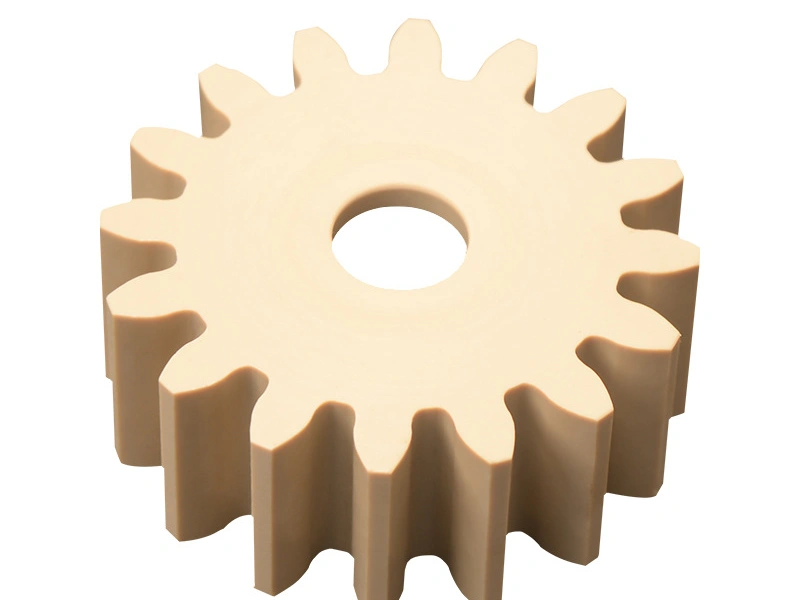
Tooling vs CNC: The Economics of Low Volume Production
Tooling and CNC must be compared at the total-program level. A useful screening equation is: break-even quantity equals the tooling route's additional fixed cost divided by the CNC route's unit-cost premium. The calculation is valid only when both routes quote the same acceptable finished part. Buyers should run the comparison across credible demand cases rather than one optimistic forecast. For example, 50-, 150-, and 300-piece releases can expose when repeated setup, inspection, and material removal begin to outweigh tooling commitment. Tool trials, qualification, yield, maintenance, secondary machining, finishing, inspection, freight, inventory, financing, and revision exposure can move the result substantially. The cost model also needs a time boundary. A route that appears economical across several years may be unsuitable when the drawing is likely to change before the fixed investment is recovered.
Consider an anodized aluminum fluid-control housing with a sealing bore, intersecting passages, a connector pattern, and a flat mounting interface. CNC from stock may support early batches while the connector and demand remain uncertain. The first controlled batch can verify datum seating, passage accessibility, burr-removal access, sealing-bore allowance, and the dimensional effect of the specified anodize. Later releases can test tool-change triggers, inspection frequency, actual consumption, and revision stability. A later route might use a die-cast or forged blank with finish machining. That alternative still needs evidence for material condition, porosity-sensitive zones, machining allowance, datum transfer, burr control, finish response, yield, and final-state inspection. The buyer should compare both routes against the same leak, assembly, dimensional, cosmetic, and traceability requirements. A lower formed-blank price is not a saving if extra sorting, machining, or rejected finished parts erase the quoted advantage.
Cost Consideration | Low Volume CNC Machining | Tooling-Based Production | Best Fit |
|---|---|---|---|
Upfront investment | Programming, workholding, setup, and inspection planning | Tool design, build, trials, gauges, and qualification | CNC while forecast or revision exposure remains high |
Per-part cost at scale | Remains sensitive to cycle, setups, material, and inspection | Can fall when stable yield spreads qualified fixed cost | Tooling after demand and final-state yield are credible |
Design flexibility | Changes may use revised programs, fixtures, and inspection | Changes can require tool modification and requalification | CNC when controlled revisions still create business value |
Lead time to first parts | Depends on material, fixture, machining, finish, and approval | Includes tool build, correction loops, and production release | Choose the verified critical path, not a generic speed claim |
Inventory exposure | Can support smaller releases against actual consumption | Economics may encourage larger commitments and stock | CNC when obsolescence risk outweighs batch savings |
Lead Time, Inventory Risk, and Design Flexibility
Lead Time Advantage
Low-volume CNC can shorten the path to released parts when stock, machine access, programming, fixtures, finishing, and inspection are available before a production tool can be built and qualified. Deep features, difficult materials, special fixtures, or constrained outside processing can remove that advantage. Buyers should compare dated critical paths that include engineering review, material, machining, finishing, inspection, approval, and any correction loop. The schedule should identify the controlling dependency for each quantity tier. Material certification, a special cutter, outsourced anodizing, a dedicated gauge, or approval of a revised drawing can determine delivery more than machine cycle time. A credible plan also reserves time for first-off review and corrective work before the remaining batch is released.
Inventory Risk Control
Smaller repeat batches can align finished stock with actual demand and reduce exposure to revision changes. The analysis should cover raw material, work in progress, finished parts, minimum purchases, carrying cost, shortage risk, and repeated setup or qualification cost. Establish a revision cut-in rule and ownership for obsolete inventory before release. CNC controls inventory only when purchasing and engineering share the same forecast and change status.
Design Flexibility
CNC often absorbs geometry changes with less sunk tooling cost, but changes still affect workholding, tool access, program verification, inspection, stock, and completed parts. Use one released revision, assess the process impact, identify affected inventory, and define the required first-off or revalidation scope. Flexibility is valuable when it is controlled. Mixed revisions and undocumented offsets destroy the evidence needed for later production transfer.
Which Industries Benefit Most from Low Volume CNC Machining?
Low-volume CNC benefits industries where functional interfaces, real material, mixed demand, long validation cycles, or configuration control matter more than immediate tooling economics. medical device programs, aerospace and aviation, industrial equipment, R&D systems, and legacy service supply often fit this pattern. The industry name is only a screening signal. Geometry, material, approval evidence, demand cadence, and alternative-route economics decide suitability.
For procurement, translate industry needs into measurable requirements. Identify material specification and condition, special finishing, lot or serial trace, key characteristics, inspection reports, source restrictions, cleaning or residue limits, packaging, record retention, and change notification. A supplier should connect drawing review, material receipt, workholding, machining, deburring, outside processing, final-state inspection, nonconformance control, and lot release without claiming evidence that the project has not produced.
Can Low Volume CNC Machining Deliver Tight Tolerances and Stable Quality?
Yes, low-volume CNC can deliver tight tolerances and stable quality when each critical feature has a functional datum, material and final-state condition, repeatable setup, tool-control rule, suitable measurement method, and a reaction plan. The control method should reflect the failure mechanism. Thin walls may move after unclamping, bore size may change after coating, and intersecting holes may retain burrs that dimensional inspection does not reveal. Machine accuracy, CMM resolution, or a passing first article cannot guarantee finished-part capability. The evidence must follow the specified feature through unclamping, deburring, heat treatment, coating, or other steps that can change it. Buyers should define acceptance in the state used by assembly, then confirm that the measurement method can access and evaluate that state.
For the fluid-control housing example, the sealing bore, connector pattern, mounting face, and intersecting-passage burrs need different controls. The sealing bore may require pre-finish allowance and final-state measurement, while passage intersections need a defined visual or borescope acceptance method. The mounting face and connector pattern should reference the functional datum scheme used by assembly. The supplier may verify datum seating, first-off geometry, tool-change triggers, periodic bore size, deburring effectiveness, and final anodized dimensions. A failed check should contain all potentially affected parts since the last accepted result. Containment is stronger when the last accepted check, tool-use record, fixture position, and lot identity define the suspect population. Future lots require impact review when material heat, fixture, program, tool, finish source, or inspection method changes.
Quality Factor | How Low Volume CNC Supports It | Buyer Benefit |
|---|---|---|
Dimensional accuracy | Feature-specific datum, setup, tooling, and measurement control | Acceptance evidence tied to fit, sealing, or alignment |
Material realism | Uses the specified grade, condition, stock, and final finish | Functional evidence reflects the intended material state |
Repeatability | Controls revision, fixture, tool, offsets, checks, and reaction | Lot decisions do not depend on final sorting alone |
Change responsiveness | Assesses revised design data before controlled revalidation | Changes remain traceable without informal process drift |
When to Move from Low Volume to Mass Production
Move from low-volume CNC toward mass production when the revision and final-state specification are stable, recurring demand is credible, the proposed route suits the geometry, and total-cost sensitivity remains favorable after qualification, yield, maintenance, secondary machining, inspection, and inventory. The route also needs demonstrated capacity, a change-control plan, and a supply transition that does not expose current orders. A volume forecast alone is not a release gate. The decision should combine an approved drawing, stable material and finish, representative yield, verified cycle and labor content, inspection readiness, supplier capacity, and a realistic fixed-cost recovery case. If one condition remains uncertain, a limited bridge release can protect supply while the missing evidence is closed.
A controlled handoff uses prototyping evidence to release the design, low-volume batches to prove repeat supply and demand, and a representative trial to qualify mass production. Define acceptance, containment, deviation, and rollback conditions before transfer. The trial should use production-intent material, tooling, secondary operations, finishing, inspection, and packaging wherever those factors can change the final part. Compare critical dimensions, functional tests, cosmetic criteria, traceability, cycle assumptions, and nonconformance handling with the approved low-volume baseline. If the new route changes material structure, datum creation, finish, or critical machining allowance, validate those differences rather than assuming the routes are equivalent. Keep the prior CNC route available until the new process has met its release conditions and current demand is protected.
Conclusion
Low-volume CNC machining is the best bridge when a released product needs repeatable functional parts but useful uncertainty remains in demand, revision, tooling, or the long-term process. Its value comes from controlled flexibility, limited sunk commitment, real material, and evidence from repeated lots. It is not a permanent default. When stable demand and a qualified alternative reduce total cost without weakening function or control, the project should transfer.
For the next sourcing decision, send the current drawing and CAD, quantity tiers, annual demand scenarios, revision status, material and finish, critical features, inspection and traceability, launch timing, and known alternatives. Compare the dedicated low-volume manufacturing route with the current prototyping evidence and the proposed mass production case. Approve the stage whose evidence, risk, and total cost match the product today.
FAQ
What Is Low Volume CNC Machining and Why Is It Ideal Between Prototype and Production?
How Many Parts Are Usually Considered a Low Volume CNC Machining Order?
Why Do Buyers Choose Low Volume CNC Machining Instead of Investing in Tooling?
Which Industries Benefit Most from Low Volume CNC Machining for Functional Parts?
Can Low Volume CNC Machining Still Deliver Tight Tolerances and Stable Quality?