What copper grades are best for CNC machined parts?
<h2 id="what-copper-grades-are-best-for-cnc-machined-parts?">What copper grades are best for CNC machined parts?</h2>
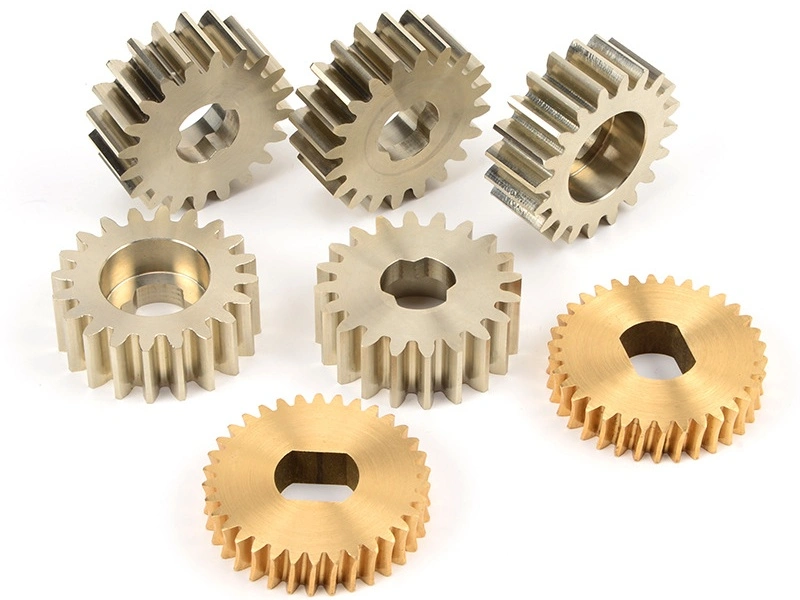
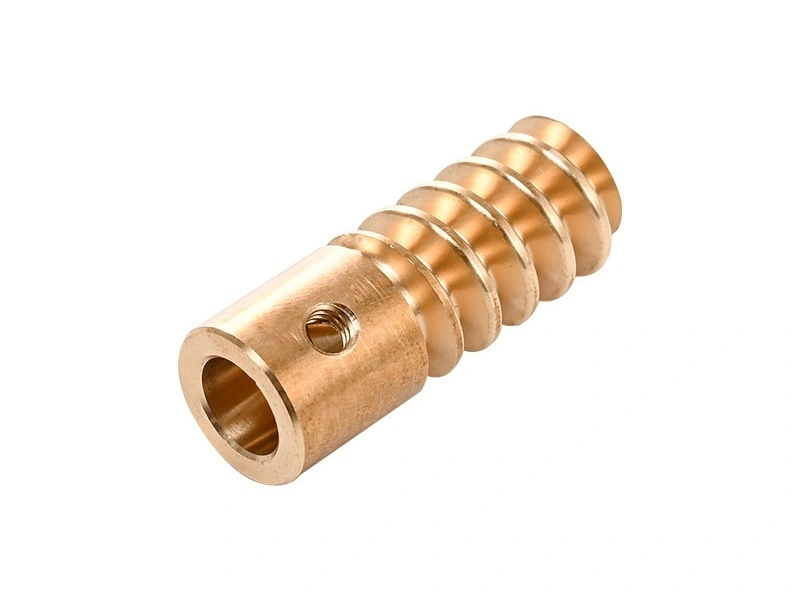
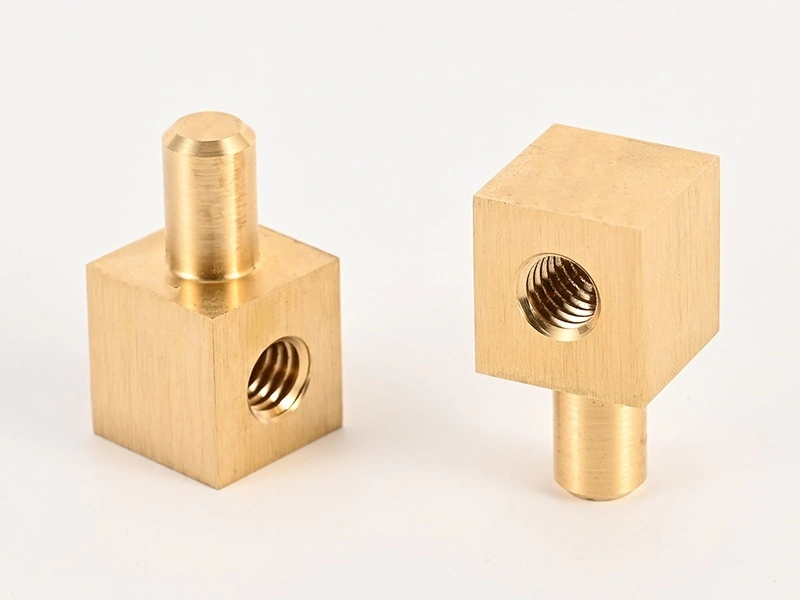
<p>The best <strong>copper grades for computer numerical control (CNC) machined parts</strong> depend on the function that controls release. Use C110 for conductivity-led parts, C101 or C102 for controlled high-purity requirements, and C151 when high conductivity needs more strength or thermal-softening resistance. Use C172 or C175 for strength and spring behavior, and C194 or C510 for specialized terminal or wear duties. The grade must also match the required temper, stock form, burr limit, surface finish, plating sequence, and inspection evidence. <a target="_blank" href="https://www.newaymachining.com/services/copper-cnc-machining/copper-c110-tu0">C110 copper machining</a> is a useful baseline for busbars and heat-transfer components, while <a target="_blank" href="https://www.newaymachining.com/services/copper-cnc-machining/copper-c172-beryllium-copper-high-strength">Copper C172 CNC machining</a> better suits resilient contacts and loaded features. A controlled <a target="_blank" href="https://www.newaymachining.com/services/copper-cnc-machining">copper CNC machining</a> decision compares delivered function, machining risk, finish state, and total cost rather than using one property alone.</p>
<div data-type="row" class="row">
<div class="col-12 col-md-6" data-type="col">
<p>
<a href="https://www.newaymachining.com/services/copper-cnc-machining/copper-c110-tu0">
<img src="https://www.newaymachining.com/storage/attachments/2026/05/10/copper-grades-for-cnc-machined-parts-copper-alloy-cnc-machining.webp" width="800" height="600" loading="lazy">
</a>
</p>
</div>
<div class="col-12 col-md-6" data-type="col">
<p>
<a href="https://www.newaymachining.com/services/copper-cnc-machining/copper-c110-tu0">
<img src="https://www.newaymachining.com/storage/attachments/2026/05/10/what-copper-grades-are-best-for-cnc-machined-parts.webp" width="800" height="600" loading="lazy">
</a>
</p>
</div>
</div>
<div class="i-typography-table-responsive">
<table>
<tbody>
<tr>
<th colspan="1" rowspan="1">
<p>Copper Grade</p>
</th>
<th colspan="1" rowspan="1">
<p>Best-Fit Part Duty</p>
</th>
<th colspan="1" rowspan="1">
<p>Selection Benefit</p>
</th>
<th colspan="1" rowspan="1">
<p>Cost, Burr, and Finish Check</p>
</th>
</tr>
<tr>
<td colspan="1" rowspan="1">
<p>Copper C101 / T2</p>
</td>
<td colspan="1" rowspan="1">
<p>High-conductivity electrical and thermal features</p>
</td>
<td colspan="1" rowspan="1">
<p>Supports demanding transfer requirements when the specified grade is necessary</p>
</td>
<td colspan="1" rowspan="1">
<p>Confirm stock identity, soft-material support, burr limits, and protected contact surfaces</p>
</td>
</tr>
<tr>
<td colspan="1" rowspan="1">
<p>Copper C102</p>
</td>
<td colspan="1" rowspan="1">
<p>Oxygen-free or controlled high-purity conductive parts</p>
</td>
<td colspan="1" rowspan="1">
<p>Matches applications whose material specification requires the low-oxygen condition</p>
</td>
<td colspan="1" rowspan="1">
<p>Define certificate, lot link, availability, cleaning, and finish-state evidence before award</p>
</td>
</tr>
<tr>
<td colspan="1" rowspan="1">
<p>Copper C110</p>
</td>
<td colspan="1" rowspan="1">
<p>Busbars, conductive blocks, contacts, and heat-transfer parts</p>
</td>
<td colspan="1" rowspan="1">
<p>Offers a practical conductivity-led choice for many rigid components</p>
</td>
<td colspan="1" rowspan="1">
<p>Control smearing, built-up edge, chip recutting, hole-exit burrs, and handling marks</p>
</td>
</tr>
<tr>
<td colspan="1" rowspan="1">
<p>Copper C151</p>
</td>
<td colspan="1" rowspan="1">
<p>Conductive parts exposed to greater thermal or mechanical demand</p>
</td>
<td colspan="1" rowspan="1">
<p>Retains high conductivity while adding strength and resistance to thermal softening</p>
</td>
<td colspan="1" rowspan="1">
<p>Confirm temper, conductivity, strength, softening resistance, joining, and machining controls</p>
</td>
</tr>
<tr>
<td colspan="1" rowspan="1">
<p>Copper C172 / Beryllium Copper</p>
</td>
<td colspan="1" rowspan="1">
<p>Spring contacts, resilient connectors, and loaded wear features</p>
</td>
<td colspan="1" rowspan="1">
<p>Provides higher strength, elastic response, and wear resistance</p>
</td>
<td colspan="1" rowspan="1">
<p>Budget for material, controlled cutting, exposure controls, finishing, and added verification</p>
</td>
</tr>
<tr>
<td colspan="1" rowspan="1">
<p>Copper C175</p>
</td>
<td colspan="1" rowspan="1">
<p>Loaded conductive parts that need a property balance</p>
</td>
<td colspan="1" rowspan="1">
<p>Combines more strength with useful conductivity for selected duties</p>
</td>
<td colspan="1" rowspan="1">
<p>State the required temper, strength-to-conductivity priority, and acceptance method</p>
</td>
</tr>
<tr>
<td colspan="1" rowspan="1">
<p>Copper C194</p>
</td>
<td colspan="1" rowspan="1">
<p>Terminals, connectors, and small conductive structures</p>
</td>
<td colspan="1" rowspan="1">
<p>Supports stronger connection features than pure copper grades</p>
</td>
<td colspan="1" rowspan="1">
<p>Inspect thin edges, small holes, plated dimensions, and mating surfaces after deburring</p>
</td>
</tr>
<tr>
<td colspan="1" rowspan="1">
<p>Copper C510</p>
</td>
<td colspan="1" rowspan="1">
<p>Elastic contacts, wear parts, and light spring components</p>
</td>
<td colspan="1" rowspan="1">
<p>Supports repeated contact and wear-oriented mechanical behavior</p>
</td>
<td colspan="1" rowspan="1">
<p>Verify duty cycle, finish, electrical boundary, formed state, and replacement criteria</p>
</td>
</tr>
</tbody>
</table>
</div>
<h3 id="1.-c110-is-often-the-best-general-choice-for-conductive-parts">1. Use C110 when conductivity controls a rigid part</h3>
<p>C110 is normally the first grade to evaluate for busbars, conductive blocks, heat-transfer components, and rigid contacts. Its functional value does not remove machining risk: soft material can smear, form built-up edge, recut chips, and leave burrs at holes or thin exits. The request for quotation (RFQ) should mark contact and thermal faces, datum surfaces, edge limits, roughness needs, and any post-machining plating. Ask how the supplier will support the geometry, evacuate chips, protect the surface, and inspect the finished condition. This prevents a conductivity-led selection from creating uncontrolled deburring or rework cost.</p>
<h3 id="2.-c101-and-c102-are-better-when-purity-or-conductivity-is-the-priority">2. Reserve C101 and C102 for defined purity requirements</h3>
<p>C101 and C102 become relevant when the drawing or application requires their conductivity, purity, or oxygen condition. Review <a target="_blank" href="https://www.newaymachining.com/services/copper-cnc-machining/copper-c101-t2">Copper C101 CNC machining</a> and <a target="_blank" href="https://www.newaymachining.com/services/copper-cnc-machining/copper-c102-oxygen-free-copper">Copper C102 CNC machining</a> against the controlling material specification, temper, product form, and certificate need. Higher material cost is not justified when the buyer cannot connect the grade to a release criterion. The lot record should link the certificate to the shipped parts, while the machining plan should address soft-stock handling, contact-face protection, cleaning, and any finish applied after cutting.</p>
<h3 id="3.-c151-is-useful-when-machinability-matters-more">3. Consider C151 when conductivity needs more strength and thermal stability</h3>
<p>C151 is a copper-zirconium alloy for applications that retain high conductivity while requiring more strength or resistance to thermal softening than a conductivity-led pure-copper route. The linked <a target="_blank" href="https://www.newaymachining.com/services/copper-cnc-machining/copper-c151-tellurium-copper">Copper C151 CNC machining</a> reference does not make C151 a free-machining tellurium grade or an automatic substitute for C110. In a non-customer engineering scenario, a current-carrying contact changes from C110 to C151 only after the drawing defines conductivity, temper, strength, joining, and elevated-temperature acceptance. The quote should separate material, workholding, cutting, burr control, joining, and final electrical and dimensional evidence. Release the substitution only when those results support the actual thermal and mechanical duty.</p>
<h3 id="4.-c172-and-c175-are-better-for-strength-and-spring-performance">4. Choose C172 or C175 for controlled strength and spring duty</h3>
<p>C172 is suited to spring contacts, resilient connectors, and wear-exposed features when higher strength and elastic response matter more than peak conductivity. C175 can be considered when the design needs a different strength-to-conductivity balance. Specify temper, product form, load direction, deflection, mating condition, finish, and required evidence instead of writing only beryllium copper. The supplier should account for cutting load, tool wear, workholding, finishing, exposure controls, and lot traceability. Buyer approval is required before a grade or temper substitution because the change can affect both function and process cost.</p>
<h3 id="5.-c194-and-c510-fit-more-specialized-electrical-or-mechanical-needs">5. Match C194 and C510 to terminal or wear conditions</h3>
<p>C194 can support terminals, connectors, and small conductive structures that need more mechanical strength than pure copper. C510 is more appropriate where elastic response, repeated contact, or wear becomes a larger part of the duty. For either grade, define the current path, mating feature, edge condition, spring action, plating state, and inspection method. Small holes and thin edges may still drive deburring and measurement cost. A material name without duty-cycle and finished-state requirements leaves the supplier guessing about the properties and surfaces that the buyer will release.</p>
<h3 id="6.-the-best-copper-grade-depends-on-the-real-part-priority">6. Rank function, manufacturing risk, and release evidence</h3>
<p>There is no single best copper grade for every CNC part. Rank conductivity, heat transfer, strength, elasticity, wear, machinability, surface condition, and cost for the actual geometry. Then provide drawing revision, grade and temper, product form, quantity, critical dimensions, burr limits, finish sequence, certificate needs, sampling, and substitution rules. Use <a target="_blank" href="https://www.newaymachining.com/services/copper-cnc-machining/copper-alloy">copper alloy CNC machining</a> to compare how each candidate changes tooling, deburring, plating, inspection, and delivery. Release the choice only when the supplier assumptions and the finished-part evidence answer the same functional priority.</p>