How can copper CNC machining cost be reduced without affecting conductivity or function?
<h2 id="how-can-copper-cnc-machining-cost-be-reduced-without-affecting-conductivity-or-function?">How can copper CNC machining cost be reduced without affecting conductivity or function?</h2>
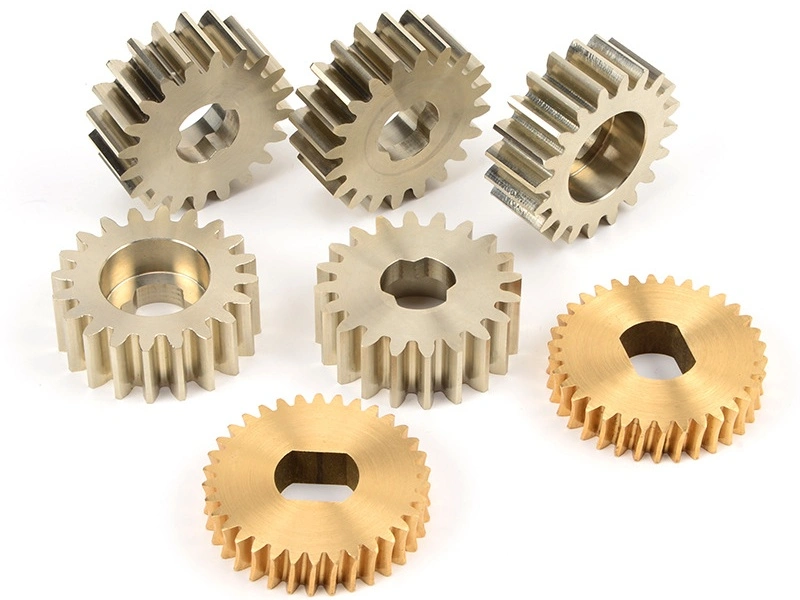
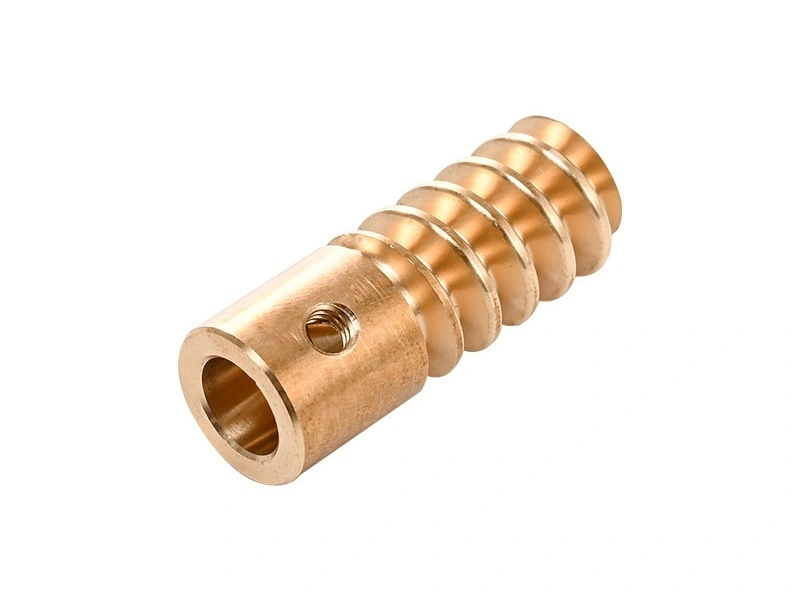
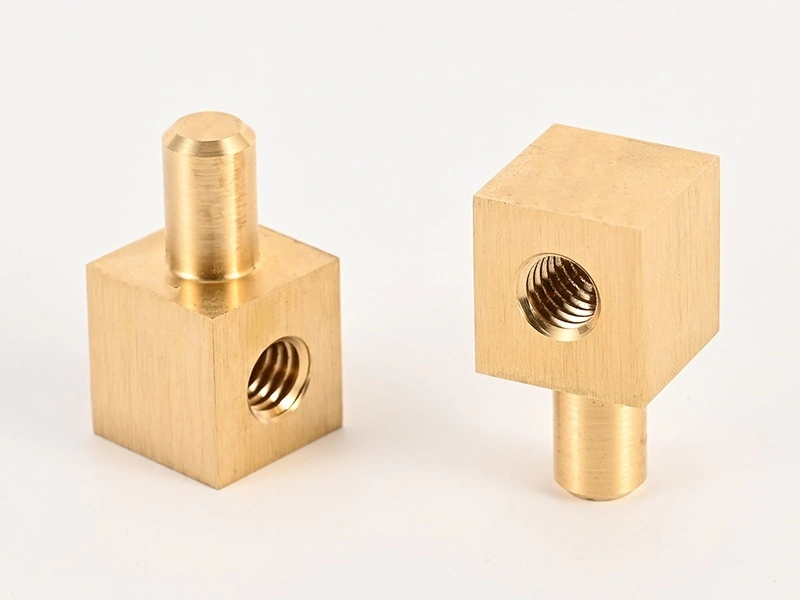
<p><strong>Copper computer numerical control (CNC) machining cost</strong> can be reduced safely by protecting the material condition, current or heat path, mating datums, finish state, and required evidence, then relaxing only features that do not control those functions. Buyers should map critical surfaces, separate machining from finished-part acceptance, and request quantity breaks for prototype, <a target="_blank" href="https://www.newaymachining.com/services/low-volume-manufacturing">low-volume manufacturing</a>, and <a target="_blank" href="https://www.newaymachining.com/services/mass-production">mass production</a> needs. The supplier can then reduce stock waste, setups, tool changes, deburring, outside processing, and inspection through <a target="_blank" href="https://www.newaymachining.com/services/copper-cnc-machining">copper CNC machining cost</a> planning. Cost reduction becomes risky when a request for quotation (RFQ) substitutes alloy or temper, widens a functional tolerance, removes contact-face protection, changes plating, or drops traceability without buyer approval.</p>
<div data-type="row" class="row">
<div class="col-12 col-md-6" data-type="col">
<p>
<a href="https://www.newaymachining.com/services/copper-cnc-machining">
<img src="https://www.newaymachining.com/storage/attachments/2026/05/10/reduce-copper-cnc-machining-cost-copper-cnc-machining-cost.webp" width="800" height="600" loading="lazy">
</a>
</p>
</div>
<div class="col-12 col-md-6" data-type="col">
<p>
<a href="https://www.newaymachining.com/services/copper-cnc-machining">
<img src="https://www.newaymachining.com/storage/attachments/2026/05/10/how-can-copper-cnc-machining-cost-be-reduced-without-affecting-conductivity-or-function.webp" width="800" height="600" loading="lazy">
</a>
</p>
</div>
</div>
<div class="i-typography-table-responsive">
<table>
<tbody>
<tr>
<th colspan="1" rowspan="1">
<p>Cost Lever</p>
</th>
<th colspan="1" rowspan="1">
<p>Protected Function and Check</p>
</th>
</tr>
<tr>
<td colspan="1" rowspan="1">
<p>Match alloy, temper, and product form to duty</p>
</td>
<td colspan="1" rowspan="1">
<p>Keep conductivity, strength, formability, stock condition, and certificate requirements explicit</p>
</td>
</tr>
<tr>
<td colspan="1" rowspan="1">
<p>Map contact, thermal, sealing, and datum surfaces</p>
</td>
<td colspan="1" rowspan="1">
<p>Concentrate tolerance, handling, roughness, and inspection on functional interfaces</p>
</td>
</tr>
<tr>
<td colspan="1" rowspan="1">
<p>Relax only non-functional dimensions</p>
</td>
<td colspan="1" rowspan="1">
<p>Preserve mating stack, hole position, wall strength, and finished-state acceptance</p>
</td>
</tr>
<tr>
<td colspan="1" rowspan="1">
<p>Remove inaccessible or unnecessary geometry</p>
</td>
<td colspan="1" rowspan="1">
<p>Retain the current path, heat path, fastening, clearance, and assembly envelope</p>
</td>
</tr>
<tr>
<td colspan="1" rowspan="1">
<p>Define critical and standard edge conditions</p>
</td>
<td colspan="1" rowspan="1">
<p>Reduce manual work without releasing burrs near contacts, insulation, seals, or mating features</p>
</td>
</tr>
<tr>
<td colspan="1" rowspan="1">
<p>Limit roughness and finish scope</p>
</td>
<td colspan="1" rowspan="1">
<p>Protect specified contact, thermal, sealing, appearance, masking, and plating boundaries</p>
</td>
</tr>
<tr>
<td colspan="1" rowspan="1">
<p>Quote realistic lot sizes and repeat demand</p>
</td>
<td colspan="1" rowspan="1">
<p>Compare setup allocation, stock purchase, outside processing, sampling, and inventory exposure</p>
</td>
</tr>
<tr>
<td colspan="1" rowspan="1">
<p>Freeze assumptions through an engineering review</p>
</td>
<td colspan="1" rowspan="1">
<p>Record approved substitutions, inspection evidence, finish responsibility, and revision control</p>
</td>
</tr>
</tbody>
</table>
</div>
<h3 id="1.-use-the-right-copper-alloy-for-the-actual-function">1. Match alloy condition to the minimum verified duty</h3>
<p>Material savings should begin with the required conductivity, thermal response, strength, wear, forming, joining, and service environment. Grade alone is not enough; temper and product form can affect machining behavior, mechanical response, stock availability, and downstream work. Ask whether a less expensive condition still satisfies the drawing and whether a change requires conductivity evidence, mechanical data, plating compatibility, or buyer approval. Do not let a supplier substitute a nominally similar copper because it cuts more easily or is available faster. State the controlling specification, certificate need, heat or lot linkage, and permitted substitution path.</p>
<h3 id="2.-control-only-the-surfaces-that-affect-conductivity-or-assembly">2. Build a functional surface map before changing tolerances</h3>
<p>Mark electrical contacts, thermal interfaces, sealing faces, datums, threaded joints, locating holes, and plated or masked regions on the drawing. These features may need controlled flatness, position, roughness, edge condition, and handling even when nearby surfaces do not. Non-functional outer faces can often use broader requirements, but the change must be checked against the assembly stack and inspection method. Use <a target="_blank" href="https://www.newaymachining.com/blogs/understanding-machining-tolerances-what-buyers-must-know-before-ordering-cnc-parts">CNC machining tolerances</a> to distinguish a functional limit from a habitual title-block default. Confirm whether acceptance applies after machining, deburring, or plating. A tolerance relaxation that ignores coating buildup or datum transfer may create rework instead of savings.</p>
<h3 id="3.-simplify-geometry-that-adds-cost-but-not-function">3. Simplify tool access without interrupting the current or heat path</h3>
<p>Deep narrow slots, small internal radii, long-reach pockets, tiny holes, thin unsupported walls, and hidden cross-holes can require fragile tools, extra setups, slow cutting, and more deburring. Before removing a feature, identify its role in current flow, heat spreading, fastening, insulation clearance, sealing, stiffness, mass, or assembly access. In a non-customer engineering scenario, a copper heat spreader has one long-reach relief pocket outside the clamped thermal interface. A wider corner radius and shallower relief remove a fragile tool without reducing the specified contact area or heat path. The supplier should show which setup, tool, or inspection step each proposal removes. Validate revised geometry against the mating model and functional interfaces, not only against machine time. If conductivity depends on cross-sectional area or a continuous contact path, preserve that boundary explicitly.</p>
<h3 id="4.-define-burr-and-edge-requirements-precisely">4. Apply premium deburring only where edge condition controls risk</h3>
<p>Copper can smear at tool exits, hole mouths, slots, and interrupted edges. A universal fine edge requirement can create extensive manual work, yet a vague deburr note can leave conductive debris or assembly interference. Classify contact edges, insulation boundaries, sealing features, thread entries, and inaccessible intersections as critical where appropriate. For other edges, define a standard treatment that does not alter datums, thin walls, or mating geometry. State whether loose chips are prohibited, whether cleaning is required, and whether the edge is accepted before or after plating. The supplier can then select cutting direction, support, tool condition, and inspection effort by risk.</p>
<h3 id="5.-set-surface-roughness-only-where-it-matters">5. Separate roughness, appearance, plating, and dimensional states</h3>
<p>A whole-part roughness requirement may force additional passes and inspection even when only a contact, thermal, sealing, or appearance face needs it. Mark each controlled zone and define the measurement direction and process state where relevant. Keep plating, polishing, masking, and cleaning instructions separate from the machined roughness target. Coating buildup can change holes, threads, datums, and mating dimensions, so the RFQ should state whether final dimensions include the finish. If a cosmetic region is not function-critical, define the actual acceptance boundary rather than using the tightest functional specification everywhere. Confirm who owns outside processing, certificates, reinspection, and damage prevention.</p>
<h3 id="6.-use-dfm-and-quantity-breaks-to-find-the-best-cost-window">6. Compare route savings and quantity exposure together</h3>
<p>A focused design for manufacturability (DFM) review for CNC machining should connect every proposal in <a target="_blank" href="https://www.newaymachining.com/blogs/dfm-for-cnc-machining-10-golden-rules-to-optimize-designs-and-reduce-costs">DFM for CNC machining</a> to stock use, setup count, tool access, cycle time, deburring, outside processing, or inspection. Quantity breaks then show how those fixed and variable costs behave across likely demand. A larger lot can spread setup and programming, but it may also increase material commitment, plating inventory, sampling, and obsolete-stock risk before the design is stable. Compare the total delivered assumption, not only unit price. The broader <a target="_blank" href="https://www.newaymachining.com/blogs/7-ways-to-reduce-cnc-machining-costs-without-sacrificing-quality">CNC machining costs</a> framework is useful when the copper-specific functional boundaries remain controlling. Ask for separate prototype, validation, repeat-lot, and change-order assumptions so the buyer can choose the best cost window without hiding launch risk.</p>
<h3 id="7.-what-should-not-be-cut-just-to-save-cost">7. Do not remove controls that prove delivered function</h3>
<p>Do not cut cost by weakening a required current path, reducing a thermal interface, changing an approved alloy condition, widening a mating tolerance, rounding a locating edge, or omitting necessary burr control. Material identity, lot traceability, finished-state dimensions, contact-face protection, plating coverage, insulation clearance, cleaning, and required inspection may be part of the delivered function. Removing a report is safe only when the underlying control and buyer release basis remain adequate. List each proposed deletion or substitution in the quotation and require approval before implementation. Separate genuine value engineering from scope exclusion: the first preserves an agreed result through a simpler route, while the second transfers an unresolved requirement back to the buyer. That distinction prevents a low quote from becoming a high rework or qualification cost.</p>
<p>For a defensible cost-down review, send the current drawing and model, alloy and condition, forecast quantities, functional surface map, finish sequence, inspection package, and approved substitution rules. Ask the supplier to return a line-item proposal showing the cost driver removed, the characteristic protected, the validation evidence, and the effect on lead time or inventory. Release only changes that preserve conductivity, thermal performance, assembly, surface condition, traceability, and the final acceptance state. Keep unapproved assumptions visible in the purchase order or quote clarification record.</p>