What Materials Should Good CNC Machined Part Manufacturers Be Able to Process?
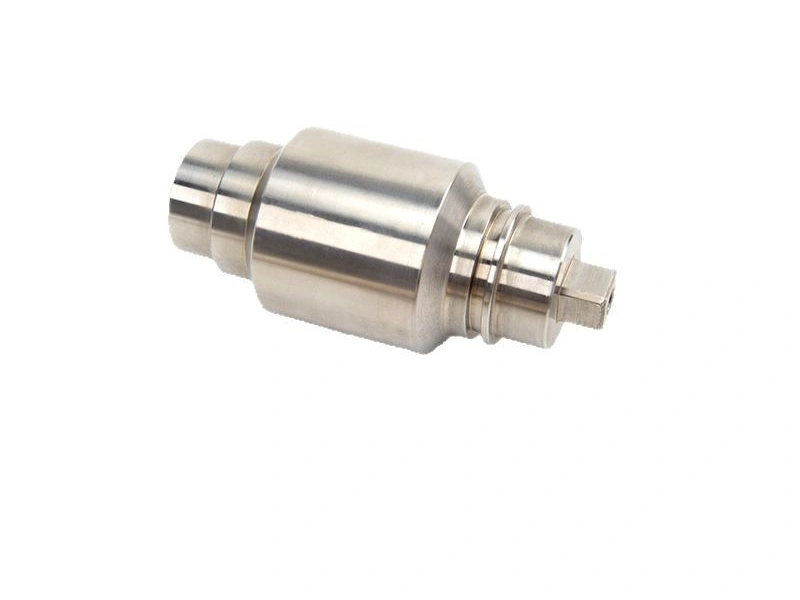
What Materials Should Good CNC Machined Part Manufacturers Be Able to Process?
Good computer numerical control (CNC) suppliers, including CNC machined part manufacturers, should process exact grades and conditions across aluminum, stainless and carbon steels, brass, titanium, nickel- or cobalt-based superalloys, and relevant engineering plastics. Capability must match the stock form, geometry, batch, finish, and inspection state; a family name alone proves little. The request for quotation (RFQ) should identify those conditions and require evidence from a comparable material-and-feature combination. Before order release, the supplier should identify that evidence, any qualification gap, and the planned verification.
A material certificate confirms identity, not control of thin walls, cross-holes, threads, burrs, or distortion. Qualification therefore combines delivered-stock records, a representative machining route, approved substitutions, outside-process controls, and inspection after the specified final operation.
1. Aluminum Capability Must Match Alloy, Temper, Stock Form, and Final State
Aluminum CNC machining evidence should distinguish alloy, temper, and stock form. Results from 6061-T6 plate do not qualify cast aluminum, 7075 stock, or a thin-walled extrusion because workholding, residual stress, edge quality, and cosmetic requirements change with the starting condition.
For a thin housing, inspect critical dimensions after unclamping. If anodizing follows machining, define dimensions before and after finishing, the allowance method, and the cosmetic acceptance areas.
Material Family | Representative RFQ Detail | Capability Evidence to Request |
|---|---|---|
6061-T6 plate; thin wall; anodized state | Matched stock and geometry; free-state and finish checks | |
316L annealed bar; cross-holes; passivation | Grade records; burr control; final-state inspection | |
C36000 or C69300; fluid-contact requirement | Exact-alloy certificate; representative threads and edges | |
Grade 5 Ti-6Al-4V; annealed bar; thin wall | Matched form; tool-life control; free-state results | |
AISI 1045; normalized bar; coating required | Material and hardness records; coating allowance | |
Alloy 718; product form; heat-treatment condition | Matched condition; tool-wear control; final inspection |
2. Stainless Steel Evidence Must Cover Grade, Condition, Geometry, and Finish
Stainless steel evidence should identify grade and condition. Results on free-machining 303 do not establish control of 316L thin walls or cross-holes, where work hardening, heat, tool condition, burrs, and unclamped movement can change the delivered part.
Ask how tool engagement, edge condition, and free-state measurement are controlled on comparable features. Passivation records do not replace dimensional and burr inspection after the complete route.
3. Brass RFQs Need the Exact Alloy and Application Requirement
Brass capability must name the alloy. The Copper Development Association identifies C36000 as Free-Cutting Brass and C69300 as ECO BRASS, so evidence from one cannot qualify the other. A drinking-water fluid-contact part also needs its applicable material restriction and jurisdiction in the RFQ, not a blanket “lead-free” claim.
Consider a C69300 valve insert with a thin bore, internal thread, and intersecting port. Qualify the delivered C69300 lot, link its certificate to the job, prohibit unapproved substitution, and inspect the free-state bore, thread, and port edges after deburring and cleaning.
4. Titanium Capability Depends on Grade, Condition, and Representative Geometry
Titanium qualification should specify grade, condition, product form, and geometry. Grade 5 Ti-6Al-4V annealed bar with a thin wall is not equivalent to another titanium grade or stock form; heat concentration, tool wear, deflection, and edge condition need a matched process plan.
Useful evidence includes tool-change criteria, chip evacuation, controlled workholding, and measurements at the defined inspection state. A polished sample without material identity or process records cannot support an award.
If the RFQ Includes... | Evidence or Route to Confirm |
|---|---|
A sample from a different grade or condition | Delivered-stock trial and lot-linked certificate |
Thin walls, deep holes, cross-holes, or critical threads | Matched material-geometry evidence and free-state inspection |
Heat treatment, passivation, anodizing, or coating | Outside-process owner, compatibility review, final-state records |
A regulated fluid-contact or material-restriction application | Specification, jurisdiction, certificate, and substitution approval |
Repeat production with material traceability | Heat or lot segregation, change notice, records, reaction plan |
Alloy 718 with a defined form and condition |
5. Carbon Steel Capability Includes Hardness, Scale, Heat Treatment, and Coating Allowance
Carbon steel evidence should distinguish grade, stock condition, hardness, and downstream treatment. AISI 1018 cold-drawn stock and normalized AISI 1045 require different cutting, distortion, finish, and heat-treatment plans; hot-rolled scale adds another variable.
Define the material standard, stock form, functional hardness, treatment sequence, coating, and critical dimensions after processing. Review the material record with final inspection because neither one proves the other.
6. Superalloy Evidence Must Match the Exact Alloy, Product Form, and Condition
Superalloy is a family, not a qualification. Technical data for INCONEL alloy 718 separates product forms and heat-treatment conditions, so evidence should identify the same alloy, form, condition, features, and final processing required by the RFQ.
Relevant proof includes tool-life limits, chip and heat management, datum transfer, and inspection after required heat treatment or finishing. An unspecified nickel alloy or simple coupon does not establish repeatability on the quoted geometry.
7. Multi-Material Capability Must Include Metals, Engineering Plastics, and Process Boundaries
Relevant engineering plastics include PEEK, acetal, polytetrafluoroethylene (PTFE), and nylon. Resin grade, fillers, molded or extruded stock, moisture or conditioning state, temperature, residual stress, and clamping can affect dimensions and surfaces.
Metal and plastic workholding, cutting, thermal, cleaning, and inspection routes should remain material-specific. Confirm which operations are internal, which are outsourced, and where identity and dimensional acceptance are recorded.
8. Screen Suppliers with Delivered-Stock Evidence, Not Material Lists
Screen the RFQ material, condition, form, geometry, finish, and inspection state against matching supplier evidence. Material certificates, comparable feature results, outside-process records, and a clear substitution rule reveal more than a long alloy list.
Release the order after every gap has an owner and verification action. State the drawing revision, material specification, condition, form, quantity, critical features, finishing route, records, inspection state, and written substitution rule in the RFQ package.
9. Choose Capability for the Actual RFQ, Not the Broadest Material Page
Good CNC suppliers cover the metals and engineering plastics their customers need, but breadth is only the entry test. Award depends on exact identity, representative geometry, controlled processing, final-state inspection, and evidence for the quoted batch and delivery condition.
Use a supplier's CNC machining page and material service pages to find candidates, then qualify the actual grade and route. Even a superalloy claim needs the specified form, condition, geometry, finishing steps, and acceptance records before purchase release.