When Should Buyers Choose CNC Machined Parts Instead of Casting, Molding, or Stamping?
When Should Buyers Choose CNC Machined Parts Instead of Casting, Molding, or Stamping?
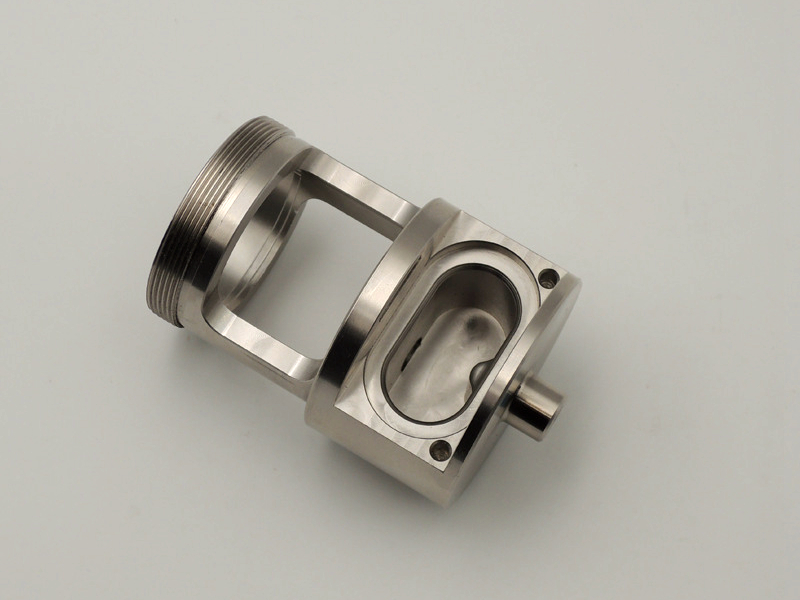
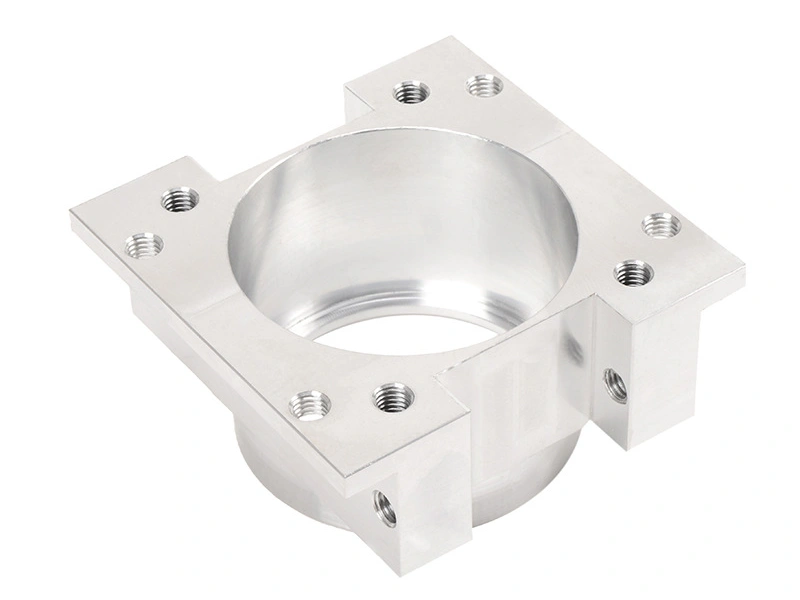
Buyers should choose CNC machined parts when design or demand is uncertain, revisions need low sunk cost, specified stock is required, or accessible critical features need direct machining. Casting suits near-net metal cavities; molding suits repeat polymer geometry; stamping suits formed, constant-thickness sheet. Tooling routes become stronger after geometry, demand, and process-specific acceptance stabilize.
A program may use prototyping, low-volume manufacturing, and mass production with different processes. Compare approved-part cost and validation risk. Provide forecast bands, revision, material form, critical features, tooling, secondary machining, and tests.
1. Start by Comparing the Real Decision Factors
Compare lifecycle stage, geometry, material form, volume scenarios, change exposure, and quality plan. CNC favors accessible stock-removal features. Casting and molding form cavities and near-net walls. Stamping cuts and forms sheet. No route owns “complexity” or “precision” without these conditions.
No universal crossover quantity exists. Divide tooling, trials, and qualification cost by verified per-part saving to estimate break-even quantity. Include yield, maintenance, inventory, secondary machining, inspection, and change exposure.
Decision Factor | CNC Machined Parts | Casting, Molding, or Stamping |
|---|---|---|
Geometry | Accessible stock-removal features | Near-net cavities, polymers, or sheet forms |
Material form | Bar, plate, forging, or billet | Cast alloy, resin, or sheet |
Change exposure | Revise CAM, setup, or fixture | Tool rework raises sunk cost |
Variable cost | Cutting and removed stock remain | Fast cycles follow qualification |
Critical features | Machine accessible datums and bores | Machine what forming cannot hold |
Validation | Proves the machined route | Needs tooling-route trials |
2. Choose CNC Machined Parts When the Project Is Still in Prototype or Functional Validation
CNC parts can validate fit, sealing, clearance, threads, and stock behavior before tooling. They represent production only when it uses the same material form and condition. Billet does not reproduce cast porosity, molded shrinkage or fiber orientation, or stamped springback.
Use CNC to retire geometry and interface risk. When route-specific structure, wall formation, residual stress, texture, or durability controls function, follow with production-intent cast, molded, or stamped samples. Record what the machined sample can and cannot validate.
3. Choose CNC Machined Parts When Batch Size Is Small or Demand Is Uncertain
Small orders, pilots, spares, bridge production, and variants often favor CNC because few identical parts share tool cost. Geometry can reverse the decision: an internal cavity or sheet form may justify tooling earlier.
When forecast and variants remain uncertain, low-volume manufacturing with CNC limits inventory and obsolescence. Request quotes at realistic volume scenarios instead of one arbitrary threshold, then compare cumulative program cost.
4. Choose CNC Machined Parts When Lead Time Matters More Than Ultimate Piece Price
CNC can shorten time to approved parts when stock, cutters, capacity, inspection, and accessible geometry are available. Complex setups, special stock, finishing, or qualification can remove that advantage. Qualified tooling delivers higher repeat throughput.
Compare time to an approved first article and to each steady-state batch. Include material, programming, fixture or tool build, trials, secondary operations, inspection, and approval loops. A faster sample matters only when it supports the next decision.
5. Choose CNC Machined Parts When Design Flexibility Is Still Important
CNC retains flexibility when a bore, pattern, slot, or datum changes, but revisions are not free. New stock, fixtures, access, or inspection can add cost. Mold and die changes may require inserts, welding, recutting, retrial, or replacement.
Control revisions and estimate changes against both routes. Keep CNC while learning is frequent, but start tooling DFM before freeze. Otherwise, a CNC-friendly shape may have impossible draft, parting, ejection, or forming conditions.
Project Situation | Better Choice | Main Reason |
|---|---|---|
Frequent feature revisions | CNC machined parts | Lower sunk tooling exposure |
Near-net metal cavity | Casting with selective machining | Less waste and joining |
Repeat polymer geometry | Injection molding | Fast cycles after qualification |
Constant-thickness sheet form | Stamping | Efficient blanking and forming |
6. Choose CNC Machined Parts When Complexity and Precision Are Critical
CNC favors accessible bores, sealing faces, threads, seats, and datum relationships. Tool reach, setups, wall stability, and inspection set its boundary. Casting or molding creates enclosed cavities; stamping creates sheet forms that may be impossible to cut from solid.
Tooling routes often retain CNC finishing. Define allowances and datum transfer before tool release. ISO 8062-3 covers dimensional, geometric, and machining-allowance rules for moulded or cast parts; ISO 20457 addresses plastics moulded-part tolerances and acceptance. Match the standard to the route.
7. Why CNC Is Often Best for Prototype, Small Batch, and Functional Validation Stages
Prototype, pilot, and bridge stages favor CNC when the question concerns geometry, stock material, tolerance stack, threads, or machined interfaces. CNC does not validate the eventual forming process. Label each result with material form, revision, setup, finish, and inspection state.
For a die-cast aluminum manifold, a plate-machined pilot can validate ports, faces, threads, and assembly, but not porosity or pressure tightness. Require cast trials with machining allowances, datum transfer, leak-test conditions, and acceptance criteria.
8. When Should Buyers Switch to Tooling-Based Processes?
Switch when design is stable, forecasts support investment, geometry suits the chosen process, and production-intent trials pass. Verified savings must recover tooling, qualification, maintenance, scrap, secondary operations, and inventory exposure within the program horizon.
Moving toward mass production requires evidence, not forecast alone. Approve tooling after samples meet dimensional, material, cosmetic, functional, and capability requirements. Keep CNC as a bridge while tool qualification remains incomplete.
Switch Signal | Required Evidence |
|---|---|
Stable released design | Approved revision and accepted change exposure |
Credible demand and variants | Low, expected, and high volume scenarios |
Route-native geometry | DFM and secondary-operation plan |
Route-specific risks pass | Cast, molded, or stamped trial results |
Favorable total economics | Break-even model with yield, tooling, and machining |
9. Practical Buyer Decision Guide
Requirement | Route | Validation Focus |
|---|---|---|
Changing design or demand | CNC machined parts | Revision, material form, and inspection |
Near-net metal cavity | Casting plus CNC | Porosity, allowance, datums, and leakage |
Repeat polymer part | Injection molding | Shrinkage, warpage, orientation, and ejection |
Repeat sheet part | Stamping | Springback, burr direction, form, and trim |
Formed shape with critical interfaces | Tooling plus CNC | Allowance, datums, and final inspection |
10. Summary
Choose CNC machined parts for prototyping or low-volume manufacturing when changes, specified stock, accessible critical features, or uncertain demand dominate. Never treat a machined sample as proof of cast, molded, or stamped behavior.
Switch toward mass production after route-specific DFM, trials, acceptance, and break-even evidence pass. Send revision, forecasts, variants, material form, critical characteristics, finish, inspection, qualification, tooling ownership, maintenance, and secondary machining. These inputs reveal the lowest-risk transition point.