What Do Oil and Gas Machining Services Typically Cover for Upstream and Industrial Equipment?
What Do Oil and Gas Machining Services Typically Cover for Upstream and Industrial Equipment?
Oil and gas machining services typically cover contract review, material and revision control, process planning, machining, deburring, approved outside-process coordination, inspection, traceability, document review, packaging, and shipment release for the ordered part. They may also support sample, pilot, low-volume manufacturing, and repeat-production stages. The scope is not automatic: pressure design, material selection, product qualification, nondestructive examination (NDE), coating, assembly, testing, and certification remain included only when the purchase specification assigns them. Buyers should issue a scope matrix that names each deliverable, acceptance rule, responsible party, and required record before comparing quotations.
The purpose of computer numerical control in oil and gas CNC machining is to reproduce specified functional features in the required material and final condition. Machining can create controlled bores, threads, seal lands, ports, datums, and wear interfaces, but it does not establish pressure rating or service suitability by itself. The approved design, material condition, manufacturing route, special processes, inspection, assembly, and test basis still govern acceptance. A complete service quotation should therefore state both its included operations and its exclusions, rather than hiding assumptions behind a general term such as full service.
1. What Is Included in Oil and Gas Machining Services?
Oil and gas machining services include the steps explicitly needed to convert an approved requirement into a traceable, inspected shipment. Contract review should confirm the active drawing revision, specifications, material grade and condition, critical characteristics, manufacturing and inspection datums, special processes, quantity, records, packaging, and delivery basis. Process planning then assigns setups, operation sequence, hold points, in-process checks, final checks, and reaction rules. Machining may combine turning, milling, drilling, boring, threading, and finishing, but the required route depends on access, geometry, material state, and final acceptance.
The scope must also define interfaces. A machining supplier may purchase material, send parts to an approved heat-treatment or coating source, coordinate NDE, or support assembly testing, yet coordination is not the same as design authority or technical qualification. The buyer should identify who approves material substitutions, concessions, outside processors, test procedures, and process changes. This prevents a request for quotation (RFQ) from pricing only cutting time while procurement expects a released product and complete evidence package.
Service Element | Included Work and Evidence | Buyer Must Define |
|---|---|---|
Contract review | Revision, specification, material, critical feature, exception, and record review | Governing documents, service inputs, acceptance authority, and approved deviations |
Process planning | Route, setups, datum transfer, hold points, outside processes, and reaction plan | Mandatory sequence, qualified sources, approval points, and change-notification rules |
Sample and pilot machining | Representative parts, first-article evidence, open-issue record, and controlled corrections | Validation purpose, sample quantity, tests, approval criteria, and release decision |
Low-volume supply | Repeat route, fixture and program control, lot records, inspection, and shipment release | Order pattern, trace level, sampling or full inspection, spares, and record retention |
Inspection and release | Specified dimensional, thread, surface, material, process, and final-status evidence | Characteristics, methods, acceptance rules, report format, and authorized release party |
2. These Services Usually Cover Sample Development, Low-Volume Batches, and Repeat Production
Oil and gas machining services can support sample development, low-volume batches, and repeat production, but each stage has a different deliverable. A sample stage should close geometry, access, datum, material, inspection, and assembly questions. A low-volume stage should prove that the approved route can be repeated without losing revision, heat identity, setup control, or required records. Production release should add stable scheduling, controlled changes, maintenance of fixtures and gauges, nonconformance response, and lot-level release. Volume alone does not define the stage; the maturity of requirements and controls does.
A buyer should set a gate between stages. Sample acceptance may authorize only the next trial lot, not unrestricted production. Changes made after a first article can invalidate some earlier evidence, depending on the affected material, setup, feature, special process, or inspection method. The purchase order should identify what must be revalidated and who can approve a change. This keeps rapid development useful without allowing a temporary sample route to become an uncontrolled repeat-production method.
3. Complex Structure Machining Is a Core Part of the Service Scope
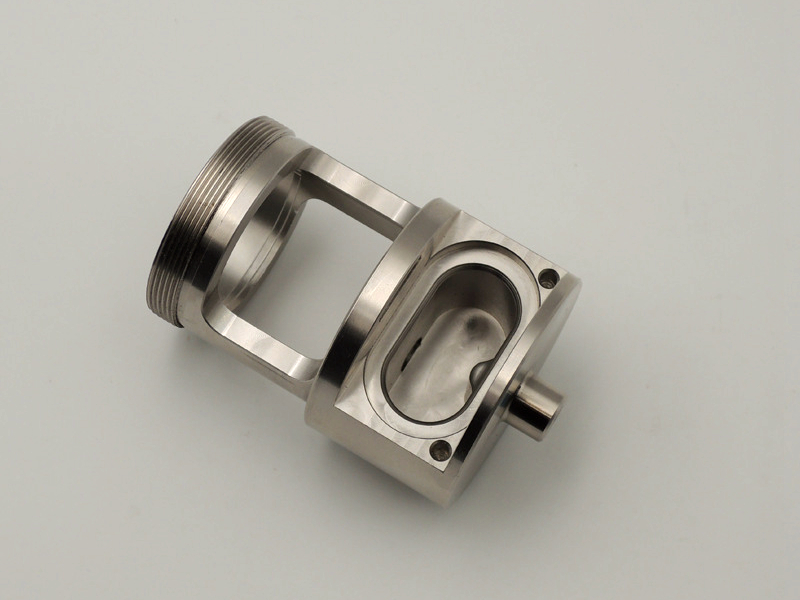
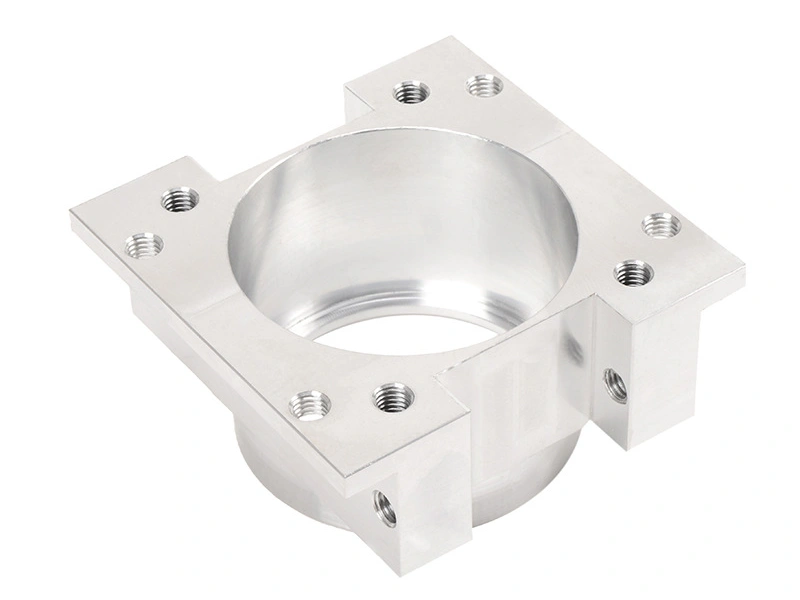
Complex structure machining covers parts whose functional result depends on relationships among features, setups, or processes. Valve bodies, manifolds, connectors, housings, seal carriers, and sleeves may combine deep bores, intersecting passages, ports, threads, seats, grooves, thin walls, and datum-controlled mounting faces. The supplier must plan access, stock support, tool reach, burr removal, feature intersections, residual-stress movement, and final measurement. A machine-axis count does not prove that all features can be produced and verified in the released condition.
Review the route against the leading failure. A port can have the correct diameter but the wrong position or remaining wall. A thread can pass its covered gauge characteristics while its shoulder or axis relationship remains wrong. A thin housing can meet dimensions while clamped and move after release. The service scope should identify prevention and validation for each risk, including any required section-specific check, functional gauge, surface measurement, coordinate measuring machine (CMM) setup, NDE, or assembly test. Each method proves only the characteristic within its defined purpose.
Typical Machined Structure | Functional Risk to Control | Scope Evidence to Request |
|---|---|---|
Valve or flow body | Seal, bore, port, seat, and pressure-wall relationships lose alignment | Datum-based route, final geometry report, required NDE, and specified test record |
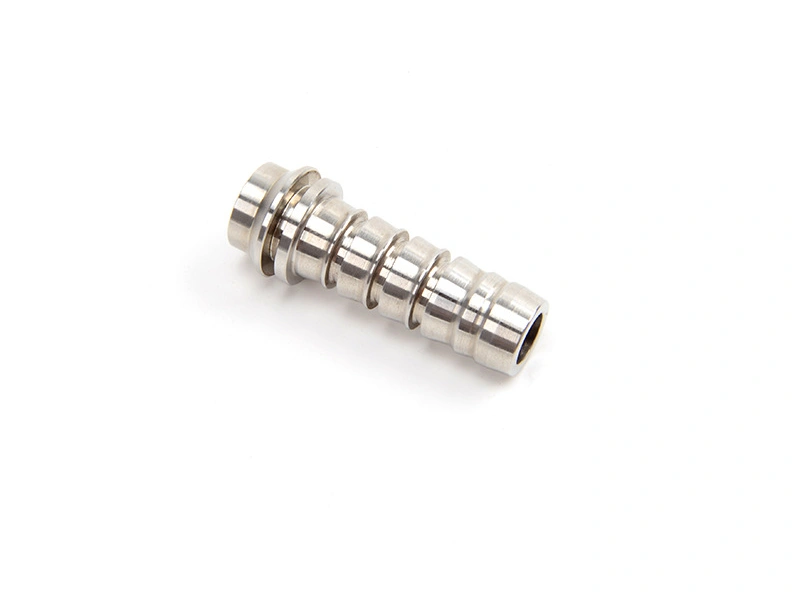
Connector or interface fitting | Thread, shoulder, axis, surface, or seal mechanism is incomplete or mismatched | Thread definition, applicable gauge result, shoulder or axis check, and surface criteria |
Housing or enclosure | Thin-wall movement or datum shift changes bore, port, mount, or sealing location | Rough-to-finish sequence, unclamped final inspection, and treatment-state confirmation |
Bushing or sleeve structure | Final clearance, form, finish, or material pair causes seizure or unstable wear | Final inside diameter (ID), outside diameter (OD), roundness, finish, mating data, and treatment-condition record |
4. Upstream Equipment Parts and General Industrial Energy Parts Are Not Exactly the Same
Upstream and general industrial energy parts require different service scopes when their functions, environments, and governing specifications differ. Upstream equipment may place greater emphasis on pressure boundaries, production-fluid exposure, hydrogen sulfide (H2S) or chloride limits, erosive flow, field assembly, proprietary connections, and traceability. The machining supplier needs those requirements in controlled documents; the label upstream does not reveal them. A valve component, connector, sleeve, or seal carrier should be planned from its specific product and service basis.
Industrial energy equipment may emphasize pump or compressor alignment, repeat assembly, bearing fits, wear interfaces, mounting geometry, or maintainability. Some industrial parts are also pressure- or corrosion-critical, while some upstream parts are non-pressure structural items. Buyers should not assign controls by sector name alone. The RFQ should classify function, failure consequence, environment, material condition, critical features, inspection, testing, and records for the actual component, then require the supplier to quote that scope.
5. The Core Content of Oil and Gas Machining Services Is Functional Feature Control
Functional feature control means preserving the specified size, form, position, axis relationship, thread, surface, edge, cleanliness, and final condition that let the component contain, seal, align, move, or assemble. General dimensions do not deserve the same attention as a seal land, pressure-wall intersection, connection shoulder, guide bore, or mounting datum. The control plan should link each critical characteristic to its manufacturing stage, prevention method, inspection method, acceptance rule, record, and reaction to a failed result.
Final condition is essential. Heat treatment can move geometry, plating can reduce a bore or alter thread fit, coating can affect seal contact, and deburring can damage an edge or seat. Inspection performed before the last changing operation cannot prove the released feature unless the approved plan accounts for that change. Buyers should state pre- and post-process requirements, datum setup, measurement method, uncertainty expectation where relevant, and required functional evidence. Supplier capability is demonstrated by this linked plan and representative results, not by equipment claims.
6. Why Low-Volume Manufacturing Is Often Important in Oil and Gas Projects
Many projects use low-volume manufacturing for pilot equipment, bridge supply, spares, maintenance, design transitions, or specialized assets. CNC machining can retain production materials and functional geometry without dedicated high-volume tooling, but flexibility must remain controlled. Frequent small orders can increase setup, inspection, document, and outside-process work per part. A repeatable low-volume service should preserve revision, program, fixture, tool, gauge, material-lot, special-process, and release controls across separated orders.
The buyer decision is whether the stage needs learning, continuity, or scaled output. A sample route can prioritize fast feedback; a bridge lot may prioritize supply continuity; a service-spares program may prioritize revision and trace retention; a stable release may justify dedicated fixtures or inspection automation. These are scope decisions, not fixed lead-time promises. The RFQ should define the intended stage, expected order pattern, validation gate, change limits, documentation, and the evidence needed before the next stage begins.
Project Stage | Required Service Output Before Release |
|---|---|
Sample development | Representative part, open-question closure, defined inspection, and limited next-stage approval |
Pilot or bridge supply | Controlled route, traceable lot, repeat evidence, approved changes, and release records |
Repeat small-batch delivery | Revision continuity, preserved setup knowledge, lot control, inspection, and record retention |
Stable production release | Frozen technical scope, capable bottleneck plan, change control, and repeatable acceptance evidence |
7. Summary
oil and gas machining services cover only the work and evidence assigned by the contract. The same supplier can support samples, low-volume manufacturing, and repeat production, but each stage needs its own deliverable and approval gate. For every stage, the required CNC machining scope may include technical review, material control, process planning, complex-feature machining, outside-process coordination, inspection, traceability, packaging, and release. Pressure design, service qualification, material selection, NDE, coating, assembly, and testing remain excluded unless the purchase specification assigns them.
Before ordering, issue a scope matrix that identifies the drawing revision, service inputs, material and condition, critical features, final state, special processes, inspection and test methods, trace level, records, quantity, production stage, packaging, delivery basis, exclusions, and approval authority. Compare suppliers against the same matrix. The appropriate service is the one that can connect each requirement to a controlled operation and valid release record, not the one that presents the broadest capability list.