What Do Aerospace Machining Solutions Cover for Flight-Critical and Structural Components?
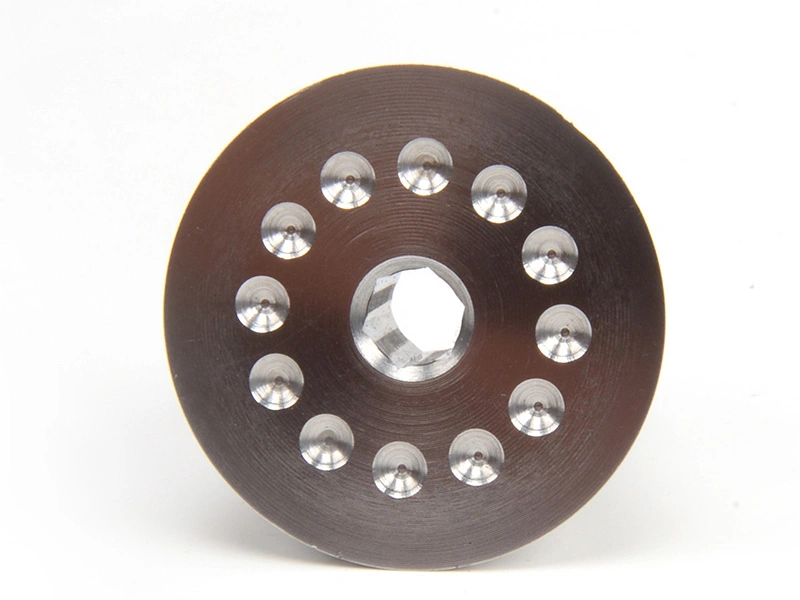
What Do Aerospace Machining Solutions Cover for Flight-Critical and Structural Components?
Aerospace machining solutions cover the precision manufacturing of structural and functional parts used in aircraft, aviation systems, and related high-performance equipment. In practical terms, this includes components such as brackets, housings, connectors, mounts, sleeves, covers, shafts, and other engineered parts that must meet strict requirements for dimensional accuracy, weight control, strength, surface quality, and repeatable inspection. These parts are commonly produced through CNC machining because the process can hold complex geometry and tightly controlled relationships between critical features.
In aerospace work, the part is rarely judged by shape alone. It is judged by whether the machined geometry supports load, alignment, sealing, assembly stability, and long-term reliability under vibration, thermal change, and repeated service stress. That is why aerospace machining solutions are not simply about making a metal part to print. They are about controlling the full path from raw material to verified component.
1. Aerospace Machining Solutions Usually Cover Both Structural Parts and Functional Parts
Aerospace parts are often divided into two broad categories: structural components and functional components. Structural components mainly support load, maintain position, or help transmit force through the larger assembly. Functional components do more than carry load. They may guide movement, support sealing, manage interfaces, connect systems, or control how other parts align and operate.
This distinction matters because the machining priorities are different. A structural bracket may focus on stiffness, hole position, and weight reduction. A functional housing or connector may focus more on bore accuracy, thread quality, sealing faces, and datum relationships. Both types demand precision, but they fail for different reasons if the process is weak.
Part Category | Typical Examples | Main Machining Priority |
|---|---|---|
Structural components | Brackets, mounts, support frames, structural covers | Weight control, hole position, flatness, repeatable assembly |
Functional components | Housings, connectors, sleeves, shafts, interface parts | Bores, threads, sealing areas, concentricity, fit accuracy |
2. Brackets Are Common Aerospace Structural Parts Because They Combine Light Weight with Precise Location
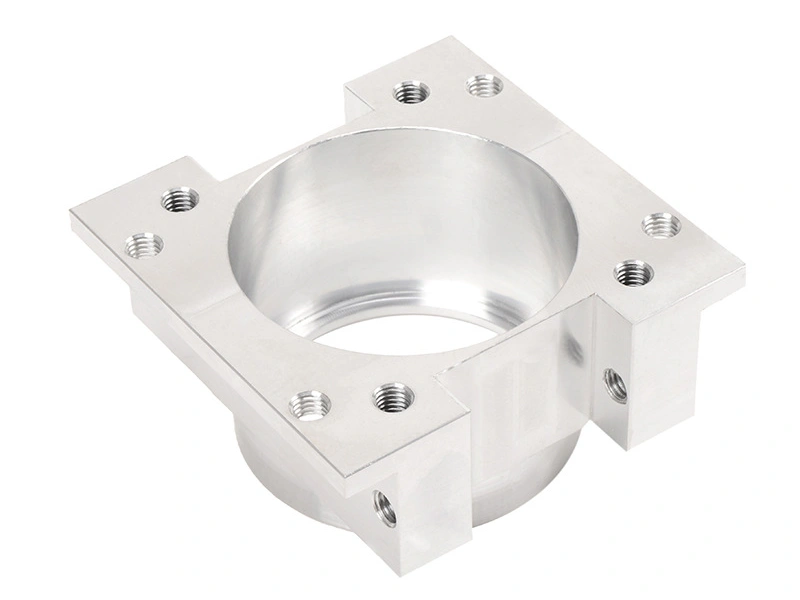
Brackets are among the most common aerospace machined parts because they often connect systems, hold equipment in place, and transfer load while still needing to remain lightweight. In aerospace assemblies, a bracket is rarely just a simple support. It may also define alignment between fasteners, panels, sensors, tubing, or subassemblies, which means hole position, face flatness, and overall geometry are often critical.
This makes CNC machining especially valuable because it can produce complex lightweight geometries with accurately controlled mounting features. A structural bracket that is slightly mislocated or warped can create assembly stress, stack-up problems, or long-term reliability issues in the surrounding system.
3. Housings Are Functional Parts Because They Protect and Locate Critical Features
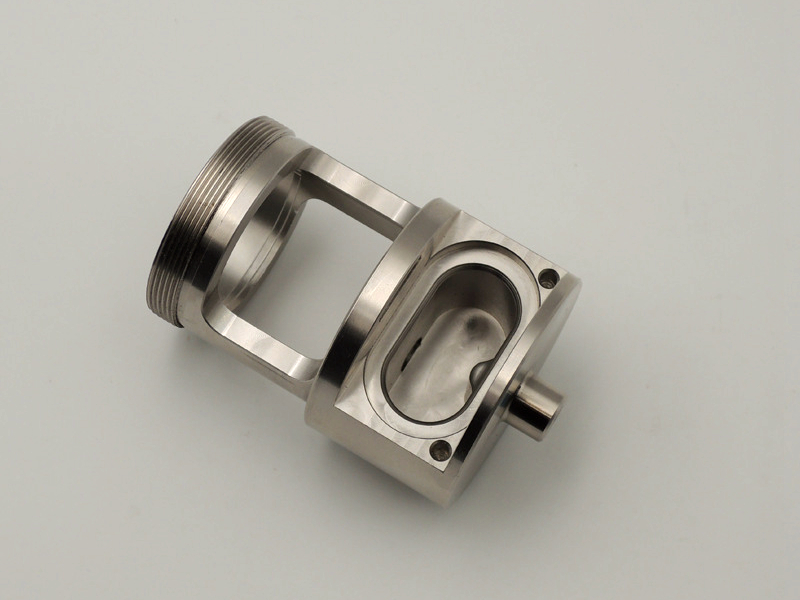
Housings are another major category in aerospace machining solutions. These parts often contain bores, threaded interfaces, locating faces, sealing zones, or other precision features that support sensors, valves, connectors, electrical interfaces, rotating parts, or instrument-related assemblies. Although the housing may look like an enclosure, its real function often depends on the exact relationship between its inner and outer features.
That is why aerospace housings are usually classified as functional parts rather than simple structural shells. The machining process must protect not only appearance or outer form, but also alignment, mounting accuracy, and the integrity of the features inside the part.
4. Connectors and Cylindrical Interface Parts Often Depend on Turning-Based Precision
Many aerospace connectors and interface parts are cylindrical or partially cylindrical in function, which means axis-related accuracy becomes very important. Threads, shoulders, sealing diameters, grooves, and coaxial bores often determine whether the part will assemble correctly and maintain stable performance in service. This is why CNC turning is often a key part of aerospace machining solutions.
Turning supports accurate control of roundness, concentricity, and step geometry in parts such as connectors, sleeves, shafts, and threaded interface components. In many aerospace systems, poor axis control does not only reduce fit quality. It can affect sealing, wear, vibration behavior, and assembly reliability.
Typical Aerospace Part | Usually Structural or Functional | Why Precision Matters |
|---|---|---|
Bracket | Structural | Controls load path, mounting position, and assembly fit |
Housing | Functional | Controls bores, threads, interfaces, and feature alignment |
Connector | Functional | Controls thread integrity, sealing, and axis relationships |
Mount or support frame | Structural | Controls stiffness, positioning, and fastener accuracy |
Sleeve or shaft | Functional | Controls fit, rotation, wear, and concentric geometry |
5. The High Standards in Aerospace Come from Risk, Load, and Service Environment
Aerospace parts are held to higher standards than many general industrial parts because the service environment is more demanding and the consequences of failure are much more serious. These components may experience vibration, load cycling, thermal variation, pressure, altitude-related conditions, or long service intervals where reliability must remain stable. Even small deviations in bore location, fastener alignment, sealing surfaces, or structural geometry can become much larger system risks once the part enters service.
This is why aerospace machining solutions emphasize tighter process control, better material handling, clearer traceability, and more disciplined inspection planning. The high standard does not come from formality alone. It comes from the need to protect real performance and real safety margins.
6. Aerospace Machining Is Not Just About Tight Tolerance. It Is About Controlled Process
Many buyers think aerospace quality is only about tighter tolerances, but the real difference is broader. Aerospace machining solutions usually include material verification, process planning, fixture strategy, dimensional inspection, surface control, and release discipline. A component may have a tight print, but if the process is unstable, the part is still risky. In aerospace work, the route used to make the part matters almost as much as the final measurement result.
This is especially true for flight-critical and function-critical components where lot repeatability, process consistency, and documented inspection have major value. The best aerospace machining suppliers therefore focus on both geometry control and process discipline.
7. Why Aerospace Programs Rely So Heavily on CNC Machining
CNC machining is widely used in aerospace because many parts combine complex geometry with strict accuracy requirements and engineered materials. Brackets may need pockets and weight-saving features. Housings may need multiple datum-related bores and faces. Connectors may require precision threads and sealing diameters. Machining is effective because it can create these features directly from solid stock or near-net blanks while maintaining control over geometry and surface condition.
That flexibility is especially important when aerospace teams need both precision and engineering responsiveness. It allows the supplier to support complex structural parts and detail-sensitive functional components within the same quality framework.
8. Summary
In summary, aerospace machining solutions cover a wide range of flight-critical and structural parts, including brackets, housings, connectors, mounts, sleeves, and other high-precision components. Structural parts mainly carry load and hold position, while functional parts control fit, sealing, movement, or interface behavior. Both require strong machining discipline, but their priorities differ according to how they work in the assembly.
The reason aerospace standards are so high is that these parts operate in demanding environments where small errors can expand into much larger performance and reliability risks. That is why precision CNC machining and precision turning remain core parts of modern aerospace and aviation manufacturing solutions.