What Are CNC Machined Parts and How Are They Used in Precision Manufacturing?
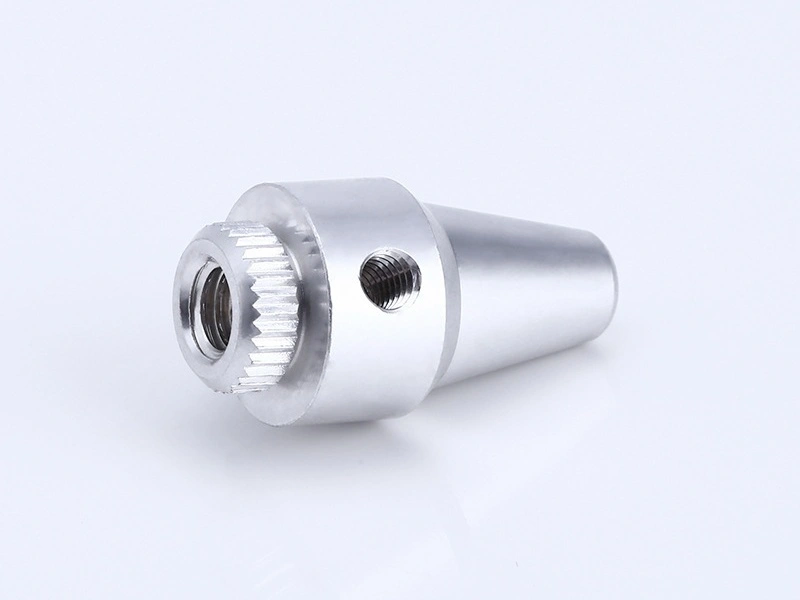
What Are CNC Machined Parts and How Are They Used in Precision Manufacturing?
CNC machined parts are precision components produced by computer-controlled material removal from stock, castings, or forgings. They are used when function depends on defined datums, dimensional relationships, bores, threads, or surface integrity. Machining is less economical for simple, stable high-volume geometry that dedicated tooling can produce with little finish work. An RFQ should identify the drawing revision, material grade and condition, critical features, finish, quantity, and inspection scope.
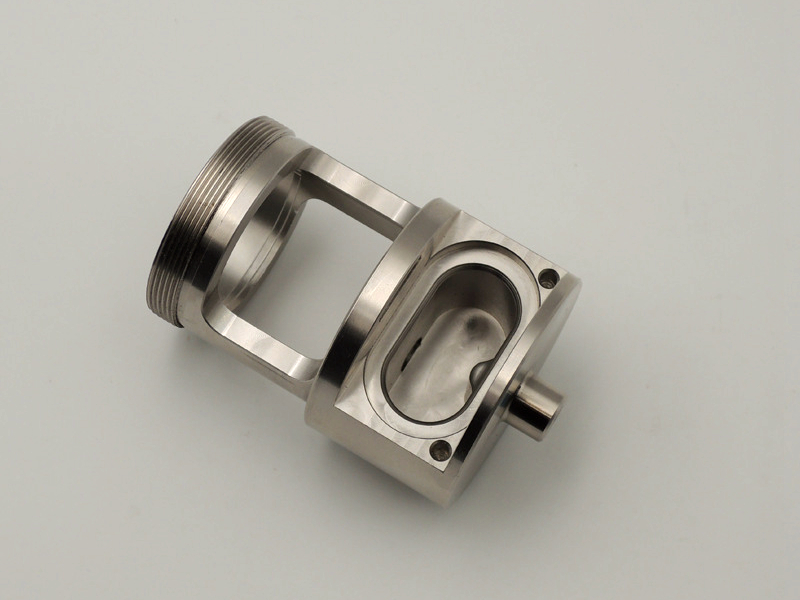
CNC machined parts support fit, motion, sealing, load transfer, and inspection through measurable features rather than outside shape alone. Typical parts include housings, brackets, shafts, manifolds, connectors, and sealing interfaces. They appear in sectors such as automotive and medical device, where material traceability, feature control, and repeatable assembly behavior can be purchase requirements.
1. What Does "CNC Machined Parts" Mean in a Manufacturing Plan?
CNC machined parts are shaped by programmed cutting tools rather than defined only by the original blank. The route can start with aluminum plate, stainless bar, titanium billet, engineering plastic sheet, or a near-net casting or forging. Toolpaths create holes, threads, pockets, bores, flat faces, profiles, and datums.
The term tells a buyer that listed features will be generated and verified through a machining route. CNC machining fits components that need accurate mating surfaces, specified material condition, and feature relationships checked from defined datums. The drawing still controls acceptance; the process name alone does not define tolerance or finish.
Characteristic | CNC Machined Parts |
|---|---|
Manufacturing method | Controlled material removal from stock or a near-net blank |
Typical processes | Milling, turning, drilling, boring, tapping, grinding, and deburring |
Common materials | Aluminum, stainless steel, titanium, brass, carbon steel, POM, PEEK, PTFE, nylon |
Best suited for | Functional parts with datums, bores, flatness, threads, sealing faces, or inspection requirements |
2. How Are CNC Machined Parts Made?
CNC machined parts are made through a planned route, not one uncontrolled cut. The route may include stock cutting, rough machining, semi-finishing, stabilization when needed, finishing, deburring, and inspection. Milling creates faces, pockets, walls, and multi-face geometry. Turning creates shafts, pins, bushings, and concentric diameters.
The route must match part risk. Thin walls may move after unclamping, while deep pockets increase tool deflection and leave tapered walls or poor corner finish. Stainless steel and titanium require different heat and tool-life controls from aluminum. RFQ review therefore needs the material condition, critical datums, finish, inspection level, and target quantity.
3. What Types of Parts Are Commonly Made by CNC Machining?
CNC machining is used for parts that need exact hole locations, stable thickness, flat mounting faces, accurate bores, reliable threads, or consistent assembly interfaces. It is also useful when material performance affects strength, corrosion resistance, sterilization compatibility, conductivity, wear, or thermal behavior.
Parts that look simple can still need machining when the datum structure is important. A base plate may need flatness. A connector may need thread quality and sealing-face control. A sensor housing may need alignment between locating bores and mounting faces so the installed subassembly remains positioned.
Part Type | Typical Function | Common Materials |
|---|---|---|
Housings | Protect components and hold machined interfaces | Aluminum, stainless steel, engineering plastics |
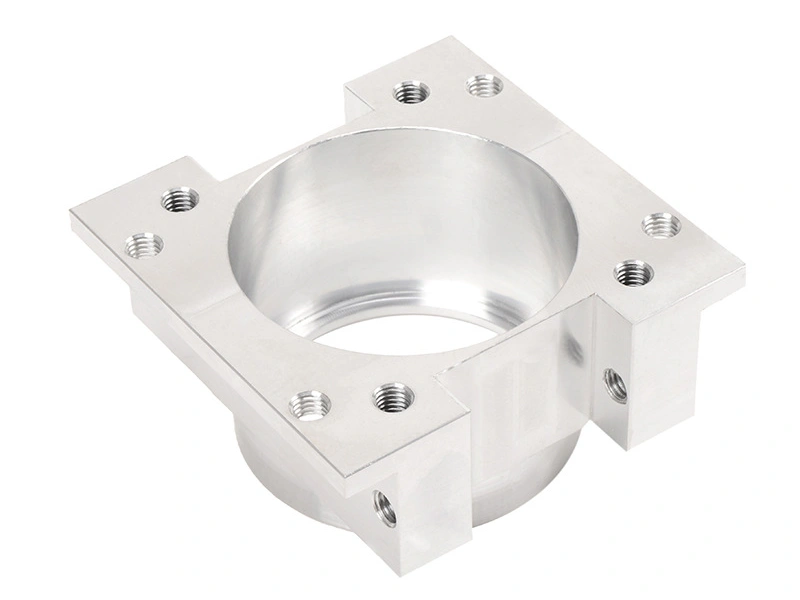
Brackets | Support positioning, load transfer, and assembly datums | Aluminum, carbon steel, stainless steel |
Shafts | Transmit motion, torque, or alignment through controlled diameters | Carbon steel, stainless steel, titanium |
Plates | Serve as bases, covers, fixtures, or structural mounting surfaces | Aluminum, steel, brass |
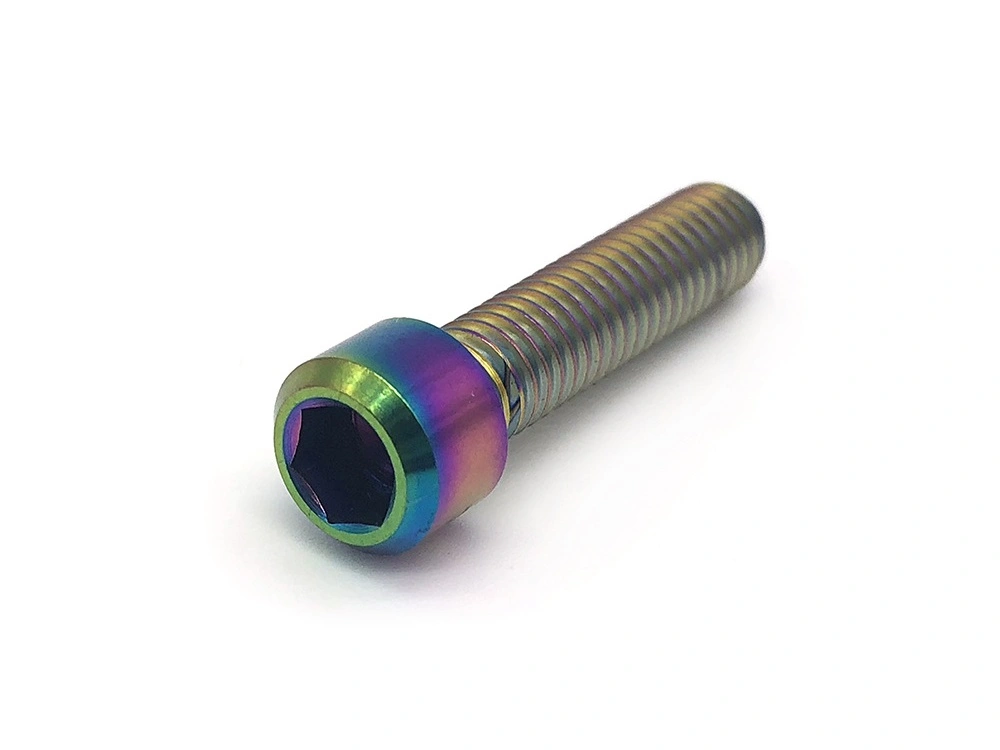
Connectors | Create mechanical, fluid, or electrical interfaces | Brass, stainless steel, aluminum |
4. Why Are CNC Machined Parts Important in Precision Manufacturing?
CNC machined parts connect design intent to measurable features. A product may fail if a bore is undersized, a sealing face is rough, or roughing releases stress and changes the relationship between a datum face and a critical bore. A thread can also pass visual review yet fail the mating-gauge requirement.
The value is controlled tolerance where function requires it, not the tightest number everywhere. General dimensions may follow a buyer-specified title-block rule. Critical size and geometric features need explicit tolerances, datums, inspection methods, and acceptance conditions so manufacturing and receiving inspection use the same requirement.
5. Which Industries Use CNC Machined Parts the Most?
Automotive, medical device, aerospace, electronics, robotics, automation, and industrial equipment are among the common users of CNC machined parts. These sectors depend on specified material, assembly fit, vibration stability, sealing, or controlled motion. Automotive programs often use machined brackets, housings, shafts, manifolds, connectors, and fixtures.
Medical device manufacturing uses CNC machining when stainless steel, titanium, engineering plastics, clean surfaces, or precise interfaces are required. Buyers should confirm regulatory, cleaning, material, and inspection requirements separately because machining a geometry does not automatically qualify a finished medical part.
Industry | Typical CNC Machined Parts | Why CNC Is Used |
|---|---|---|
Automotive | Brackets, housings, shafts, connectors, valve components | Fit control, repeatability, strength, and revision flexibility |
Medical Device | Instrument parts, housings, clamps, guides, titanium or stainless components | Material control, fine features, clean surfaces, and inspection discipline |
Aerospace | Structural brackets, titanium parts, precision interfaces | Lightweight design, controlled datums, and strict dimensional accuracy |
Industrial Equipment | Base plates, shafts, mounts, manifolds, covers | Durability, serviceability, and multi-feature machining flexibility |
6. What Materials Are Commonly Used for CNC Machined Parts?
Common CNC machined part materials include aluminum alloys, stainless steels, carbon steels, titanium alloys, brass, copper alloys, and engineering plastics. Aluminum is often chosen for lightweight housings and brackets. Stainless steel suits corrosion-resistant and durable components. Titanium fits high strength-to-weight applications. Brass is common for connectors and fittings.
Engineering plastics such as POM, PEEK, PTFE, nylon, and polycarbonate are used for insulation, low friction, chemical resistance, or weight reduction. Material choice should be confirmed by grade, condition, stock form, finish, environment, and critical dimensions. A material name alone is not enough.
7. How Precise Can CNC Machined Parts Be?
CNC machined parts can hold tighter control on short, rigid, accessible features than on thin walls, deep features, or dimensions spanning multiple setups. No single tolerance describes every machined part because material condition, workholding, tool access, thermal stability, datum transfer, and inspection method change the result.
Applying the tightest tolerance to every dimension raises cost and may not improve function. A better RFQ marks critical dimensions, references the datum scheme, states surface-finish needs, and identifies whether acceptance requires calipers, a height gauge, bore gauges, optical inspection, a coordinate measuring machine, or another method.
8. How Do Buyers Benefit from CNC Machined Parts During Product Development and Production?
Buyers benefit because CNC machined parts support validation, bridge supply, and repeat production with real materials. Prototypes can test wall thickness, threads, bores, sealing faces, and assembly fit before tooling. Bridge production stays flexible while forecasts remain uncertain.
During repeat production, CNC machining remains useful for critical precision parts, spare parts, engineering changes, and components that need machined datums after another forming or near-net-shape process. The buyer action is to decide which stage the part is in and which features must be protected at that stage.
9. Summary
CNC machined parts finish stock or near-net blanks when datum control, surface function, and measurable feature relationships determine acceptance.
Examples are housings, brackets, shafts, plates, and connectors for automotive and medical device assemblies. An RFQ for CNC machined parts should state drawing revision, material grade, critical dimensions, finish, quantity, and inspection scope.