Is CNC Machining a Good Option for EV Car Parts Requiring Lightweight and Thermal Performance?
Is CNC Machining a Good Option for EV Car Parts Requiring Lightweight and Thermal Performance?
Yes, CNC machining is a good option for lightweight, thermally functional EV parts when the critical features are reachable, the alloy and temper suit the duty, and the finished assembly can be tested. Machining does not by itself guarantee low mass, low thermal resistance, or leak-tight closed passages. Those outcomes also depend on section geometry, interface condition, joining, coolant routing, and final-state validation. An automotive EV RFQ should define the heat path, structural interfaces, sealed boundaries, material condition, final finish, and required thermal or fluid tests.
An EV component can be dimensionally correct and still perform poorly as a thermal part. Bulk material conductivity is only one resistance in the heat path; contact flatness, surface texture, thermal-interface material, clamp load, wall thickness, coolant flow, and joint quality can dominate the result. Lightweighting is also a stiffness and load-path decision, not simply a request to remove more stock. CNC is most valuable when the drawing connects machined features to these functions and the acceptance plan checks the completed part or assembly under its intended conditions.
1. EV Parts Need Machined Interfaces, Not Just Precise Outer Geometry
EV cold plates, inverter housings, motor covers, cooling manifolds, and module brackets often combine structural, sealing, electrical-clearance, and thermal-interface functions. CNC can establish datum faces, bores, ports, threads, seal lands, mounting patterns, and contact surfaces in a controlled relationship. The relevant failure mode must be named for each interface: leakage, poor thermal contact, bearing or connector misalignment, insufficient clamp load, or interference after finishing.
The machining plan should preserve those relationships through fixturing, roughing, finishing, deburring, cleaning, joining, coating, and insert installation. A datum scheme interpreted under ASME Y14.5 or ISO 1101 can align manufacturing and inspection, but the standard does not set the required tolerance. Final evidence may include datum-based geometry, surface texture, cleanliness, pressure or leak results, flow data, assembly fit, and a thermal test matched to the component duty.
EV Part | Suitable CNC Role and Condition | Principal Risk and Release Evidence |
|---|---|---|
Cold plate | Machine open channels, ports, seal lands, and contact faces; add a qualified route for closed passages | Burrs, chips, joint distortion, or leakage; inspect passages and verify pressure, leak, flow, and thermal performance |
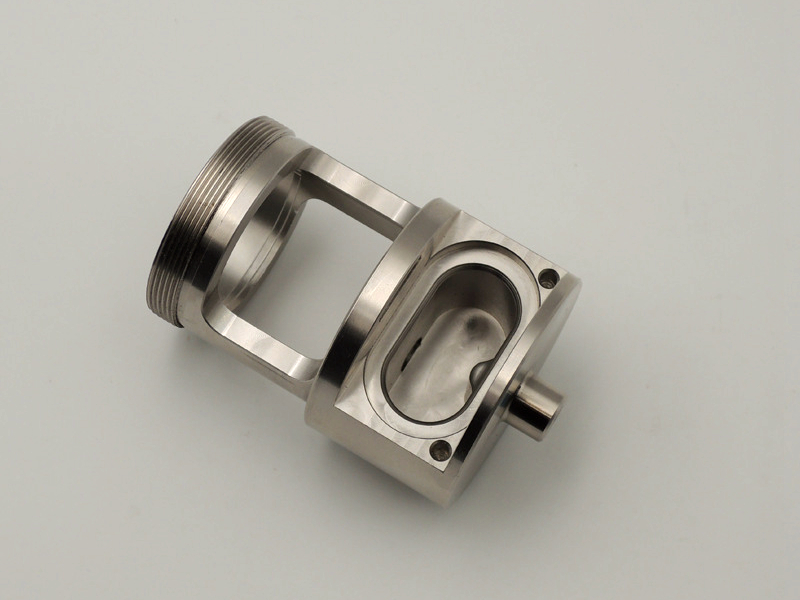
Housing | Finish bores, datums, mounting faces, and thermal interfaces on billet, casting, forging, or extrusion | Thin-wall movement or blank variation; inspect final-state geometry and confirm assembly and heat-path function |
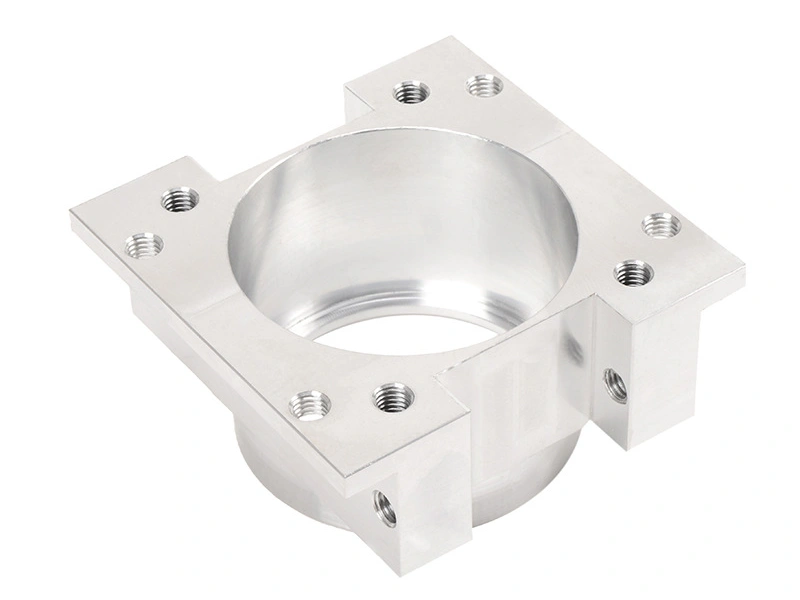
Bracket | Create datum faces, holes, pockets, and ribs while retaining the analyzed load path and fixture access | Distortion, coating buildup, or lost stiffness; verify final position, assembly stack, and structural acceptance |
Cover or interface part | Finish seal lands, fastener patterns, locating features, and thermal-contact surfaces after route selection | Joining or treatment changes flatness and texture; inspect after final processing and run the specified functional test |
2. Cold Plates Need a Complete Channel, Joining, and Test Route
Cold plates are good CNC candidates when their channels are open to a tool or the design includes a qualified method for closing and sealing them. Machining can establish channel floors, divider walls, ports, gasket grooves, fastener patterns, and module-contact faces. Many closed circuits still need a bonded, brazed, welded, or mechanically sealed cover. Extrusion, casting, additive manufacturing, or another route may be better when passages are inaccessible or billet waste is excessive.
Release decisions must address more than channel dimensions. Burrs at intersections can trap debris or disturb flow, while clamping and joining can move a previously flat contact face. Cleaning must achieve the specified particle and residue limit without leaving blocked branches. The completed plate should receive the defined pressure or leak test, flow or pressure-drop check, and thermal validation with stated coolant, temperature, heat load, mounting condition, and acceptance limits.
3. EV Housings Require Thin-Wall and Final-State Control
EV housings are suitable for CNC when the route controls thin-wall movement, functional datums, and the condition in which the part will be accepted. Billet, casting, forging, and extrusion blanks carry different stock, residual stress, porosity, and locating risks. Clamp load and uneven material removal can mask distortion during cutting; a wall or sealing face may move after unclamping even though the in-process reading was acceptable.
A stable plan can rough the part with controlled stock, release or re-establish the workholding where needed, and finish bores, datum faces, ports, and thermal interfaces in a deliberate sequence. Heat treatment, joining, anodizing, paint, inserts, and assembly can change size or contact conditions. Buyers should define whether each requirement applies before or after those operations, then request final-state geometry, texture, coating or masking confirmation, assembly fit, and the applicable thermal or sealing result.
4. Lightweight Brackets Must Preserve Load Paths and Datums
EV brackets benefit from CNC when pockets, ribs, holes, slots, and mounting faces can reduce mass without interrupting the required load path. Removing stock does not automatically improve a bracket: stiffness depends strongly on section shape, rib placement, fastener load, and unsupported span. The design analysis should establish the allowed envelope, loads, interfaces, and deflection or vibration criteria before machining priorities are set.
Machining must also leave enough rigidity for workholding and final assembly. Thin arms can spring after unclamping, threaded inserts can shift local geometry, and coating can build on holes or contact faces unless masking is defined. An RFQ should identify functional datums, no-cut zones, interface surfaces, insert state, coating state, and assembly stack requirements. Final inspection should reproduce the specified datum setup and include the structural or calibration check required by the bracket function.
5. Aluminum Is a Starting Family, Not a Complete Thermal Specification
Aluminum CNC machining is appropriate for many EV cold plates, housings, and brackets because aluminum alloys combine low density, useful conductivity, and practical machinability. The alloy name alone does not establish system thermal performance. Temper, product form, wall section, contact area, surface condition, coolant compatibility, joining history, and the complete resistance from heat source to coolant or ambient all affect the result.
Material selection should balance structural load, allowable mass, thermal duty, corrosion environment, electrical isolation, joining method, and production route. Anodizing can support corrosion or insulation requirements, yet the coating also changes electrical and thermal contact and may alter fits or seal geometry. Functional faces may need masking or controlled post-treatment machining. The drawing and RFQ should state the final surface condition instead of assuming that every aluminum finish helps heat transfer.
Selection Factor | Engineering Implication | RFQ or Validation Action |
|---|---|---|
Mass and stiffness | Density sets material mass, but section geometry and load path govern stiffness and local deflection | Provide loads, supports, minimum walls, rib intent, and structural acceptance criteria |
Thermal path | Alloy conductivity interacts with wall thickness, contact resistance, interface material, flow, and joint quality | State heat load, temperatures, coolant, interface stack, and required flow and thermal tests |
Machining stability | Blank form, temper, residual stress, stock removal, and clamping influence final distortion | Specify form and temper; confirm the fixture sequence and measure critical features after unclamping |
Finish and joining | Anodizing, bonding, brazing, welding, inserts, and masking can alter geometry or interface behavior | Define every final process and inspect or function-test the part after those operations |
6. 6061, 6063, and 7075 Serve Different Material and Product-Form Decisions
Aluminum 6061 suits many machined housings and structural-thermal parts when its strength, corrosion behavior, joining route, and conductivity fit the selected temper. Aluminum 6063 is often considered with extruded thermal sections, but the section and temper must support machining and loads. Aluminum 7075 can serve higher-strength parts, yet its corrosion, conductivity, and joining limits make it an unsuitable automatic upgrade for coolant-wetted or joined thermal components.
The RFQ should state alloy, temper, and product form rather than only the word aluminum. ASTM B209 applies to relevant sheet and plate products, while ASTM B221 covers relevant extruded products; the purchase specification must match the actual blank and drawing jurisdiction. Material certificates confirm supplied identity, not finished heat-transfer performance. Buyers should review grade-specific producer data for the specified temper and validate the completed thermal path under the design operating conditions.
7. Prototype and Production EV Parts Require Different Evidence
Prototype CNC is useful for EV fit, packaging, channel, interface, assembly, and controlled thermal experiments, but each sample proves only the conditions it represents. A billet prototype may confirm mounting and flow geometry while failing to represent production casting porosity, extrusion stock, joining distortion, coating, cleaning, tool wear, or normal fixture variation. The test plan should list every production-intent difference before the prototype result is used for a release decision.
Production evidence should come from the intended blank, temper, machining sequence, joint, finish, cleaning method, and inspection setup. A pilot run can then expose thin-wall movement, channel debris, sealing variation, and interface drift under representative conditions. The supplier and buyer should agree which dimensions are checked after each risk-changing step and which final pressure, leak, flow, structural, electrical-isolation, or thermal results authorize the next program stage.
8. Choose CNC by Route Risk and Final-State Evidence
CNC is a sound route for EV cold plates, housings, brackets, and interface parts when the important features are accessible and the complete process closes the structural, thermal, cleanliness, and sealing risks. Use full-part CNC machining for development or suitable production volumes. Use CNC as a finishing step on an extrusion, casting, forging, or joined assembly when that route gives a better blank or closed-passage solution.
Aluminum remains a strong starting material family, but an automotive EV RFQ needs the exact grade, temper, form, CAD and drawing revision, quantities, datums, thin-wall and sealing features, channel and cleanliness requirements, joining and finish states, and interface controls. It should also define pressure, leak, flow, structural, and thermal acceptance conditions. Compare suppliers by the proposed route and final evidence, not by a generic claim that machining or aluminum guarantees lightweight thermal performance.