How to Select Active vs. Passive Cooling for Different Lighting Systems?
Select passive cooling when the LED heat load can be managed by a reliable heatsink, natural convection, radiation, and available housing area; select active cooling when power density, size limits, ambient temperature, or enclosure restrictions make passive cooling too large or too hot. The decision should be based on junction-temperature margin, thermal resistance, airflow path, noise, service access, dust exposure, cost, and failure mode. Buyers should ask for a thermal budget and validation plan before accepting either cooling method.
The Fundamental Trade-Off: Reliability vs. Performance Density
Passive cooling has no fan, pump, bearing, filter, or electrical control loop, so it is usually more reliable and easier to maintain. The trade-off is size and mass. A passive heatsink needs enough area, orientation, and air clearance to remove heat under worst-case ambient conditions. Active cooling can increase heat removal in a smaller volume, but it adds moving parts, noise, power consumption, control electronics, clogging risk, and a failure mode that must be detected. The correct decision is not passive versus active as a preference. It is whether the luminaire can meet its junction-temperature target throughout its real installation life.
Key Selection Criteria and Decision Matrix
The following parameters should be evaluated as an early screening tool. Final selection still requires simulation, prototype measurement, and production validation.
Selection Criteria | Passive Cooling Favored When... | Active Cooling Favored When... |
|---|---|---|
Power Density & Heat Flux | Heat load is moderate, the heatsink has enough exposed area, and the allowable junction-to-ambient temperature rise can be met with natural convection. | Heat flux is high, the fixture must stay compact, or passive fins would become too large, heavy, or blocked by the enclosure. |
Lifetime & Reliability Requirements | Long service life, low maintenance, inaccessible mounting, outdoor lighting, street lighting, or high-bay installations make fan replacement difficult. | The product is serviceable, duty cycle is known, fan life can be qualified, and performance density is more important than eliminating moving parts. |
Ambient Environment | Air is reasonably clean, clearance is available, orientation supports natural airflow, and dust will not quickly insulate the fin surfaces. | Airflow can be filtered, sealed, monitored, or maintained, and the cooling device is protected from dust, moisture, vibration, and corrosion. |
Acoustic Noise | Noise is unacceptable, such as in residential, office, retail, museum, studio, medical, or quiet vehicle cabin lighting. | Noise is acceptable or controllable through low-speed fans, larger impellers, fan curves, thermal feedback, and enclosure acoustic design. |
System Cost & Complexity | The design favors lower part count, simple assembly, fewer electronics, and stable manufacturing such as Aluminum CNC Machining or casting. | The added fan, driver, sensor, filter, wiring, and reliability validation are justified by smaller size, higher output, or tighter thermal margin. |
Thermal Budget (ΔTJA) | The allowable junction-to-ambient temperature rise is large enough for a passive heatsink at worst-case ambient, orientation, and airflow clearance. | The required sink-to-ambient resistance is too low for passive cooling, or the enclosure prevents natural convection from developing. |
Passive Cooling Deep-Dive: Design for Efficiency
When passive cooling is selected, the design must make every gram useful. The main controls are heat spreading, interface flatness, fin spacing, surface area, orientation, and surface emissivity.
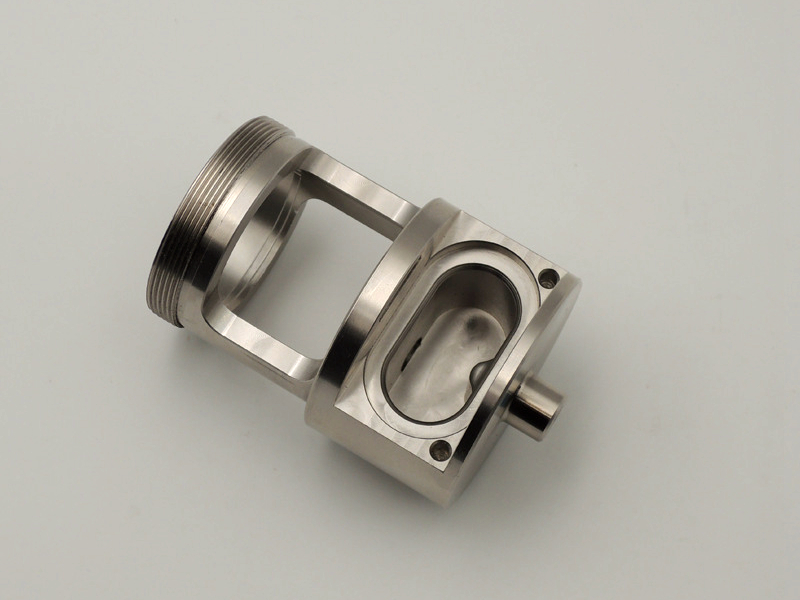
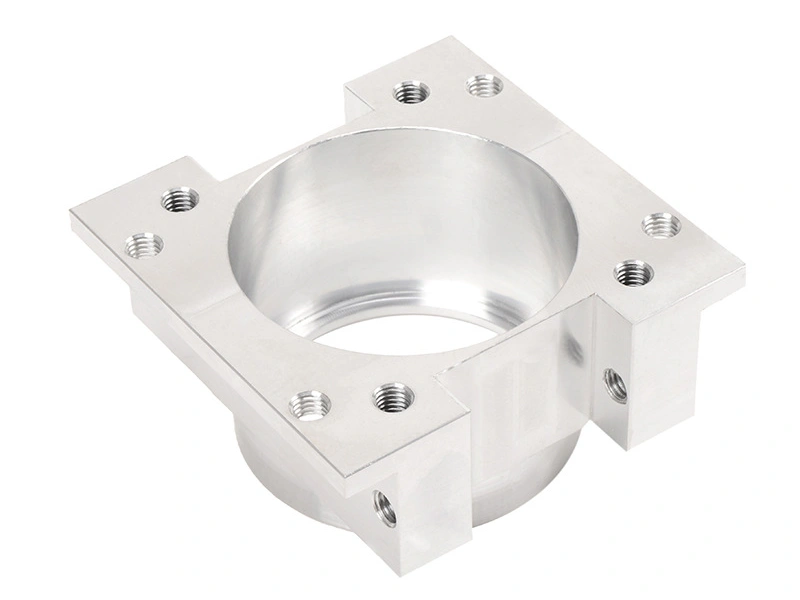
Advanced Heatsink Design: CNC Machining or casting can create fin arrays, thin walls, base plates, and mounting faces that fit the lighting package. Aluminum 6061 is common for machinability and weight, while Copper CNC Machining may be used locally as a heat spreader under a high-flux LED module.
Surface Enhancement: CNC Aluminum Anodizing, especially dark anodizing, can raise emissivity and improve corrosion resistance. It should not cover electrical grounding, LED board contact, or tolerance-critical seating areas unless the design accounts for coating thickness.
Integration: The housing can act as the heatsink, which is common in Automotive lighting. This approach reduces separate parts but requires flat board contact, stable screw preload, sealed electronics, and airflow around the outside surface.
Active Cooling Deep-Dive: Managing Complexity and Failure Modes
Active cooling should be selected with a failure plan. The fan or pump is part of the safety and lifetime design, not an accessory added after passive cooling fails.
Redundancy and Control: Multiple lower-speed fans may reduce noise and provide partial cooling if one fan slows down. Thermal feedback can adjust fan speed based on LED board or heatsink temperature. The control logic should define derating, alarm, and shutdown thresholds.
Filtration and Sealing: Dust, fibers, mud, insects, oil mist, or water can block airflow and damage fans. This is important in Agricultural Machinery and Industrial Equipment. Filters, seals, drains, and service intervals should be included in the design review.
Fail-Safe Mechanisms: A high-power luminaire should respond to fan failure, sensor failure, clogged filters, or unexpectedly high ambient temperature. Possible responses include LED dimming, duty-cycle reduction, warning signals, or controlled shutdown before junction temperature exceeds the design limit.
Hybrid and Advanced Approaches
Many demanding lighting systems use a hybrid route. A luminaire may operate passively at normal ambient temperature and activate a fan only during peak load, high ambient, or blocked airflow. Additive manufacturing through 3D Printing can support complex internal air channels or lightweight lattice prototypes, but the final design must still be cleanable, inspectable, and cost-effective. Early samples made through CNC Machining Prototyping can confirm board contact, airflow, pressure drop, and junction-temperature margin before committing to tooling. For Aerospace and Aviation lighting or other constrained applications, the final decision should include thermal test data, fan-life assumptions, acoustic data, service plan, and a defined response to cooling failure.