
English
What inspection reports are recommended for bronze CNC machined parts?
Table of Contents
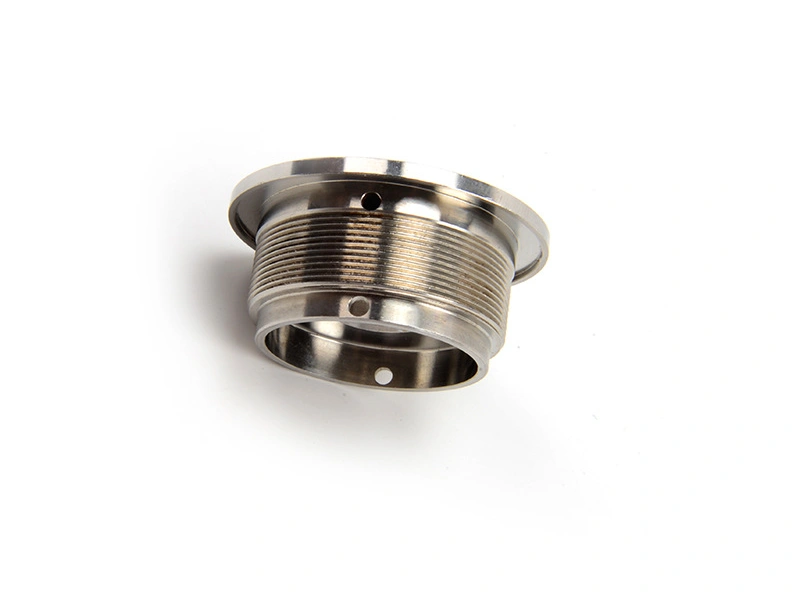
<h2 id="what-inspection-reports-are-recommended-for-bronze-cnc-machined-parts?">What inspection reports are recommended for bronze CNC machined parts?</h2><p>The recommended inspection package for bronze CNC machined parts is a risk-based set of records, not every available report. It normally starts with material identity and a ballooned dimensional result, then adds bore form, axis relationship, surface roughness, burr or cleanliness, first-article, and lot-traceability evidence where those characteristics control fit, lubrication, wear, or release. The drawing and purchase order should identify which characteristics require recorded values, the applicable sample or complete-inspection coverage, the part condition during measurement, and the acceptance rule. A bushing with a critical running fit needs different evidence from a static wear plate. Buyers should therefore map each requested record to a failure mode and release decision under <a target="_blank" href="https://www.newaymachining.com/services/bronze-cnc-machining">bronze machining quality control</a>.</p><div data-type="row" class="row"><div class="col-12 col-md-6" data-type="col"><p><a href="https://www.newaymachining.com/services/bronze-cnc-machining"><img src="https://www.newaymachining.com/storage/attachments/2026/05/10/bronze-cnc-machined-parts-inspection-report-bronze-machining-quality-control.webp" width="800" height="600" loading="lazy"></a></p></div><div class="col-12 col-md-6" data-type="col"><p><a href="https://www.newaymachining.com/services/bronze-cnc-machining"><img src="https://www.newaymachining.com/storage/attachments/2026/05/10/what-inspection-reports-are-recommended-for-bronze-cnc-machined-parts.webp" width="800" height="600" loading="lazy"></a></p></div></div><div class="i-typography-table-responsive"><table><tbody><tr><th colspan="1" rowspan="1"><p>Recommended record</p></th><th colspan="1" rowspan="1"><p>Use, limitation, and buyer check</p></th></tr><tr><td colspan="1" rowspan="1"><p>Material certificate or mill test report</p></td><td colspan="1" rowspan="1"><p>Links grade, specification, product form, condition, and heat or lot; verify that the document matches the released material requirement</p></td></tr><tr><td colspan="1" rowspan="1"><p>Ballooned dimensional report</p></td><td colspan="1" rowspan="1"><p>Maps measured results to drawing characteristics; confirm revision, units, sampling, equipment, and disposition</p></td></tr><tr><td colspan="1" rowspan="1"><p>Bore size and form record</p></td><td colspan="1" rowspan="1"><p>Supports fit and contact decisions; state whether size, roundness, cylindricity, or straightness is being verified</p></td></tr><tr><td colspan="1" rowspan="1"><p>Datum and axis relationship report</p></td><td colspan="1" rowspan="1"><p>Checks alignment to mating features; define datums, setup, final process state, and measurement method</p></td></tr><tr><td colspan="1" rowspan="1"><p>Surface roughness report</p></td><td colspan="1" rowspan="1"><p>Evaluates a specified functional zone; identify trace direction, parameter, instrument settings, and acceptance limit</p></td></tr><tr><td colspan="1" rowspan="1"><p>Burr and cleanliness record</p></td><td colspan="1" rowspan="1"><p>Protects shafts and lubricant paths; define inspected edges, groove intersections, oil holes, and cleaning acceptance</p></td></tr><tr><td colspan="1" rowspan="1"><p>First article inspection report</p></td><td colspan="1" rowspan="1"><p>Establishes the released process baseline; do not treat one approved part as evidence for every later batch</p></td></tr><tr><td colspan="1" rowspan="1"><p>Batch traceability and change record</p></td><td colspan="1" rowspan="1"><p>Connects shipped parts to material and process history; require revalidation after an approved change affects function</p></td></tr><tr><td colspan="1" rowspan="1"><p>Nonconformance and disposition record</p></td><td colspan="1" rowspan="1"><p>Shows containment and release authority when results fail; verify buyer approval before use-as-is or repair</p></td></tr></tbody></table></div><h3 id="1.-material-certification-is-the-baseline-for-bronze-parts">1. Start with material identity and its exact scope</h3><p>A material certificate should connect the shipped bronze parts to the drawing requirement through grade, governing specification, product form, condition, and heat or lot identity. A commercial name such as bearing bronze or aluminum bronze is not enough to confirm equivalence. Buyers should check whether chemistry, mechanical results, or only identity is reported and whether the document actually covers the supplied stock. A certificate does not prove bore accuracy, wear life, or corrosion performance in the final assembly. Its purpose is to prevent an unapproved grade or material state from entering the process and to support traceability if later wear or cracking requires investigation. Substitutions need written approval and a defined revalidation scope.</p><h3 id="2.-bore-inspection-is-often-more-important-than-general-size-checking">2. Require recorded bore results when fit controls function</h3><p>A general pass statement cannot show whether a bushing bore met its functional requirements. The report should identify the drawing revision, characteristic number, nominal value, tolerance, actual result, units, instrument or method, measurement temperature when relevant, sample coverage, and acceptance status. Size alone is insufficient when local form or the relationship to another feature controls contact. Buyers should distinguish bore diameter from roundness, cylindricity, straightness, and axis location rather than combine them under one measurement. The record should also state whether inspection occurred before or after unclamping, pressing, coating, or final cleaning. Those conditions can change a thin-wall part or determine the delivered assembly fit.</p><h3 id="3.-roundness-and-concentricity-should-be-checked-when-running-stability-matters">3. Match form and axis reports to the drawing definition</h3><p>Roundness evaluates individual circular sections, while an axis relationship such as coaxiality or runout depends on a datum and measurement setup. A correct diameter does not establish either result. When uneven contact, shaft misalignment, noise, or edge loading is a credible failure mode, request the characteristic that directly represents that risk. The report should name the datum features, evaluation method, measurement locations, fixture condition, and final-state acceptance limit. Buyers should not infer a tighter result from instrument resolution or from a machine's positioning specification. Review actual measured values and confirm that the method can access the required surface without filtering away the defect that matters.</p><h3 id="4.-cmm-reports-are-useful-for-complex-or-tight-tolerance-parts">4. Use CMM results for suitable geometry, not as a universal certificate</h3><p>A coordinate measuring machine (CMM) report is useful when a bronze component has multiple datums, positions, profiles, or feature relationships that suit probing. It may support <a target="_blank" href="https://www.newaymachining.com/services/precision-machining">precision machining</a> verification, but a CMM report does not by itself prove surface roughness, burr removal, material identity, or process capability. Buyers should review the datum alignment, measured points or scan strategy, probe access, software evaluation, equipment identification, calibration status, and result units. The linked discussion of <a target="_blank" href="https://www.newaymachining.com/blogs/iso-certified-cmm-quality-assurance-for-cnc-machined-components">ISO-certified CMM quality assurance</a> does not replace checking the current certificate scope, site, validity, and applicability to the order. A qualified method must match the feature and acceptance rule.</p><h3 id="5.-surface-roughness-and-burr-inspection-protect-wear-and-lubrication-performance">5. Define roughness, burr, and cleanliness evidence by zone</h3><p>A roughness report should identify the measured surface, parameter, trace direction, instrument settings, evaluation length or applicable rule, actual value, and limit. A reading on an accessible exterior cannot represent a wear-critical bore. Burr and cleanliness evidence should cover oil-hole intersections, groove edges, bore entrances, and other locations where loose material can damage a shaft or obstruct lubricant flow. Photographs may document access and condition, but they do not replace a specified tactile, optical, dimensional, or cleanliness acceptance method. These records belong within broader <a target="_blank" href="https://www.newaymachining.com/blogs/quality-control-in-cnc-machining-how-tolerances-surface-finish-and-geometry-are-verified">quality control in CNC machining</a>, with clear responsibility for cleaning, final inspection, and disposition after an outside process.</p><h3 id="6.-fai-and-traceability-become-more-important-as-the-project-moves-into-repeat-supply">6. Connect FAI, batch records, and changes over time</h3><p>A first article inspection (FAI) report establishes evidence for the released drawing, material state, process route, workholding, and inspection plan represented by that article. It does not guarantee every later piece. Repeat orders need a traceable link among purchase order, drawing revision, material heat or lot, manufacturing batch, inspection results, nonconformance disposition, and shipment. The buyer should define which changes require notification or a new first article, such as material source or condition, stock form, fixture, critical toolpath, heat treatment, coating, inspection method, or supplier location. Batch evidence should also state the sampling or complete-inspection coverage and the reaction rule if drift is detected.</p><h3 id="7.-the-right-inspection-package-depends-on-the-application">7. Build the purchase-order evidence package from risk</h3><p>The final report set should follow the function and failure consequence of the specific bushing, bearing, wear plate, sleeve, or valve component. An <a target="_blank" href="https://www.newaymachining.com/solutions/industrial-equipment">industrial equipment CNC machining</a> order with a critical shaft interface may require material identity, bore size and form, axis relationship, roughness, groove condition, first article, batch results, and change traceability. A noncritical spacer may need fewer recorded characteristics. When a coating or other <a target="_blank" href="https://www.newaymachining.com/knowledge-hub/typical-surface-treatment-for-custom-bronze-cnc-machining-parts">typical surface treatment for custom bronze CNC machining parts</a> changes dimensions or contact, require inspection in the delivered state. The RFQ should state drawing revision, critical characteristics, report format, coverage, equipment expectations, certificate scope, retention period, deviation authority, and revalidation triggers. Buyers can then compare suppliers by evidence completeness and release control instead of requesting an expensive document bundle that does not answer the actual wear risk.</p>
<h2 id="what-inspection-reports-are-recommended-for-bronze-cnc-machined-parts?">What inspection reports are recommended for bronze CNC machined parts?</h2><p>The recommended inspection package for bronze CNC machined parts is a risk-based set of records, not every available report. It normally starts with material identity and a ballooned dimensional result, then adds bore form, axis relationship, surface roughness, burr or cleanliness, first-article, and lot-traceability evidence where those characteristics control fit, lubrication, wear, or release. The drawing and purchase order should identify which characteristics require recorded values, the applicable sample or complete-inspection coverage, the part condition during measurement, and the acceptance rule. A bushing with a critical running fit needs different evidence from a static wear plate. Buyers should therefore map each requested record to a failure mode and release decision under <a target="_blank" href="https://www.newaymachining.com/services/bronze-cnc-machining">bronze machining quality control</a>.</p><div data-type="row" class="row"><div class="col-12 col-md-6" data-type="col"><p><a href="https://www.newaymachining.com/services/bronze-cnc-machining"><img src="https://www.newaymachining.com/storage/attachments/2026/05/10/bronze-cnc-machined-parts-inspection-report-bronze-machining-quality-control.webp" width="800" height="600" loading="lazy"></a></p></div><div class="col-12 col-md-6" data-type="col"><p><a href="https://www.newaymachining.com/services/bronze-cnc-machining"><img src="https://www.newaymachining.com/storage/attachments/2026/05/10/what-inspection-reports-are-recommended-for-bronze-cnc-machined-parts.webp" width="800" height="600" loading="lazy"></a></p></div></div><div class="i-typography-table-responsive"><table><tbody><tr><th colspan="1" rowspan="1"><p>Recommended record</p></th><th colspan="1" rowspan="1"><p>Use, limitation, and buyer check</p></th></tr><tr><td colspan="1" rowspan="1"><p>Material certificate or mill test report</p></td><td colspan="1" rowspan="1"><p>Links grade, specification, product form, condition, and heat or lot; verify that the document matches the released material requirement</p></td></tr><tr><td colspan="1" rowspan="1"><p>Ballooned dimensional report</p></td><td colspan="1" rowspan="1"><p>Maps measured results to drawing characteristics; confirm revision, units, sampling, equipment, and disposition</p></td></tr><tr><td colspan="1" rowspan="1"><p>Bore size and form record</p></td><td colspan="1" rowspan="1"><p>Supports fit and contact decisions; state whether size, roundness, cylindricity, or straightness is being verified</p></td></tr><tr><td colspan="1" rowspan="1"><p>Datum and axis relationship report</p></td><td colspan="1" rowspan="1"><p>Checks alignment to mating features; define datums, setup, final process state, and measurement method</p></td></tr><tr><td colspan="1" rowspan="1"><p>Surface roughness report</p></td><td colspan="1" rowspan="1"><p>Evaluates a specified functional zone; identify trace direction, parameter, instrument settings, and acceptance limit</p></td></tr><tr><td colspan="1" rowspan="1"><p>Burr and cleanliness record</p></td><td colspan="1" rowspan="1"><p>Protects shafts and lubricant paths; define inspected edges, groove intersections, oil holes, and cleaning acceptance</p></td></tr><tr><td colspan="1" rowspan="1"><p>First article inspection report</p></td><td colspan="1" rowspan="1"><p>Establishes the released process baseline; do not treat one approved part as evidence for every later batch</p></td></tr><tr><td colspan="1" rowspan="1"><p>Batch traceability and change record</p></td><td colspan="1" rowspan="1"><p>Connects shipped parts to material and process history; require revalidation after an approved change affects function</p></td></tr><tr><td colspan="1" rowspan="1"><p>Nonconformance and disposition record</p></td><td colspan="1" rowspan="1"><p>Shows containment and release authority when results fail; verify buyer approval before use-as-is or repair</p></td></tr></tbody></table></div><h3 id="1.-material-certification-is-the-baseline-for-bronze-parts">1. Start with material identity and its exact scope</h3><p>A material certificate should connect the shipped bronze parts to the drawing requirement through grade, governing specification, product form, condition, and heat or lot identity. A commercial name such as bearing bronze or aluminum bronze is not enough to confirm equivalence. Buyers should check whether chemistry, mechanical results, or only identity is reported and whether the document actually covers the supplied stock. A certificate does not prove bore accuracy, wear life, or corrosion performance in the final assembly. Its purpose is to prevent an unapproved grade or material state from entering the process and to support traceability if later wear or cracking requires investigation. Substitutions need written approval and a defined revalidation scope.</p><h3 id="2.-bore-inspection-is-often-more-important-than-general-size-checking">2. Require recorded bore results when fit controls function</h3><p>A general pass statement cannot show whether a bushing bore met its functional requirements. The report should identify the drawing revision, characteristic number, nominal value, tolerance, actual result, units, instrument or method, measurement temperature when relevant, sample coverage, and acceptance status. Size alone is insufficient when local form or the relationship to another feature controls contact. Buyers should distinguish bore diameter from roundness, cylindricity, straightness, and axis location rather than combine them under one measurement. The record should also state whether inspection occurred before or after unclamping, pressing, coating, or final cleaning. Those conditions can change a thin-wall part or determine the delivered assembly fit.</p><h3 id="3.-roundness-and-concentricity-should-be-checked-when-running-stability-matters">3. Match form and axis reports to the drawing definition</h3><p>Roundness evaluates individual circular sections, while an axis relationship such as coaxiality or runout depends on a datum and measurement setup. A correct diameter does not establish either result. When uneven contact, shaft misalignment, noise, or edge loading is a credible failure mode, request the characteristic that directly represents that risk. The report should name the datum features, evaluation method, measurement locations, fixture condition, and final-state acceptance limit. Buyers should not infer a tighter result from instrument resolution or from a machine's positioning specification. Review actual measured values and confirm that the method can access the required surface without filtering away the defect that matters.</p><h3 id="4.-cmm-reports-are-useful-for-complex-or-tight-tolerance-parts">4. Use CMM results for suitable geometry, not as a universal certificate</h3><p>A coordinate measuring machine (CMM) report is useful when a bronze component has multiple datums, positions, profiles, or feature relationships that suit probing. It may support <a target="_blank" href="https://www.newaymachining.com/services/precision-machining">precision machining</a> verification, but a CMM report does not by itself prove surface roughness, burr removal, material identity, or process capability. Buyers should review the datum alignment, measured points or scan strategy, probe access, software evaluation, equipment identification, calibration status, and result units. The linked discussion of <a target="_blank" href="https://www.newaymachining.com/blogs/iso-certified-cmm-quality-assurance-for-cnc-machined-components">ISO-certified CMM quality assurance</a> does not replace checking the current certificate scope, site, validity, and applicability to the order. A qualified method must match the feature and acceptance rule.</p><h3 id="5.-surface-roughness-and-burr-inspection-protect-wear-and-lubrication-performance">5. Define roughness, burr, and cleanliness evidence by zone</h3><p>A roughness report should identify the measured surface, parameter, trace direction, instrument settings, evaluation length or applicable rule, actual value, and limit. A reading on an accessible exterior cannot represent a wear-critical bore. Burr and cleanliness evidence should cover oil-hole intersections, groove edges, bore entrances, and other locations where loose material can damage a shaft or obstruct lubricant flow. Photographs may document access and condition, but they do not replace a specified tactile, optical, dimensional, or cleanliness acceptance method. These records belong within broader <a target="_blank" href="https://www.newaymachining.com/blogs/quality-control-in-cnc-machining-how-tolerances-surface-finish-and-geometry-are-verified">quality control in CNC machining</a>, with clear responsibility for cleaning, final inspection, and disposition after an outside process.</p><h3 id="6.-fai-and-traceability-become-more-important-as-the-project-moves-into-repeat-supply">6. Connect FAI, batch records, and changes over time</h3><p>A first article inspection (FAI) report establishes evidence for the released drawing, material state, process route, workholding, and inspection plan represented by that article. It does not guarantee every later piece. Repeat orders need a traceable link among purchase order, drawing revision, material heat or lot, manufacturing batch, inspection results, nonconformance disposition, and shipment. The buyer should define which changes require notification or a new first article, such as material source or condition, stock form, fixture, critical toolpath, heat treatment, coating, inspection method, or supplier location. Batch evidence should also state the sampling or complete-inspection coverage and the reaction rule if drift is detected.</p><h3 id="7.-the-right-inspection-package-depends-on-the-application">7. Build the purchase-order evidence package from risk</h3><p>The final report set should follow the function and failure consequence of the specific bushing, bearing, wear plate, sleeve, or valve component. An <a target="_blank" href="https://www.newaymachining.com/solutions/industrial-equipment">industrial equipment CNC machining</a> order with a critical shaft interface may require material identity, bore size and form, axis relationship, roughness, groove condition, first article, batch results, and change traceability. A noncritical spacer may need fewer recorded characteristics. When a coating or other <a target="_blank" href="https://www.newaymachining.com/knowledge-hub/typical-surface-treatment-for-custom-bronze-cnc-machining-parts">typical surface treatment for custom bronze CNC machining parts</a> changes dimensions or contact, require inspection in the delivered state. The RFQ should state drawing revision, critical characteristics, report format, coverage, equipment expectations, certificate scope, retention period, deviation authority, and revalidation triggers. Buyers can then compare suppliers by evidence completeness and release control instead of requesting an expensive document bundle that does not answer the actual wear risk.</p>
Related Blogs
Subscribe for expert design and manufacturing tips delivered to your inbox.
Share this Post:
Neway Precision Works Ltd.
No.3 Lefushan Industry West Road
Fenggang, Dongguan, China
ZIP 523000
Solutions
Copyright © 2026 Machining Precision Works Ltd.All Rights Reserved.