Which post-processes enhance corrosion resistance for Inconel components?
Cleaning and decontamination, oxide or heat-tint removal, alloy-specific heat treatment, machining or polishing, electropolishing, qualified chemical treatment, and service-specific coatings can enhance Inconel corrosion resistance. The correct route depends on the exact alloy, manufacturing surface, corrosive medium, temperature, flow, stress, and required dimensions. Inconel 718 and Inconel 625 both rely on chromium-rich passive films, but their strengthening systems and heat-treatment risks differ. The RFQ should identify the final wetted surface, corrosion mode, material-removal limit, treatment specification, and validation method before selecting a sequence.
Critical Post-Processes for Corrosion Enhancement
Effective post-processing removes the actual corrosion initiator without creating a new one. Parts made by additive manufacturing may have oxide, adhered powder, rough downskin, open porosity, or inaccessible passages. Parts made by CNC machining may retain heat tint, free-iron transfer, abrasive residue, sharp burrs, smeared metal, or crevice-forming tool marks. Process order matters because later heat treatment, blasting, machining, handling, or coating preparation can recontaminate a previously cleaned surface.
1. Heat Treatment (Microstructural Stabilization)
Heat treatment enhances corrosion resistance only when the selected cycle produces an acceptable final microstructure for the named alloy and environment. A cycle chosen solely for hardness or stress relief can leave unwanted segregation, grain-boundary phases, scale, or heat tint. The heat-treated surface may still require oxide removal, cleaning, and a qualified final chemical treatment before service.
Stress Relief & Solution Annealing: Stress relief can reduce residual stress from machining or DMLS, but lower stress does not automatically prevent stress-corrosion cracking. Solution treatment may reduce detrimental segregation or dissolve selected phases when the alloy, section size, furnace atmosphere, heating rate, hold, and cooling route are qualified. Thermal movement can shift datums or thin walls, so critical features are often finished and inspected in the final thermal condition.
Aging (Precipitation Hardening): Alloy 718 aging develops gamma-prime and gamma-double-prime strengthening, while Alloy 625 follows a different material route. Improper time-temperature exposure can alter delta phase, residual segregation, grain-boundary chemistry, or strength-corrosion balance. Corrosion specimens should represent the same solution, aging, surface preparation, and exposure condition as the released part rather than an unaged coupon.
2. Hot Isostatic Pressing (HIP) - Integrity for Additive Parts
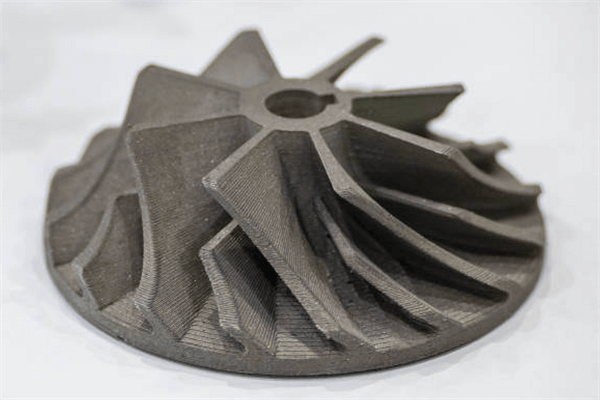
For DMLS components, Hot Isostatic Pressing (HIP) may reduce suitable isolated internal porosity, but HIP is not a universal corrosion-enhancement step. Internal pores that never contact the medium do not create the same corrosion path as open porosity or a surface-connected crack. HIP cannot automatically remove oxide films, large lack-of-fusion indications, trapped powder, contaminated surfaces, or crevice geometry. Its thermal effect on phases and grain structure must be included in the alloy-specific heat-treatment and corrosion-validation plan.
3. Surface Finishing and Densification
Surface finishing can reduce retention sites, expose sound metal, improve cleanability, and prepare a repeatable passive surface. The benefit depends on access, directionality, final roughness parameter, removed depth, edge condition, and the corrosion mechanism. A low average roughness does not compensate for a deep crevice, embedded abrasive, exposed pore, or chemically incompatible finish.
Electropolishing: Electropolishing removes a controlled surface layer by anodic dissolution and can level micropeaks on accessible wetted areas. It may improve cleanability and passive-film uniformity when bath chemistry, current distribution, temperature, time, fixturing, and rinsing are qualified for the alloy. The drawing should protect sharp edges, threads, sealing lands, small bores, and minimum wall thickness because removal is not uniform across all features.
Sandblasting or Bead Blasting: Blasting can remove loose scale or create a controlled texture, yet it can also embed media, smear contamination, open near-surface pores, or increase roughness. Media composition, prior use, pressure, distance, coverage, and post-cleaning should be specified. Blasting is a preparation step, not proof of passivation or corrosion resistance.
Mechanical Polishing: Mechanical polishing can remove machining marks and improve cleanability where tools can reach. Abrasive sequence, direction, transferred material, edge rounding, and final cleaning affect the result. Specify the required roughness parameter and measurement rule with the wetted-surface map; do not use a generic Ra value as a corrosion guarantee.
4. Chemical Passivation
Chemical treatment can remove free iron, residues, and selected surface oxides so the Inconel surface can repassivate, but the chemistry must suit the alloy and contamination. “Passivation” is not one universal nitric-acid recipe for every nickel alloy. The governing customer or process specification should define pretreatment, solution, concentration, temperature, time, rinsing, drying, and verification. The treatment:
Removes specified free iron or shop contamination after machining, blasting, polishing, support removal, or handling when the chosen chemistry is compatible with the alloy.
Helps produce a clean, reproducible surface for natural repassivation, while aggressive or poorly rinsed chemistry can attack crevices or leave residues.
Does not repair cracks, open porosity, wrong heat treatment, unfavorable crevice design, or an alloy that lacks resistance to the actual medium.
5. Advanced Coatings for Extreme Environments
Coatings can add wear, oxidation, erosion, or barrier protection in severe chemical or oil and gas exposure, but only when the coating system matches the medium, temperature, stress, geometry, and repair plan. A coating may shift rather than remove the failure mode. Pores, pinholes, edge thinning, poor adhesion, scratches, or underfilm attack can expose a small anode area and accelerate local damage.
PVD Coatings: PVD can deposit thin hard films for selected wear-corrosion duties. Line-of-sight coverage, substrate preparation, coating chemistry, thickness, pinhole control, edge condition, service temperature, and dimensional allowance must be qualified. CrN or TiAlN performance in one environment cannot be transferred to another fluid without compatible test evidence.
Thermal Spray Coatings: Thermal spray can provide a thicker sacrificial or barrier layer for erosion-corrosion, but coating porosity, oxide content, bond strength, sealing, finishing, and edge termination govern protection. The RFQ should state substrate preparation, coating system, minimum and maximum thickness, masked areas, adhesion test, porosity limit, and repair acceptance.
Engineering Guidelines for Optimal Corrosion Resistance
Establish a Robust Post-Process Sequence: Build the sequence from the failure mode. A DMLS route may include powder removal, thermal processing, HIP only when justified, machining, oxide removal, smoothing, cleaning, chemical treatment, coating, and final inspection. Confirm which step establishes the final surface and which later step could contaminate or damage it.
Prioritize Internal Integrity for AM Parts: Separate internal structural integrity from wetted-surface corrosion. Use process records, representative sections, CT or another suitable method for internal risks, and surface examination for open defects. State each method’s detection limit; neither HIP nor one NDT result proves every internal passage is corrosion-ready.
Specify Surface Finish Requirements: Provide a surface map, roughness parameter and measurement method, protected dimensions, cleaning limit, coating or chemical-treatment specification, and permitted material removal. Inspect after the last operation that can alter the functional surface. Include inaccessible passages and crevice interfaces rather than checking only easy external faces.
Validate with Testing: Select a corrosion test that represents the alloy, failure mode, final surface, medium, temperature, and acceptance decision. ASTM G28 addresses intergranular-corrosion susceptibility for applicable nickel-rich chromium-bearing alloys; ASTM G48 addresses specified pitting or crevice tests, and ASTM G61 supports cyclic polarization evaluation. None is a universal service-life test. The RFQ should define specimen condition, solution, temperature, duration or scan method, replicates, measured result, and acceptance limit.