Is silicon carbide ceramic 3D printing mature, and what challenges remain?
Silicon carbide (SiC) ceramic 3D printing is mature enough for selected near-net parts and qualified production routes, but it is not a material-agnostic replacement for conventionally formed SiC. Binder-jetted preforms followed by reaction bonding, slurry photopolymerization followed by sintering, and converted precursor routes produce different phase compositions and properties. The remaining challenges are complete densification, residual silicon or other secondary phases, debinding defects, non-uniform shrinkage, internal inspection, and repeatable finishing. Critical bores or sealing faces may still require ceramic CNC machining and CNC grinding, after densification. Buyers should specify the SiC route, phase limits, density or porosity method, service environment, critical dimensions, and validation tests rather than ordering only “3D-printed SiC.”
Current state of silicon carbide 3D printing
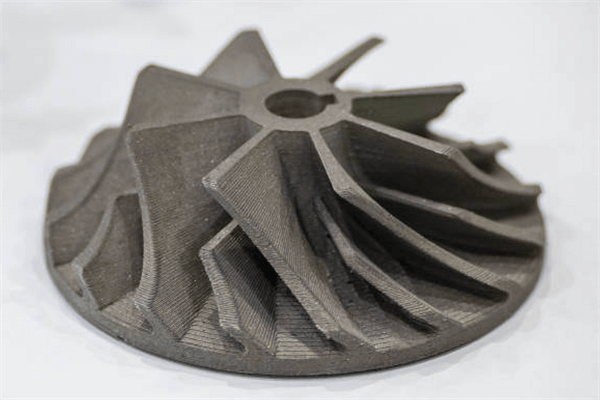
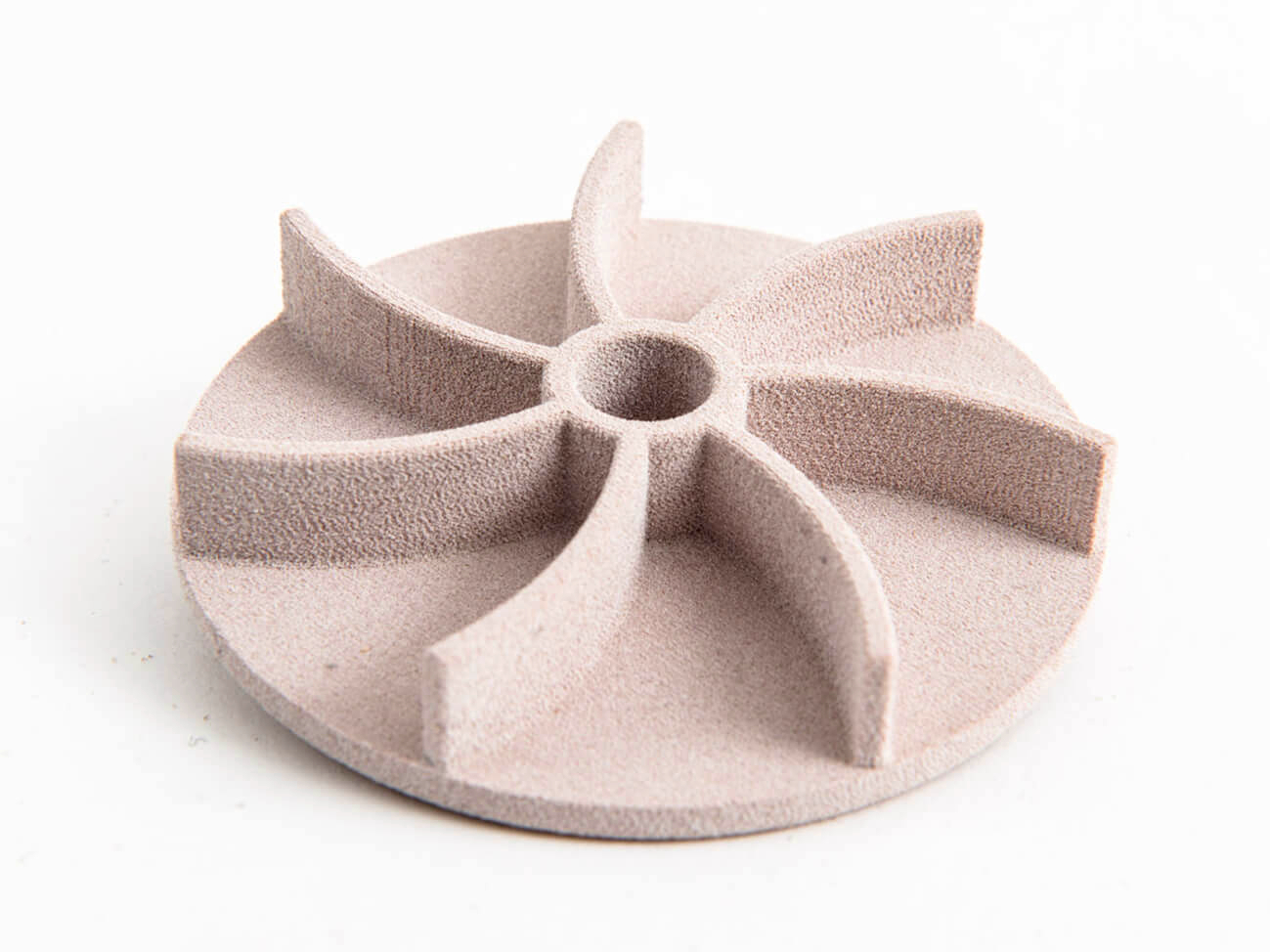
Commercial maturity is strongest where printing makes a porous SiC-containing preform and a qualified thermal process establishes the final ceramic. Vat routes related to SLA 3D printing or DLP 3D printing shape a ceramic-filled green body that must be cleaned, debound, and densified. Powder-bed SiC preforms are also produced by binder jetting. That process must not be confused with SLS 3D printing, which uses a laser to fuse powder. A published Argonne study used binder jetting and liquid-silicon infiltration to join and densify complex channeled SiC preforms, demonstrating a viable route without proving universal material equivalence.
The material name must follow the densification route. Reaction-bonded SiC uses a porous SiC/carbon preform and liquid silicon; the reaction forms new SiC, while residual free silicon and local phase distribution can remain buyer-relevant. Sintered SiC relies on solid-state or liquid-phase sintering with its own additives, shrinkage, furnace conditions, and grain-boundary chemistry. Polymer-derived or converted routes add another set of conversion yield and residual-porosity limits. Printed silicon carbide components may therefore share geometry but not thermal conductivity, oxidation response, strength, or chemical resistance. Conventional CNC machining services can set interfaces after densification, but machining does not convert one SiC material system into another.
Key technical challenges
Densification and phase control remain the main barriers to declaring SiC additive manufacturing fully mature. Low green density can leave connected pores; blocked binder-removal paths can cause internal cracking; incomplete infiltration can leave porous zones; excess infiltrant can increase free-silicon content. These conditions affect gas tightness, strength, thermal transport, oxidation behavior, and dimensional stability differently. ISO 18754:2020 defines density and apparent-porosity methods for fine ceramics, but the drawing or material specification must set the acceptance value. An RFQ should identify reaction-bonded, sintered, or converted SiC, plus allowable porosity and secondary-phase limits.
Internal defects and statistical strength require separate validation. A polished exterior can hide a crack, unfilled core, density gradient, or weak layer boundary. Computed tomography may locate suitable voids or cracks when part thickness, material attenuation, and scan resolution allow it, but CT does not replace every material test. ISO 14704:2016 defines room-temperature flexural-strength testing for monolithic fine ceramics; it does not assign a universal strength target. Parts for aerospace and aviation or power generation need application-specific sampling, witness specimens, thermal exposure, leak or flow checks, and inspection coverage tied to the actual failure risk.
Dimensional repeatability is limited by geometry-dependent debinding, infiltration, and sintering. A thick manifold around thin channels can densify differently, moving a sealing face even when average shrinkage matches the model. One CAD scale factor cannot correct local phase formation or differential thermal paths. Reserve stock on accessible datums, bores, and sealing lands, then use CNC machining prototyping only after the proposed densification cycle. Measure datum shift, channel clearance, flatness, bore position, and surface condition on the first article before releasing the same geometry and furnace route.
Manufacturing and economic limitations
SiC additive manufacturing is usually justified by inaccessible internal geometry, part consolidation, lightweight structures, or avoided forming tooling rather than by a universal cost advantage. Abrasive ceramic feedstocks wear pumps, recoaters, nozzles, vats, and cleanup equipment. Yield can fall when trapped powder, unsupported spans, uneven carbon distribution, difficult infiltration paths, or thick-to-thin transitions survive printing but fail later. High-resolution 3D printing services are only one cost step; debinding, furnace time, infiltration or sintering, inspection, grinding, and rejected parts belong in the route comparison. Buyers should compare total accepted-part cost at the required quantity.
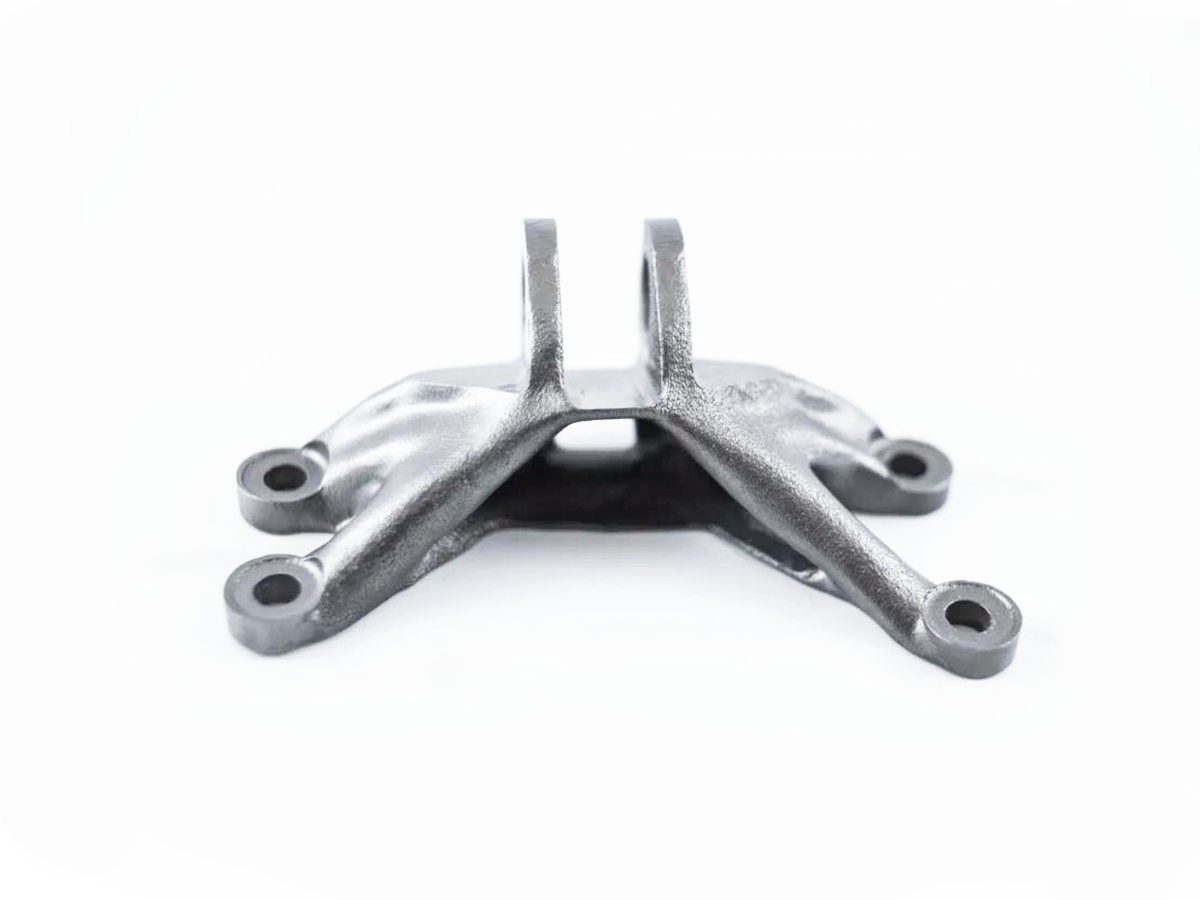
Post-processing must be designed before the first build. Diamond grinding can establish a sealing land or bore, but tool access, fixturing, stock, coolant, edge support, and subsurface damage all affect the result. Reaction-bonded SiC also needs a service review because free silicon can change high-temperature or chemically exposed behavior relative to a specified sintered SiC grade. For a compact heat exchanger, internal channels may justify printing while flat connections are ground afterward. The release plan should still verify channel clearance, leak performance, phase composition, density, finished datums, and the material response at the specified temperature and atmosphere.
Silicon carbide ceramic 3D printing is therefore mature by route and application, not by the SiC name alone. It is a defensible choice when a supplier can show comparable geometry through printing, debinding, densification, finishing, and validation under controlled conditions. The RFQ should state the material route, powder or slurry system, target phase composition, free-silicon limit where relevant, density or porosity criterion, critical datums, roughness, service temperature and atmosphere, inspection method, sample plan, and reject criteria. Pairing additive geometry with SiC CNC machining and grinding is appropriate only when the inaccessible printed regions and accessible finished interfaces are both covered by a measurable acceptance plan.