From 42CrMo Steel to a Nitrided Crankshaft: A Neway Delivery Story
From 42CrMo Steel to a Nitrided Crankshaft: A Neway Delivery Story
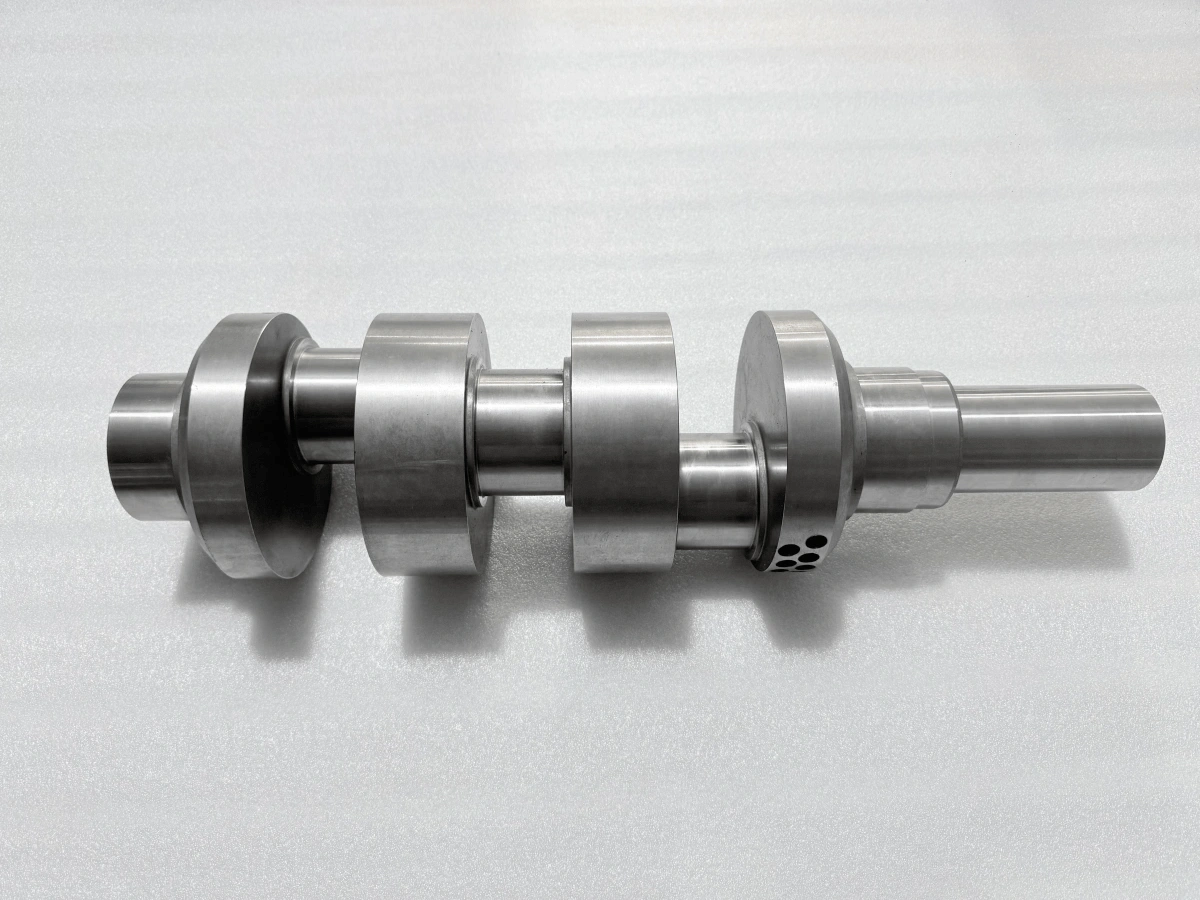
Neway successfully delivered this custom nitrided crankshaft in 42CrMo steel for a power-generation application. The finished part brought a practical material question into focus: how should the starting steel condition support both machining and the required journal surface? Our engineering review connected the core requirements with staged machining, nitriding, and the limits on any subsequent finishing. That connection is central to 42CrMo crankshaft manufacturing, where an uneven section and offset journals make the material's response relevant well beyond the initial grade selection.
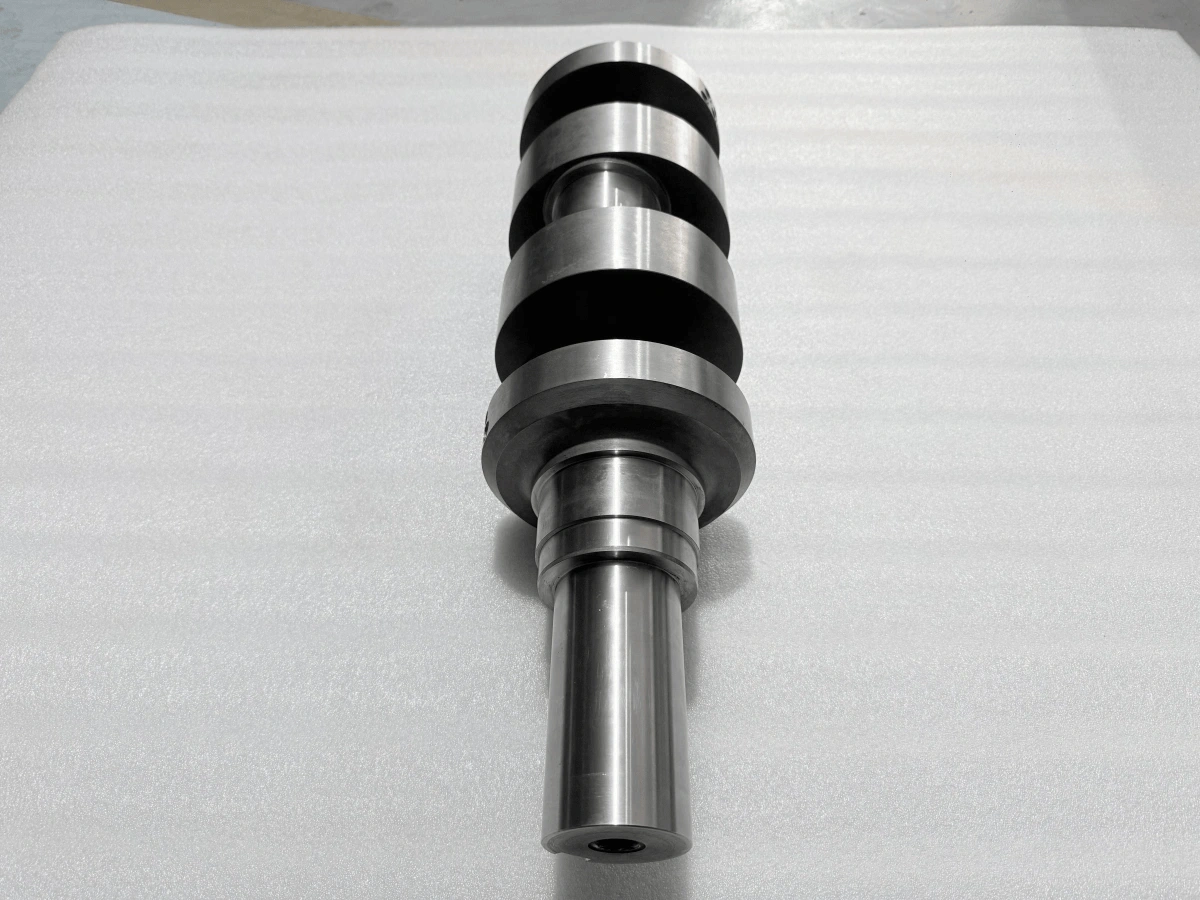
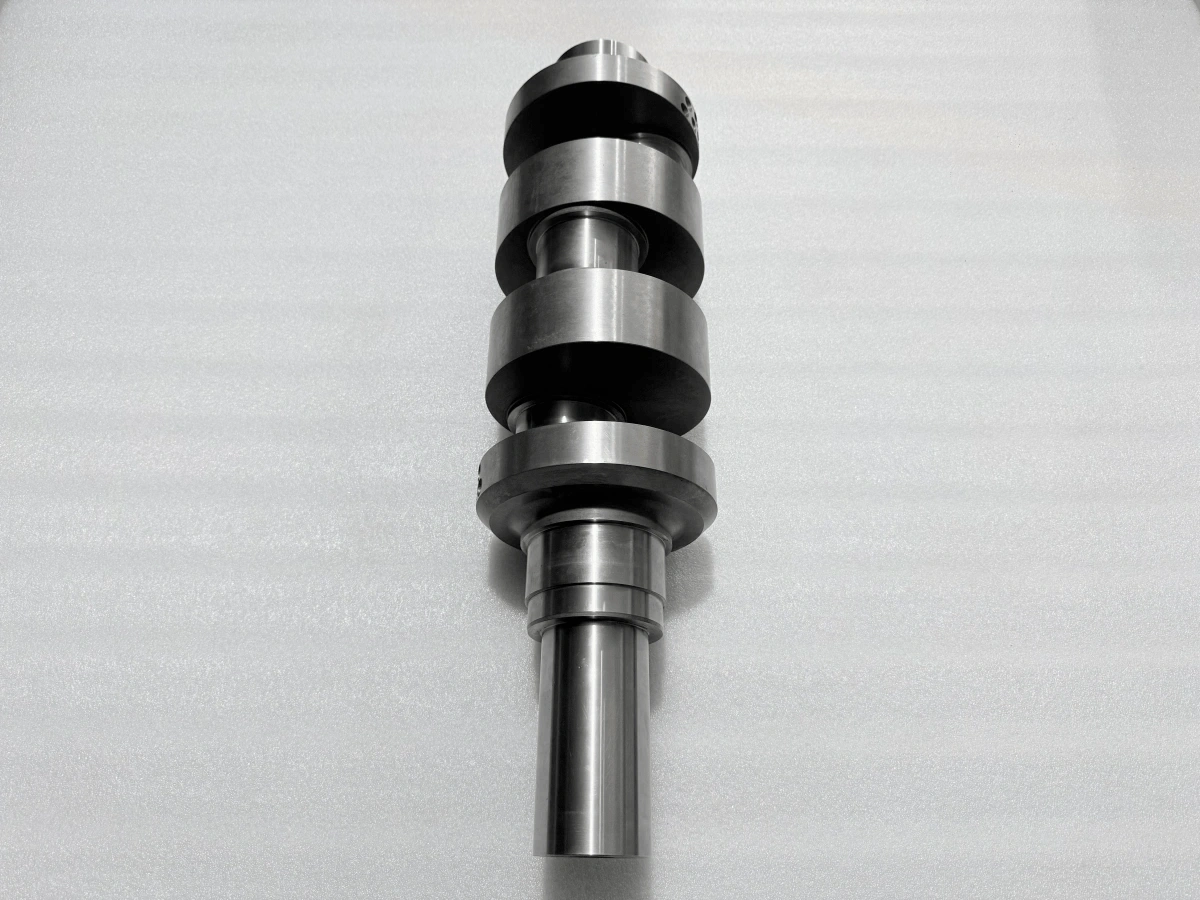
This material-led view is useful for buyers because a crankshaft does several jobs at once. Its body carries cyclic mechanical loading, its webs and journals create an uneven section, and selected surfaces must resist contact and wear. A workable specification must therefore connect the condition of the steel to machining behavior and the condition required after nitriding. The grade choice therefore needs a defined starting condition and a manufacturing route suited to the part.
Matching 42CrMo to the Crankshaft Duty
42CrMo is a chromium-molybdenum alloy structural steel. For a crankshaft, its value comes from the balance that can be developed between strength, toughness, hardenability, and machinability when the material and thermal condition are properly specified. The word “balance” is important. Maximum hardness is not a complete target for a core that also has to tolerate local stress concentration and retain useful toughness. Hardenability should not be confused with hardness: it concerns the ability to develop the intended structure through a section under a defined thermal route, while the achieved property balance still depends on that route and the section being treated. Likewise, a machinable starting condition is only useful if it remains compatible with the required core properties and subsequent surface treatment.
The response of the steel also depends on product form, section size, chemistry, prior processing, and heat treatment. A property measured from one sample or condition cannot be assumed to describe every region of an offset crankshaft. Journal sections, webs, transitions, and shaft ends do not present the same mass or geometry to machining and thermal processing. Material review should consider the actual blank and drawing rather than treating the catalogue description of the grade as the finished engineering answer.
42CrMo is often compared with AISI 4140 or 42CrMo4 because all are chromium-molybdenum steels. They are not automatically interchangeable; the controlling standard, product form, delivery condition, mechanical requirements, and customer approval still govern.
Giving the Core and Surface Different Jobs
Strength, toughness, and wear resistance describe different needs. Core strength helps the crankshaft resist the stresses applied through its main journals, offset journals, and webs. Toughness helps the material accommodate local energy and stress concentration without behaving like an excessively brittle body. Wear resistance is concentrated at working surfaces where contact and relative motion occur. Asking one hardness value to represent all three needs would hide the actual design trade-offs.
The starting core condition should therefore be chosen for the component, not simply pushed to the highest achievable hardness. An overly hard condition may narrow the machining window or reduce the toughness available at transitions. A softer condition may improve cutting behavior but still require further conditioning before the final surface process. Nitriding modifies the surface region; establishing the core condition remains a separate step because the underlying material provides the structural base. The correct route depends on the drawing, material standard, section response, and required verification. For this type of part, material condition, preceding thermal history, and nitriding instructions need to be reviewed together.
The nitrided surface forms within the steel through diffusion, unlike a separate plated coating. Nitrogen diffuses into the surface region and can produce a thin compound layer with a deeper diffusion zone beneath it. The diffusion zone develops a changing profile into the core rather than a sharp coating boundary. The compound-layer condition, surface hardness, and effective nitriding depth therefore describe related but different features. A depth assessment follows the specified hardness profile, while surface hardness characterizes the outer region at the test location. They should be specified and measured separately, because a surface reading alone does not explain how far the modified region extends into the material.
Letting the Starting Condition Guide Machining
The blank enters machining with a history. Its product form, thermal condition, section variation, and residual-stress state influence cutting load, tool response, surface integrity, and dimensional movement as material is removed. The asymmetric shape makes this especially relevant for a crankshaft: each newly exposed journal or web changes local stiffness and the way the part responds to support. Cutting parameters also influence the roughness and residual-stress state left at the surface. The next operation therefore inherits a surface history as well as a dimensional allowance. A machining plan should manage that changing structure and surface history rather than assume the blank will behave like a uniform shaft.
Staged stock removal, controlled support, and intermediate rechecking are practical ways to manage risk. They do not eliminate movement, but they give the engineering team opportunities to observe it before the finishing allowance is consumed. Clamping also matters. A flexible section can be forced into a convenient position during a setup and spring away after release, so support should stabilize the part without turning fixture force into apparent accuracy.
There is no universal speed, feed, depth of cut, or allowance that belongs to every 42CrMo crankshaft. The usable window depends on the actual material condition, machine rigidity, tool system, interrupted-cut pattern, and surface requirement. In CNC machining, we use those inputs to plan the relationship between roughing, reference preservation, semi-finishing, and the stock reserved for later operations. The material route and machining route must support each other.
Planning Nitriding With Final Journal Finishing
Nitriding response begins with the condition of the core and the prepared surface. Prior microstructure affects nitrogen diffusion and the structure developed in the treated zone. Surface cleanliness, machining condition, masking boundaries, and support orientation also need definition before the part enters treatment. Preparation protects the intended boundary between working surfaces and features that require a different condition. A masking map should follow the same drawing revision used for machining, especially around shoulders, transitions, oil features, and centers. Because nitriding modifies the steel by diffusion, the result cannot be managed as if an independent coating could simply be reapplied after unrestricted material removal.
Any final journal grinding must be planned before nitriding. Grinding consumes material from the region in which hardness and depth are being controlled. The pre-treatment journal condition, nitriding target, permitted removal, final surface requirement, and verification method therefore form one engineering chain. Surface finish and retained nitriding depth are not interchangeable requirements: a smooth journal is not enough if the specified treated region has been removed, and a measured depth does not replace control of final journal geometry.
Our process review for this project addressed the interaction between the nitrided layer and any later journal finishing. The agreed direction retained nitriding and defined the conditions under which subsequent grinding could be considered. Those conditions linked the proposed finishing allowance to the treated layer and the final journal requirements.
Applying the Material Strategy in a Delivered Project
The project MTC identified 42CrMo and carried the traceability fields used for the material review. From that starting point, the proposed manufacturing route linked material release with datum-based machining, nitriding, conditional journal finishing, and separate inspection activities. Dimensional, surface-treatment, surface-examination, and balancing records addressed different parts of the project requirement. That separation kept the material question connected to the manufacturing plan without asking one document or one measurement to represent the entire crankshaft.
The delivered component brought those decisions together in a real power generation supply project. The transferable lesson is to specify the grade as part of a complete material-and-process route. The starting condition, core requirements, machining behavior, surface treatment, permitted finishing, and verification plan all need to fit the actual application. That is the engineering basis behind this 42CrMo crankshaft manufacturing example.
Reviewing a 42CrMo Crankshaft Project With Neway
For a new CNC machining project, send Neway the current drawing, controlling material standard, blank form, required core condition, nitriding specification, treated and masked areas, final journal requirements, permitted post-treatment finishing, and expected inspection documents. We can review how those inputs interact, identify decisions that need customer approval, and propose a manufacturing route around the actual geometry. If 42CrMo is being considered in place of another grade, include the governing chemical, mechanical, condition, and certification requirements so the comparison is made against the project specification rather than the similarity of the names.
FAQ