EDM Deep Hole Drilling Services – High Accuracy Custom Parts
EDM deep hole drilling services are suitable for high-accuracy custom parts when the hole is very small, deep, hard to reach, or located in a conductive material that would deflect, burr, crack, or overheat under mechanical drilling. The process is strongest when the RFQ defines hole diameter, depth, L:D ratio, datum references, entrance and exit conditions, flushing access, recast-layer limits, surface finish, and inspection method.
Neway positions EDM machining services as a process route within broader CNC machining capabilities. That matters because EDM deep holes often depend on milling, turning, datum preparation, heat treatment planning, deburring, cleaning, and inspection. Buyers should choose EDM drilling for conductive materials and difficult hole geometry, not as a universal replacement for gun drilling or BTA drilling. Non-conductive materials, poorly defined hole bottoms, heavy recast-layer limits, and inaccessible flushing paths need early review before a quote is treated as final.
What Is EDM Deep Hole Drilling?
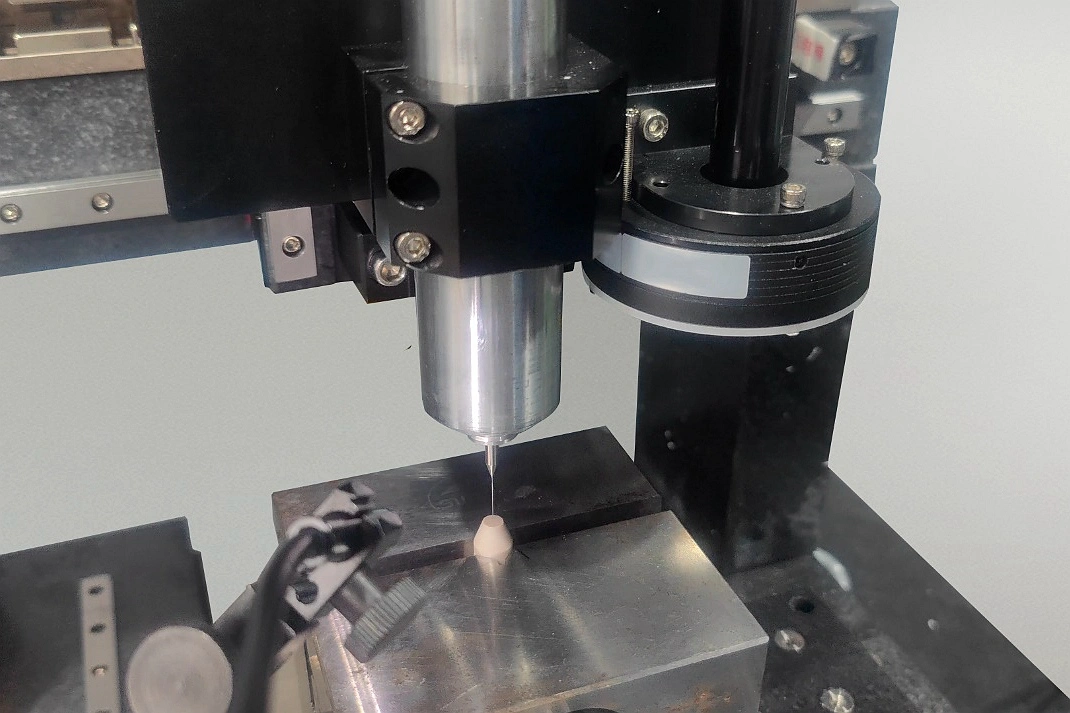
EDM deep hole drilling is a non-contact machining process that removes electrically conductive material with controlled sparks from a tubular electrode. It is used when a narrow hole, high aspect ratio, hard material, or fragile wall makes conventional cutting risky. The buyer action is simple: define the hole function first, then let the supplier evaluate electrode size, spark gap, flushing, entry support, and final inspection.
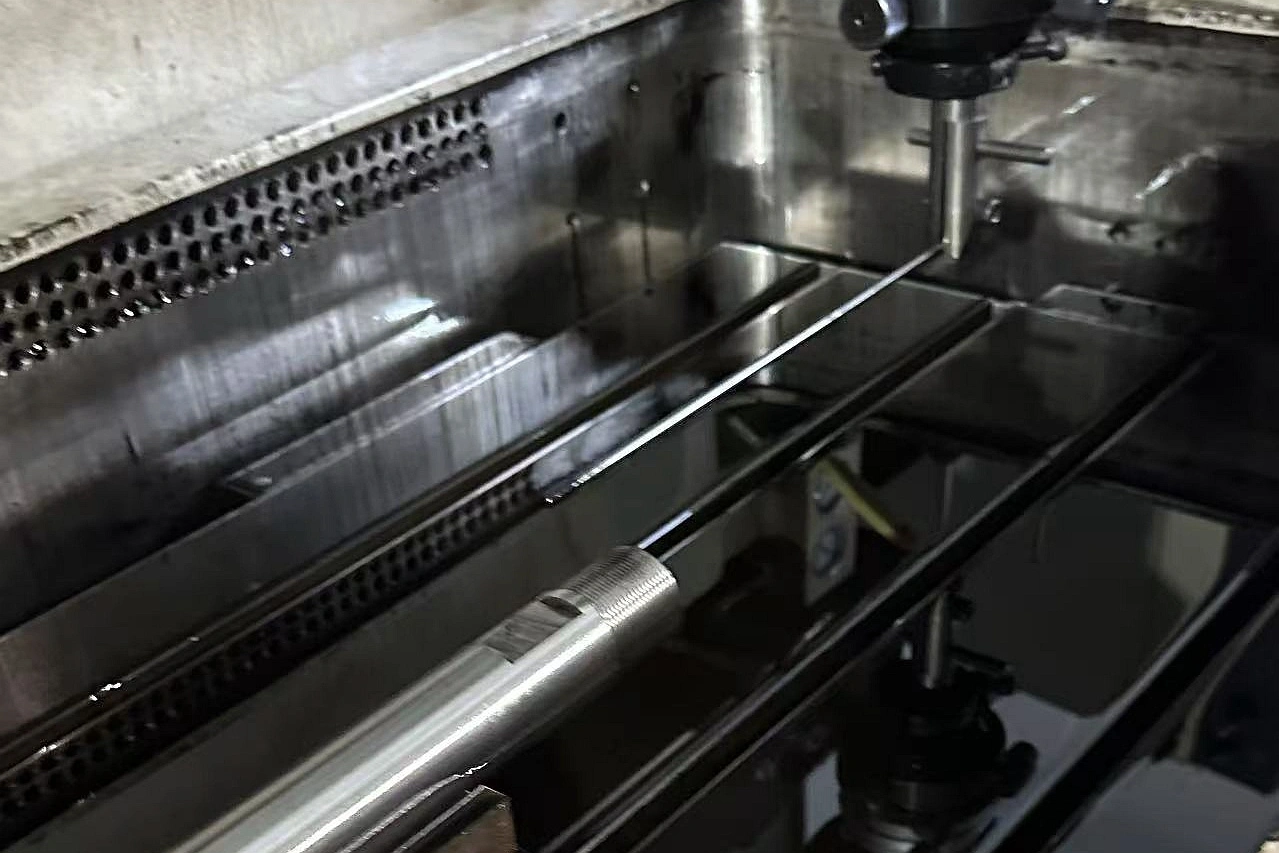
Unlike twist drilling, gun drilling, or boring, EDM drilling does not rely on a cutting edge pushing through the workpiece. A dielectric fluid flows through or around the electrode, cools the discharge zone, and removes eroded particles. Hole accuracy depends on stable sparking, electrode wear control, flushing efficiency, entrance guidance, material conductivity, and how the part is held. EDM can reduce cutting-force deformation, but it can still create taper, recast layer, microcracks, debris traps, and heat-affected edge conditions if the process is not controlled.
EDM deep hole drilling is especially relevant for conductive superalloys, titanium, hardened steels, and conductive ceramics. The material name alone is not enough. The RFQ should state grade, heat treatment, coating status, conductivity condition, stock form, and whether the hole will be accepted before or after any later process.
Advantages of EDM for Deep Hole Applications
EDM is useful for deep hole applications when mechanical force, tool deflection, burr formation, or tool wear becomes the controlling risk. The advantage is not just small diameter capability. The real value is controlled material removal in conductive hard materials, narrow passages, delicate walls, and features where the hole must remain aligned to functional datums.
1. Ultra-High Accuracy and Repeatability
EDM deep hole accuracy should be treated as a project-specific tolerance window, not a fixed catalog number. Diameter, depth, electrode size, spark gap, flushing path, material condition, and measurement access all change the result. For buyer review, separate diameter tolerance from positional tolerance, straightness, roundness, taper, surface texture, and burr limits. ISO 1101 can define geometric tolerances and datums, while the drawing still needs a practical inspection method for the actual hole.
2. Non-Contact Machining
Non-contact machining reduces cutting loads on thin ribs, delicate bosses, hardened surfaces, and small-diameter features. That does not mean the part is risk-free. Fixturing, flushing pressure, thermal loading, and electrode runout can still affect the entry, sidewall, and exit edge. Thin walls may also move after unclamping if earlier roughing left residual stress. The quote should identify which datum surfaces are prepared before EDM and which features are checked after the hole is complete.
3. Exceptional Depth-to-Diameter Ratios
High L:D holes are possible with EDM when electrode stiffness, guidance, flushing, and debris removal remain stable. A very high L:D claim is only useful as a screening reference because hole diameter, material, electrode length, and inspection access control feasibility. Very small holes may need shorter validated depths, pilot features, or sectioned samples. Buyers should ask whether the quoted route controls taper and breakout burrs, not only whether the nominal depth can be reached.
4. Hard Material Capability
EDM can machine conductive hard materials such as Inconel, conductive carbide, hardened die steels, and precipitation-hardened alloys. The material hardness does not remove all risk. Recast-layer limits, microcrack sensitivity, post-EDM polishing, and heat-treatment sequence can decide whether EDM drilling is acceptable. For fatigue-critical or fluid-control parts, require a drawing note or inspection plan that defines the allowed edge and sidewall condition.
5. Minimal Burr and Superior Surface Finish
EDM can reduce mechanical burrs because no drill lip exits the hole, but “burr-free” should not be used as an unlimited guarantee. Exit edges, intersecting passages, and thin webs can still need inspection and cleaning. Surface finish depends on spark energy, electrode wear, flushing, finish pass strategy, and whether recast material must be removed. ISO 21920-1 surface texture indications help only when the measurement method and acceptance location are also clear.
The practical advantage of EDM deep hole drilling is decision control. Use EDM when the hole function justifies slower processing, special electrodes, dielectric flushing, and stronger inspection. Use mechanical deep drilling when the material, diameter, access, burr risk, and production quantity make cutting more efficient. A good RFQ asks the supplier to compare those routes before tooling and material are committed.
EDM Deep Hole Drilling vs. Conventional Deep Drilling Methods
EDM deep hole drilling and conventional deep drilling solve different risks. EDM favors conductive hard materials, miniature holes, low cutting force, and complex access. Gun drilling or BTA drilling usually wins when the hole is larger, straighter, open to coolant, and needed at higher production speed. The table below should be used as a route-selection checklist, not as a guaranteed capability chart.
Feature | EDM Deep Hole Drilling | Conventional Deep Drilling (e.g., Gun Drilling) |
|---|---|---|
Contact Mechanism | Non-contact spark erosion; best when cutting force would move a wall, chip an edge, or overload a small tool. | Physical cutting with tool guidance; best when the entry, coolant path, and chip evacuation are stable. |
Machinable Materials | Electrically conductive metals and conductive ceramics; conductivity, heat treatment, and recast limits must be checked. | Metals that can form controllable chips; hardness, toughness, and thermal behavior affect drill wear and drift. |
Hole Depth-to-Diameter Ratio | High aspect ratios are possible when electrode support, flushing, and inspection access are validated. | Strong for many long through holes, but tool deflection and chip packing rise with L:D ratio. |
Surface Finish Quality | Controlled by spark parameters, finish passes, electrode wear, and recast-layer acceptance. | Controlled by cutting edge condition, feed, coolant, guide pads, and later honing or reaming if required. |
Burr Formation | Lower mechanical burr risk; exit edges and intersecting passages still need visual or borescope review. | Burrs and chip smearing can occur at breakout, cross holes, or ductile material edges. |
Tool Wear | Electrode wear changes hole size and taper, so compensation and process monitoring matter. | Drill wear changes diameter, straightness, burr size, surface marks, and cutting temperature. |
Heat-Affected Zone | Localized thermal layer may require limits, polishing, or validation on fatigue-sensitive parts. | Frictional heat can affect chips, work hardening, surface tearing, and coolant strategy. |
Ideal Use Cases | Cooling holes, micro-fluid passages, hard alloy features, fragile walls, and conductive hard materials. | Hydraulic bores, shafts, manifolds, engine blocks, and higher-volume holes with good tool access. |
The route decision should follow the feature function. If the hole controls flow, pressure, cooling, dosage, or alignment, define the acceptance method before choosing EDM or mechanical drilling. If the part only needs a clearance passage, conventional drilling may be faster and less expensive. If EDM is selected, ask how the supplier will verify taper, debris, recast condition, and edge quality.
Material Compatibility in EDM Deep Hole Drilling
Electrically conductive alloys, conductive tool materials, and some conductive ceramics can be suitable for EDM deep hole drilling when the feature geometry and surface condition match the machining plan. The main limitation is conductivity. Material hardness alone does not make a part suitable or unsuitable. Buyers should provide grade, heat treatment, hardness range, coating status, and any standard-controlled stock condition.
Common Compatible Materials
Superalloys
Nickel-based alloys such as Inconel, Hastelloy, and Rene alloys are common EDM candidates because mechanical drilling can suffer from tool wear, heat, and poor chip control. EDM can help with small cooling holes or deep passages, but recast-layer limits and fatigue requirements must be defined. Learn more about superalloy CNC machining capabilities.
Titanium Alloys
Titanium alloys can benefit from EDM when low thermal conductivity, galling risk, and small hole size make cutting unstable. The buyer should confirm alloy grade, heat treatment, medical or aerospace cleanliness needs, and whether edge discoloration or recast material is allowed. See titanium machining services.
Hardened Tool Steels
Hardened H13, D2, and similar die steels may be poor candidates for conventional small-hole drilling after heat treatment. EDM can place vent holes, cooling passages, or starter holes without heavy cutting loads. Check whether the steel must be drilled before hardening, after hardening, or after final grinding. This aligns with carbon steel CNC machining services.
Stainless Steels
Stainless steels such as 304 and 316L are conductive, corrosion-resistant, and common in fluid handling or medical components. EDM may be selected for micro-holes, deep fluid channels, or delicate features. Passivation, electropolishing, burr limits, and cleaning validation should be considered after drilling. Explore stainless steel machining services.
Conductive Ceramics and Exotic Alloys
Conductive ceramics, metal matrix composites, copper alloys, and unusual high-temperature materials need a stronger review before EDM drilling. Conductivity can vary by composition and processing route. Brittle materials also need entry support and edge inspection. If the application controls heat transfer, electrical function, or fluid flow, the RFQ should include the operating environment.
Material compatibility should be treated as a quick selection guide. Aluminum and copper alloys are often easier to cut mechanically, but EDM may still help with small holes, fragile edges, or hardened inserts. Superalloys and titanium often justify EDM when tool wear or burr control dominates. Conductive ceramics and composites need proof of conductivity, fixture support, and inspection access before production approval.
Applications of EDM Deep Hole Drilled Parts by Industry
EDM deep hole drilling is useful in industries where a small internal feature controls flow, temperature, alignment, pressure, or sensor performance. The industry name does not prove EDM is required. The feature function, material, hole size, cleanliness requirement, and inspection method decide the route.
Aerospace
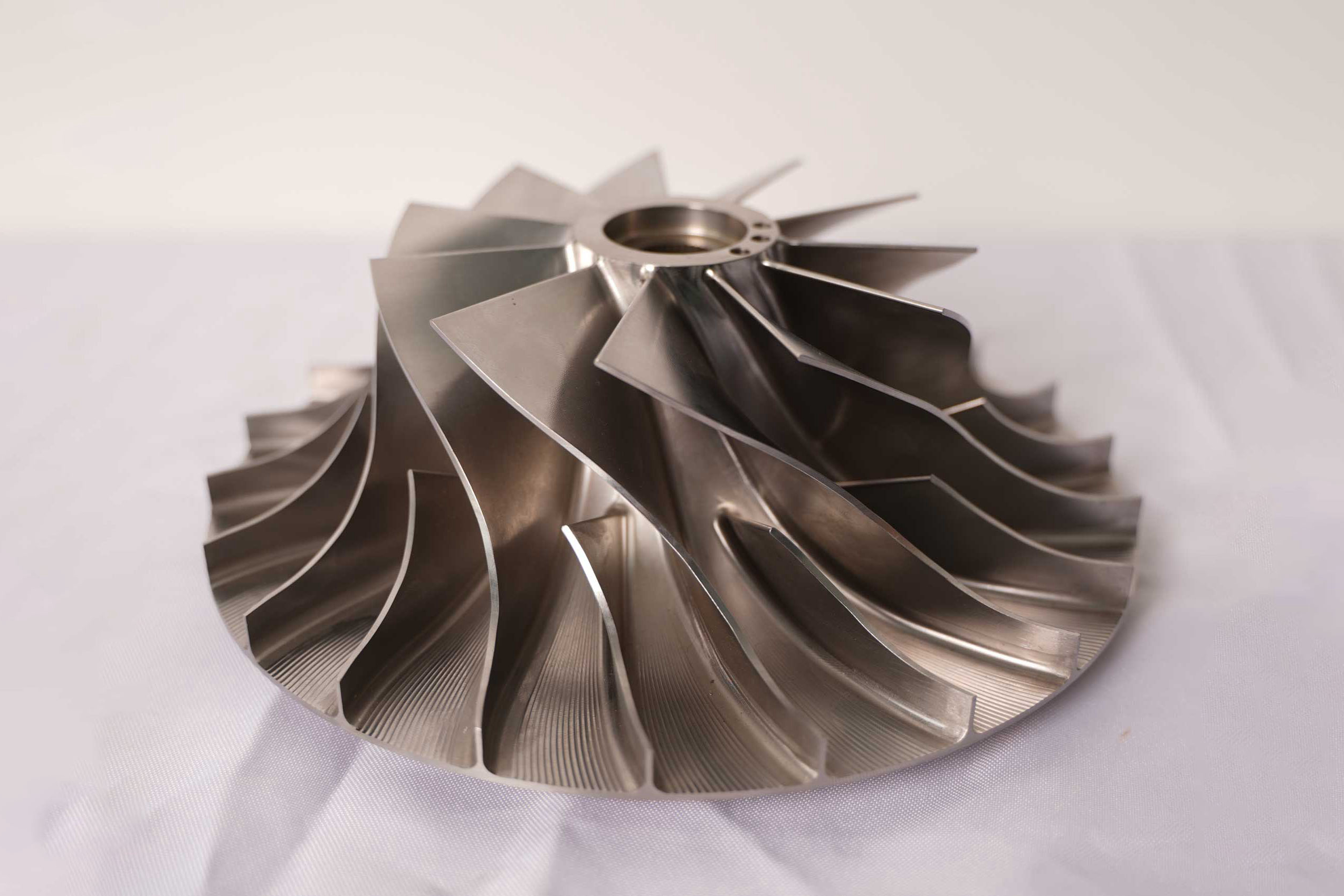
Aerospace parts may use deep micro-holes in conductive superalloys for cooling, pressure control, or weight reduction. EDM can reduce mechanical tool deflection in hard heat-resistant alloys. The risk is that recast layer, edge condition, or internal debris may affect fatigue or flow. The drawing should define whether borescope inspection, sectioning, flow testing, or first article reporting is required.
Medical Devices
Medical components may need small passages in titanium or stainless steel for irrigation, suction, guidance, or fluid delivery. EDM can create small conductive-material holes with low mechanical force, but cleaning and edge condition become serious buyer concerns. Procurement should identify patient-contact surfaces, cleaning rules, passivation, surface finish, and whether the hole is functional or only used during assembly.
Automotive
Automotive and mobility parts may use EDM deep drilling for hardened valve features, injector-related passages, oil channels, and small hydraulic controls. Mechanical drilling may still be preferred when the geometry is open and production volume is high. EDM becomes more attractive when the hole is small, the material is hard, or burrs at a cross passage would disturb flow.
Power Generation
Power generation components may use deep holes for coolant pathways, turbine hardware, heat exchanger features, or high-temperature fluid passages. Nickel alloys and stainless steels can be difficult to drill mechanically after heat treatment. EDM helps when low cutting force and small hole size matter, but recast limits, thermal exposure, corrosion, and internal cleanliness must be included in the acceptance plan.
Industrial Automation
Industrial automation parts may need EDM drilling for sensor bodies, fluid handling blocks, nozzles, precision pins, and small internal control passages. The risk is often not the hole diameter alone. Datum relationship, intersecting features, burrs, and assembly cleanliness decide whether the part works after machining.
A practical industry example is a hard alloy nozzle plate with several small cooling holes near a thin sealing edge. Mechanical drilling may create burrs or wander as the tool approaches the thin wall. EDM can reduce cutting force, but the buyer still needs an inspection plan for hole location, taper, recast condition, and cleaning. That decision is more useful than a broad claim that EDM is always better.
Key Design Guidelines for EDM Deep Hole Drilling
Good EDM deep hole design starts by giving the electrode a stable path and giving the inspection team a measurable acceptance target. The drawing should define the hole function, datum references, entrance and exit geometry, surface texture, recast-layer rule, and whether the hole is checked before or after heat treatment, coating, or cleaning.
1. Hole Diameter and Depth Ratio
Use a very high L:D ratio only as an early screening category. Confirm feasibility against electrode stiffness, material conductivity, flushing distance, and measurement access.
For submillimeter holes, ask whether the supplier will validate depth, taper, debris removal, and breakout quality on the real material condition.
For larger small holes, compare EDM with gun drilling, BTA drilling, boring, or a drilled-and-finished route before approving the process plan.
2. Minimum Feature Size
A submillimeter hole can be discussed as a screening-scale micro-hole, but feasibility depends on electrode material, length, runout, flushing, and allowable taper.
Features smaller than the stable spark and flushing window can show blocked passages, oversize holes, edge damage, or inconsistent flow.
3. Entry and Exit Clearance
Provide a clear, straight-line path for the electrode whenever possible. A flat entry face improves guidance and reduces entrance bellmouth risk.
Angled entries, curved surfaces, blind bottoms, and hidden exits need a fixture and inspection review before the supplier confirms the route.
4. Material Considerations
Choose materials with stable conductivity and known condition. Inclusions, coatings, hard layers, and mixed-material assemblies can destabilize sparking.
Use material machining services as the route review point for alloy, heat treatment, coating, and post-EDM finishing decisions.
5. Tolerances and Surface Finish
Define a drawing-controlled tolerance window for diameter, position, straightness, taper, roundness, and edge condition instead of relying on a single process number.
Define specified surface finish with location, direction, measurement method, and whether recast material or polishing is allowed after EDM.
6. Flushing Strategy
Plan flushing before quoting deep blind holes or intersecting passages. Poor flushing can trap debris, widen the entrance, change taper, or leave particles that fail cleaning.
7. Avoid Blind Bottoms When Possible
Through-holes are easier to flush, inspect, and deburr. Blind bottoms can be machined, but bottom form, depth tolerance, electrode wear, and debris removal need explicit acceptance rules.
These design rules help reduce rework during prototypes and low-volume manufacturing. A buyer can also use them as an RFQ checklist. Send CAD, drawing, material standard, hole callout, L:D ratio, datum scheme, surface finish, cleaning requirement, quantity, and inspection report needs in the first request.
Why Choose Neway for Custom EDM Deep Hole Drilled Components
Choose Neway for custom EDM deep hole drilled components when the proposal connects EDM drilling with material review, CNC preparation, secondary finishing, cleaning, and measurable inspection evidence. The strongest buying signal is not a broad capability statement. It is a quote that explains the process route, the risks near the process limit, and the information still needed before production approval.
1. Dedicated EDM Drilling Workstations
Dedicated EDM drilling resources should be evaluated by electrode range, work envelope, positioning method, dielectric control, flushing options, and fixture strategy. Holes with submillimeter diameters or high L:D ratios need route validation on the actual material, not only a nominal equipment claim. Ask whether the quote includes pilot features, trial coupons, first article inspection, or special cleaning.
2. Material Expertise
From superalloys and titanium to stainless steel and copper alloys, the material review should define conductivity, heat treatment, burr sensitivity, corrosion exposure, and post-EDM finishing. This prevents the process route from being selected only by material name. It also helps decide whether EDM, drilling, boring, reaming, or polishing should finish the feature.
3. Tight Tolerance Manufacturing
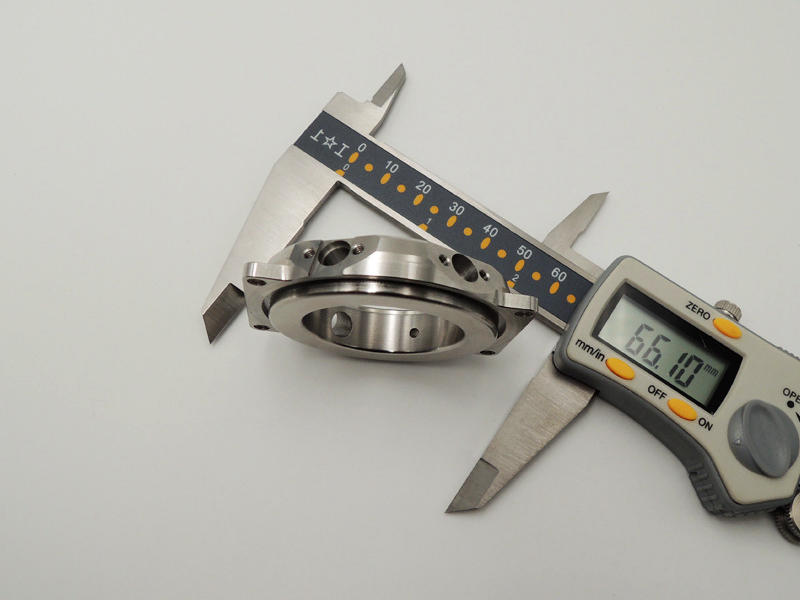
Tight tolerance manufacturing requires a drawing-controlled tolerance and a matching measurement method. Internal EDM holes may need pin gauges, air gauges, borescopes, flow checks, sectioned samples, CMM access to related datums, or 3D scanning of accessible geometry. Do not treat equipment resolution as finished-part capability. Ask which feature will be measured directly and which feature will be controlled by process evidence.
4. One-Stop Custom Part Production
EDM drilling works best as part of a controlled manufacturing sequence. A one-stop CNC machining service can connect milling, turning, EDM, deburring, surface treatment, cleaning, inspection, and mass production planning. The buyer should ask where datums are created, where heat treatment occurs, where allowance is left, and where the final EDM hole is accepted.
5. Industry Case Experience
Industry experience should be judged by risk recognition, not by unverified project claims. For aerospace parts, ask about recast and fatigue-sensitive edges. For medical parts, ask about cleaning and passivation. For automation parts, ask about fit, flow, and burrs at intersecting holes. A supplier that asks these questions early is more useful than one that quotes only hole diameter and depth.
EDM deep hole drilling is the right choice when a conductive custom part needs a small, deep, low-force, or hard-material hole that can be verified after machining. Send the drawing, CAD model, material condition, hole function, acceptance method, surface requirement, finishing route, and quantity. If the feature is close to a process limit, request sample validation before approving production.