
English
Why is titanium CNC machining more expensive than aluminum or steel machining?
Table of Contents
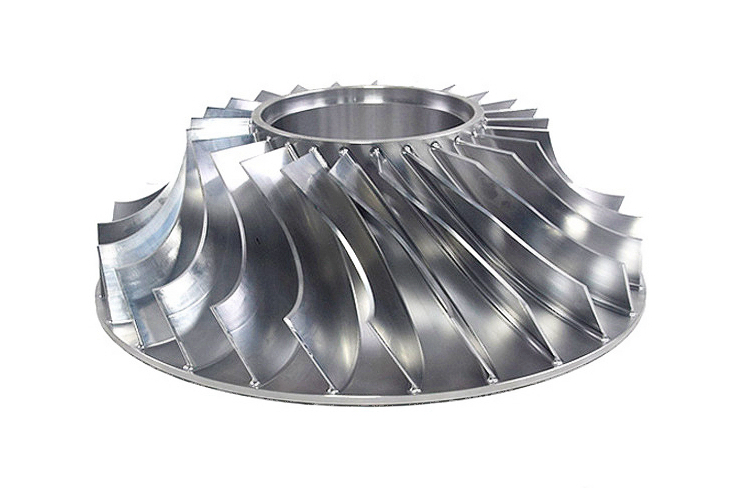
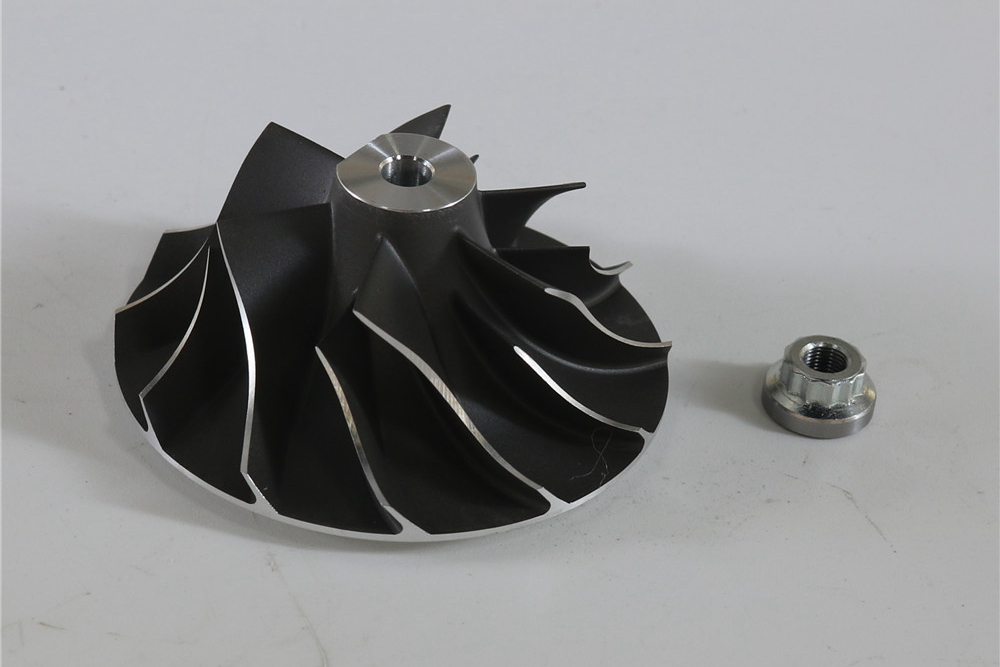
<h2 id="why-is-titanium-cnc-machining-more-expensive-than-aluminum-or-steel-machining?">Why is titanium CNC machining more expensive than aluminum or steel machining?</h2><p><strong>Titanium CNC machining cost</strong> is usually higher than machining a comparable part from 6061 aluminum or readily available steel because the purchased stock, cutting time, tool consumption, deformation control, and verification scope can all cost more. This comparison is valid only when grade, product form, geometry, quantity, tolerances, finish, and inspection are held constant; stainless steel, hardened steel, and certified specialty stock may narrow or reverse individual cost differences. Buyers should use a scope-matched <a target="_blank" href="https://www.newaymachining.com/services/titanium-cnc-machining">titanium CNC machining cost</a> evaluation instead of applying a universal material multiplier.</p><div data-type="row" class="row"><div class="col-12 col-md-6" data-type="col"><p><a href="https://www.newaymachining.com/services/titanium-cnc-machining"><img src="https://www.newaymachining.com/storage/attachments/2026/05/10/titanium-cnc-machining-cost-titanium-machining-cost.webp" width="800" height="600" loading="lazy"></a></p></div><div class="col-12 col-md-6" data-type="col"><p><a href="https://www.newaymachining.com/services/titanium-cnc-machining"><img src="https://www.newaymachining.com/storage/attachments/2026/05/10/why-is-titanium-cnc-machining-more-expensive-than-aluminum-or-steel-machining.webp" width="800" height="600" loading="lazy"></a></p></div></div><div class="i-typography-table-responsive"><table><tbody><tr><th colspan="1" rowspan="1"><p>Quote cost driver</p></th><th colspan="1" rowspan="1"><p>Scope to match and evidence to request</p></th></tr><tr><td colspan="1" rowspan="1"><p>Material and yield</p></td><td colspan="1" rowspan="1"><p>Match specification, grade, condition, product form, certificate, stock size, and usable yield; validate the mill or distributor basis and permitted substitution.</p></td></tr><tr><td colspan="1" rowspan="1"><p>Cutting and setup time</p></td><td colspan="1" rowspan="1"><p>Match geometry, feature access, setup count, and lot size; confirm which operations and difficult features drive machine time.</p></td></tr><tr><td colspan="1" rowspan="1"><p>Tooling and coolant</p></td><td colspan="1" rowspan="1"><p>Identify wear-sensitive operations and the applicable toolmaker data; validate tool-change criteria and in-process checks rather than a generic titanium surcharge.</p></td></tr><tr><td colspan="1" rowspan="1"><p>Distortion control</p></td><td colspan="1" rowspan="1"><p>Mark thin walls, stock allowance, datums, and free-state requirements; confirm roughing, relaxation, finishing, and unclamped verification stages.</p></td></tr><tr><td colspan="1" rowspan="1"><p>Edges and surface condition</p></td><td colspan="1" rowspan="1"><p>State burr limits, roughness, treatment specification, masking, and inspection timing; confirm the acceptance method after all required processes.</p></td></tr><tr><td colspan="1" rowspan="1"><p>Inspection and records</p></td><td colspan="1" rowspan="1"><p>List critical characteristics, datum scheme, method, sampling, report format, certificates, and the buyer's release evidence.</p></td></tr><tr><td colspan="1" rowspan="1"><p>Quantity and schedule</p></td><td colspan="1" rowspan="1"><p>Compare the same revision at prototype, pilot, and repeat quantities; identify setup reuse, material commitment, and schedule assumptions.</p></td></tr><tr><td colspan="1" rowspan="1"><p>Exclusions and risk</p></td><td colspan="1" rowspan="1"><p>Expose subcontract work, testing, packaging, rework responsibility, and quote exclusions; reject comparisons that omit required scope.</p></td></tr></tbody></table></div><h3 id="1.-titanium-material-itself-costs-more">1. Titanium material itself costs more</h3><p>Material price is meaningful only after the RFQ identifies the governing specification, grade, condition, and product form. ASTM B348/B348M, for example, is applicable when the purchased titanium bar or billet falls within that specification; it is not a price table and does not define sheet, forging, or implant requirements. The buyer should compare supplier quotes against the same certificate and stock assumptions. A quote for unspecified titanium cannot be compared fairly with one based on a certified grade and controlled lot traceability.</p><h3 id="2.-titanium-runs-hot-and-cuts-slower">2. Titanium runs hot and cuts slower</h3><p>Titanium's low thermal conductivity keeps a larger share of cutting heat near the tool-workpiece interface than aluminum does. Productive cutting conditions therefore depend closely on alloy, operation, engagement, tool grade, edge geometry, and coolant delivery. The resulting cost is longer machine occupancy when the qualified route removes material more slowly, not an automatic percentage added to every titanium part. Buyers should ask which features set cycle time and require the supplier to base exact parameters on applicable toolmaker data and controlled trials.</p><h3 id="3.-tool-wear-and-process-control-are-more-demanding">3. Tool wear and process control are more demanding</h3><p>Tool wear adds more than insert cost because a worn edge can shift size, burr condition, and surface integrity before final inspection detects the change. A defensible quote connects wear-sensitive operations to a tool-change criterion, an in-process characteristic, and a containment action when the trend moves. This failure-and-validation chain is more useful than a blanket comparison with general <a target="_blank" href="https://www.newaymachining.com/blogs/7-ways-to-reduce-cnc-machining-costs-without-sacrificing-quality">CNC machining costs</a>. Buyers do not need proprietary parameters, but they do need evidence that tooling risk is included rather than left as an exclusion.</p><h3 id="4.-thin-walled-parts-and-precision-features-increase-risk">4. Thin-walled parts and precision features increase risk</h3><p>Geometry decides whether the titanium premium compounds. Consider a planning scenario, not a Neway customer case: a thin-wall Ti-6Al-4V bracket is inspected in the fixture, then moves outside tolerance after release. The failure mode is elastic recovery or residual-stress movement; the controls are staged roughing, balanced stock, controlled clamping, and a free-state check against the drawing datum scheme. The buyer should release the higher-cost route only when the quote identifies the unclamped validation stage and the acceptance rule.</p><h3 id="5.-post-processing-and-quality-documents-can-add-significant-cost">5. Post-processing and quality documents can add significant cost</h3><p>Finishing and documentation create valid price differences only when both quotes carry the same scope. The RFQ should state the treatment specification, type or class where applicable, masking, pre-process allowances, final dimensions, and acceptance method. Material certificates, dimensional reports, or first article records should be requested because the contract needs them, not because the part is titanium. AS9102 defines first article inspection documentation when the applicable aerospace contract invokes it; the buyer must still identify characteristics, revision, accountability, and release criteria.</p><h3 id="6.-how-to-reduce-titanium-machining-cost-without-hurting-function">6. How to reduce titanium machining cost without hurting function</h3><p>Cost reduction starts by protecting function-critical requirements and changing only what analysis permits. A larger internal radius, accessible feature, practical stock envelope, simpler datum transfer, or relaxed nonfunctional tolerance can reduce setups, tool reach, finishing passes, or inspection effort. Use <a target="_blank" href="https://www.newaymachining.com/blogs/dfm-for-cnc-machining-10-golden-rules-to-optimize-designs-and-reduce-costs">DFM for CNC machining</a> to document each proposal, and use the drawing's functional stack to decide whether changes to <a target="_blank" href="https://www.newaymachining.com/blogs/understanding-machining-tolerances-what-buyers-must-know-before-ordering-cnc-parts">CNC machining tolerances</a> are acceptable. The buyer should approve every deviation by revision rather than allowing silent cost-driven substitutions.</p><h3 id="7.-quantity-breaks-can-change-the-unit-price-significantly">7. Quantity breaks can change the unit price significantly</h3><p>Quantity breaks reveal cost structure only when revision, material, inspection, finish, and delivery assumptions remain identical. Prototype pricing may carry programming, fixturing, and first-article work once, while repeat pricing may reuse some preparation; a design change can remove that advantage. Ask for prototype, pilot, and repeat-order lines that separate recurring from nonrecurring scope. The planned transition to <a target="_blank" href="https://www.newaymachining.com/services/low-volume-manufacturing">low-volume manufacturing</a> or <a target="_blank" href="https://www.newaymachining.com/services/mass-production">mass production</a> should be released only after the supplier states what tooling, inspection, and material commitments each level assumes.</p><h3 id="8.-the-right-cost-target-should-be-based-on-function,-not-only-price">8. The right cost target should be based on function, not only price</h3><p>Titanium earns its premium only when the selected grade and part design use properties that the lower-cost baseline cannot meet, such as a required strength-to-weight combination, corrosion behavior, or contractually defined material compatibility. Compare total cost per accepted part, including material, machining, finishing, inspection, documentation, and credible scrap exposure. The RFQ should name any acceptable aluminum or steel alternative and its validation route. If no functional requirement distinguishes titanium, the buyer should challenge the material choice before negotiating machining price.</p>
<h2 id="why-is-titanium-cnc-machining-more-expensive-than-aluminum-or-steel-machining?">Why is titanium CNC machining more expensive than aluminum or steel machining?</h2><p><strong>Titanium CNC machining cost</strong> is usually higher than machining a comparable part from 6061 aluminum or readily available steel because the purchased stock, cutting time, tool consumption, deformation control, and verification scope can all cost more. This comparison is valid only when grade, product form, geometry, quantity, tolerances, finish, and inspection are held constant; stainless steel, hardened steel, and certified specialty stock may narrow or reverse individual cost differences. Buyers should use a scope-matched <a target="_blank" href="https://www.newaymachining.com/services/titanium-cnc-machining">titanium CNC machining cost</a> evaluation instead of applying a universal material multiplier.</p><div data-type="row" class="row"><div class="col-12 col-md-6" data-type="col"><p><a href="https://www.newaymachining.com/services/titanium-cnc-machining"><img src="https://www.newaymachining.com/storage/attachments/2026/05/10/titanium-cnc-machining-cost-titanium-machining-cost.webp" width="800" height="600" loading="lazy"></a></p></div><div class="col-12 col-md-6" data-type="col"><p><a href="https://www.newaymachining.com/services/titanium-cnc-machining"><img src="https://www.newaymachining.com/storage/attachments/2026/05/10/why-is-titanium-cnc-machining-more-expensive-than-aluminum-or-steel-machining.webp" width="800" height="600" loading="lazy"></a></p></div></div><div class="i-typography-table-responsive"><table><tbody><tr><th colspan="1" rowspan="1"><p>Quote cost driver</p></th><th colspan="1" rowspan="1"><p>Scope to match and evidence to request</p></th></tr><tr><td colspan="1" rowspan="1"><p>Material and yield</p></td><td colspan="1" rowspan="1"><p>Match specification, grade, condition, product form, certificate, stock size, and usable yield; validate the mill or distributor basis and permitted substitution.</p></td></tr><tr><td colspan="1" rowspan="1"><p>Cutting and setup time</p></td><td colspan="1" rowspan="1"><p>Match geometry, feature access, setup count, and lot size; confirm which operations and difficult features drive machine time.</p></td></tr><tr><td colspan="1" rowspan="1"><p>Tooling and coolant</p></td><td colspan="1" rowspan="1"><p>Identify wear-sensitive operations and the applicable toolmaker data; validate tool-change criteria and in-process checks rather than a generic titanium surcharge.</p></td></tr><tr><td colspan="1" rowspan="1"><p>Distortion control</p></td><td colspan="1" rowspan="1"><p>Mark thin walls, stock allowance, datums, and free-state requirements; confirm roughing, relaxation, finishing, and unclamped verification stages.</p></td></tr><tr><td colspan="1" rowspan="1"><p>Edges and surface condition</p></td><td colspan="1" rowspan="1"><p>State burr limits, roughness, treatment specification, masking, and inspection timing; confirm the acceptance method after all required processes.</p></td></tr><tr><td colspan="1" rowspan="1"><p>Inspection and records</p></td><td colspan="1" rowspan="1"><p>List critical characteristics, datum scheme, method, sampling, report format, certificates, and the buyer's release evidence.</p></td></tr><tr><td colspan="1" rowspan="1"><p>Quantity and schedule</p></td><td colspan="1" rowspan="1"><p>Compare the same revision at prototype, pilot, and repeat quantities; identify setup reuse, material commitment, and schedule assumptions.</p></td></tr><tr><td colspan="1" rowspan="1"><p>Exclusions and risk</p></td><td colspan="1" rowspan="1"><p>Expose subcontract work, testing, packaging, rework responsibility, and quote exclusions; reject comparisons that omit required scope.</p></td></tr></tbody></table></div><h3 id="1.-titanium-material-itself-costs-more">1. Titanium material itself costs more</h3><p>Material price is meaningful only after the RFQ identifies the governing specification, grade, condition, and product form. ASTM B348/B348M, for example, is applicable when the purchased titanium bar or billet falls within that specification; it is not a price table and does not define sheet, forging, or implant requirements. The buyer should compare supplier quotes against the same certificate and stock assumptions. A quote for unspecified titanium cannot be compared fairly with one based on a certified grade and controlled lot traceability.</p><h3 id="2.-titanium-runs-hot-and-cuts-slower">2. Titanium runs hot and cuts slower</h3><p>Titanium's low thermal conductivity keeps a larger share of cutting heat near the tool-workpiece interface than aluminum does. Productive cutting conditions therefore depend closely on alloy, operation, engagement, tool grade, edge geometry, and coolant delivery. The resulting cost is longer machine occupancy when the qualified route removes material more slowly, not an automatic percentage added to every titanium part. Buyers should ask which features set cycle time and require the supplier to base exact parameters on applicable toolmaker data and controlled trials.</p><h3 id="3.-tool-wear-and-process-control-are-more-demanding">3. Tool wear and process control are more demanding</h3><p>Tool wear adds more than insert cost because a worn edge can shift size, burr condition, and surface integrity before final inspection detects the change. A defensible quote connects wear-sensitive operations to a tool-change criterion, an in-process characteristic, and a containment action when the trend moves. This failure-and-validation chain is more useful than a blanket comparison with general <a target="_blank" href="https://www.newaymachining.com/blogs/7-ways-to-reduce-cnc-machining-costs-without-sacrificing-quality">CNC machining costs</a>. Buyers do not need proprietary parameters, but they do need evidence that tooling risk is included rather than left as an exclusion.</p><h3 id="4.-thin-walled-parts-and-precision-features-increase-risk">4. Thin-walled parts and precision features increase risk</h3><p>Geometry decides whether the titanium premium compounds. Consider a planning scenario, not a Neway customer case: a thin-wall Ti-6Al-4V bracket is inspected in the fixture, then moves outside tolerance after release. The failure mode is elastic recovery or residual-stress movement; the controls are staged roughing, balanced stock, controlled clamping, and a free-state check against the drawing datum scheme. The buyer should release the higher-cost route only when the quote identifies the unclamped validation stage and the acceptance rule.</p><h3 id="5.-post-processing-and-quality-documents-can-add-significant-cost">5. Post-processing and quality documents can add significant cost</h3><p>Finishing and documentation create valid price differences only when both quotes carry the same scope. The RFQ should state the treatment specification, type or class where applicable, masking, pre-process allowances, final dimensions, and acceptance method. Material certificates, dimensional reports, or first article records should be requested because the contract needs them, not because the part is titanium. AS9102 defines first article inspection documentation when the applicable aerospace contract invokes it; the buyer must still identify characteristics, revision, accountability, and release criteria.</p><h3 id="6.-how-to-reduce-titanium-machining-cost-without-hurting-function">6. How to reduce titanium machining cost without hurting function</h3><p>Cost reduction starts by protecting function-critical requirements and changing only what analysis permits. A larger internal radius, accessible feature, practical stock envelope, simpler datum transfer, or relaxed nonfunctional tolerance can reduce setups, tool reach, finishing passes, or inspection effort. Use <a target="_blank" href="https://www.newaymachining.com/blogs/dfm-for-cnc-machining-10-golden-rules-to-optimize-designs-and-reduce-costs">DFM for CNC machining</a> to document each proposal, and use the drawing's functional stack to decide whether changes to <a target="_blank" href="https://www.newaymachining.com/blogs/understanding-machining-tolerances-what-buyers-must-know-before-ordering-cnc-parts">CNC machining tolerances</a> are acceptable. The buyer should approve every deviation by revision rather than allowing silent cost-driven substitutions.</p><h3 id="7.-quantity-breaks-can-change-the-unit-price-significantly">7. Quantity breaks can change the unit price significantly</h3><p>Quantity breaks reveal cost structure only when revision, material, inspection, finish, and delivery assumptions remain identical. Prototype pricing may carry programming, fixturing, and first-article work once, while repeat pricing may reuse some preparation; a design change can remove that advantage. Ask for prototype, pilot, and repeat-order lines that separate recurring from nonrecurring scope. The planned transition to <a target="_blank" href="https://www.newaymachining.com/services/low-volume-manufacturing">low-volume manufacturing</a> or <a target="_blank" href="https://www.newaymachining.com/services/mass-production">mass production</a> should be released only after the supplier states what tooling, inspection, and material commitments each level assumes.</p><h3 id="8.-the-right-cost-target-should-be-based-on-function,-not-only-price">8. The right cost target should be based on function, not only price</h3><p>Titanium earns its premium only when the selected grade and part design use properties that the lower-cost baseline cannot meet, such as a required strength-to-weight combination, corrosion behavior, or contractually defined material compatibility. Compare total cost per accepted part, including material, machining, finishing, inspection, documentation, and credible scrap exposure. The RFQ should name any acceptable aluminum or steel alternative and its validation route. If no functional requirement distinguishes titanium, the buyer should challenge the material choice before negotiating machining price.</p>
Related Blogs
Subscribe for expert design and manufacturing tips delivered to your inbox.
Share this Post:
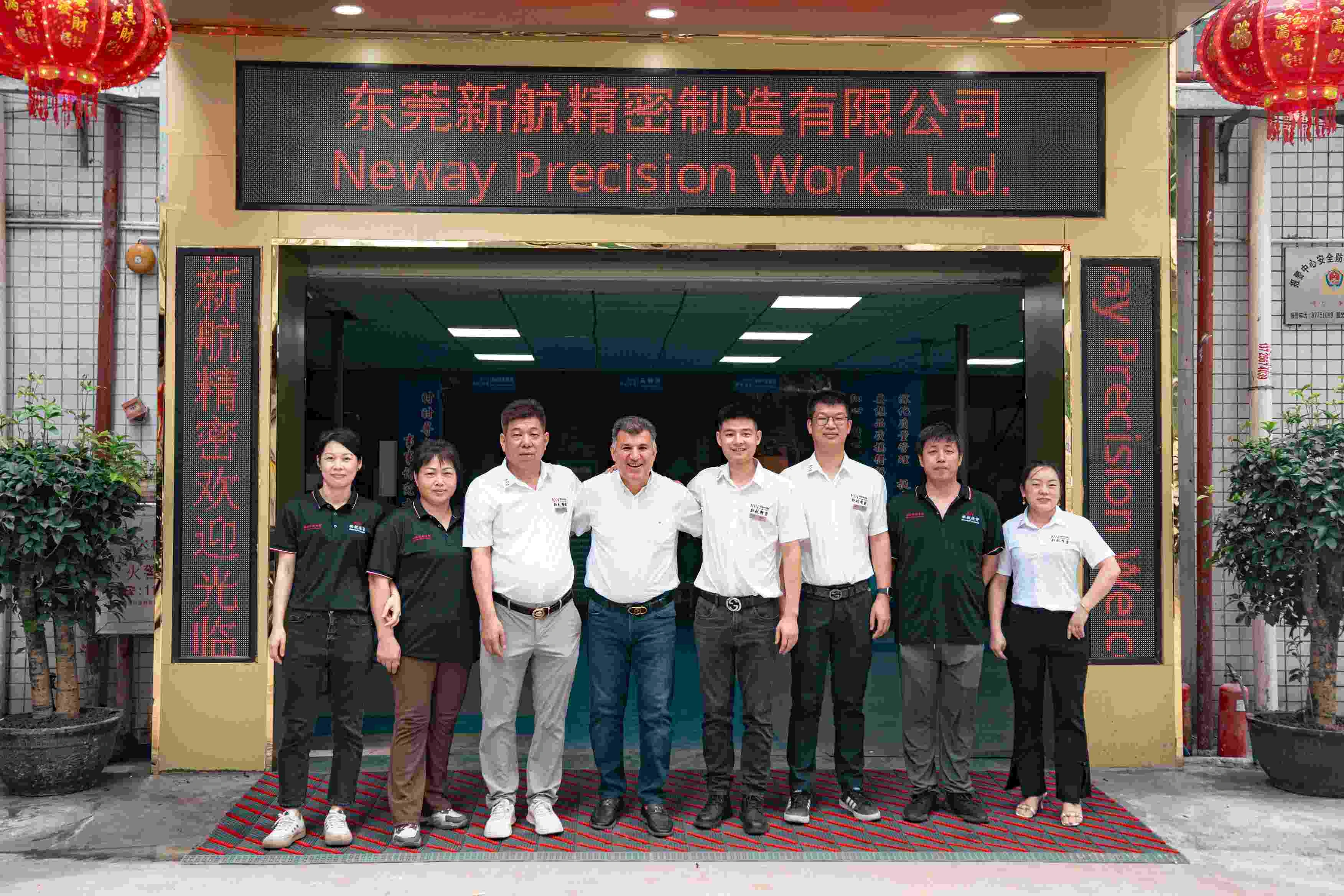
Neway Precision Works Ltd.
No.3 Lefushan Industry West Road
Fenggang, Dongguan, China
ZIP 523000
Solutions
Copyright © 2026 Machining Precision Works Ltd.All Rights Reserved.