Waspaloy
Waspaloy CNC Machining Materials Introduction
Waspaloy is a precipitation-hardenable nickel-based superalloy developed for applications requiring high strength, creep resistance, and oxidation performance at elevated temperature. Compared with general corrosion-resistant nickel alloys, Waspaloy is selected when the component must retain load-bearing capability and fatigue durability under sustained thermal exposure, particularly in demanding aerospace and turbine environments.
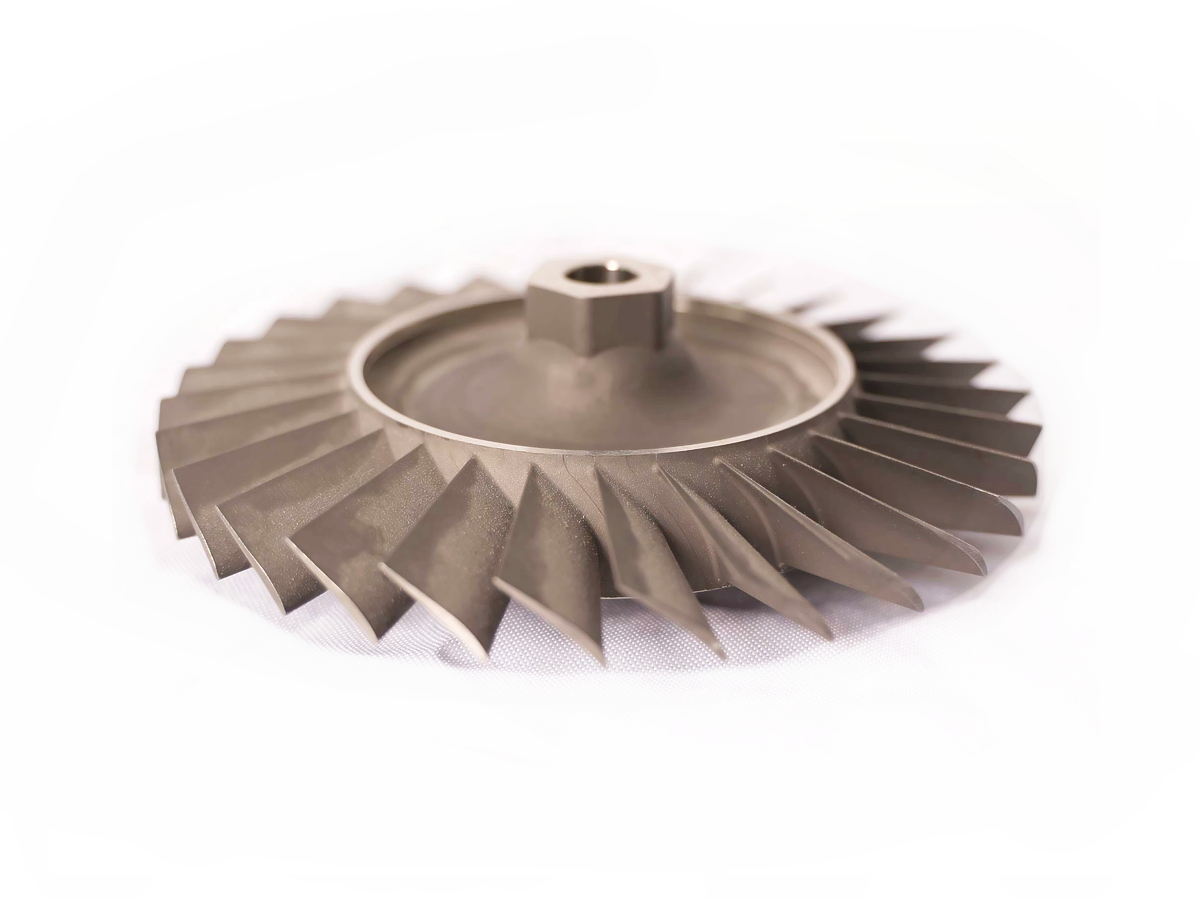
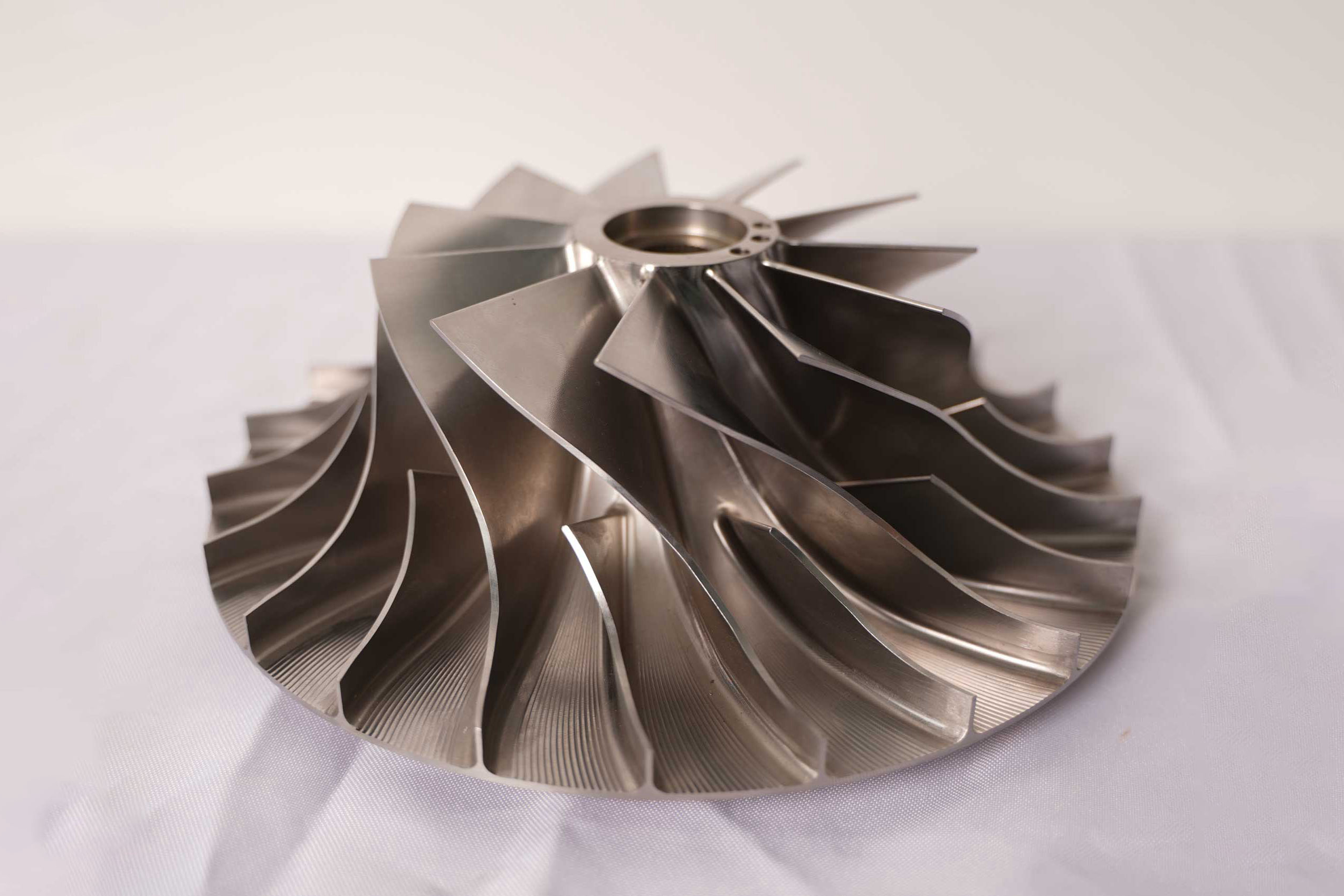
In superalloy CNC machining, Waspaloy is widely used for shafts, fasteners, seal components, turbine discs, rings, casings, and structural hot-end parts. Its high-temperature capability makes it suitable for precision parts that must maintain dimensional stability and mechanical performance in engine, power-generation, and severe-duty industrial systems.
Waspaloy Similar Grades Table
The table below lists commonly referenced equivalent designations for Waspaloy in major international standards, including China:
Country/Region | Standard | Grade Name or Designation |
|---|---|---|
USA | UNS | N07001 |
USA | AMS | AMS 5544 / AMS 5706 / AMS 5707 / AMS 5708 |
USA | ASTM | ASTM B637 |
Germany | W.Nr. / DIN | 2.4654 |
France | AFNOR | NC20K14 |
China | GB | GH4738 |
Waspaloy Comprehensive Properties Table
Category | Property | Value |
|---|---|---|
Physical Properties | Density | 8.19 g/cm³ |
Melting Range | Approximately 1330–1365°C | |
Thermal Conductivity | About 11 W/(m·K) at room temperature | |
Specific Heat Capacity | About 420–460 J/(kg·K) | |
Thermal Expansion | About 12.5–13.5 µm/(m·K), temperature dependent | |
Chemical Composition (%) | Nickel (Ni) | Balance |
Chromium (Cr) | 18.0–21.0 | |
Cobalt (Co) | 12.0–15.0 | |
Molybdenum (Mo) | 3.5–5.0 | |
Titanium (Ti) | 2.75–3.50 | |
Aluminum (Al) | 1.20–1.60 | |
Mechanical Properties | Tensile Strength | Typically 1200–1450 MPa after heat treatment |
Yield Strength (0.2%) | Typically 800–1100 MPa after heat treatment | |
Elongation at Break | Typically 10–20% | |
Modulus of Elasticity | About 210 GPa | |
Service Characteristic | Excellent creep and fatigue strength at elevated temperature |
CNC Machining Technology of Waspaloy
Waspaloy is typically processed using a combination of CNC turning, CNC milling, CNC drilling, and where required for final geometry and roughness control, CNC grinding. Due to its high strength and strong work-hardening tendency, cutting parameters must be chosen to maintain a stable shearing action and avoid rubbing that can accelerate tool wear.
For complex aerospace geometry and multi-surface datum relationships, multi-axis machining is often used to reduce re-clamping error and improve tool access. In narrow slots, sharp corners, or difficult hardened regions, EDM may be introduced as a secondary process to achieve critical detail without excessive cutting force.
Applicable Process Table
Technology | Precision | Surface Quality | Mechanical Impact | Application Suitability |
|---|---|---|---|---|
CNC Turning | Typically ±0.01–0.03 mm | Ra 0.8–3.2 µm | Efficient for rotational high-strength parts | Shafts, rings, sleeves, fasteners |
CNC Milling | Typically ±0.02–0.05 mm | Ra 1.6–3.2 µm | Excellent for flanges, profiles, pockets | Casings, brackets, structural parts |
CNC Drilling | Typically ±0.02–0.08 mm | Application dependent | Suitable for precise hole-making | Fastener holes, cooling-related features |
CNC Grinding | Typically ±0.005–0.01 mm | Ra 0.2–0.8 µm | Improves final accuracy and finish | Seal faces, bearing seats, critical datums |
EDM | Typically ±0.005–0.02 mm | Ra 0.4–3.2 µm | Low-force shaping of difficult details | Slots, internal corners, intricate features |
Waspaloy CNC Machining Process Selection Principles
When the part is rotationally symmetric and demands high concentricity, turning is typically the preferred primary process. This is common for rings, shafts, threaded parts, and cylindrical supports where dimensional consistency and stable stock removal are essential. Because Waspaloy can work harden rapidly, the toolpath must keep a positive cut and avoid light rubbing passes that reduce tool life.
For structural parts with flanges, milled profiles, pockets, or complex external contours, CNC machining routes centered on milling are normally selected. This allows better control of datum relationships and feature placement in aerospace and turbine hardware where assembly accuracy and load transfer are critical.
Grinding is preferred when the design requires lower roughness, better flatness, or tighter finished size on sealing faces, bearing interfaces, or contact surfaces. EDM becomes a more suitable choice when the component includes narrow slots, sharp internal radii, or difficult localized details that would otherwise cause high deflection or tool failure under conventional cutting conditions.
Waspaloy CNC Machining Key Challenges and Solutions
One of the main challenges in machining Waspaloy is its combination of high strength and rapid work hardening. If feeds are too light or the cutting edge dwells, the surface layer can harden and make subsequent passes more difficult. The best solution is to maintain stable chip formation, use sharp tools, and avoid toolpaths that generate repeated rubbing over the same area.
Heat concentration at the cutting edge is another critical issue, especially during longer cuts or when machining age-hardened material. Controlled cutting speed, rigid machine dynamics, and effective coolant delivery are essential to limit notch wear, edge chipping, and loss of dimensional control on critical features.
Residual stress and distortion can become relevant in thin-wall or high-value aerospace components. Balanced stock allowance, careful sequencing from rigid reference features to weaker sections, and close coordination with heat treatment planning help reduce movement between roughing, finishing, and final inspection.
To ensure the final component meets tight dimensional and functional requirements, manufacturers often apply disciplined precision machining methods with strong tool-wear monitoring, burr control, and surface-integrity management. This is especially important for high-temperature fasteners, discs, seals, and structural parts subjected to cyclic stress and thermal loading.
Industry Application Scenarios and Cases
Waspaloy is widely used in industries that require a combination of hot strength, fatigue resistance, and long-term dimensional reliability:
Aerospace and Aviation: Turbine discs, shafts, seals, casings, fasteners, and structural engine hardware requiring high-temperature strength and fatigue durability.
Power Generation: Turbine-related hot-end parts, retaining hardware, and structural components operating under sustained thermal and mechanical stress.
Industrial Equipment: High-temperature fixtures, severe-duty rotating parts, and alloy details used in thermally demanding process equipment.
Oil and Gas: Heat- and corrosion-resistant structural components, high-strength fasteners, and rotating parts used in demanding service environments.
A common Waspaloy production route starts with rough machining in the solution-treated or pre-aged condition, followed by controlled heat treatment to achieve the required mechanical properties, then final machining or grinding of critical datums and interfaces. This workflow supports high-value components that need both strong metallurgical performance and precise final geometry for reliable service.
Explore Related Blogs