Which Material and Stock Details Belong in a Milled-Parts RFQ?
Which Material and Stock Details Belong in a Milled-Parts RFQ?
A milled-parts RFQ should state the exact material grade, condition, stock form, certification requirement, substitution rule, rough-stock envelope, machining allowance, and final-state requirements. Those details let a supplier price the same work the buyer intends to receive. “Aluminum” or “steel” alone is not enough when temper, heat treatment, corrosion condition, grain direction, or traceability affects machining and performance. The buyer should also identify which dimensions and surfaces are checked before and after heat treatment, coating, plating, painting, or other outside processing.
Name the Material Precisely
Use the drawing to identify alloy or grade, temper, heat-treatment condition, and any relevant product form. A bar, plate, billet, extrusion, and casting may have different stock behavior and machining allowances even when the chemistry is similar. If the part needs a specific standard, include the standard and revision in the controlled document. If multiple grades are acceptable, define the approved list and explain the performance or cost reason for each option.
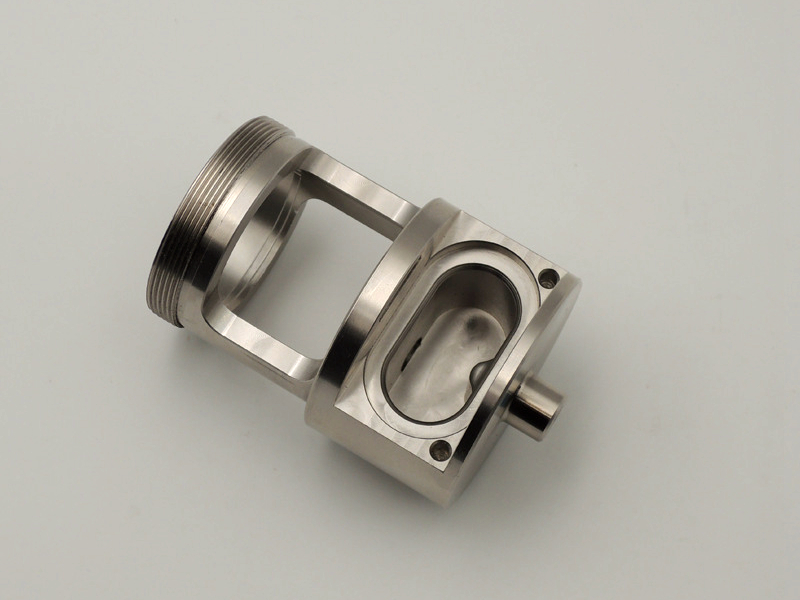
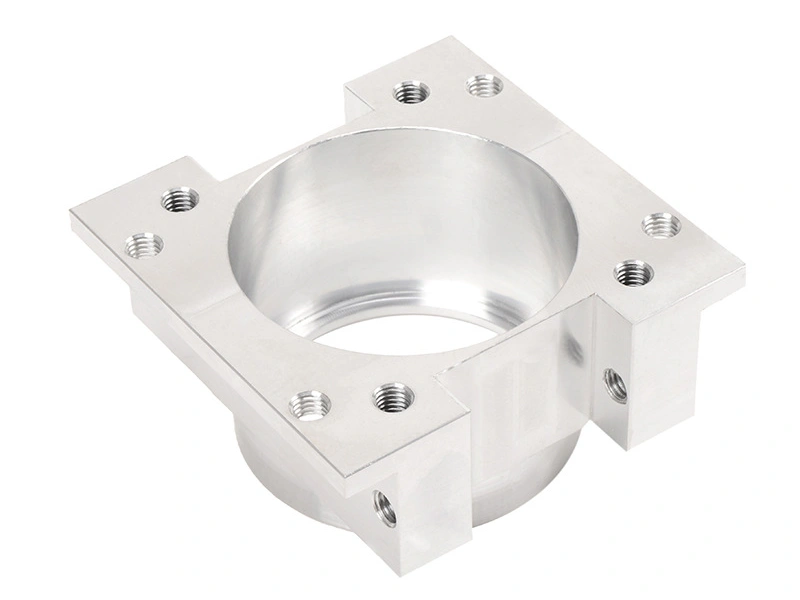
The silver appearance of a photographed block cannot identify aluminum, stainless steel, titanium, or another alloy. A supplier should not infer material from color, tool marks, or a surface image. Request a certificate or lot reference when material identity is critical, but keep the certificate's role clear: it supports incoming material identity and condition; it does not prove finished-part dimensions, form, or assembly fit.
State Stock Form and Direction
Specify the starting stock envelope, minimum finished dimensions, and any required grain, rolling, or extrusion direction. Direction may matter for thin walls, bending, sealing surfaces, or a feature that is sensitive to distortion. If no direction requirement exists, say so rather than leaving the supplier to make a hidden assumption. For a split block and cover, identify whether both pieces must come from the same stock condition or whether independent lots are acceptable.
Include surface scale, saw allowance, edge condition, and any cleaning requirement that affects datum preparation. A raw face may not be suitable as a final reference until enough material is removed. A stock edge may also be out of square or damaged. The RFQ should ask the supplier to explain how datum faces will be established and how much allowance is reserved for finishing, without turning an estimated allowance into an unconditional tolerance promise.
Connect Material Condition to the Process
Material condition influences cutting forces, burr behavior, heat, tool wear, residual stress, and post-machining movement. A route for a soft condition may not transfer unchanged to a hardened or precipitation-treated condition. If heat treatment occurs between operations, define the surfaces or features that are re-established afterward and the evidence that confirms the final state. If the part is stress-relieved, identify the record and acceptance step rather than assuming a supplier's standard cycle is equivalent.
When a coating, plating, anodizing, or paint is required, state the coverage, masking, color or appearance limits, and which dimensions are measured after processing. Coating growth can affect a hole, cover seat, thread, or locating face. A finish reference can help frame the process discussion, but the drawing and quality agreement determine acceptance. If a final surface needs a numerical characteristic, name the method and measurement state; visual uniformity is not a substitute.
Define Allowance and Substitution Rules
Allowance depends on stock stability, workholding, distortion risk, tool access, heat treatment, and the remaining tolerance. Excess stock may increase cycle time and heat; insufficient stock may prevent a datum or cosmetic face from cleaning up. Ask for a proposed allowance when the drawing does not prescribe one, and require the proposal to identify the operation that consumes it. The buyer should approve a change when the proposed envelope affects weight, orientation, or material traceability.
Substitution rules should be explicit. If an equivalent grade is permitted, state the evidence needed to show equivalent strength, corrosion behavior, machinability, or downstream compatibility. If no substitution is permitted, require a written change request before material is purchased. A shop's familiar stock is not automatically an approved alternative. Record the selected grade, condition, lot, and certificate reference so a receiving team can compare the shipment with the RFQ.
| RFQ field | Specific detail | Why it matters |
|---|---|---|
| Grade and condition | Alloy, standard, temper or heat treatment | Controls behavior and certificate scope |
| Stock form | Plate, bar, billet, extrusion, casting and direction | Sets allowance and distortion assumptions |
| Starting envelope | Raw dimensions, edge state and minimum cleanup | Prevents hidden material or cycle-time changes |
| Outside process | Masking, coverage, final-state measurement | Protects interfaces after finish growth or change |
| Substitution | Approved list, evidence and change authority | Stops unapproved material swaps |
| Traceability | Lot reference, certificate and record retention | Connects material to the finished shipment |
Request Evidence Without Overclaiming
Ask for the material certificate, lot or heat reference, condition, and any required treatment record in a format that identifies the drawing revision. If a test report is needed, specify the property, method, sampling boundary, and acceptance criterion. Do not request a vague “full material report” and then assume it covers finished-part geometry. Dimensional and functional results need their own records, tied to the same part and lot.
Review the material evidence before production release. Confirm that the grade and condition match the drawing, the lot reference appears on the packing or traveler record, and any approved deviation is linked. If a certificate is missing or conflicts with the order, hold the affected material and ask for clarification. This approach gives the supplier a clear commercial scope while preserving the buyer's ability to trace the actual material used in the milled parts.