What Surface Preparation Evidence Supports Powder-Coating Adhesion?
What Surface Preparation Evidence Supports Powder-Coating Adhesion?
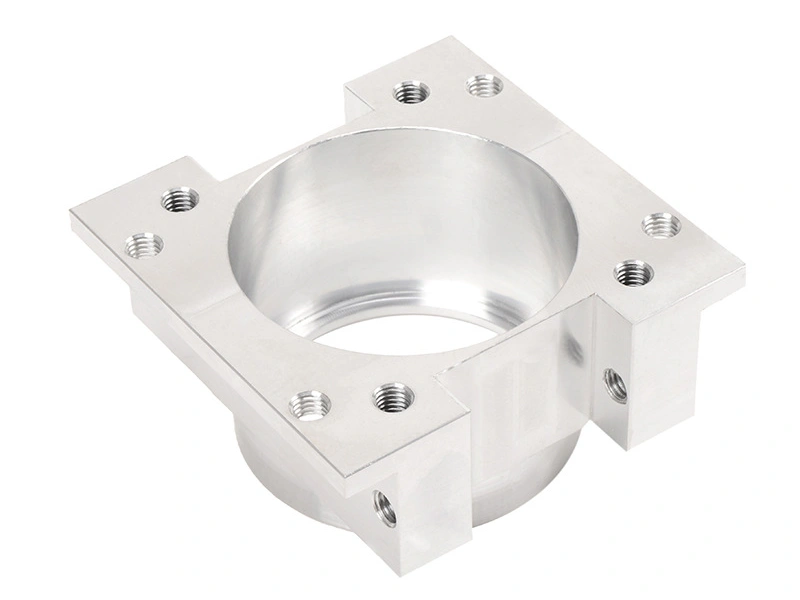
Surface preparation evidence supports powder-coating adhesion when it identifies the substrate condition, cleaning and profile route, chemical or mechanical controls, time between preparation and spray, powder and cure state, and the test or observation used to accept the result. A clean-looking face is not proof that oil, oxide, salts, or residue have been controlled. The pictured coated bracket shows a light-colored surface and bent geometry from two views, but it cannot prove adhesion, pretreatment chemistry, film thickness, cure, or corrosion resistance. The buyer should define the evidence boundary in the drawing, coating specification, and RFQ. A metal-finishing reference can help structure the questions without certifying a particular coating.
Identify the Substrate Before Cleaning
Record material designation, temper or condition, heat or lot identity, machined state, prior coating, and any heat or chemical exposure. Different substrates and conditions respond differently to degreasing, blasting, conversion treatment, and cure. Do not infer alloy or hardness from the white appearance in a product photograph. Attach the material certificate or controlled substitution approval to the same lot identity used for coating and inspection.
Control Oil, Coolant, and Residue
Define the removal of cutting oil, coolant, chips, fingerprints, salts, and loose oxide. State the approved cleaner class or process window, rinse, drying, handling, and maximum hold time before coating. A part can become recontaminated by a dirty rack, glove, conveyor, or storage container after it passes a wash. Record the preparation cell, batch, operator, and transfer condition when those facts influence the surface.
Choose Mechanical or Chemical Profiling
Blasting, conversion treatment, etching, or another route may create a surface suitable for the selected powder. Specify media or chemistry, pressure or concentration where controlled, coverage, profile or visual condition, and protected regions. A profile value from one flat coupon cannot automatically represent an inside corner, thin flange, or masked hole. Record inaccessible areas and the alternate evidence used there.
Keep preparation separate from machining tolerance. A blast can remove material or change an edge; a conversion layer can add a small film; a chemical route can affect a sensitive alloy. Measure critical datums, bores, and threads after preparation when the fit depends on them. A CNC machining reference can frame the original features but does not establish the preparation allowance.
Protect Masks During Preparation
Confirm that plugs, caps, tape, liquid masks, and fixtures survive the cleaning or blasting route. A mask leak can leave residue at a thread, while an over-tight plug can trap cleaner or change a thin wall. Record mask identity, insertion depth, removal method, and the post-preparation check. If a feature is intentionally prepared and coated, do not call it masked; define its film and dimensional requirement instead.
Inspect the mask boundary before spray. Overspray or abrasive shadow at a datum may not be visible after powder is applied. A fixturing reference can help frame support and access questions, but the controlled mask map determines the keep-clear region.
Control the Time to Spray
State the maximum interval between final preparation and powder application, plus protection from humidity, dust, handling, and corrosion during that interval. If the interval is exceeded, define re-cleaning, re-profiling, or reinspection. Record start and finish times, storage condition, rack identity, and any visible change. A preparation result from yesterday is not automatically the surface condition being coated today.
Link Preparation to Powder and Cure
Record powder product, color or texture reference, batch, application equipment, cure requirement, load configuration, and part-temperature evidence. Adhesion tests and cure records answer different questions: a cured film can still fail on a contaminated substrate, while a well-prepared surface can be rejected if the cure state is uncontrolled. Link the evidence to the same part or lot and note any change in powder or oven.
For thick and thin sections, identify representative locations and any validated witness. Do not treat an oven setpoint as proof of part temperature or adhesion. If a cure interruption occurs, contain the lot and decide whether re-cure, strip and recoat, expanded testing, deviation, or replacement is allowed.
Choose an Adhesion Check Within Scope
Define the adhesion method, location, specimen or witness, coating age, conditioning, rating, and reaction. A destructive test may use a witness panel or a representative sample rather than a production datum. A cross-hatch or pull result applies to the tested condition and location; it does not prove every edge, recess, or future powder batch. Keep failed results and the affected identity.
Use visual inspection, thickness readings, solvent resistance, or corrosion exposure as separate evidence when required. None should be presented as a substitute for another without an approved correlation. State the acceptance boundary and who approves a deviation.
Record Preparation and Coating Failures
For blistering, poor adhesion, bare areas, residue, profile drift, or contamination, preserve the original observation, affected range, suspected state, containment, rework, new result, and approver. Stripping and recoating can change thickness, edge coverage, and the substrate condition. A later pass does not erase the first failure. Replacement parts receive a new identity and a new record.
Write the Preparation Evidence in the RFQ
Provide drawing and model revisions, substrate and lot rules, cleaning route, profile or pretreatment boundary, mask map, hold time, powder reference, cure evidence, adhesion method, sample basis, rework rule, packaging, records, and change authority. Ask suppliers to state their preparation checks, transfer controls, witness policy, and reaction to contamination or failed adhesion. Separate preparation, powder, inspection, testing, rework, and fixture costs.
Accept Adhesion With a Defined Boundary
Accept when substrate identity, preparation state, transfer time, powder and cure evidence, test method, sample, owner, and reaction are explicit and linked to the coated lot. Hold when cleanliness is inferred from color, a profile is extrapolated from one face, cure is inferred from the oven display, or rework removed the original result. The buyer's next action is to approve the preparation and adhesion evidence map before production coating.