What Is High Volume Production Machining and How Does It Differ from Prototype Manufacturing?
What Is High Volume Production Machining and How Does It Differ from Prototype Manufacturing?
High volume production machining repeatedly manufactures a released part through a controlled route, with defined process inputs, inspection evidence, lot disposition, and reaction rules. Prototype manufacturing instead creates evidence for design learning and may allow frequent revisions, temporary workholding, manual adjustments, or intensive inspection. A prototype pass proves only the tested revision and conditions. Before high-volume release, the buyer should confirm that the intended material, fixture, tooling, finish, measurement method, and deviation status are represented in a repeatable production run.
This evidence boundary separates prototype manufacturing from production. Low-volume manufacturing can expose tool wear, burr growth, fixture sensitivity, finish variation, and inspection workload before output expands. Quantity alone does not define the stage; design authority, route maturity, accepted risk, and the decision supported by the parts do.
1. Prototype, Low-Volume, and High-Volume Machining Have Different Goals
Prototype, low-volume, and high-volume machining create different evidence. Prototype parts answer a design question. Low-volume lots test whether an approved design and route can repeat. High-volume production controls an already released configuration across planned output.
The buyer should define the gate before ordering parts. A fit result, repeat-lot result, and production release are separate decisions, even when the same material and CNC process appear in all three stages.
Manufacturing Stage | Main Goal | Main Buyer Priority |
|---|---|---|
Answer a named design, fit, or functional question | Record the tested revision, representative variables, result, and evidence limits | |
Test repeatability and production-route assumptions across more than one build | Close deviations and confirm fixture, tool-life, finish, inspection, yield, and reaction logic | |
Replicate the released part through a stable, controlled route | Release lots only when CTQ evidence and process status satisfy the agreed plan |
2. Prototype Manufacturing Focuses on Learning, Not Maximum Efficiency
Prototype manufacturing prioritizes a valid engineering answer over a production-optimized cycle. Extra setup time, manual offset correction, or full inspection may be reasonable when each action is recorded and does not distort the question being tested.
Those methods become limitations at scale. If acceptance depends on selective fitting, an expert operator, or repeated adjustment without a rule, the prototype demonstrates a possible result rather than a released production process.
3. Low-Volume Manufacturing Is the Bridge Between Proof and Scale
Low-volume manufacturing is useful when it represents the proposed material, workholding, machining sequence, deburring, finish, and inspection route. It reveals variation that a single development part cannot show.
The bridge is complete only when route changes and prototype concessions are closed or formally carried forward. A small repeat lot that uses another temporary workaround does not establish high-volume readiness.
4. High-Volume Production Machining Is Built Around Stable Replication and Lower Unit Cost
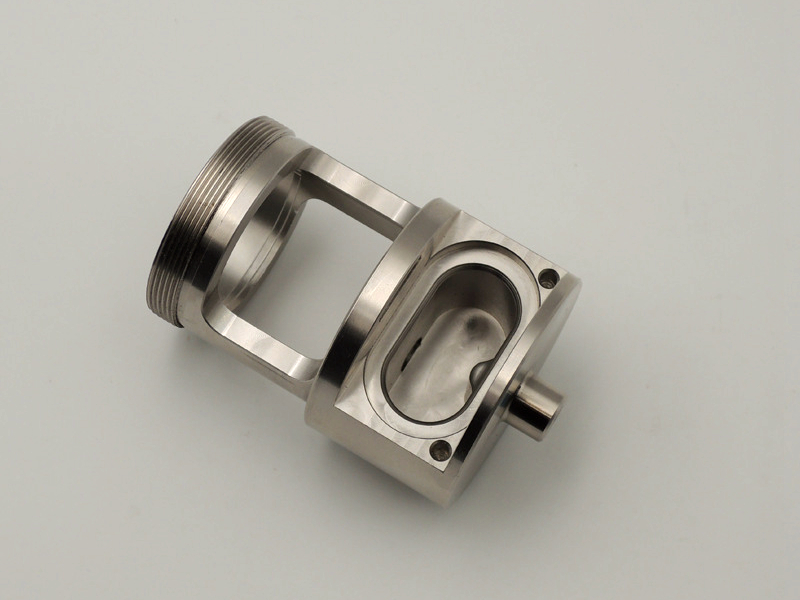
In high volume production machining, stable replication comes before claimed unit-cost reduction. Consider a stainless valve sleeve with a precision bore, seal groove, external thread, and passivated final state. Production evidence must connect fixture location, tool condition, final inspection, and lot release to those interfaces.
A prototype made acceptable through manual bore offsets or selected mating parts cannot define that route. The buyer needs a representative run, recorded yield, defined adjustment limits, and a reaction for drift before using the result for commercial release.
Production Focus | Prototype Manufacturing | High-Volume Production Machining |
|---|---|---|
Design status | Revision may change after test evidence | Released authority with controlled change approval |
Process style | Temporary setup is acceptable when its limitation is documented | Representative fixture, tooling, finish, inspection, and maintenance rules |
Cost priority | Spend is judged against the learning decision | Cost is judged with cycle, yield, material, inspection, and risk evidence |
Inspection style | May inspect broadly to diagnose design and process questions | Control CTQs with suitable methods, sampling, trends, and reaction limits |
Main risk | Evidence does not represent the intended design decision | Uncontrolled drift, change, or containment affects multiple lots |
5. High-Batch Machining Requires Design Freeze and Stronger Engineering Discipline
High-batch machining requires a released design authority, not an assumption that no future change will occur. The drawing, model, material condition, finish, CTQs, acceptance methods, and approved deviations need identifiable revisions.
When a change is proposed, review its effect on stock, programs, fixtures, tools, outside processes, inspection, existing inventory, and validation evidence. Production should not mix revisions or apply an undocumented interpretation.
6. Cost Control in High-Volume Machining Comes from Process Efficiency, Not Only from Cheaper Material
High-volume cost control comes from verified cycle, yield, material utilization, tool consumption, inspection effort, and handling. A cheaper stock or reduced inspection step is not a saving when it increases drift, scrap, rework, or field risk.
Evaluate each change with before-and-after evidence on the affected characteristics. Preserve drawing requirements for functional interfaces and use a pilot or controlled trial before releasing a cost-driven route change.
7. Engineering Requirements for Production Ramp-Up Are Much Stronger Than for Prototype Release
Production ramp-up requires evidence that the route can detect and contain foreseeable failures. The package should identify CTQs, process inputs, measurement methods, sampling or monitoring logic, reaction owners, and lot disposition.
Request the actual deliverables in the RFQ. Terms such as control plan, capability, or first article are incomplete unless the supplier and buyer agree on characteristics, data conditions, acceptance rules, and change triggers.
Ramp-Up Requirement | Why It Matters in High-Volume Production |
|---|---|
Frozen drawing and revision control | Confirms the exact authority for programming, inspection, inventory, and change disposition |
Defined critical dimensions | Links fit, seal, motion, or safety risk to a controlled characteristic and acceptance method |
Repeatable workholding and tooling | Defines locating, maintenance, tool-change, and offset rules before drift affects a lot |
Structured inspection plan | States method, frequency, part state, data review, escalation, containment, and release responsibility |
Process capability discipline | Uses representative data and measurement conditions to support release, not a generic capability claim |
8. Dimension Consistency Becomes More Important as Volume Increases
Dimensional consistency means CTQs remain acceptable across time, tools, fixtures, machines, operators, and material lots within the approved route. A first-piece report establishes a starting state; it does not prove later output.
Monitor the failure mechanism that can move each characteristic. Bore size may follow tool wear and temperature, while position may follow fixture location or datum simulation. The reaction must address the relevant cause.
9. A Successful High-Volume Launch Usually Builds on Low-Volume Learning
A strong launch uses low-volume manufacturing to test production assumptions under repeated loading, tool use, finishing, inspection, and release. The value is the evidence collected and acted upon, not the batch label.
Close burr growth, fixture wear, offset frequency, measurement access, finish-lot variation, and deviation status before expansion. Open risks need an owner, containment, acceptance boundary, and revalidation trigger.
10. Summary
high volume production machining controls repeated output from a released route, while prototype manufacturing creates design evidence under change. Low-volume manufacturing can test whether the proposed route repeats before broader release.
For the RFQ, provide the controlled revision, exact material and finish state, CTQs and datums, expected demand, production route, inspection deliverables, accepted deviations, and functional acceptance rules. Approve high-volume release only when representative evidence, reaction ownership, and change control are complete.